Unisex Fragrance Selection: Quality, Value, Distinction
Choosing a fragrance can feel daunting when old myths still linger about who should wear which scent. For UK fragrance lovers searching for affordable unisex perfumes, it helps to know that modern perfumery uses art and science to create scents with wide appeal, not just products aimed at men or women. By focusing on universal olfactory experiences, you unlock options that deliver quality, value, and distinct character for yourself or as thoughtful gifts.
Table of Contents
- Defining Unisex Fragrances And Common Myths
- Fragrance Categories And Scent Profiles Explained
- How Scent Notes Influence Unisex Appeal
- Choosing Quality Ingredients And Formulations
- Comparing Affordable Dupes And Originals
- Avoiding Common Perfume Selection Mistakes
Key Takeaways
| Point | Details |
|---|---|
| Unisex Fragrances Appeal | Unisex fragrances are crafted to transcend gender boundaries, offering universal emotional resonance without compromising depth or character. |
| Fragrance Testing Importance | Always test fragrances on your skin, considering personal chemistry over marketing narratives or price assumptions. |
| Quality Over Price | The quality of unisex fragrances relies on the calibre of ingredients and perfumer skill, not on whether they target a single gender. |
| Beware of Selection Errors | Avoid common mistakes by thoroughly testing fragrances and aligning choices with your individual lifestyle and preferences. |
Defining Unisex Fragrances And Common Myths
Unisex fragrances represent far more than a marketing trend or a simple middle ground between masculine and feminine scents. They are carefully crafted compositions designed to appeal across gender boundaries, rooted in the understanding that fragrance appreciation transcends traditional gender categories. At their core, unisex fragrances embody the principle that certain olfactory experiences possess universal emotional resonance. A fragrance built around crisp citrus, warm amber, or fresh musk doesn’t inherently belong to one gender because these scent families naturally evoke responses in all people. The distinction lies not in synthetic chemical formulations that somehow neutralise masculinity or femininity, but rather in thoughtful scent architecture that celebrates broad appeal. Modern perfumery blends art, science, and technology with chemistry at its core, allowing perfumers to craft compositions that resonate universally whilst maintaining the sophistication and complexity expected by discerning fragrance enthusiasts.
Several persistent myths cloud the understanding of unisex fragrances, particularly among those new to fragrance collecting. The first misconception is that unisex fragrances lack depth or personality. In reality, many unisex compositions boast remarkable complexity, featuring intricate accords of rare ingredients, unexpected juxtapositions of top notes, and carefully layered base notes. Another common myth suggests that unisex fragrances must smell “neutral” or “safe”, as if universality demands blandness. This fundamentally misunderstands how fragrance works. A bold, distinctive scent can appeal universally without diluting its character. Consider how certain woody scents, gourmand fragrances, or mineral compositions attract wearers across all demographics precisely because they offer something genuine and memorable. The concept of scents historically linked to attraction are often natural blends appealing universally challenges the notion that gender must dictate fragrance choice. What matters is whether a fragrance speaks to you personally, not whether marketing materials suggest it was designed with your gender in mind.
Another widespread myth concerns value and quality. Many assume that unisex fragrances, particularly affordable options, compromise on ingredient quality or longevity compared to designer fragrances marketed to specific genders. This simply doesn’t reflect how fragrance creation actually works. Quality depends on the perfumer’s skill, the calibre of raw materials selected, and the concentration of fragrance oils, not on whether a scent targets one gender or multiple audiences. You’ll find exceptional unisex fragrances offering outstanding sillage and longevity at a fraction of luxury brand prices. The real decision involves understanding your personal preferences, budget constraints, and how a fragrance performs on your skin chemistry. Some wearers discover that unisex compositions suit their lifestyle better because they transition seamlessly from casual daywear to evening occasions without requiring a wardrobe of different scents. When exploring unisex fragrance options, you’ll discover that quality and distinctive character exist at every price point, allowing you to prioritise what genuinely matters to you.
Pro tip: Test fragrances on your actual skin rather than relying on gender marketing or price point assumptions, as your personal chemistry and preferences matter infinitely more than the fragrance category or cost.
Fragrance Categories And Scent Profiles Explained
Understanding fragrance categories and scent profiles forms the foundation of intelligent fragrance selection, particularly when exploring unisex options. Every fragrance is constructed from multiple layers that work together to create the complete olfactory experience you perceive from application through the final dry down. Perfume notes are classified into top, middle, and base notes), which define how a fragrance unfolds over time and determine its overall character. The top notes, also called head notes, are the initial impression you encounter within the first five to fifteen minutes of application. These volatile compounds evaporate quickly, providing brightness and immediate impact. Middle notes, or heart notes, emerge as the top notes fade and form the true body of the fragrance, typically lasting between thirty minutes and two hours. Base notes are the foundational elements that linger longest on your skin, often persisting for four hours or more, and provide depth, warmth, and longevity. This hierarchical structure means that a well-balanced unisex fragrance doesn’t simply smell pleasant; it tells a story that evolves as it develops on your skin.
Fragrance categories themselves describe the dominant character or family of a scent, and recognising these categories helps you identify compositions that appeal to your personal preferences. Floral fragrances celebrate botanical notes ranging from soft, powdery violets to heady gardenias and romantic roses. Woody fragrances anchor themselves in materials like sandalwood, cedarwood, and vetiver, offering earthy sophistication and masculine warmth without being gender specific. Citrus fragrances deliver fresh, zesty brightness through notes such as bergamot, lemon, and grapefruit, making them ideal for daywear and warm weather. Gourmand fragrances incorporate edible scent profiles including vanilla, caramel, tonka bean, and chocolate, creating indulgent, dessert inspired compositions. Oriental fragrances feature rich, sensual accords built around amber, musk, and spices, often considered the most luxurious category. Fresh fragrances emphasise aquatic, herbal, and green notes that evoke clean, crisp sensations. Understanding that unisex fragrance options exist across all these categories rather than being confined to a narrow spectrum transforms how you approach fragrance shopping.

Here is a comparison of popular fragrance categories and their typical unisex appeal:
| Fragrance Category | Common Notes | Unisex Appeal | Typical Season |
|---|---|---|---|
| Floral | Rose, jasmine, violet | Moderate with balanced blends | Spring, summer |
| Woody | Sandalwood, cedarwood | Strong, appeals widely | Autumn, winter |
| Citrus | Bergamot, lemon, grapefruit | Very high, universally fresh | Spring, summer |
| Gourmand | Vanilla, tonka bean, caramel | Moderate, often modern | Autumn, winter |
| Oriental | Amber, musk, spices | High, rich sophistication | Autumn, evening |
| Fresh | Aquatic, herbal, green notes | Strong, clean and crisp | Year-round |
Scent profiles further refine your understanding by describing the overall sensory experience rather than just the chemical composition. A fragrance might be classified as a floral woody, meaning it combines floral heart notes with woody base notes, or a fruity gourmand, blending fruit forward brightness with creamy sweetness. The concentration of fragrance oils also influences scent profile intensity. Eau de Parfum contains fifteen to twenty percent fragrance concentration, delivering robust, long lasting presence. Eau de Toilette typically contains five to fifteen percent concentration, offering lighter wear suited to warmer climates or office environments. Eau de Cologne contains two to five percent concentration, providing gentle freshness perfect for reapplication throughout the day. These technical distinctions matter because they affect how a fragrance performs on your body and how effectively it suits different occasions. What makes a scent profile truly unisex involves balance rather than dilution. A composition featuring complementary notes that create harmony without emphasising traditionally masculine or feminine elements will appeal broadly across wearers, provided the fragrance quality and construction genuinely merit attention.
Pro tip: Spray fragrance on pulse points like your wrists and neck where body heat naturally accelerates the scent’s evolution, allowing you to experience all three note stages more fully and assess whether the complete fragrance journey appeals to you.
How Scent Notes Influence Unisex Appeal
The relationship between individual scent notes and their capacity to appeal universally forms the scientific heart of unisex fragrance design. Not all notes carry the same perceived gender associations, and understanding these nuances explains why certain fragrances resonate broadly whilst others remain niche. Citrus notes, for instance, are perceived as fresh and energetic across demographic boundaries, making them extraordinarily common in unisex compositions. Similarly, woody notes like cedarwood and vetiver offer warmth and complexity without inherent gender coding. The magic of unisex fragrances lies in selecting and balancing notes that possess natural universal appeal rather than attempting to neutralise traditionally masculine or feminine elements. Genetic variability influences fragrance preferences, particularly the perception of certain scent molecules, which explains why some unisex fragrances achieve remarkably broad appeal through molecular compositions that resonate across different populations. This scientific reality means that unisex fragrance selection isn’t about compromise but rather about understanding which notes naturally transcend gender boundaries.
Top notes, being the first impression a fragrance delivers, hold particular importance in establishing unisex appeal. Citrus notes such as bergamot, lemon, and grapefruit possess immediate brightness that appeals universally without gender association. Green notes and herbal elements like galbanum or mint offer freshness equally appreciated by all wearers. Aquatic notes, which evoke clean water or marine sensations, have become increasingly popular in unisex fragrances precisely because they suggest clarity and simplicity rather than gendered characteristics. The middle notes represent the true heart of unisex appeal, where floral, spicy, and fruity elements create the fragrance’s character. White florals like jasmine or gardenia needn’t read as specifically feminine when balanced with warm spices or woody accords. Fruity notes such as peach or blackcurrant offer complexity that attracts diverse wearers when combined thoughtfully. Base notes provide the lasting impression and determine overall wearability. Warm amber, creamy vanilla, and earthy vetiver all possess qualities that appeal across gender lines when used in appropriate concentrations. The structure and volatility of these balanced combinations of fresh top notes with woody or floral middle notes and lasting base notes) create compositions that suit diverse olfactory preferences without gender bias.
Consider how specific note combinations create unisex appeal through complementary tension rather than mutual cancellation. A fragrance featuring bright citrus top notes over a sophisticated woody heart with warm amber base notes appeals to those seeking freshness and longevity simultaneously. Another composition built around fruity notes with creamy vanilla and subtle musk offers gourmand indulgence without reading as explicitly feminine or masculine. Spicy fragrances, when constructed with balanced pepper and cinnamon notes supported by clean woody bases, achieve warmth and distinction equally valued by diverse wearers. The key distinction separating successful unisex fragrances from unsuccessful attempts involves intentional note selection that recognises universal appeal rather than attempting gender neutrality through blandness. When you encounter a unisex fragrance featuring recognisable, quality ingredients combined with thoughtful structure, you’re experiencing the result of perfumers understanding which notes transcend gender perception and which combinations create harmonious, memorable experiences. This approach to fragrance building explains why quality unisex fragrances for different occasions often outperform expensive gendered alternatives, because they’re constructed around genuine sensory merit rather than marketing categorisation.
Pro tip: When testing unisex fragrances, experience all three note stages over at least four hours to assess whether the complete progression appeals to you, as individual note preferences change throughout the fragrance’s evolution on your skin.
Choosing Quality Ingredients And Formulations
Selecting a high-quality unisex fragrance begins with understanding what separates genuinely excellent formulations from mediocre alternatives. Quality in fragrance isn’t simply about price point or brand prestige. Instead, it centres on the calibre of raw materials used, the skill of the perfumer, and the concentration of fragrance oils in the final product. Natural ingredients such as Bulgarian rose absolute, Indian sandalwood, and Madagascar vanilla command premium prices because they deliver superior olfactory performance and complexity that synthetic alternatives cannot fully replicate. When examining a unisex fragrance, look for transparency regarding ingredient sourcing and formulation composition. Brands committed to quality typically highlight their use of specific, identifiable ingredients rather than hiding behind vague descriptions. The fragrance industry benefits from rigorous ingredient standards, and selecting fragrances from producers who understand verified ingredient sourcing and quality control ensures you’re investing in authentic, safely produced scents. This commitment to ingredient integrity particularly matters for unisex fragrances because broad consumer appeal demands trustworthiness and demonstrated quality assurance.
Fragrance concentration represents another critical quality marker that directly affects your purchasing decision. Eau de Parfum formulations contain between fifteen and twenty percent fragrance oils, delivering robust longevity and sillage that typically lasts six to eight hours. Eau de Toilette contains five to fifteen percent concentration, offering lighter wear suitable for daytime or office environments, generally lasting four to six hours. Eau de Cologne contains two to five percent concentration, providing gentle freshness that necessitates reapplication but offers excellent versatility. Understanding these distinctions allows you to assess whether a fragrance’s price reflects its actual concentration or merely its marketing positioning. Quality unisex fragrances across all concentration levels exist, but recognising the formulation type helps you anticipate performance and evaluate genuine value. A lower-priced Eau de Toilette from a quality-focused brand often outperforms an expensive Eau de Cologne simply because its higher concentration delivers superior lasting power. Additionally, examine the stability of the formulation by checking for clarity and colour consistency. Quality fragrances maintain stable colour over time, whilst inferior formulations may appear cloudy or show colour separation, indicating poor ingredient integration or degradation.
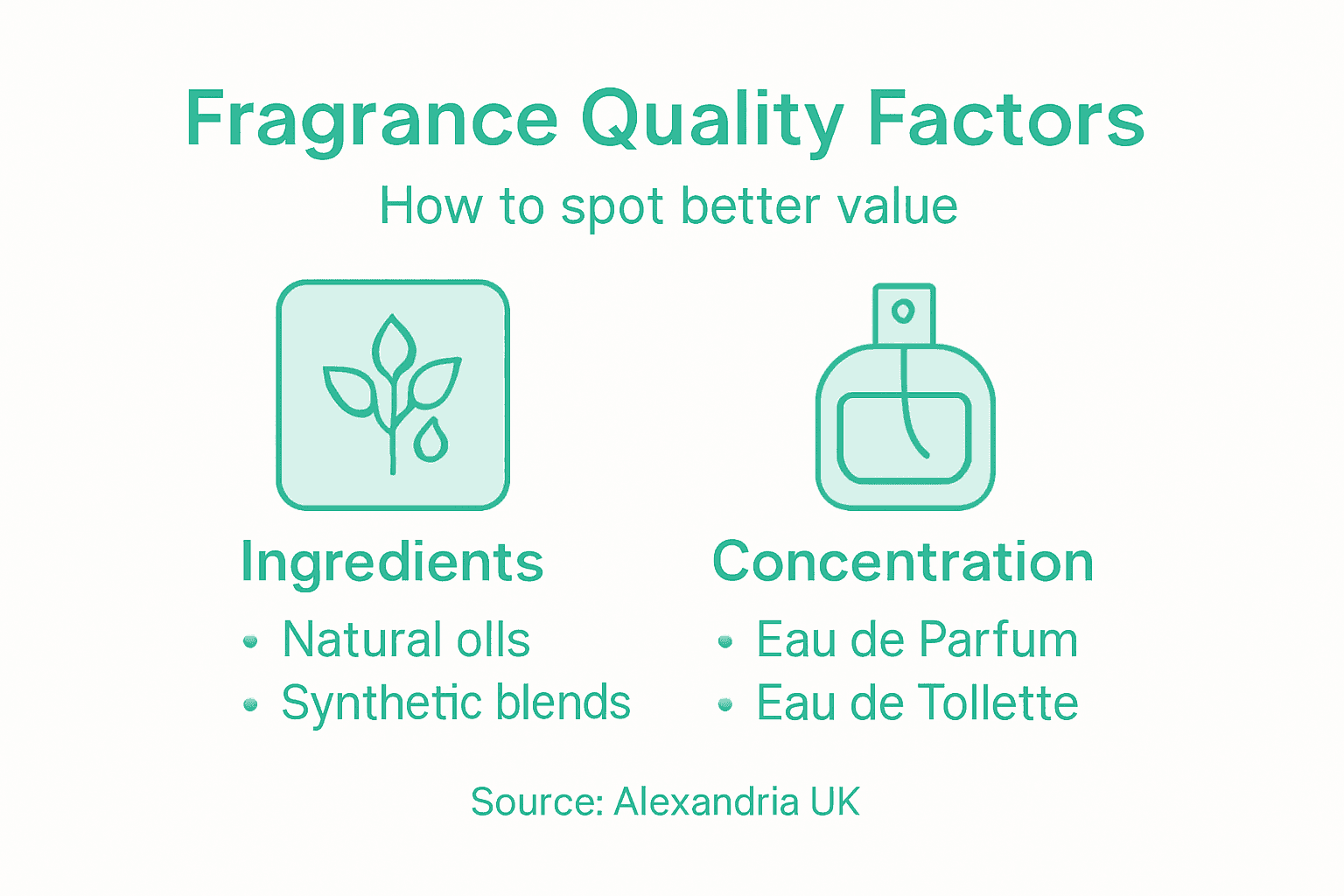
Below is a summary of key factors that influence fragrance longevity and value:
| Factor | Impact on Longevity | Role in Value Assessment |
|---|---|---|
| Oil Concentration | Higher means longer wear | Justifies higher price |
| Raw Material Quality | Enhances scent richness | Determines actual luxury |
| Sillage | Strong sillage lasts longer | Increases perceived value |
| Skin Chemistry | Personal variation in wear | Requires individual testing |
The formulation process itself reflects quality considerations that distinguish exceptional fragrances from adequate ones. Professional perfumers balance top, middle, and base notes using precise measurements and careful ingredient selection to create fragrances that evolve beautifully rather than fragmenting into disconnected scent experiences. Unisex fragrances specifically demand exceptional formulation skill because they must appeal to diverse preferences without relying on gender stereotypes. A well-formulated unisex fragrance features smooth transitions between note stages, complementary ingredient combinations that enhance rather than compete with each other, and a logical progression that feels intentional rather than accidental. When you encounter fragrances featuring thoughtful ingredient lists, recognisable botanical components, and clear olfactory direction, you’re experiencing the results of skilled formulation. Quality standards in the United Kingdom ensure that fragrance formulations meet safety and regulatory compliance requirements, protecting consumers whilst permitting innovative compositions. This regulatory framework means that certified fragrances have undergone rigorous testing for safety and efficacy. Always check whether a fragrance carries appropriate compliance certifications, as this demonstrates the producer’s commitment to meeting established quality standards.
Pro tip: Request fragrance samples before committing to full-size purchases, allowing you to test formulation quality through longevity and evolution on your skin chemistry over several hours.
Comparing Affordable Dupes And Originals
The fragrance market offers consumers a genuine choice between original designer fragrances and affordable dupe alternatives, yet understanding the distinctions between these options requires nuance rather than dismissal of either category. A dupe fragrance attempts to replicate the scent profile of an established original through different ingredient combinations and formulations. This isn’t inherently deceptive. Many dupes are openly marketed as alternatives, allowing budget conscious fragrance enthusiasts to experience similar olfactory profiles without luxury brand pricing. However, the comparison between dupes and originals extends far beyond scent similarity. Original fragrances from established houses typically benefit from decades of expertise, access to rare raw materials, and investment in research and development that results in sophisticated formulations. They’ve undergone rigorous testing, quality assurance protocols, and regulatory compliance verification. Dupes, conversely, vary dramatically in quality depending on the manufacturer. Some affordable alternatives deliver genuinely impressive results at a fraction of the cost, whilst others prioritise scent replication over longevity, sillage, or formulation stability. The fragrance market dynamics, shaped by ingredient sourcing and supply chain competition, influence availability and pricing of both categories, affecting the value proposition each offers.
When comparing specific fragrances, performance characteristics matter as much as scent similarity. An original Eau de Parfum with twenty percent fragrance concentration will typically outlast a dupe Eau de Toilette containing eight percent concentration, regardless of how closely the scent profiles match initially. Original fragrances often feature superior ingredient quality, which translates to better longevity, more complex evolution throughout the wear experience, and greater sillage. A dupe might capture the top notes brilliantly but fail to replicate the sophisticated middle and base notes that give the original its distinctive character. Additionally, originals generally maintain consistent formulation across batches and over time, whilst dupe quality can fluctuate depending on ingredient availability and manufacturing standards. Consider also that many original fragrances are unisex compositions designed with broad appeal in mind, whereas dupes frequently target specific gender demographics, potentially limiting their versatility. The regulatory environment protecting consumers includes safety standards for fragrance formulations, which established brands consistently meet, whilst some affordable alternatives may operate in jurisdictions with less rigorous oversight. This doesn’t automatically mean dupes are unsafe, but it does mean you’re accepting greater uncertainty regarding ingredient safety and formulation stability.
Value assessment requires personal prioritisation rather than absolute rankings. If you wear fragrances casually and don’t mind reapplying midday, an affordable dupe offering decent scent similarity might represent exceptional value. If fragrance is central to your personal expression and you prefer all day wear without reapplication, investing in a quality original often justifies the premium through superior performance and lasting satisfaction. Budget conscious UK fragrance enthusiasts might find that mid range alternatives offer genuine value between budget dupes and luxury originals, delivering respectable performance without luxury pricing. Testing both categories reveals that comparing quality and performance across dupe and original options helps you make informed decisions based on your specific needs rather than price alone. Some wearers discover they prefer certain dupes for specific occasions because they perform adequately whilst allowing them to reserve expensive originals for situations where they want maximum impact. Others find that original fragrances deliver such superior experiences that the investment becomes non negotiable. The distinction isn’t about snobbery. It’s about understanding that different products serve different purposes and that informed choice beats uninformed assumptions. Quality unisex fragrances exist across both categories, but understanding performance differences, regulatory compliance, and ingredient sourcing helps you identify whether a specific dupe or original justifies its price within your personal fragrance strategy.
Pro tip: Test dupes and originals side by side on separate wrists during the same session, then assess longevity and evolution over eight hours to genuinely understand whether scent similarity translates to satisfactory performance for your lifestyle.
Avoiding Common Perfume Selection Mistakes
Fragrance selection mistakes often stem from impulse decisions made without proper testing or consideration of how fragrances perform on individual skin chemistry. The most pervasive error involves purchasing a fragrance based solely on how it smells on a paper tester or in the bottle without experiencing it on your actual skin. Fragrances interact unpredictably with body chemistry, skin pH, and natural oils, meaning a scent that smells magnificent in a shop might transform entirely once applied to your wrists. This chemical interaction explains why identical fragrances perform differently on different people and why recommendations from friends don’t always translate to personal satisfaction. Another common mistake involves testing multiple fragrances in quick succession without allowing adequate time between applications. Your olfactory system becomes fatigued after encountering several scents, making it increasingly difficult to perceive differences accurately. If you test five fragrances in ten minutes, the fifth one will smell distorted simply because your nose is overwhelmed. Rather than shopping hastily, experienced fragrance enthusiasts test one or two fragrances, wait at least fifteen minutes, sniff coffee grounds to reset their olfactory palette, and then test another fragrance. Additionally, many shoppers ignore the importance of authenticity verification. Purchasing from unauthorised retailers, particularly online, risks acquiring counterfeit fragrances that not only deliver inferior performance but may contain unsafe ingredients. Understanding UK cosmetic safety regulations and product compliance requirements helps you identify legitimate sellers and verify that fragrances meet established safety standards.
Price confusion represents another significant selection mistake. Many assume that expensive fragrances automatically provide superior quality or that budget fragrances must be inferior. This simply doesn’t reflect reality. A mid range unisex fragrance from a quality focused brand often outperforms a luxury fragrance poorly suited to your preferences. Conversely, some budget fragrances deliver surprising quality, whilst others disappoint despite modest pricing. Rather than using price as a proxy for quality, focus on fragrance concentration, ingredient transparency, longevity expectations, and personal preference alignment. Another mistake involves selecting fragrances based entirely on marketing narratives or celebrity endorsements rather than personal testing. Marketing campaigns craft compelling stories about fragrances, but these narratives describe the perfumer’s intentions, not necessarily how the fragrance will interact with your chemistry or suit your lifestyle. A fragrance marketed as “bold and masculine” might smell wonderfully unisex on you, or a “romantic floral” might feel inappropriately heavy for your daytime wear preferences. Testing before committing prevents expensive disappointments stemming from marketing persuasion rather than genuine suitability. Many fragrance enthusiasts also make the mistake of purchasing full sized bottles without proper trial periods. Testing fragrances thoroughly before committing to full bottles through samples or decants allows you to assess longevity, how the fragrance develops throughout the day, and whether the investment justifies the cost.
Seasonal mismatch represents a frequently overlooked error. Heavy, warm fragrances feel oppressive in summer, whilst fresh, light compositions feel insubstantial in winter. However, this doesn’t mean you need separate collections for each season. Instead, it means understanding how temperature and climate affect fragrance performance. A fresh citrus fragrance might work year round if you genuinely enjoy its profile, as long as you accept reduced longevity in warmer weather. Similarly, a sophisticated gourmand composition can work seasonally when you need that particular experience. The mistake isn’t wearing seasonal fragrances incorrectly but rather expecting fragrances to perform identically regardless of environmental conditions. Another critical error involves neglecting to consider fragrance versatility for your actual lifestyle. If you work in conservative office environments, an extremely bold or polarising fragrance might create complications. If you spend significant time outdoors or in active environments, expecting an Eau de Cologne to provide all day wear is unrealistic. Aligning fragrance choices with how you actually spend your time prevents selecting fragrances that sound appealing theoretically but feel impractical daily. Finally, many shoppers make the mistake of assuming that unisex fragrances represent compromises rather than intentional compositions offering genuine distinction. Quality unisex fragrances are designed for broad appeal through sophisticated structure and balanced note compositions, not through diluting character into blandness. Understanding this distinction prevents dismissing entire categories based on misconceptions about what unisex fragrances offer.
Pro tip: Always request samples or purchase decants before committing to full sized bottles, testing them across multiple days and varying situations to ensure the fragrance genuinely suits your chemistry and lifestyle requirements.
Discover Unisex Fragrances That Truly Reflect Your Unique Style
Navigating the world of unisex fragrances can be challenging with myths around quality, value, and scent profiles clouding your choices. If you are seeking exceptional formulations that combine lasting quality with genuine distinction, you are not alone. Whether you desire fragrances that evolve gracefully on your skin or affordable dupes that deliver real performance, understanding these elements helps you avoid common mistakes and find scents that resonate personally and universally.
Explore our carefully curated collection at Alexandria UK, where you will find a stunning range of fragrances inspired by quality originals and expertly crafted dupes. Take the next step today and experience the difference of scents designed with sophisticated balance and authentic ingredients. Visit our homepage now and embrace a fragrance journey that honours your individual chemistry and lifestyle preferences.
Frequently Asked Questions
What defines a unisex fragrance?
A unisex fragrance is designed to appeal to all genders, featuring scent compositions that transcend traditional masculine or feminine categories. They are carefully crafted to evoke universal emotional responses through various fragrance notes.
How do I choose a quality unisex fragrance?
To select a quality unisex fragrance, consider the concentration of fragrance oils, the calibre of raw materials used, and the expertise of the perfumer. Look for transparency regarding ingredient sourcing and opt for fragrances that maintain consistent formulation across batches.
What common myths exist about unisex fragrances?
Common myths about unisex fragrances include the belief that they lack depth or character, must smell neutral, or compromise on quality. In reality, many unisex fragrances are complex and can be bold while still appealing universally, and quality often depends on ingredient quality rather than marketing categorisation.
How do scent notes influence the appeal of unisex fragrances?
Scent notes play a crucial role in the appeal of unisex fragrances. Notes like citrus, woody, and fresh scents are perceived as universally appealing, while combinations of various notes can create balanced fragrances that resonate well across different demographics.