How to Store Perfume for Lasting Fragrance Quality
Choosing the wrong spot for your perfumes can leave even the best scents flat and disappointing before their time. For British fragrance lovers who crave affordable yet quality finds, proper storage is about more than tidiness—it is vital for enjoying a perfume’s full life and character. Drawing from expert guidance, this guide reveals how a cool, light-protected location not only preserves your favourite bottles but also ensures every spray smells as good as the day you bought it.
Table of Contents
- Step 1: Choose An Optimal Storage Location
- Step 2: Control Light, Temperature And Humidity
- Step 3: Arrange Bottles For Easy Access And Safety
- Step 4: Protect Perfumes From Daily Handling
- Step 5: Check Fragrance Quality Regularly
Quick Summary
| Essential Insights | Detailed Descriptions |
|---|---|
| 1. Store in a cool, dark place | Choose a stable environment away from humidity and sunlight to prolong your perfume’s life. |
| 2. Manage light, temperature, humidity | Control these factors to prevent degradation; ideal conditions are 15-20°C and 40-60% humidity. |
| 3. Organise for accessibility | Arrange bottles with adequate space and stability to prevent accidents and help find your fragrances easily. |
| 4. Seal bottles tightly after use | Always cap your perfume immediately to reduce exposure to air and preserve scent quality. |
| 5. Regularly check your fragrances | Inspect for colour changes or altered scents to identify degradation early and take necessary action. |
Step 1: Choose an optimal storage location
Where you store your perfume makes an enormous difference to its longevity and performance. Your chosen location will either protect your fragrance or slowly degrade it, so this decision deserves your careful attention. Think of your perfume collection as something that requires a stable, protected environment rather than a spot that’s convenient simply because it happens to be nearby.
The ideal storage location sits cool, dark, and away from direct sunlight. Your bathroom cabinet might seem logical, but the humidity and temperature fluctuations there are actually your fragrance’s worst enemies. A bedroom wardrobe, hallway cupboard, or dedicated shelving in a cool corner of your home works far better. Light damage happens remarkably fast, particularly with lighter coloured fragrances that can visibly change shade within weeks of sun exposure. Heat accelerates chemical degradation, breaking down the delicate aromatic compounds that give your perfume its character. According to chemical storage principles, substances should be stored away from direct heat sources, moisture, and light to prevent degradation, which applies directly to how you should approach fragrance preservation.
Consider the temperature stability of your chosen spot as well. Avoid areas near radiators, heated vents, or external walls that experience significant temperature swings between seasons. Your perfumes respond to temperature changes by expanding and contracting slightly, which can stress the bottle seal and allow tiny amounts of fragrance to evaporate over time. A consistent environment at around 15 to 18 degrees Celsius is genuinely ideal, though most home locations between 10 and 25 degrees Celsius will serve your collection acceptably. If you live in a warmer climate or have limited cool storage options, simply choose the coolest, darkest space available to you.
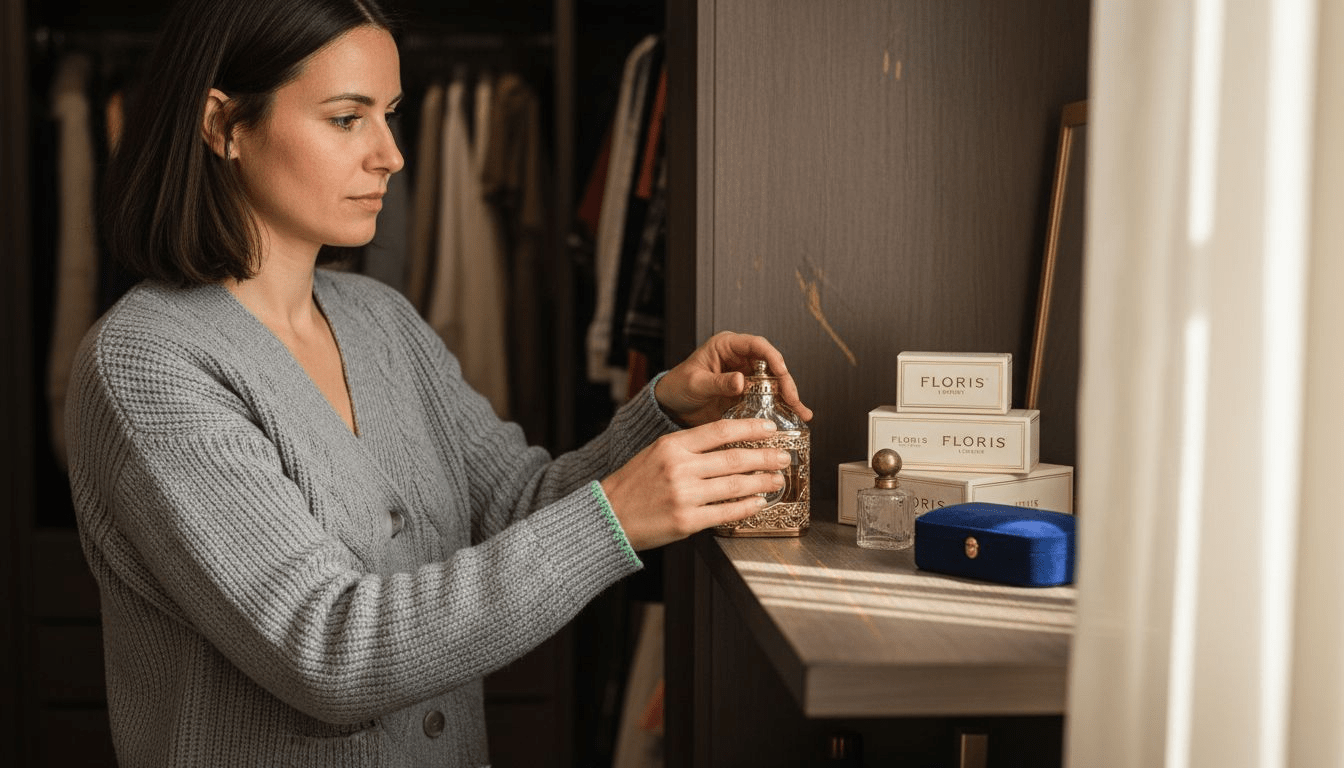
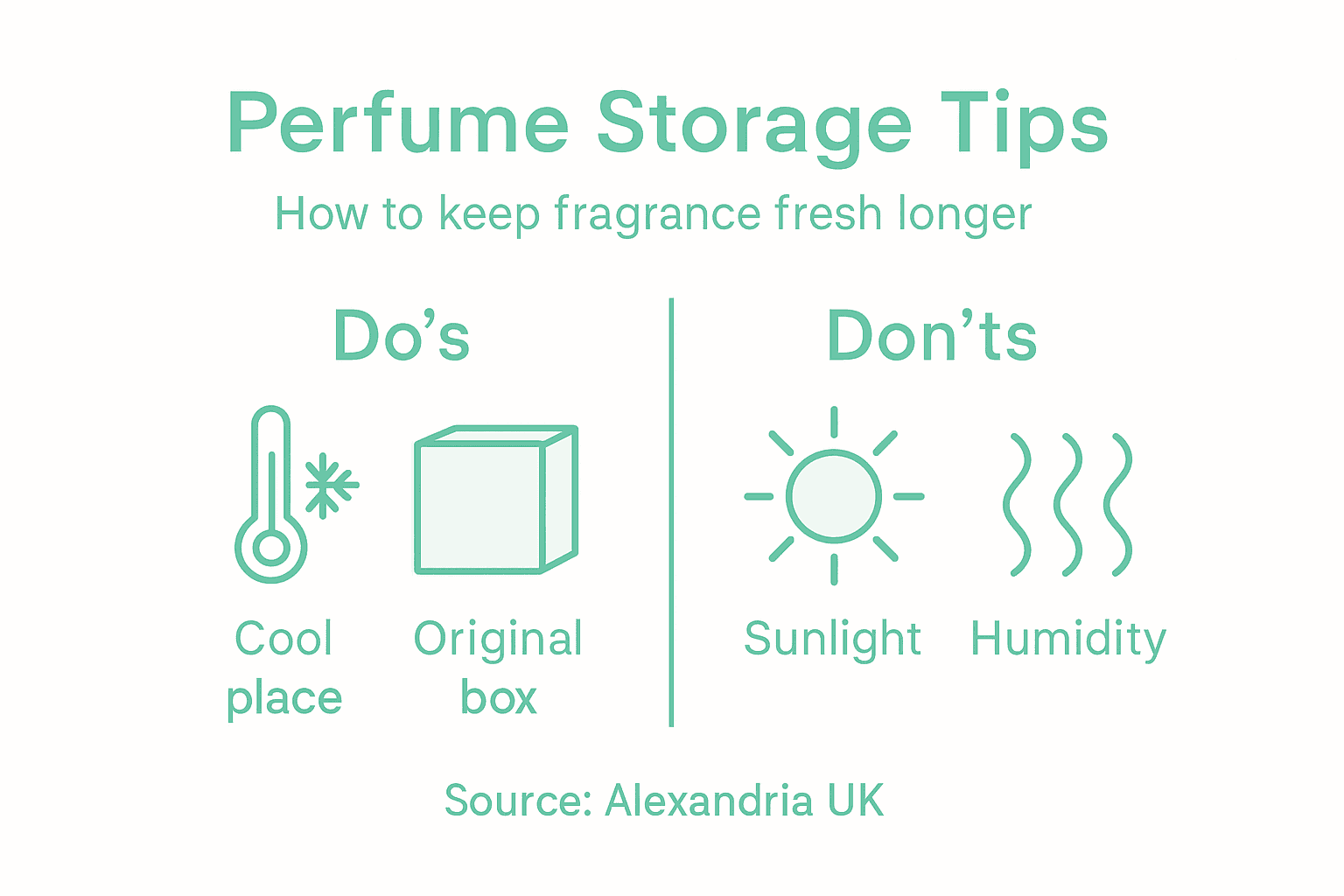
Professional tip Store your fragrances in their original boxes within a closed cupboard or drawer, as the packaging provides an additional protective layer against light exposure and helps maintain stable internal conditions around your bottles.
Step 2: Control light, temperature and humidity
Now that you’ve chosen your storage location, the next challenge is managing the three environmental factors that genuinely matter. Light, temperature, and humidity work together to either preserve your fragrance or break it down molecule by molecule. Each one demands your attention because they operate constantly, even when you’re not thinking about your collection.
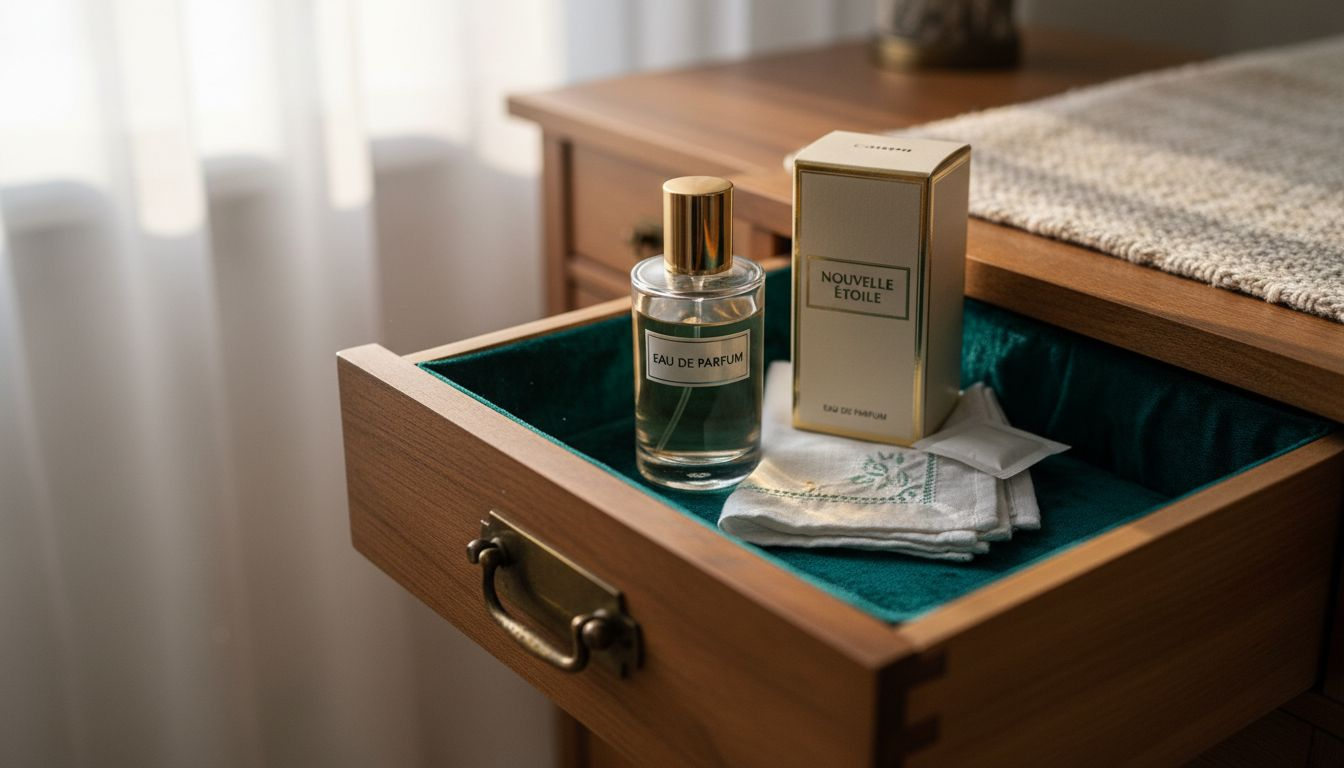
Light exposure is perhaps the most visually obvious culprit. Ultraviolet rays penetrate clear glass bottles and chemically alter the fragrance compounds inside, causing oxidation and colour changes that signal degradation has begun. Store your perfumes in opaque containers or keep them in their original boxes, which typically feature protective dark cardboard or frosted glass. If your cupboard or drawer receives any natural light, simply closing the door solves the problem completely. Artificial light rarely causes issues, but direct sunlight through windows absolutely does, so avoid placing your fragrances on bedroom windowsills or bathroom shelves near windows. According to GHS precautionary statements, keeping chemical containers cool and protected from sunlight and moisture is critical for preservation, which translates directly to your perfume storage strategy.
Temperature consistency matters more than you might think. Fluctuations cause the liquid inside your bottles to expand and contract, stressing the seal and allowing tiny amounts of fragrance to evaporate over time. Aim to keep your storage area between 15 and 20 degrees Celsius, avoiding rooms that experience dramatic seasonal swings or daily temperature changes. Humidity presents its own challenges. Excess moisture can corrode metal sprayers and caps, and it can gradually seep into bottles, diluting your fragrance and encouraging unwanted chemical reactions. A relative humidity level between 40 and 60 percent is ideal. If your home tends towards dampness, consider placing silica gel packets or small containers of uncooked rice inside your storage cupboard to absorb excess moisture. These simple additions work quietly in the background and cost virtually nothing.
Here is a quick reference for the impact of environmental factors on perfume preservation:
| Factor | Positive Practice | Consequence of Neglect | Optimal Range |
|---|---|---|---|
| Light | Store away from sunlight | Rapid oxidation, faded scent | No direct sunlight |
| Temperature | Keep consistently cool | Accelerated chemical change | 15–20°C |
| Humidity | Maintain moderate moisture levels | Corroded caps, diluted scent | 40–60% relative humidity |
Professional tip Avoid storing perfumes in bathrooms entirely, as the warm, humid air from showers creates the worst possible environment for fragrance preservation, even if your cabinet door stays closed.
Step 3: Arrange bottles for easy access and safety
How you physically organise your perfume collection matters more than most people realise. A well-arranged display prevents accidents, makes selecting fragrances effortless, and allows you to monitor your collection at a glance. Poor arrangement leads to forgotten bottles buried at the back, damaged caps from crowding, and the real risk of bottles toppling and breaking.
Start by selecting appropriate shelving or storage units that keep your bottles visible and stable. Acrylic boxes or clear organisers work brilliantly because they let you see everything without opening drawers, whilst also protecting bottles from dust and minor knocks. Avoid overstuffing shelves or drawers, as cramped spacing makes bottles harder to remove safely and increases the risk of them tipping over. Leave enough space between each bottle that you can comfortably grasp one without disturbing its neighbours. According to perfume storage solutions, organising fragrances by preference, seasonality, or scent type can enhance accessibility whilst keeping bottles visible and preventing overcrowding. Consider arranging lighter fragrances towards the front and heavier, darker scents towards the back, which mirrors how many people mentally categorise their collection anyway.
Arrange your bottles with the caps facing upward and standing fully upright rather than tilted or leaning. This simple positioning reduces stress on the bottle neck and cap seal, preventing slow leaks that you might not notice until fragrance has already escaped. If you’re storing bottles on multiple shelves, position heavier items on lower shelves where they’re more stable and less likely to cause catastrophe if dropped. Use non slip trays or small rubber mats on shelving to prevent bottles from sliding when you open and close drawers or if someone bumps the unit accidentally. Ensure your storage area is away from high traffic zones where family members or pets might accidentally knock shelves. Take a moment to step back and examine your arrangement visually, identifying any bottles in precarious positions that could topple with minimal disturbance.
Professional tip Photograph your collection and keep a digital list organised by fragrance type or season, which transforms selection time from a guessing game into a quick, confident decision.
Step 4: Protect perfumes from daily handling
Your perfume bottles face their greatest risks during everyday use. Every time you remove a cap, spray, and replace it, you expose the fragrance to air, light, and temperature fluctuations. Daily handling also increases the chance of accidental drops, spills, or contamination that can damage your collection irreversibly. Protecting your bottles during regular use requires deliberate habits and awareness.
Start by always keeping your perfume bottles tightly sealed when not actively wearing them. The moment you finish applying your fragrance, cap the bottle immediately rather than leaving it sitting open on your dressing table. This seemingly small action prevents evaporation, which happens faster than most people realise. Oxygen slowly oxidises fragrance compounds, changing both the scent profile and colour over time. Keeping containers tightly closed prevents evaporation and contamination, which is why religious attention to sealing your bottles delivers measurable benefits. When you do handle your bottles, grip them by the base or body rather than by the cap or atomiser head, which reduces pressure on the seal and minimises the risk of accidentally loosening it. If you’ve purchased a particularly treasured fragrance, consider storing it in its original protective case between wearings rather than leaving it on display.
Minimise unnecessary handling whenever possible. Avoid frequently opening bottles just to sniff them, as this exposes the fragrance multiple times unnecessarily. Instead, open your bottle, apply, and close it in one smooth motion. If you travel regularly with your fragrances, invest in protective travel cases or padded pouches that cushion bottles against impact and temperature changes. These are inexpensive insurance policies against expensive accidents. Never leave perfume bottles where children or pets can access them, as curious hands or paws can cause spills or broken glass. Store your collection in a dedicated cupboard or drawer that you control, keeping handling to only what’s necessary for your actual fragrance use. By treating your bottles with care during daily handling, you preserve both the fragrance quality and the physical integrity of your collection.
Professional tip Use the types of perfume bottles article to understand which atomiser designs are most prone to leaking, helping you identify bottles that need extra protection during handling.
Step 5: Check fragrance quality regularly
Your perfume collection deserves periodic inspection to catch signs of degradation before they become irreversible. Quality doesn’t remain static once you’ve purchased a bottle. Time, environmental exposure, and normal chemical processes gradually alter your fragrances, and spotting these changes early lets you know whether a bottle is still in its prime or approaching the end of its usable life. Regular checks take only minutes but provide invaluable peace of mind about your investment.
Start by examining each bottle visually every few months. Hold it up to natural light and observe the colour carefully. Quality fragrances should maintain consistent colour throughout their life, so any darkening, cloudiness, or unexpected colour shifts signal that oxidation or contamination may have occurred. Clear fragrances should remain transparent, whilst darker scents should maintain their original shade. Next, uncap the bottle and take a careful sniff. Does the fragrance smell as you remember it, or has the scent profile altered noticeably? Changes might include loss of top notes, unexpected sour or off odours, or a general dulling of brightness. These sensory clues tell you far more than you might expect. According to fragrance quality standards, regularly inspecting perfumes for changes in colour, smell, or consistency can indicate degradation and help maintain awareness of any chemical changes. Also check the consistency by tilting the bottle gently. The liquid should flow naturally without appearing unusually thick or thin. If you notice the atomiser has become stiff or sprays inconsistently, this may indicate that some evaporation or crystallisation has occurred inside the bottle.
Keep a simple record of your fragrances by writing the purchase date on the bottom or back of each bottle with a permanent marker. This reference point helps you assess whether any observed changes align with normal ageing or signal premature deterioration. If a fragrance shows obvious signs of turning, such as visible colour changes or distinctly altered scent, it may be nearing the end of its usable life and should be prioritised for use. Fragrances that have been stored perfectly and show no signs of degradation can safely last several years, whilst poorly stored bottles might decline noticeably within months.
The following table outlines common signs that your perfume requires attention and what action to take:
| Observed Sign | Possible Cause | Suggested Action |
|---|---|---|
| Colour darkening | Oxidation or ageing | Use soon or discard |
| Change in scent | Heat/light exposure | Review storage methods |
| Thicker consistency | Evaporation or crystallisation | Replace bottle if performance suffers |
| Weak spray | Blocked atomiser | Clean or use a new atomiser |
Professional tip When testing fragrance quality, compare your stored bottles side by side with a freshly purchased duplicate if possible, as this direct sensory comparison makes subtle degradation far more obvious than evaluating a single bottle in isolation.
Preserve Your Perfume Investment with Expert Storage and Quality Fragrances
Properly storing your perfume safeguards its delicate aromatic compounds from heat, light, and humidity that can quickly degrade its quality. If you have struggled with fading scents or colour changes despite careful storage, you are not alone. Many perfume lovers recognise the frustration of losing precious fragrance notes due to poor environmental conditions or daily handling. At Alexandria UK, we understand these challenges and offer a curated selection of high-quality perfumes and dupes designed to deliver lasting fragrance brilliance when paired with smart storage practices.
Explore our exclusive collection at Alexandria UK and transform how you experience your scents. Whether you are replacing a bottle showing signs of ageing or seeking a fresh fragrance to rotate through your organised collection, our range focuses on quality and longevity. Act now to invest in perfumes that stand the test of time and delight your senses every day. Visit us today and discover how you can confidently protect and enjoy your fragrance treasures with ease.
Frequently Asked Questions
How should I choose a storage location for my perfumes?
To enhance the longevity of your fragrances, select a cool, dark place away from direct sunlight. Avoid bathrooms due to humidity; instead, consider a bedroom wardrobe or dedicated shelving.
What temperature range is best for storing perfumes?
Perfumes should ideally be stored at a consistent temperature between 15 and 20 degrees Celsius. Aim to avoid rooms with significant temperature fluctuations, such as those near radiators or external walls.
How can I protect my perfumes from light exposure?
Store your perfumes in opaque containers or keep them in their original boxes to shield them from light. Ensure they are placed in a cupboard that doesn’t receive natural light to prevent degradation due to UV rays.
What should I do to maintain optimal humidity levels for my perfume collection?
Maintain a relative humidity level between 40 and 60 percent to prevent moisture damage. Consider placing silica gel packets or uncooked rice in your storage area to absorb excess humidity.
How often should I check the quality of my perfumes?
Inspect your perfumes visually and by scent approximately every few months. Look for colour changes or unusual scents, which may suggest that the fragrance has degraded, and assess whether to use or discard affected bottles.
What actions should I take if a perfume bottle shows signs of degradation?
If you notice darkening colours or altered scents, it’s best to use the fragrance soon or consider discarding it. Keep track of purchase dates on the bottles to help identify when deterioration occurs.