

Fragrance Sampling Process: Smarter Perfume Choices
Finding a perfume that truly suits you can feel overwhelming, especially when high-quality fragrances come at a premium. For British fragrance lovers who value both affordability and quality in their quest for the best dupes, effective fragrance sampling is the secret to making confident and informed choices. By harnessing proven sampling methods and understanding how scents evolve on your unique skin, you can avoid costly mistakes and discover hidden gems that genuinely match your style and budget.
Table of Contents
- What Is Fragrance Sampling? Key Principles
- Types Of Fragrance Samples Explained
- How To Test Perfume Like An Expert
- The Role Of Skin Chemistry In Scent Testing
- Avoiding Common Mistakes And Misjudgements
Key Takeaways
| Point | Details |
|---|---|
| Fragrance Sampling Importance | Proper fragrance sampling allows for informed decisions by evaluating scents over time, factoring in skin chemistry. |
| Types of Samples Matter | Understanding different sample types (spray, vial, blotter) helps set appropriate expectations for testing. |
| Controlled Testing Conditions | Conduct tests in consistent environments and document observations to achieve accurate assessments of fragrances. |
| Skin Chemistry Impact | Individual skin chemistry significantly alters fragrance performance, so personal testing is essential for accurate results. |
What Is Fragrance Sampling? Key Principles
Fragrance sampling is the practice of testing perfumes before committing to a full-size purchase, allowing you to experience how a scent develops on your skin over time. It’s fundamentally different from spraying yourself with a tester in a shop for thirty seconds. When you sample a fragrance properly, you’re conducting a personal chemistry experiment—discovering whether the top notes enchant you, whether the heart truly resonates, and most crucially, whether the base notes remain compatible with your skin chemistry after several hours. This methodical approach transforms fragrance shopping from an impulse-driven gamble into an informed decision-making process.
At its core, effective fragrance sampling rests on several key principles. The first involves understanding fragrance composition—knowing that most perfumes unfold in three distinct stages (top, heart, and base notes) helps you evaluate whether a scent is genuinely suited to you or merely impressive in the opening moments. The second principle centres on minimising exposure risks whilst sampling, which means using proper techniques to apply small quantities and controlling exposure at the source rather than overwhelming yourself with excessive application. The third principle demands consistency in your testing environment—sampling the same fragrance under different conditions (humidity levels, room temperature, time of day) can yield vastly different results, so controlling these variables ensures reliable assessments. Finally, safety assessment standards matter significantly; reputable fragrance brands follow International Fragrance Association Standards that guarantee the compounds used are safe for skin contact and have been properly evaluated for potential allergic reactions.
Understanding why people sample fragrances reveals the practical wisdom behind this approach. UK fragrance enthusiasts particularly appreciate sampling because it allows you to discover high-quality dupes and affordable alternatives before spending £40 to £80 on a full bottle. You can test whether a specific dupe genuinely captures the essence of a luxury fragrance without the investment risk. Moreover, sampling helps you avoid costly mistakes—those fragrances that smell divine in the bottle but develop into something unpleasant after two hours on your skin. When you sample correctly, you’re gathering firsthand evidence about longevity, sillage (how far the scent projects), and skin chemistry compatibility. This isn’t about being overly cautious; it’s about making smarter purchasing decisions that align with both your budget and your genuine preferences.
Pro tip: Always sample fragrances on pulse points where your skin is warmest (wrist, inner elbow, behind the ears), as heat amplifies scent development and gives you the most realistic preview of how the fragrance will actually perform throughout your day.
Types Of Fragrance Samples Explained
Fragrance samples come in several distinct varieties, each serving a particular purpose in your journey towards smarter perfume choices. Understanding these different types helps you know exactly what you’re testing and why it matters. The main categories include spray samples, vial samples, blotter strip samples, and direct application samples, each offering unique advantages depending on how you want to evaluate a fragrance. Rather than treating all samples the same, recognising which type you’re holding allows you to set appropriate expectations for the testing experience.
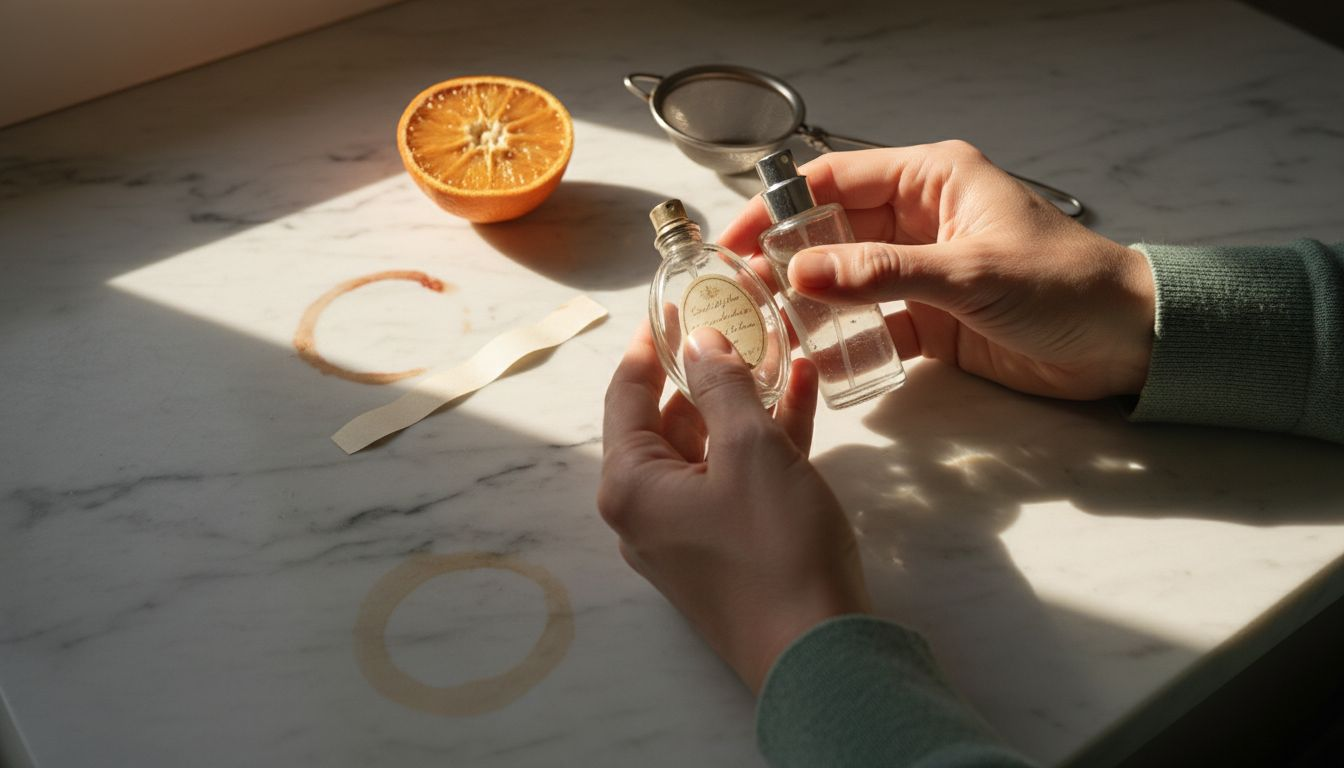
Spray samples are perhaps the most common format you’ll encounter. These small atomisers (typically 2 to 5 millilitres) dispense fragrance in a controlled mist, mimicking how a full-size bottle performs on your skin. Vial samples, by contrast, are tiny glass bottles without spray mechanisms, requiring you to apply the fragrance directly to your skin or a testing surface. Blotter strips are absorbent paper pieces designed to hold fragrance without skin contact, useful if you want to evaluate scent composition without the interference of your personal skin chemistry. Essential oils and aroma chemicals used in samples must undergo rigorous safety assessments, particularly when evaluating their chemical compositions and potential allergenic effects, ensuring whatever you’re testing meets industry standards. Each sample type reveals different information—spray samples show longevity and sillage, vial samples demonstrate how a fragrance interacts with your unique skin, and blotter strips isolate the fragrance composition itself.
To clarify how different fragrance sample types serve various testing goals, see this comparison:
| Sample Type | Typical Volume | Best Use Case | Advantages |
|---|---|---|---|
| Spray Sample | 2–5 millilitres | Everyday wear, longevity assessment | Closely replicates full-size bottle application |
| Vial Sample | 1–2 millilitres | Detailed personal skin evaluation | Allows for skin chemistry tests on specific areas |
| Blotter Strip | Varies | Comparing multiple fragrances quickly | Avoids skin interference, ideal for note isolation |
| Direct Application | Varies | Assessing oil-based perfumes | Useful for niche or oil-heavy fragrances |
Beyond these physical formats, fragrance samples are often categorised by their intended use. Test samples are what you’ll typically receive from retailers or purchase for personal evaluation before buying full-size bottles. Trade samples are professional-grade samples used by fragrance consultants and industry experts to compare offerings or conduct business assessments. Production samples serve quality control purposes during manufacturing, ensuring consistency batch to batch. For someone seeking expert sampling techniques for quality dupes, understanding these categories clarifies what you’re working with and how to extract maximum insight from each sample type. Many UK fragrance enthusiasts find that mixing sample types yields the best understanding—using spray samples for everyday wear testing, vial samples for detailed analysis, and blotter strips for comparing multiple fragrances back-to-back without olfactory fatigue.
Pro tip: Keep spray and vial samples in a cool, dark cupboard away from direct sunlight, as exposure to heat and light degrades fragrance compounds, giving you inaccurate test results and wasting your samples.
How To Test Perfume Like An Expert
Testing perfume like an expert means abandoning casual sniffing and embracing a structured, methodical approach that yields genuine insights about fragrance quality and longevity. The difference between casual testing and expert-level evaluation comes down to consistency, documentation, and understanding what you’re actually evaluating. When you test systematically, you’re not just smelling different fragrances—you’re conducting a sensory assessment that accounts for skin chemistry, environmental factors, and fragrance development over time. This rigorous approach transforms your sampling sessions from pleasant experiences into data-gathering missions that inform smarter purchasing decisions.
The foundation of expert perfume testing rests on creating controlled testing conditions. This means selecting a consistent time of day (morning testing before showering is ideal, as your skin is clean and your sense of smell is sharpest), maintaining a neutral room temperature, and avoiding overwhelming your olfactory system with other scents beforehand. Structured testing methods involving sniffing samples in controlled environments, taking detailed notes, and comparing fragrance components systematically help you discern subtle variations that casual testers miss. Rather than spraying multiple fragrances simultaneously and creating a confusing sensory blend, experts test one fragrance at a time, waiting at least 15 minutes between applications to allow your nose to reset. Document what you observe at each stage—the initial burst of top notes, the heart that emerges after 5-10 minutes, and the base notes that reveal themselves after several hours. Include sensory descriptors (fruity, woody, vanilla-based), longevity observations (does it fade after 2 hours or last 8 hours?), and sillage assessment (how far does the scent project from your body?). For someone interested in testing multiple perfumes for lasting quality, this documentation becomes invaluable when comparing options weeks later.
Expert testing also demands understanding what makes a fragrance perform well on your specific skin. Your personal skin chemistry—influenced by pH, natural oils, and even diet—affects how a fragrance develops. This is why a scent that smells divine in the bottle might turn sour on your wrist, or why a fragrance your friend adores seems pedestrian on you. Test fragrances on clean skin without competing products (lotions, other perfumes, deodorants), and always test on the same body area during your evaluation session. Additionally, recognise that fragrance perception changes with exposure—after 15 minutes of wearing a scent, your nose becomes accustomed to it through a process called olfactory adaptation. This doesn’t mean the fragrance faded; it means you’ve stopped consciously detecting it. Asking someone nearby whether they can still smell your sample provides objective feedback about actual sillage versus perceived sillage.
Pro tip: Create a simple testing spreadsheet or notebook documenting fragrance name, sample date, top notes observed, heart notes, base notes, longevity hours, sillage level, and your overall impression—this reference becomes invaluable when you’re deciding between dupes months later.
The Role Of Skin Chemistry In Scent Testing
Your skin chemistry is arguably the most influential factor determining how a fragrance actually performs on you, yet many casual testers overlook this entirely. When you apply a perfume sample, you’re not simply placing a fragrance onto an inert surface. You’re introducing fragrance compounds into a dynamic ecosystem consisting of your skin’s pH level, natural oil production, temperature, and bacterial flora. Each of these elements interacts with the perfume molecules, fundamentally altering how the scent develops, how long it lasts, and whether it smells pleasant or turns slightly off-putting after a few hours. This is precisely why a fragrance that your friend raves about might smell completely different on your skin, or why the same perfume behaves differently on you depending on your stress levels, hormonal cycle, or even what you’ve eaten recently.
Understanding pH balance forms the foundation of comprehending skin chemistry’s role in scent testing. Human skin typically maintains a pH between 4.5 and 5.5 (slightly acidic), but this varies considerably from person to person and even across different areas of your own body. Fragrances are typically formulated within a neutral pH range, and when they encounter your skin’s natural acidity, the fragrance molecules respond differently than they would on a blotter strip or in the bottle. Skin chemistry significantly influences how fragrance compounds interact with your skin, affecting scent diffusion and the potential for allergic reactions. Additionally, natural skin oils (sebum) play a critical role in fragrance longevity. Oily skin tends to hold fragrances longer because the perfume molecules dissolve into and bind with your skin’s natural oils, creating extended wear time. Conversely, dry skin may cause fragrances to fade more rapidly. This explains why someone with naturally oily skin might experience 8 hours of fragrance wear whilst someone with dry skin experiences only 4 hours with the same sample. Skin conditions like eczema or sensitivity also affect testing outcomes significantly, as compromised skin barriers may absorb fragrances differently or trigger unexpected reactions.
Temperature regulation compounds these effects further. Your body’s natural warmth amplifies fragrance diffusion—pulse points like your wrists, inner elbows, and neck area generate more heat, causing fragrance molecules to evaporate faster and project more intensely. This is why applying fragrance to these warm zones produces different results than applying it to cooler areas like your calves. Proper skin preparation minimises variability caused by skin conditions or residues, ensuring your testing reflects genuine fragrance performance rather than quirks of contaminated or compromised skin. Before testing samples seriously, wash the testing area with unscented soap and allow it to dry completely. Avoid applying fragrance over moisturisers, deodorants, or other competing products that create interference. If you’re testing multiple fragrances in one session, cleanse your skin between applications with a damp cloth. For UK fragrance enthusiasts making purchasing decisions between dupes and originals, recognising that your unique skin chemistry creates a personalised fragrance experience means you should trust your own testing results more than anyone else’s reviews or recommendations.
Key variables shaping your fragrance testing results are outlined below:
| Variable | Impact on Scent | How to Control |
|---|---|---|
| Skin pH | Alters fragrance molecule bonds | Test on same body area consistently |
| Natural Skin Oils | Affects longevity and intensity | Avoid skin products before sampling |
| Ambient Temperature | Changes rate of evaporation | Test in a neutral, stable environment |
| Humidity | Modifies scent projection | Choose consistent testing conditions |
Pro tip: Test fragrances consistently on the same day of your menstrual cycle if applicable, as hormonal fluctuations noticeably affect skin chemistry and fragrance perception—this eliminates a major variable that could skew your assessment.
Avoiding Common Mistakes And Misjudgements
Fragrance sampling is deceptively simple on the surface, yet countless testers sabotage their own evaluations through preventable mistakes. The most damaging error involves testing fragrances in a random, unstructured manner without any system or documentation. You might spray five different perfumes on each arm within minutes, creating an olfactory cacophony that makes honest evaluation impossible. Or you might test a fragrance, decide immediately whether you like it, and move on without experiencing the full scent journey across several hours. Using systematic testing approaches with proper protocols, note-taking practices, and adequate time between applications dramatically improves the reliability of your assessments. When you abandon structure, you’re essentially making purchasing decisions based on instinct rather than evidence—precisely what sampling is meant to prevent.
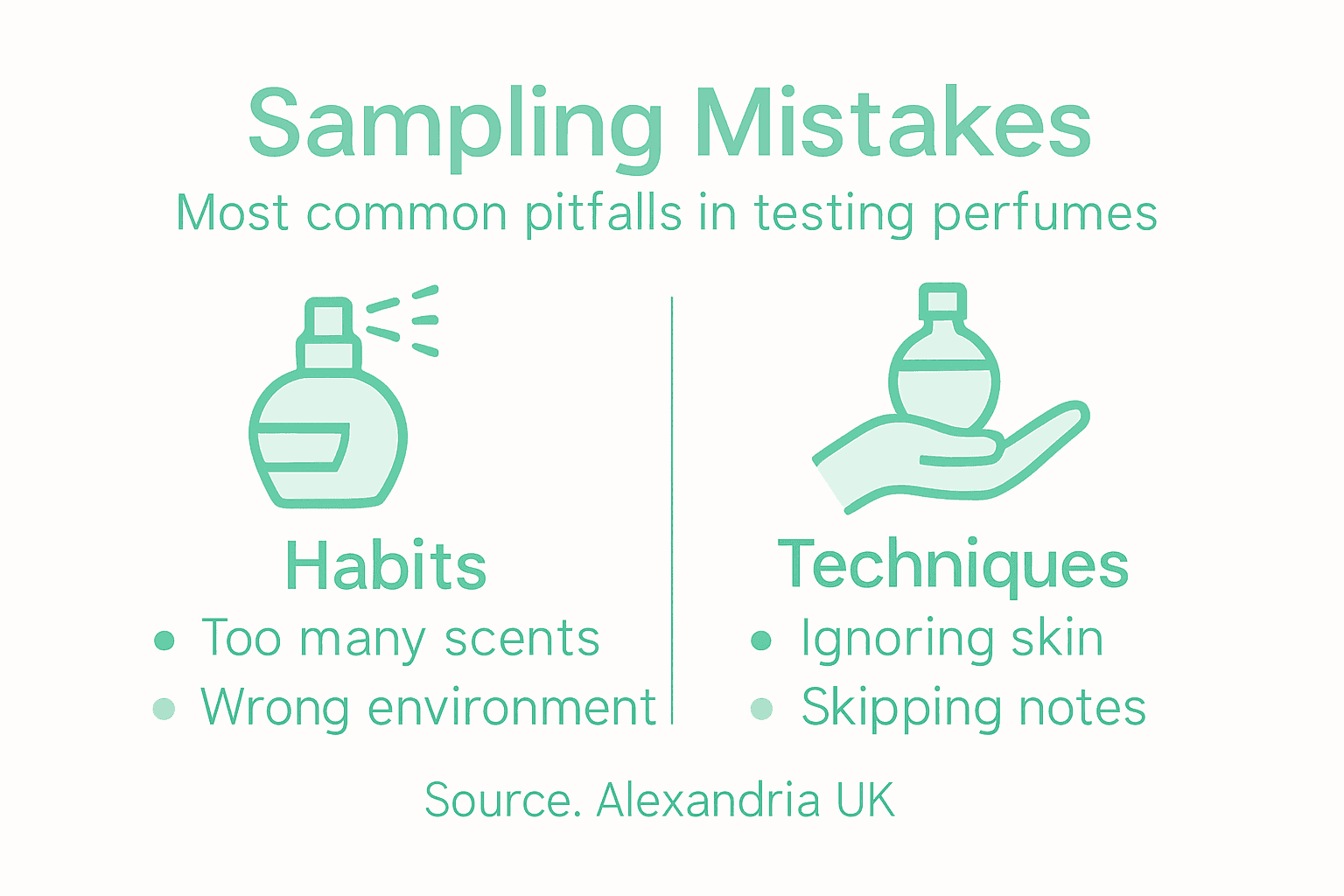
Another critical mistake centres on ignoring olfactory adaptation. Your nose is remarkably clever but also deceptive. After approximately 15 minutes of wearing a fragrance, your olfactory receptors stop actively detecting the scent you’re smelling constantly. This doesn’t mean the fragrance faded or disappeared; it simply means your brain has stopped processing it as a novel stimulus. Many testers misinterpret this natural adaptation as poor longevity or weak sillage, leading them to incorrectly reject fragrances that actually perform excellently. The antidote involves stepping away from the fragrance entirely for 20 to 30 minutes, allowing your nose to reset, then returning to evaluate whether the scent is genuinely still present or truly absent. Additionally, testing multiple fragrances simultaneously creates catastrophic interference. When you apply three different samples within a short timeframe, the fragrance molecules compete for space on your skin, creating a blended scent that bears little resemblance to how any individual fragrance actually smells. Test one fragrance, document your observations thoroughly, cleanse your skin, allow adequate reset time (at least 15 minutes), then proceed to the next sample. Never rush this process simply because you’re excited to evaluate multiple options.
Environmental factors often cause misjudgements that testers fail to recognise. Testing fragrances in a warm, humid bathroom immediately after showering produces entirely different results compared to testing in a cool, dry room. Fragrance molecules evaporate more rapidly in heat and diffuse differently in humidity. Similarly, testing fragrances when you’re stressed, dehydrated, or experiencing congestion alters your scent perception—your olfactory system simply doesn’t function optimally under these conditions. Beyond these physiological factors, many UK fragrance enthusiasts make the mistake of testing new samples immediately after eating strongly aromatic foods like garlic, coffee, or spices. These residual flavours and aromas interfere with your ability to perceive subtle fragrance notes accurately. Finally, avoid the trap of relying solely on initial impressions or top notes. Fragrances are composed of three distinct stages, and a perfume that smells unremarkable in the opening may develop into something truly special after several hours. Give every sample at least 6 to 8 hours of wear time before rendering final judgment.
Pro tip: Create a testing schedule limiting yourself to evaluating no more than three fragrances per session, spacing applications at least 20 minutes apart, and always testing on the same time and day to minimise variables that distort your assessments.
Discover Quality Fragrance Dupes Through Smarter Sampling
Navigating the world of perfume sampling can feel overwhelming without the right guidance. This article highlights the crucial role of skin chemistry, controlled testing conditions and understanding fragrance composition to avoid costly mistakes when choosing scents. If you are looking to make confident perfume purchases and want to explore quality fragrance dupes that suit your unique preferences, you have a trusted partner at Alexandria UK.
Unlock access to expertly curated perfumes inspired by luxury fragrances, designed to offer exceptional quality and true value without the gamble. Start your journey with samples that allow you to test the longevity, sillage and scent development on your skin before committing to full bottles. Explore our collection today for smarter perfume choices that respect your budget and elevate your scent wardrobe at Alexandria UK.
Experience the difference of informed fragrance sampling and shop confidently now by visiting Alexandria UK.
Frequently Asked Questions
What is fragrance sampling and why is it important?
Fragrance sampling allows you to test perfumes before purchasing a full-size bottle, helping you understand how a scent develops on your skin over time and ensuring it’s the right fit for you, thus avoiding costly mistakes.
What are the different types of fragrance samples available?
Fragrance samples come in various forms, including spray samples, vial samples, blotter strip samples, and direct application samples, each offering unique advantages based on how you want to evaluate a fragrance.
How should I test a fragrance effectively?
To test a fragrance effectively, create controlled conditions by choosing a consistent time and environment, apply the fragrance to clean, dry skin, and document your observations about the scent’s development over time.
How does skin chemistry affect fragrance performance?
Your skin chemistry plays a crucial role in how a fragrance develops and lasts, as factors like pH, natural oils, and temperature can significantly alter the scent’s projection and longevity on your skin.


