

Why Some Scents Last Longer: What Every UK Perfume Lover Should Know
Choosing a fragrance in the British climate can feel like a science experiment, with so many scents fading fast despite their hefty price tag. Studies show that nearly 60 percent of perfume wearers are frustrated by short-lived fragrances, especially in places like London and Manchester. Understanding what makes certain perfumes last longer helps British fragrance enthusiasts invest in high-quality scents that truly stand out. This guide breaks down which factors set long-lasting fragrances apart and offers practical advice for confident purchases.
Table of Contents
- What Makes Scents Last Longer
- Types of Perfume Concentration and Notes
- Role of Ingredients and Molecular Structure
- How Skin Chemistry and Climate Affect Longevity
- Common Mistakes and How to Maximise Scent Duration
Key Takeaways
| Point | Details |
|---|---|
| Fragrance Longevity Factors | The longevity of fragrances is influenced by ingredient quality, molecular structure, and concentration. Higher concentrations and base notes offer extended wear times. |
| Types of Perfume Concentration | Understanding the different perfume concentrations can help in selecting fragrances that last longer; Pure Parfum lasts 8-10 hours, while Eau de Cologne lasts up to 2 hours. |
| Impact of Skin Chemistry and Climate | Individual skin type and local climate significantly affect how long a fragrance lasts; moisturised skin retains scent better, while humidity can cause faster evaporation. |
| Common Application Mistakes | Applying perfume to dry skin and improper storage can reduce scent longevity; using moisturiser and storing in cool, dark places can enhance fragrance performance. |
What Makes Scents Last Longer
Understanding why some fragrances linger longer than others requires delving into the intricate science of perfume composition. At the core of scent longevity are several key factors that determine how a fragrance interacts with human skin and remains perceptible hours after application. Molecular volatility and fixative selection play crucial roles in determining a perfume’s staying power.
The fundamental elements influencing fragrance duration include ingredient quality, molecular structure, and concentration. Higher-quality base notes like sandalwood, vanilla, and musk tend to provide longer-lasting scent profiles compared to more volatile top notes such as citrus and light florals. Professional perfumers carefully select ingredients with specific molecular weights and evaporation rates to create fragrances that maintain their aromatic complexity throughout the day.
Concentration levels significantly impact perfume longevity. Eau de parfum, containing 15-20% pure fragrance essence, typically lasts much longer than eau de toilette, which contains only 5-15% fragrance concentration. The molecular density of ingredients determines how slowly or quickly a scent dissipates from the skin. Complex molecular structures in base notes create a more stable aromatic environment, allowing the fragrance to unfold gradually and remain detectable for extended periods.
Expert Tip: When selecting a long-lasting fragrance, prioritise perfumes with prominent base notes and higher concentration levels to ensure extended wear time.
Types of Perfume Concentration and Notes
Perfume concentration and note composition are fundamental to understanding fragrance complexity and performance. Perfume notes form a delicate olfactory hierarchy that creates the unique sensory experience of each scent, ranging from immediate top notes to lingering base notes that define a fragrance’s character.
Fragrance concentrations are traditionally categorised into several distinct levels. Eau de Cologne contains the lowest concentration (2-4% fragrance essence), offering a light, fleeting scent. Eau de Toilette provides a slightly more robust experience with 5-15% fragrance concentration, typically lasting 2-3 hours. Eau de Parfum represents a more intense formulation, containing 15-20% pure fragrance essence and delivering a more prolonged aromatic experience lasting up to 5 hours. Pure Parfum, the most concentrated variant, contains 20-40% fragrance essence and can persist on the skin for an impressive 8-10 hours.
Here is a useful comparison of perfume concentration categories and their typical wear times:
| Perfume Type | Fragrance Concentration | Typical Longevity on Skin | Ideal Occasion |
|---|---|---|---|
| Eau de Cologne | 2-4% | Up to 2 hours | Light daytime refresh |
| Eau de Toilette | 5-15% | 2-3 hours | Everyday wear |
| Eau de Parfum | 15-20% | 5 hours | Evening events |
| Pure Parfum | 20-40% | 8-10 hours | Formal and special use |
Fragrance notes are traditionally structured in a three-tier pyramid. Top notes are the initial, volatile essences that greet the wearer immediately upon application, typically consisting of light, fresh elements like citrus, bergamot, and lavender. Middle notes, or heart notes, emerge after 15-30 minutes and form the fragrance’s core personality, often featuring floral, spicy, or fruity characteristics. Base notes are the foundation, providing depth and longevity with rich, heavy molecular structures like sandalwood, vanilla, and musk that anchor the entire olfactory experience.
Pro Tip: When selecting a fragrance, sample it on your skin and allow at least 30 minutes for the full note progression to understand its true character and longevity.
Role of Ingredients and Molecular Structure
Molecular engineering principles play a crucial role in determining perfume longevity and performance, revealing the intricate science behind fragrance composition. Each ingredient’s molecular weight, volatility, and interaction with human skin create a complex chemical landscape that defines a perfume’s unique characteristics and staying power.
At the molecular level, perfumers strategically select ingredients with specific chemical properties. Heavier molecular structures like sesquiterpenes and large aromatic compounds tend to have slower evaporation rates, providing longer-lasting base notes. Lighter molecules such as terpenes and aldehydes create those bright, ephemeral top notes that initially captivate the senses. The precise balance and selection of these molecular components determine how a fragrance develops and persists on the skin.
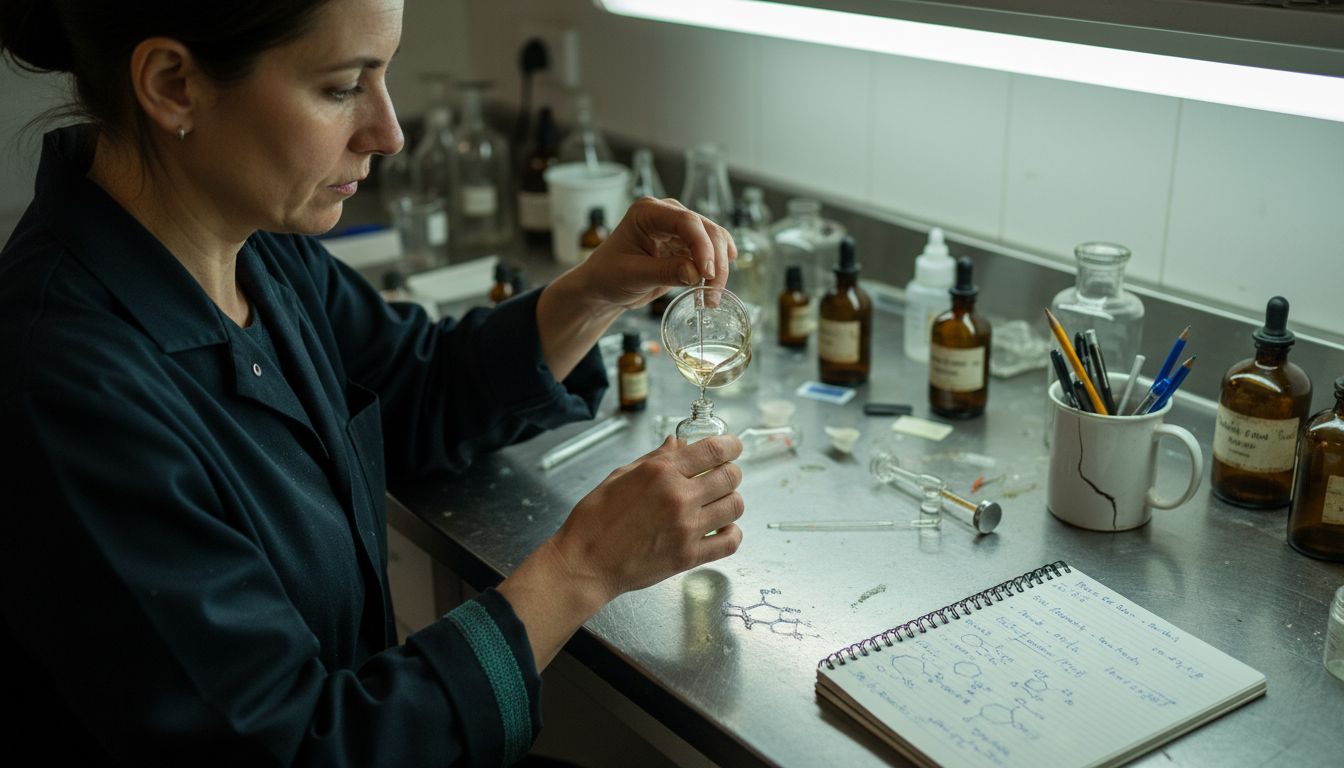
Fixative ingredients serve as molecular anchors, dramatically extending a perfume’s longevity. Synthetic and natural fixatives like benzoin, vanilla, and synthetic musks create molecular bonds that slow down evaporation and help fragrances maintain their complex aromatic profile. These ingredients essentially create a stable molecular environment that allows the scent to unfold gradually, preventing rapid dissipation and ensuring a more consistent olfactory experience throughout the day.
Pro Tip: When evaluating a fragrance’s potential longevity, focus on the proportion of heavy molecular compounds and natural fixatives in its composition.
How Skin Chemistry and Climate Affect Longevity
The intricate relationship between perfume performance and local climate conditions presents a fascinating scientific challenge for fragrance enthusiasts. Individual skin chemistry and the United Kingdom’s variable atmospheric conditions play pivotal roles in determining how a scent develops, persists, and ultimately performs throughout the day.
Skin pH, moisture levels, and temperature dramatically influence fragrance perception and longevity. Individuals with drier skin tend to have shorter fragrance lifespans, as less natural oils mean faster molecular evaporation. Conversely, those with slightly oily or well-hydrated skin create a more hospitable environment for fragrance molecules, allowing scents to adhere more effectively and unfold more gradually. Hormonal variations, diet, and even stress levels can subtly alter skin’s chemical composition, causing the same perfume to perform differently across various personal and temporal contexts.
The United Kingdom’s unique climatic conditions further complicate fragrance performance. High humidity can accelerate molecular breakdown, causing fragrances to dissipate more quickly, while cooler temperatures can slow molecular movement, potentially extending a scent’s perceived longevity. Seasonal variations mean a perfume might perform entirely differently in damp Autumn compared to crisp Winter conditions, requiring fragrance lovers to adapt their application techniques and scent selections accordingly.
The following table summarises how skin chemistry and climate influence fragrance performance:
| Factor | Effect on Fragrance | Adaptation Strategy |
|---|---|---|
| Dry Skin | Shorter longevity | Use richer moisturiser before applying |
| Oily/Hydrated Skin | Extended wear time | Lighter scent or lower concentration |
| High Humidity | Accelerates fading | Reapply scent; opt for stronger formulas |
| Cool Temperatures | Slows evaporation | Apply more sparingly |
Pro Tip: Apply an unscented moisturiser before your perfume to create a hydrated base that helps fragrance molecules bind more effectively to your skin.
Common Mistakes and How to Maximise Scent Duration
Common perfume application mistakes can dramatically reduce a fragrance’s potential longevity, making understanding proper techniques crucial for fragrance enthusiasts. Most individuals unknowingly compromise their perfume’s performance through simple yet critical errors that can be easily rectified with targeted knowledge and technique.
One of the most prevalent mistakes is applying perfume directly to dry skin, which accelerates molecular evaporation and reduces scent duration. Dry skin lacks the necessary lipid base to help fragrance molecules adhere and unfold gradually. Excessive rubbing of applied perfume breaks down delicate molecular structures, causing faster dissipation and diminishing the complexity of the scent profile. Professional perfumers recommend gentle dabbing or light spraying techniques that preserve the intricate aromatic composition.
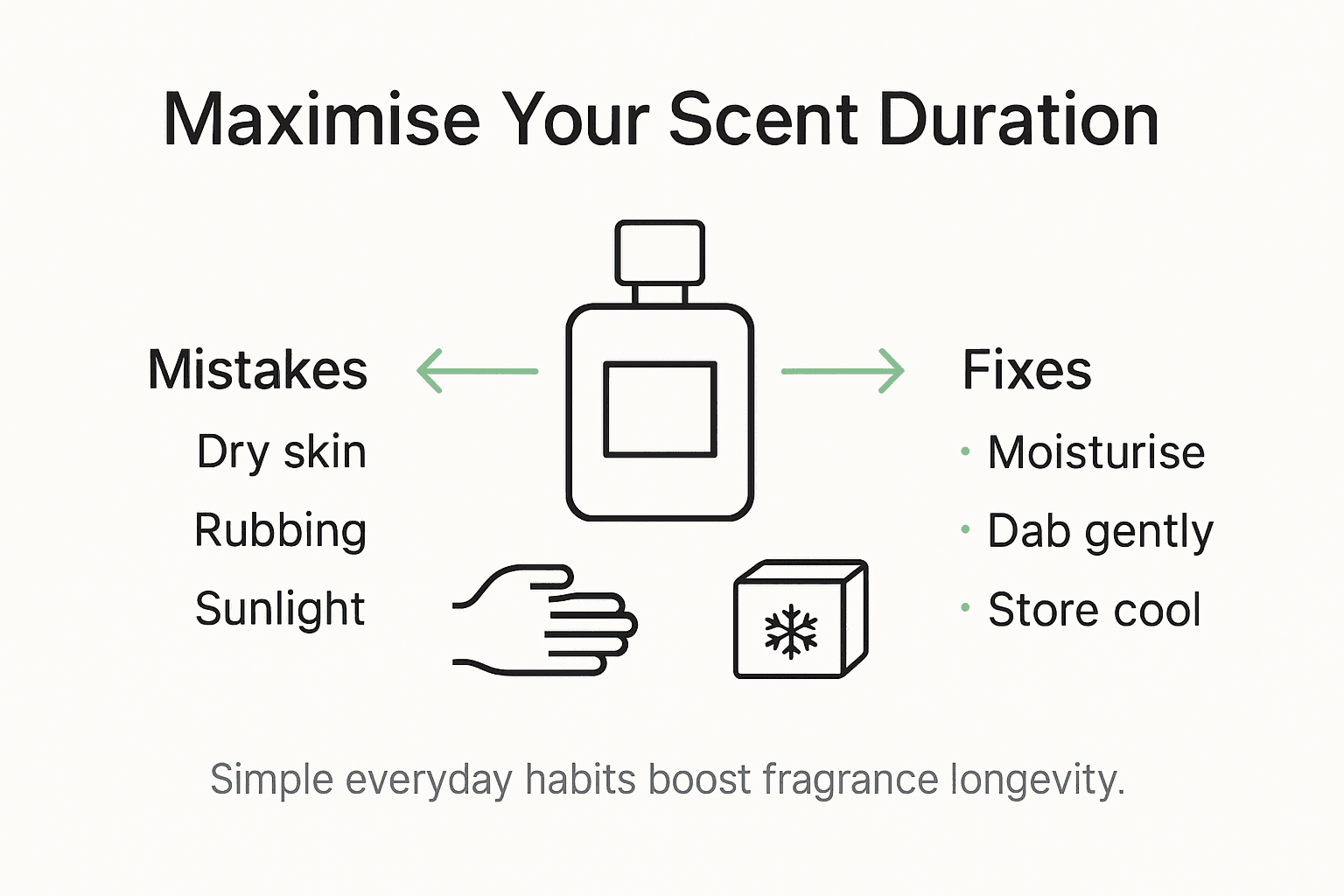
Storage and application location also significantly impact fragrance performance. Storing perfumes in direct sunlight, near heat sources, or in humid bathrooms can degrade molecular integrity, causing rapid oxidation and loss of aromatic nuance. Ideal storage involves cool, dark environments with stable temperatures. Strategic application points like pulse points – wrists, neck, inside elbows – provide optimal heat and moisture conditions for fragrance molecules to interact with skin chemistry, creating a more sustained and dynamic olfactory experience.
Pro Tip: Store your fragrances in a dedicated cool, dark drawer or cabinet, away from temperature fluctuations and direct light, to preserve their molecular complexity and longevity.
Discover Long-Lasting Fragrances Designed for You
Are you frustrated by scents that fade too quickly or fail to suit your unique skin chemistry and local climate? The science behind scent longevity reveals how crucial higher concentration perfumes and quality base notes are for an enduring fragrance experience. At Alexandria UK, we understand these challenges and offer a carefully curated collection of perfumes and dupes focused on lasting power and exquisite quality.
Explore our selection of eau de parfums and pure parfums that prioritise rich molecular structures and natural fixatives to help your scent stay with you throughout the day. Visit Alexandria UK now to find carefully crafted fragrances that match your skin and the UK’s climate. Do not wait to transform how your perfume performs and enjoy every moment wrapped in a captivating, long-lasting aroma.
Frequently Asked Questions
What factors determine how long a fragrance lasts?
Understanding fragrance longevity involves several elements including ingredient quality, molecular structure, concentration levels, and skin chemistry. Higher concentrations like Eau de Parfum generally last longer than Eau de Toilette due to a higher percentage of pure fragrance essence.
Why do some perfumes fade faster than others?
Perfumes with volatile top notes, such as citrus or light florals, tend to dissipate quickly. In contrast, fragrances with rich base notes, like sandalwood or vanilla, have heavier molecular structures that evaporate more slowly, resulting in a longer-lasting scent.
How can I make my perfume last longer on my skin?
To ensure a longer-lasting fragrance, apply a moisturiser before your perfume to hydrate the skin and help scent molecules adhere better. Also, target pulse points during application and avoid rubbing the fragrance, as this can break down the scent.
Does climate affect the longevity of my perfume?
Yes, climate can significantly impact fragrance performance. Higher humidity can accelerate evaporation, causing scents to fade more quickly, while cooler temperatures may extend longevity. Adjust your application method and fragrance choice according to the seasons.


