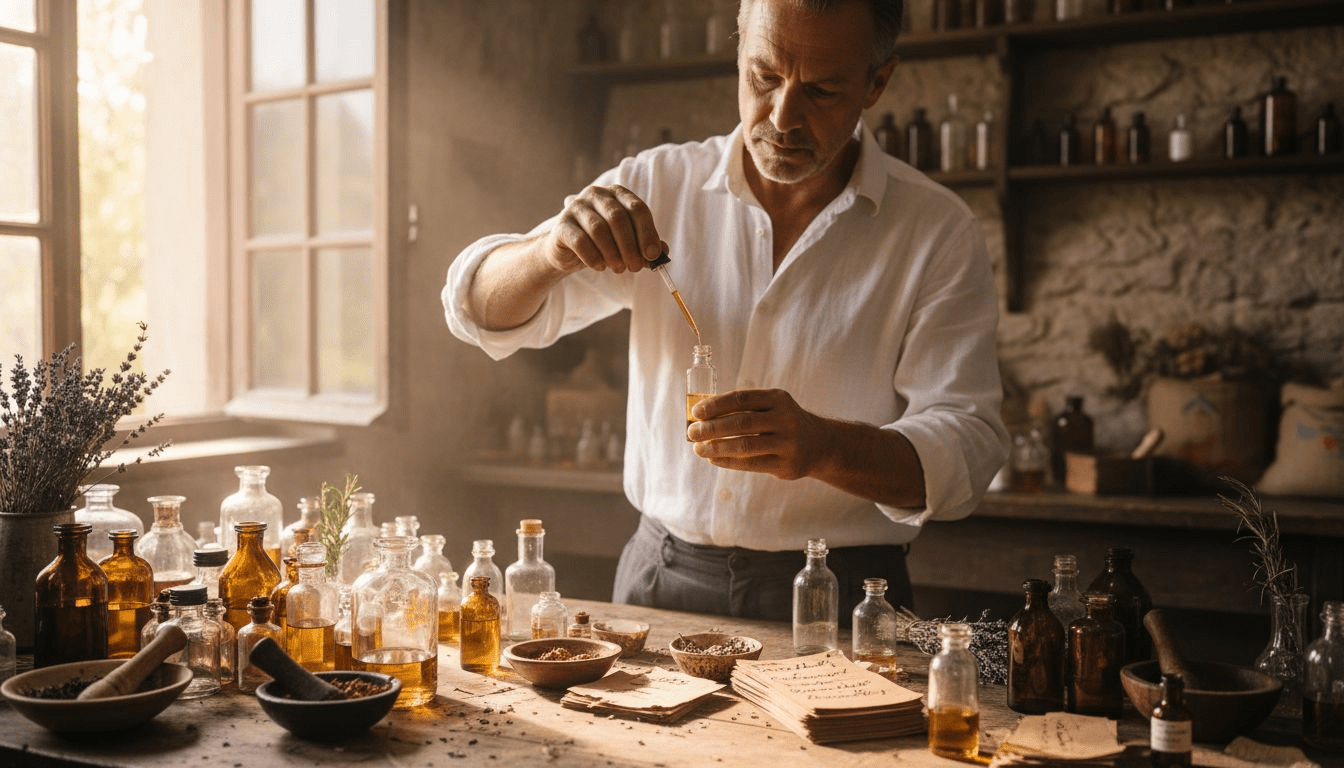
Unterschiede bei Parfümölen: Wirkung, Haltbarkeit, Hautverträglichkeit
More than 80 percent of all fragrance lovers do not recognize the difference between perfume oils and classic alcohol-based perfumes at first glance. Those who value long-lasting, individual fragrances, however, are often faced with the question of how these essences differ and what makes them so special. This overview shows why perfume oils are gaining more and more fans and how you can get the best out of your next fragrance choice.
Table of Contents
- What are perfume oils really?
- Natural, synthetic, and mixed perfume oils
- Perfume oils vs. alcohol-based fragrances
- Application, longevity, and skin-friendliness
- Legal & safety aspects in the UK
Key Takeaways
| Point | Details |
|---|---|
| Perfume oils are highly concentrated | They consist of pure aroma components without diluents like alcohol and offer an intense fragrance experience. |
| Difference between perfume oil types | Natural, synthetic, and mixed perfume oils offer different benefits for various applications and skin types. |
| Longevity and application | The longevity of perfume oils depends on concentration, body chemistry, and application technique; ideally, they are applied to pulse points. |
| Legal aspects in the UK | Perfume oils are subject to strict regulations regarding ingredients and product safety, which is essential for consumer protection. |
What are perfume oils really?
Perfume oils are highly concentrated, essential liquids that represent the essence of a fragrance in its purest form. Unlike traditional perfumes, they contain no additional diluents such as alcohol, focusing instead on pure aroma components. Perfume Oil Differences: Everything You Need to Know shows that these oils are extracted directly from flowers, herbs, fruits, and other natural sources.
The production of perfume oils is a complex process that requires high-precision techniques. Traditionally, they are obtained through steam distillation, cold pressing, or extraction. Each method influences the quality and intensity of the fragrance. High-quality perfume oils are characterized by their purity and natural composition, making them a preferred choice for fragrance enthusiasts and those with sensitive skin.
While synthetic fragrances can often seem artificial and overpowering, perfume oils offer a more subtle and natural fragrance experience. They interact individually with body chemistry and develop uniquely throughout the day. The concentration of aroma components means that even small amounts can create a long-lasting fragrance note.
Pro-Tip for perfume oil enthusiasts: Always store your perfume oils in a cool and dark place, ideally in sealed glass vials. This prevents oxidation and preserves the quality and intensity of the fragrance over a longer period.
Natural, synthetic, and mixed perfume oils
Natural perfume oils originate directly from plants, flowers, and botanical extracts, with each oil featuring a unique and complex composition. Different Types of Perfume: Essential Guide clarifies that these oils represent the most original and pure form of fragrance production. Raw materials like jasmine, rose, sandalwood, and lavender are carefully distilled to obtain their essential essences.
Synthetic perfume oils are produced in a laboratory and offer perfumers greater flexibility in creating fragrances. These artificial aromas can create scent notes that do not exist in nature or are difficult to extract. They allow for consistent quality, lower production costs, and a wider range of fragrance compositions.

Mixed perfume oils combine natural and synthetic components to create a balanced fragrance experience. This hybrid form utilizes the benefits of both worlds: the authenticity of natural extracts and the creativity of synthetic molecules. Such blends allow perfumers to develop more complex and longer-lasting scent notes.
Pro-Tip for fragrance connoisseurs: Pay attention to the composition when purchasing perfume oils. High-quality blends with a high proportion of natural oils not only offer a better fragrance experience but are also more skin-friendly and longer-lasting.
Here is an overview of the fundamental differences between natural, synthetic, and mixed perfume oils:
| Perfume Oil Type | Main Source/Production | Benefits | Typical Application |
|---|---|---|---|
| Natural | Plant extracts | Authentic, complex fragrance nuances | Luxury fragrances, sensitive skin |
| Synthetic | Laboratory, chemical compounds | Great scent variety, stable quality | Everyday perfumes, modern fragrances |
| Mixed | Combination of nature+chemistry | Balance, long longevity, creativity | Exclusive perfume blends |
Perfume oils vs. alcohol-based fragrances
Alcohol-based fragrances are the traditional form of perfumery, whereas perfume oils represent a more concentrated alternative. What is an Extrait de Parfum? Understanding its Essence shows that the main difference lies in the composition and concentration. Alcoholic perfumes typically contain 70-95% alcohol as a solvent, while perfume oils are pure, undiluted aroma components.
The alcohol content in traditional fragrances allows for faster evaporation and diffusion of the scent. Perfume oils, on the other hand, develop more slowly on the skin and offer a more intense, longer-lasting fragrance experience. They do not dry out the skin and are particularly suitable for people with sensitive or dry skin.
While alcohol-based fragrances allow for a wider range of scent notes and variations, perfume oils score points with their purity and natural composition. They are often gentler on the skin, as they contain no drying alcohol and interact directly with body chemistry. The concentration of aroma components means that even small amounts generate an intense and lasting scent note.
Pro-Tip for fragrance lovers: Try out different perfume oils on your skin to find the most individual and personal scent. Each oil develops uniquely and harmonizes differently with your individual body chemistry.
Application, longevity, and skin-friendliness
Perfume oils require a special application technique that differs fundamentally from conventional fragrances. Why do perfumes last different lengths of time? Everything essential highlights that longevity depends heavily on concentration and application technique. Optimal application is on pulse points such as the wrist, neck, and collarbone, where body heat gently unfolds the fragrance.
The skin compatibility of perfume oils varies depending on individual skin reaction and ingredients. People with sensitive skin should perform a skin patch test before the first application. Natural oils are less prone to skin irritation, whereas synthetic components may trigger allergic reactions more frequently. Storage plays a decisive role in longevity: perfume oils should be kept cool, dark, and sealed to preserve their quality and intensity.
The duration of longevity differs significantly between different types of perfume oils. High-quality, natural oils can last up to 8-12 hours on the skin, while synthetic variants often produce shorter scent notes. Factors like molecule size, concentration, and individual body chemistry are decisive. Some oils evolve throughout the day, unfolding different fragrance nuances.

Pro-Tip for perfume oil enthusiasts: Always store your oils upright and cool, avoid direct sunlight, and open the vials only briefly. This way, you will maintain the quality and intensity of your fragrances over a longer period.
The following factors influence the longevity and intensity of perfume oils in everyday life:
| Factor | Influence on fragrance | Notes for optimal use |
|---|---|---|
| Application on pulse points | Enhances fragrance development | Select wrist, neck, collarbone |
| Storage (temperature/light) | Preserves quality & intensity | Store cool, dark, and sealed |
| Skin type | Influences hold & reaction | Test compatibility before use |
Legal & safety aspects in the UK
The trade and production of perfume oils in the UK are subject to strict legal regulations intended to ensure consumer protection and product safety. Cosmetic regulations define clear guidelines for ingredient labeling, safety assessments, and product authorizations. Manufacturers must demonstrate that their products pose no health risks and meet all legal requirements.
Particularly important are the regulations regarding potentially allergenic substances. This means that every perfume oil must carry a detailed list of ingredients, which protects consumers from possible allergic reactions. Allergens such as cinnamon, vanilla, or certain essential oils must be labeled if their concentration exceeds a defined limit.
UK authorities place great value on transparency and safety in perfume production. Cosmetic products must undergo extensive safety testing, which includes toxicological assessments, skin compatibility tests, and stability analyses. Independent laboratory tests document the safety of the products and protect consumers from potential health risks.
Pro-Tip for legal certainty: Purchase perfume oils only from certified manufacturers who can provide transparent ingredient lists and safety certifications. Check the packaging for complete labeling and pay attention to allergen warnings.
Discover the variety of high-quality perfume oils for your personal fragrance journey
Choosing the right perfume oil often proves challenging when it comes to effect, longevity, and skin compatibility. This knowledge is crucial for how your fragrance accompanies you throughout the day and emphasizes your personality. At Alexandria UK, we understand exactly these needs and offer you an exquisite selection of perfume oils that focus on quality and skin-friendliness. Our fragrances are based on finely tuned natural and synthetic components so that you always find the perfect aroma.

Immerse yourself now in the world of unique fragrance compositions and benefit from carefully selected perfume oils that are particularly long-lasting and skin-friendly. Don't miss the chance to discover your fragrance preferences and create your individual signature scent. Learn more about the differences in perfume oils and let yourself be inspired by our selection. Visit us and secure high-quality fragrances that suit you perfectly.
Frequently Asked Questions
What are the main differences between natural and synthetic perfume oils?
Natural perfume oils originate from plant extracts and offer an authentic, complex fragrance nuance. Synthetic perfume oils are produced in a laboratory and allow for greater flexibility in fragrance creation, often with constant quality and lower costs.
How long do perfume oils last compared to alcohol-based fragrances?
Perfume oils generally have a longevity of 8-12 hours on the skin, while alcohol-based fragrances often evaporate faster. The longevity depends on the concentration of the aroma components and individual body chemistry.
Are perfume oils more skin-friendly than alcohol-based fragrances?
Yes, perfume oils are generally more skin-friendly, as they contain no drying alcohol. They are especially suitable for people with sensitive or dry skin.
How should I best apply perfume oils to maximize intensity?
Apply perfume oils to pulse points such as wrists, neck, and collarbone. These areas promote the gentle unfolding of the fragrance through body heat. Additionally, you should store the oils in a cool, dark place to ensure their longevity.