

Office Fragrance Tips for a Fresh, Inviting Workspace
More than 40 percent of British office workers report feeling distracted by strong scents at work. For managers aiming to maintain a comfortable and inclusive environment, choosing the right fragrance solution is more than just a luxury. The right approach can improve mood and productivity while preventing discomfort for sensitive employees. Discover how thoughtful fragrance management helps every member of your team feel respected and at ease without overspending.
Table of Contents
- Step 1: Assess Workspace Scent Needs And Sensitivities
- Step 2: Select Subtle Fragrances For Shared Environments
- Step 3: Position Fragrances For Optimal Distribution
- Step 4: Test Scent Strength And Staff Comfort
- Step 5: Maintain A Welcoming Fragrance Throughout The Week
Quick Summary
| Key Point | Explanation |
|---|---|
| 1. Assess scent sensitivities | Conduct surveys to understand colleagues’ fragrance preferences and sensitivities for an inclusive environment. |
| 2. Choose subtle fragrances | Select low-intensity, clean scents that enhance the atmosphere without overwhelming others. |
| 3. Position for even distribution | Place fragrance diffusers centrally to ensure balanced scent coverage, avoiding strong concentration zones. |
| 4. Test scent strength gradually | Introduce fragrances slowly, gathering feedback to prevent discomfort or irritation among staff. |
| 5. Maintain fragrance consistency | Implement a rotation system for scents, ensuring a fresh and welcoming environment throughout the week. |
Step 1: Assess workspace scent needs and sensitivities
Creating a comfortable fragrance environment requires thoughtful consideration of everyone’s sensory experiences. Workplace scent assessment is about understanding individual comfort levels and potential sensitivities while maintaining a professional atmosphere.
Begin by understanding workplace sensory risks. This involves a systematic evaluation of potential fragrance impacts across your team. Interview colleagues about their scent preferences and sensitivities discretely. Some individuals might have heightened sensory responses that could cause discomfort or allergic reactions.
Consider developing a brief anonymous survey to gather insights about scent tolerances. Focus on identifying any strong reactions to specific fragrance families such as floral, citrus, or woody notes. Pay special attention to employees with respiratory conditions or known sensitivities. The goal is creating an inclusive environment where everyone feels comfortable and respected.
Key observation: Workplace scent policies should prioritise collective well-being over individual preferences.
Step 2: Select subtle fragrances for shared environments
Choosing the right fragrance for a shared workspace requires a delicate balance between creating a pleasant atmosphere and respecting individual sensitivities. Your goal is to introduce a gentle, unobtrusive scent that enhances the environment without overwhelming colleagues.
Start by selecting low-intensity fragrance products recommended by professional fragrance experts. Look for light, clean scents with minimal projection such as soft woody or light citrus notes. These fragrances provide a subtle background ambience without creating sensory overload. Consider water-based or minimally concentrated room sprays that disperse gently and dissipate quickly.
Prioritise workplace safety by understanding substance exposure guidelines when selecting fragrances. Opt for hypoallergenic products that comply with workplace health regulations. Test potential fragrances during non working hours and seek subtle feedback from team members about their comfort levels. Remember that individual tolerance varies significantly.
Refined recommendation: Choose fragrances that whisper rather than shout their presence in shared professional spaces.
Here is a comparison of common workplace fragrance types and their typical advantages and risks:
| Fragrance Type | Typical Benefits | Possible Risks | Best Used In |
|---|---|---|---|
| Light Citrus | Refreshing, clean atmosphere | Rare sensitivities | Reception areas |
| Soft Woody | Calm, stable ambience | Occasional allergic response | Meeting rooms |
| Floral | Uplifting, gentle effect | Higher chance of irritation | Shared spaces |
| Unscented/Hypoallergenic | No risk of discomfort | No aromatic enhancement | Individual workstations |
Step 3: Position fragrances for optimal distribution
Strategic fragrance placement transforms an ordinary office into a welcoming workspace by ensuring balanced and subtle scent distribution. Understanding how to position your fragrance diffusers can make the difference between an inviting atmosphere and an overwhelming sensory experience.
Local exhaust ventilation principles provide crucial guidance for intelligent fragrance positioning. Consider placing diffusers near air circulation points such as ventilation intakes or central areas with moderate airflow. This approach ensures even scent dispersion while preventing concentrated fragrance zones. Avoid positioning diffusers directly next to individual workstations or in corners where scents might accumulate and become intense.
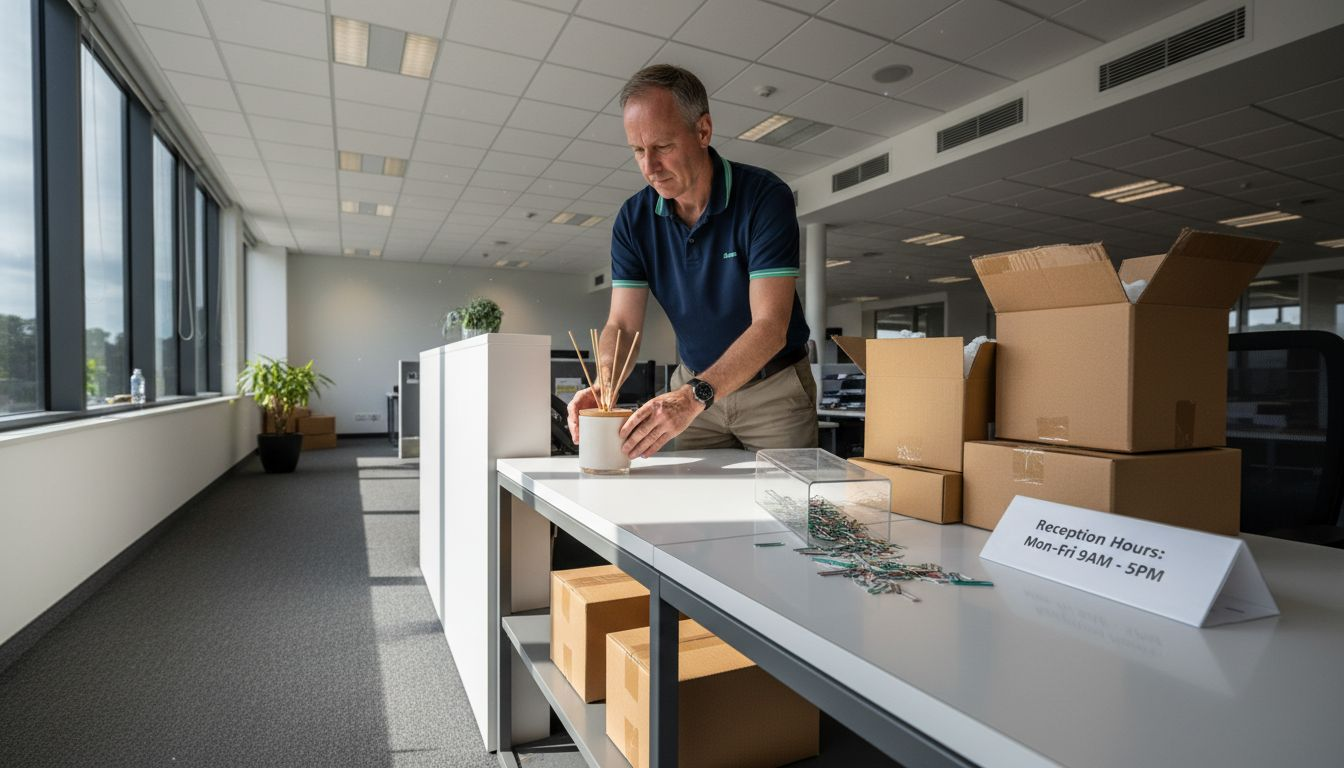
Carefully evaluate your office layout to identify optimal distribution points. Typically central locations like reception areas or shared meeting spaces work best. Use small discreet diffusers that can be easily adjusted or moved. Consider using timer mechanisms that release fragrance intermittently to maintain a light background scent without continuous exposure.
Professional insight: Less fragrance is more when creating a professional aromatic environment.
Step 4: Test scent strength and staff comfort
Testing fragrance intensity is a critical process that ensures your workspace remains pleasant and professional. The goal is to create an inviting atmosphere without causing discomfort or distraction among colleagues.
Workplace comfort assessments require careful and systematic evaluation of environmental factors. Begin with a soft launch approach by introducing a minimal amount of fragrance and conducting an anonymous survey. Ask colleagues about their sensory experience using specific questions about scent intensity frequency and potential irritation. Pay attention to subtle feedback such as colleagues adjusting their workspace or showing signs of respiratory discomfort.
Implement a gradual testing protocol that respects individual sensitivities. Start with short fragrance exposure periods during less busy hours. Monitor reactions carefully and be prepared to adjust or remove the scent entirely if multiple team members express concerns. Your objective is creating a neutral yet pleasant olfactory environment that supports productivity and well-being without causing undue stress.
Professional guidance: Always prioritise employee comfort over aesthetic fragrance preferences.
Step 5: Maintain a welcoming fragrance throughout the week
Sustaining a consistent and pleasant workplace fragrance requires strategic planning and careful monitoring. Your objective is to create an ambient scent experience that remains fresh and inviting without becoming overwhelming or fatiguing for colleagues.
Workplace fragrance control measures are essential for maintaining a balanced sensory environment. Implement a rotation system for your fragrance diffusers that prevents scent saturation. Use timer mechanisms to release fragrance in short intervals throughout the day perhaps 15 minutes every two hours. This approach ensures a gentle background aroma that does not become intrusive or cause sensory fatigue.
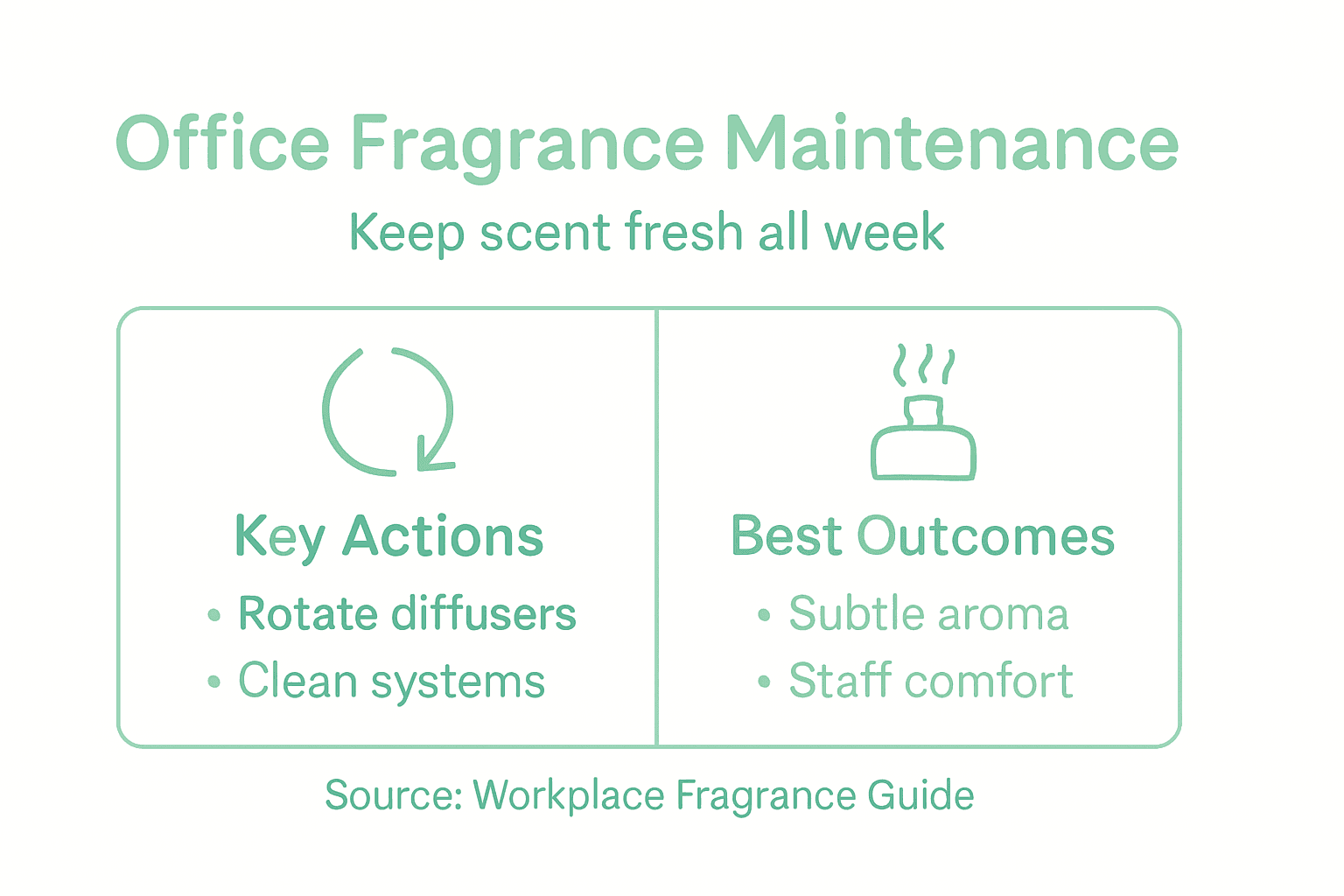
Regularly inspect and clean your fragrance delivery systems to maintain optimal performance. Consider using different subtle scent profiles for various areas of the workspace ensuring each zone has its own gentle olfactory character. Be prepared to adjust your fragrance strategy based on seasonal changes temperature variations and employee feedback. Your goal is creating a dynamic yet consistent aromatic landscape that supports workplace well-being.
Professional guidance: Subtlety and consistency are the hallmarks of excellent workplace fragrance management.
The table below summarises key steps for effective office fragrance management:
| Step | Main Action | Intended Outcome |
|---|---|---|
| Assess Scent Needs | Survey preferences and sensitivities | Inclusive, comfortable setting |
| Select Suitable Fragrance | Choose mild, low-intensity scents | Enhanced but subtle environment |
| Position for Distribution | Centralise and moderate placement | Even, unobtrusive coverage |
| Test and Adjust Intensity | Gradually expose and gather feedback | Avoid discomfort or irritation |
| Maintain Consistency | Schedule regular, subtle rotations | Stable, welcoming workspace |
Enhance Your Workspace with Quality Fragrances from Alexandria UK
Creating a fresh and inviting office atmosphere requires careful fragrance selection that respects everyone’s sensitivities and preferences. The article highlights the importance of subtle scents, strategic placement, and regular scent strength testing to maintain a professional and comfortable environment. At Alexandria UK, we understand these challenges and offer a range of high-quality fragrances and dupes designed to provide that perfect balance between pleasant aroma and personal comfort.
Discover our collection tailored for those seeking quality and subtlety without overwhelming your workspace. Whether you want light citrus or soft woody notes to gently uplift your office ambience, our selection supports the goals outlined in the article for an enhanced yet unobtrusive fragrance environment.
Explore how our premium fragrances can transform your office into a welcoming space while prioritising your team’s well-being. Act now to bring subtle sophistication to your workplace by visiting our main site and start your journey towards a fresher, more comfortable office environment today. Find the perfect scent that whispers professionalism and care at Alexandria UK and experience quality that speaks for itself.
Frequently Asked Questions
How can I assess the fragrance needs of my workspace?
Begin by conducting an anonymous survey among your colleagues to understand their scent preferences and sensitivities. This will help you identify individual comfort levels and create an inclusive scent environment.
What type of fragrances are recommended for shared office spaces?
Opt for light, clean scents such as soft woody or light citrus notes. These subtle fragrances enhance the atmosphere without overwhelming sensitive individuals.
How should I position fragrance diffusers in the office?
Place diffusers in central locations near air circulation points to ensure even scent distribution. Avoid setting them too close to workstations to prevent concentrated fragrance zones.
What is the best way to test the strength of office fragrances?
Introduce a small amount of fragrance during less busy hours and gather anonymous feedback from colleagues on their sensory experience. Adjust the fragrance intensity based on their comfort levels and reactions.
How can I maintain a pleasant fragrance throughout the workweek?
Implement a rotation system for scent diffusers that releases fragrance intermittently, for example, 15 minutes every two hours. Regularly inspect and clean your systems to ensure consistent scent strength and freshness.
What should I do if employees report discomfort from office fragrances?
Immediately reduce or remove the fragrance causing discomfort and re-evaluate your fragrance selections. Gather further feedback to ensure that all employees feel comfortable and supported in the workspace.


