

Designer vs Niche Fragrance: Choosing Affordable Dupes
Finding a distinctive scent that turns heads without exceeding your budget is a challenge many British fragrance fans know well. With over 60% of perfume lovers in the United Kingdom actively searching for alternatives to costly niche brands, the line between designer and niche fragrances has never mattered more. Understanding these differences and discovering high quality dupes can help you curate a unique scent wardrobe that feels exclusive yet remains affordable.
Table of Contents
- Designer And Niche Fragrances Defined Clearly
- Types And Key Distinctions Between Fragrance Styles
- Quality, Ingredients And Creative Process
- Pricing, Availability And Brand Prestige In The UK
- How Dupes Fit Into The UK Fragrance Scene
- Common Misconceptions And Mistakes To Avoid
Key Takeaways
| Point | Details |
|---|---|
| Designer vs Niche Fragrances | Designer fragrances are mass-produced for broad audiences, while niche fragrances focus on unique, artisanal scents in limited batches. |
| Fragrance Families | Understanding the primary scent families—Floral, Woody, Oriental, and Fresh—helps consumers navigate and appreciate olfactory profiles. |
| Quality of Ingredients | The quality of fragrance ingredients significantly impacts the scent experience, with natural extracts and rare essences reflecting higher craftsmanship. |
| Importance of Research | Consumers should research and sample fragrances to ensure personal compatibility and avoid impulse purchases based on brand reputation. |
Designer and niche fragrances defined clearly
Fragrances occupy a fascinating spectrum in the world of perfumery, with two distinct categories emerging: designer and niche fragrances. While both aim to create olfactory experiences, their approaches and philosophies differ significantly. Niche perfumes are distinct from mass-market designer fragrances by being produced in smaller batches, emphasising unique, artisanal scents that target a more discerning clientele.
Designer fragrances traditionally emerge from fashion houses and luxury brands, designed to appeal to a broad consumer base. These scents are typically mass-produced, widely available in department stores, and often reflect the current fashion trends. Their marketing strategies involve celebrity endorsements, extensive advertising campaigns, and accessibility across multiple retail channels. In contrast, niche fragrances prioritise artistic expression and olfactory complexity over commercial appeal. These perfumes are crafted by independent perfumers or specialised fragrance houses, focusing on rare ingredients, innovative compositions, and limited production runs.
The boundaries between designer and niche fragrances have become increasingly blurred in recent years. Large luxury conglomerates have started acquiring niche brands, integrating their unique formulations into broader perfume portfolios. This trend suggests a growing appreciation for the craftsmanship and originality that characterise niche fragrances. For fragrance enthusiasts, this means an expanding landscape of scent experiences that blend commercial accessibility with artistic innovation.
Pro tip: When exploring fragrances, sample both designer and niche options to appreciate the nuanced differences in craftsmanship and olfactory storytelling.
The following table summarises the main differences between designer and niche fragrances for quick reference:
| Aspect | Designer Fragrances | Niche Fragrances |
|---|---|---|
| Production Scale | Mass-produced, widespread | Limited batches, exclusive |
| Target Audience | Broad, mainstream consumers | Enthusiasts seeking uniqueness |
| Creative Focus | Aligns with current fashion trends | Prioritises innovation and artistry |
| Ingredient Choices | Consistent, affordable, familiar scents | Rare, unconventional, high-quality |
| Accessibility | Department stores and broad retailers | Independent shops, online platforms |
Types and key distinctions between fragrance styles
Fragrance classification represents a sophisticated system that allows enthusiasts and professionals to understand and categorise scent profiles. The fragrance wheel serves as a critical classification tool grouping perfumes into distinct scent families based on their olfactory characteristics and sensory experiences. These classifications help consumers navigate the complex world of fragrances by providing a structured approach to understanding scent composition and personality.
Traditionally, fragrances are divided into primary families that capture distinct olfactory experiences. The main families include Floral (featuring rose, jasmine, and lily notes), Woody (characterised by sandalwood, cedar, and pine), Oriental (rich with amber, vanilla, and spice), and Fresh (encompassing citrus, marine, and green notes). Each family contains intricate subfamilies that further refine the scent profile, allowing for nuanced exploration of fragrance complexity. These categories help perfume enthusiasts understand the underlying structure and emotional resonance of different scent compositions.
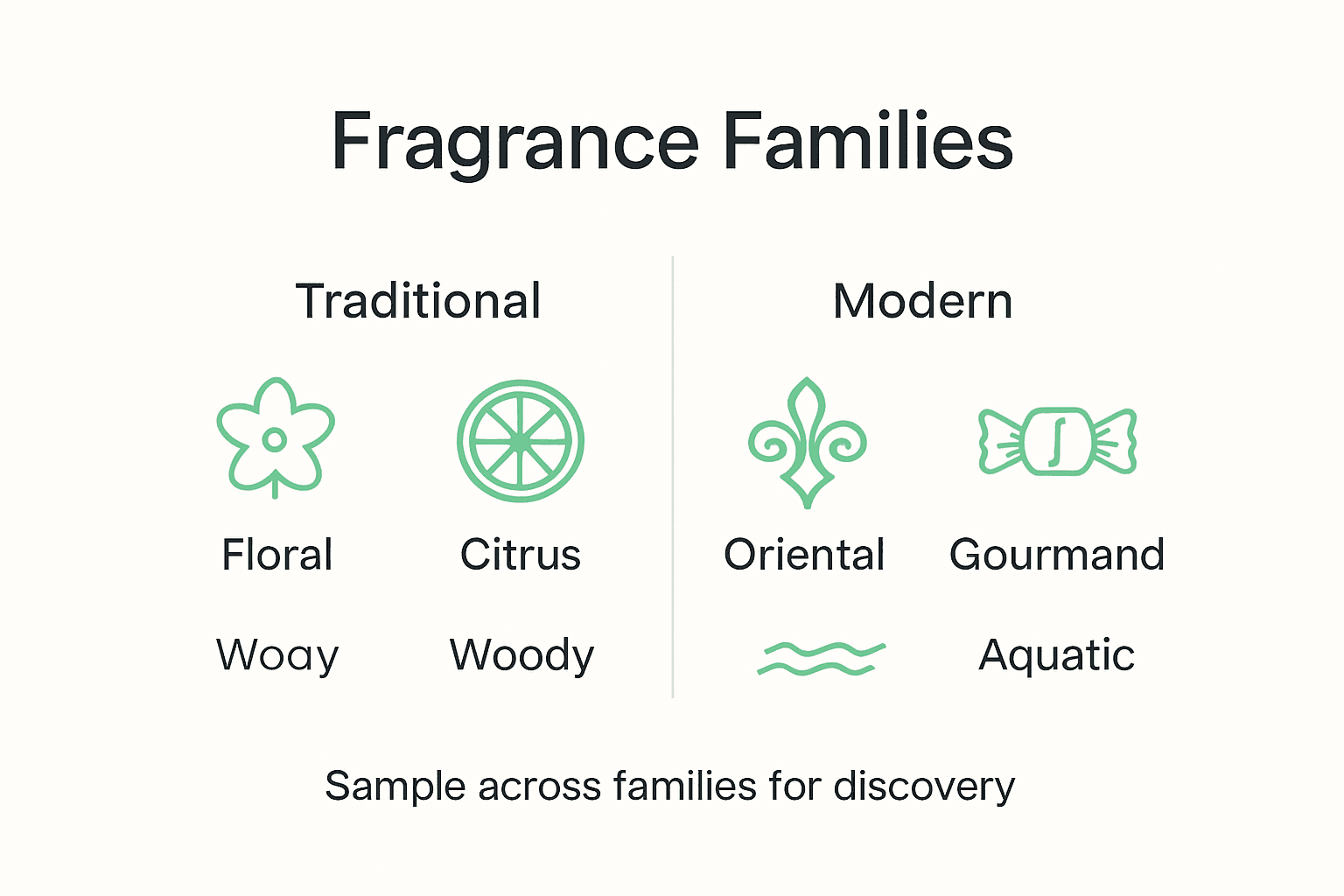
Beyond traditional classifications, modern perfumery has evolved to create more sophisticated and hybrid fragrance styles. Contemporary perfumers often blend multiple fragrance families, creating unique olfactory experiences that challenge conventional categorisation. This approach allows for greater creativity, enabling perfumers to craft scents that tell complex stories and evoke multifaceted emotional responses. The popular perfume families guide provides deeper insights into these emerging trends and innovative scent compositions.
Pro tip: Explore fragrances across different families to develop a more sophisticated understanding of scent complexity and personal preferences.
Below is a table highlighting the fragrance wheel’s primary families and typical scent notes:
| Family | Defining Notes | Emotional Effect |
|---|---|---|
| Floral | Rose, jasmine, lily | Romantic, feminine, uplifting |
| Woody | Sandalwood, cedar, pine | Earthy, calming, sophisticated |
| Oriental | Amber, vanilla, spice | Exotic, warm, mysterious |
| Fresh | Citrus, marine, green | Bright, revitalising, clean |
Quality, ingredients and creative process
The world of fragrance creation represents an intricate dance between artistry and scientific precision, where quality emerges from meticulous ingredient selection and innovative craftsmanship. Cost vs quality considerations play a crucial role in determining the overall sensory experience of a perfume, with each ingredient contributing to the complexity and depth of the final composition.

Ingredient quality sits at the heart of exceptional fragrances. Perfume ingredients can be categorised into three primary tiers: synthetic molecules, natural extracts, and rare botanical essences. Synthetic ingredients offer consistency and affordability, allowing perfumers to recreate complex scent profiles with precision. Natural extracts, sourced from global botanical regions, provide authentic and nuanced aromatic experiences. Rare ingredients like Jasmine de Grasse from France or Sandalwood from Mysore represent the pinnacle of perfumery, commanding premium prices due to their extraordinary complexity and limited availability.
The creative process in fragrance development is a sophisticated journey of artistic expression and scientific expertise. Perfumers, often referred to as ‘noses’, undergo extensive training to understand molecular interactions, sensory perception, and olfactory composition. They blend individual notes like a composer creates musical arrangements, carefully balancing top, heart, and base notes to create harmonious and emotionally evocative fragrances. This intricate process involves hundreds of potential ingredient combinations, with master perfumers sometimes spending years developing a single signature scent.
Pro tip: Learn to read fragrance notes and ingredient lists to develop a more discerning understanding of perfume quality and composition.
Pricing, availability and brand prestige in the UK
The fragrance market in the United Kingdom represents a sophisticated landscape where pricing, brand perception, and accessibility intersect in complex ways. Luxury brands are increasingly competing on earned desirability rather than scale alone, with brand prestige becoming increasingly tied to cultural legitimacy and consumer trust. This evolving dynamic creates a nuanced environment where both designer and niche fragrances must continuously justify their market positioning.
Brand prestige in the UK fragrance market is no longer simply about heritage or price point, but about storytelling, craftsmanship, and perceived value. Designer brands like Chanel and Dior leverage their fashion credentials to maintain premium positioning, while niche fragrance houses build credibility through unique compositions and limited availability. Pricing strategies have become more sophisticated, with brands carefully calibrating their offerings to appeal to different consumer segments. Luxury perfume houses now invest heavily in creating narratives that extend beyond the scent itself, focusing on experiential marketing and emotional connection.
Availability plays a critical role in shaping fragrance perception in the British market. Affordable perfume purchasing strategies have become increasingly important for consumers seeking quality without astronomical prices. Niche fragrances traditionally occupied exclusive boutique spaces, but digital platforms have democratised access, allowing smaller brands to reach wider audiences. This shift has created opportunities for more affordable alternatives and inspired perfumes that capture the essence of high-end scents at a fraction of the cost.
Pro tip: Research fragrance notes and compare price points across different retailers to find the best value for your preferred scent profile.
How dupes fit into the UK fragrance scene
The rise of fragrance dupes represents a transformative trend in the United Kingdom’s perfume market, reflecting changing consumer attitudes towards luxury and accessibility. Traditionally viewed as budget alternatives, dupes have evolved from mere imitations to sophisticated fragrance options that challenge established brand hierarchies. This shift is particularly pronounced among Millennial and Gen Z consumers who prioritise value and individual expression over conventional brand prestige.
Dupe culture in the UK fragrance scene is fundamentally about democratising access to high-end scent experiences. Legal replicas that avoid trademark infringement) have emerged as compelling alternatives to expensive designer perfumes, offering consumers the opportunity to explore complex fragrance profiles without substantial financial investment. Social media platforms and digital influencers have played a crucial role in normalising and celebrating these more affordable alternatives, creating a vibrant ecosystem where creativity and accessibility coexist.
The economic and cultural dynamics driving dupe popularity are multifaceted. Budget-conscious consumers increasingly seek intelligent purchasing strategies, viewing dupes not as cheap knockoffs but as smart, informed choices. Niche and independent fragrance houses have responded by creating inspired scents that capture the essence of premium fragrances while maintaining distinct identities. This approach has transformed dupes from marginal products to legitimate options within the broader fragrance marketplace, challenging traditional notions of luxury and value.
Pro tip: Explore multiple dupe options and read comprehensive reviews to find fragrances that genuinely capture the spirit of more expensive counterparts.
Common misconceptions and mistakes to avoid
Misconceptions about fragrance quality can lead consumers astray in their quest for the perfect scent. Many individuals mistakenly assume that higher price or niche status automatically guarantees superior fragrance performance. In reality, the perfume landscape is far more nuanced, with exceptional scents existing across designer, niche, and dupe categories. Understanding these subtle distinctions requires a more sophisticated approach to fragrance selection.
Price myths dominate the fragrance marketplace, creating significant confusion for consumers. Designer fragrances might have mass appeal but still deliver excellent scent profiles at more accessible prices. Conversely, expensive niche perfumes are not inherently better simply because of their limited production or exotic ingredients. Consumers often fall into the trap of equating cost with quality, overlooking the importance of personal scent compatibility, individual body chemistry, and specific fragrance notes.
Another critical mistake is neglecting to research and sample fragrances before purchasing. Many consumers make impulse buying decisions based on brand reputation, marketing narratives, or influencer recommendations without considering their unique olfactory preferences. This approach can lead to expensive disappointments and unused bottles. Authenticity and proper purchasing from authorised retailers also remain crucial, as the fragrance market is riddled with potential counterfeit products that compromise both quality and performance.
Pro tip: Always test fragrances on your skin and observe their development over several hours to truly understand their unique characteristics and compatibility with your personal chemistry.
Discover Affordable Luxury with Quality Fragrance Dupes
Choosing between designer and niche fragrances often means balancing your desire for unique, high-quality scents against the challenge of affordability. The article highlights the rise of fragrance dupes as a smart solution for those who want to enjoy the rich olfactory experiences and rare ingredients found in niche perfumes without paying premium prices. If you are seeking exceptional perfumery that respects craftsmanship while offering value, you are not alone.
Explore our expertly curated collection at Alexandria UK where quality meets accessibility. We focus on providing fragrances inspired by celebrated designer and niche scents that maintain authenticity without compromising affordability. Whether you want to dive deeper into the art of perfume quality or are searching for your perfect scent dupe, our offerings are crafted to satisfy your sophisticated taste and budget.
Ready to experience the best of both worlds It is time to elevate your fragrance wardrobe without overspending Visit Alexandria UK now and discover how affordable luxury fragrances can transform your scent story today.
Frequently Asked Questions
What is the main difference between designer and niche fragrances?
Designer fragrances are mass-produced by well-known fashion houses aimed at a broad audience, whereas niche fragrances are crafted in smaller quantities by independent perfumers focusing on unique, artistic compositions.
Are fragrance dupes considered lower quality compared to original scents?
Not necessarily. Many fragrance dupes are designed to offer similar scent profiles to high-end perfumes and can provide excellent olfactory experiences at more affordable prices, making them appealing choices for budget-conscious consumers.
How can I determine if a dupe is a good alternative for a high-end fragrance?
Research reviews and check ingredient lists. Sampling a dupe can also help, allowing you to compare how closely it resembles the original scent and aligns with your personal preferences.
What should I be cautious about when buying fragrance dupes?
Be wary of potential counterfeit products and ensure you are purchasing from reputable sources to avoid poor quality. Testing a fragrance on your skin is also essential, as body chemistry affects how scents develop over time.


