Best Type of Cologne: The Essential Guide
Most British fragrance lovers are surprised to learn that over 80 percent of scent preferences are shaped by personal chemistry and environment rather than branding. With the sheer variety of colognes available, sorting through choices can be confusing. Understanding what makes a cologne truly the best goes beyond asking for recommendations—it involves decoding how concentration, season, and even skin type come together to help you pick a signature scent.
Table of Contents
- What Is ‘Best Type Of Cologne’?
- Comparing Fragrance Concentrations
- Choosing Based On Longevity And Season
- Value Vs Concentration Trade‑Offs
- Safety And Regulatory Considerations
Key Takeaways
| Point | Details |
|---|---|
| Personal Preference is Key | The best type of cologne varies greatly among individuals, influenced by personal chemistry and lifestyle. |
| Understand Fragrance Concentrations | Fragrances are categorised by concentration levels, directly impacting strength and longevity, with options ranging from Eau de Cologne to Parfum. |
| Seasonal Selection Matters | Choosing colognes appropriate for the season enhances the olfactory experience, as scent performance can vary significantly with climate conditions. |
| Value is Not Just Price | The perceived value of a fragrance is determined by its concentration and personal satisfaction levels, not solely its cost. |
What Is ‘Best Type Of Cologne’?
Defining the “best type of cologne” is a nuanced exploration that transcends simple categorisation. It involves understanding personal chemistry, lifestyle preferences, and the complex world of fragrance composition. Cologne selection is deeply personal, influenced by individual scent perception, skin type, and emotional resonance.
Fragrance experts recognise that the “best” cologne varies dramatically between individuals. What works magnificently for one person might feel entirely inappropriate for another. The selection process involves considering several critical factors: skin chemistry, occasion, season, personal style, and olfactory preferences. Some individuals prefer woody, robust scents that convey strength, while others gravitate towards lighter, fresher aromatics that suggest sophistication and subtlety.
In exploring different types of colognes, we discover a rich landscape of olfactory experiences. Fragrances can be classified into several primary families:
- Citrus Scents: Bright, energetic fragrances featuring lemon, bergamot, and orange notes
- Woody Fragrances: Deep, earthy compositions with cedarwood, sandalwood, and pine undertones
- Oriental Perfumes: Warm, sensual scents incorporating spices, vanilla, and amber
- Fresh Aquatic Colognes: Clean, marine-inspired aromas reminiscent of ocean breezes
- Spicy Orientals: Complex blends featuring pepper, cinnamon, and exotic spice notes
Understanding these categories helps individuals navigate the intricate world of fragrances, enabling more informed and personalised selections that truly resonate with their unique identity.
Comparing Fragrance Concentrations
Fragrance concentrations represent the fundamental building blocks of olfactory experiences, determining a perfume’s intensity, longevity, and overall character. Fragrance concentration refers to the percentage of aromatic compounds dissolved in a solvent, which directly influences the scent’s strength and performance throughout the day.
Traditionally, fragrances are categorised into several distinct concentration levels. Research examining volatile organic compound emissions highlights the intricate relationship between fragrance composition and sensory perception. The primary concentration categories include:
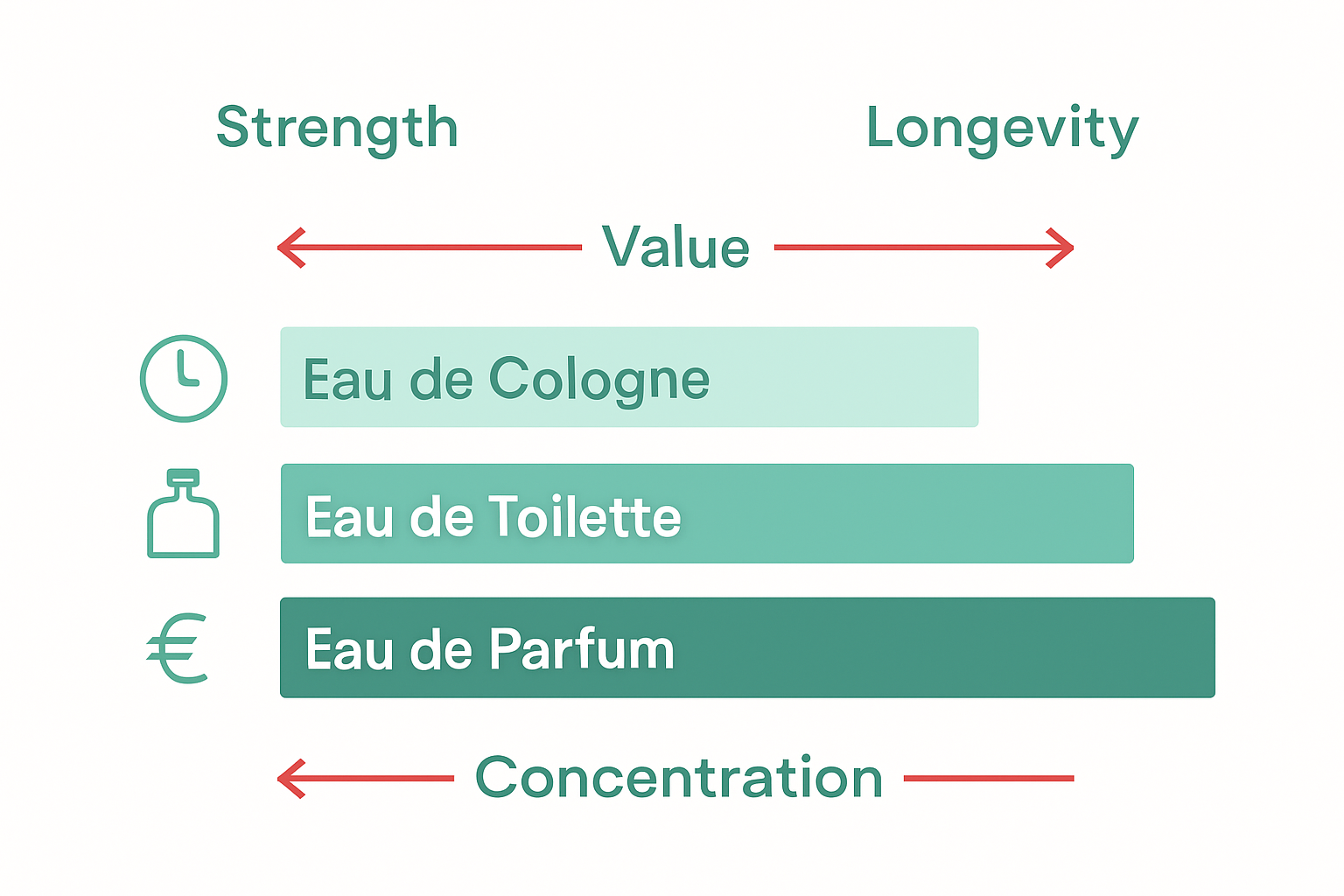
- Eau de Cologne: 2-4% aromatic compounds
- Eau de Toilette: 5-15% aromatic compounds
- Eau de Parfum: 15-20% aromatic compounds
- Parfum/Extrait de Parfum: 20-40% aromatic compounds
Each concentration level offers unique characteristics that appeal to different preferences and occasions. Lower concentration fragrances like Eau de Cologne provide a light, refreshing experience ideal for daily wear, while higher concentration options such as Parfum deliver intense, long-lasting scent profiles that can persist for hours. Studies on indoor fragrance diffusion underscore the complexity of how aromatic compounds interact with personal chemistry and environmental factors.

Understanding these concentration variations allows fragrance enthusiasts to make more informed selections based on their specific needs. Factors such as skin type, climate, and personal preference play crucial roles in determining the most suitable fragrance concentration for an individual’s lifestyle and sensory preferences.
Choosing Based On Longevity And Season
Seasonal fragrance selection represents a sophisticated art form where personal preference intersects with environmental considerations. Understanding how different scents perform across varying climatic conditions requires nuanced insight into fragrance chemistry and individual olfactory experiences.
Consumer behaviour studies reveal fascinating patterns in fragrance preferences that shift dramatically with seasonal changes. Winter demands rich, warm fragrances with deeper notes like vanilla, sandalwood, and amber, which provide warmth and complexity. Conversely, summer calls for lighter, fresher compositions featuring citrus, marine, and green botanical notes that feel crisp and invigorating.
The longevity of a fragrance depends on multiple interconnected factors:
- Concentration Level: Higher concentration fragrances naturally last longer
- Skin Chemistry: Individual metabolic variations impact scent persistence
- Environmental Temperature: Heat accelerates fragrance molecular interactions
- Humidity: Moisture levels influence scent diffusion and staying power
Personalised fragrance research emphasises that successful seasonal selection involves understanding how molecular compounds interact with personal body chemistry. Lighter Eau de Toilette concentrations work brilliantly in warmer months, while richer Parfum extracts become ideal during cooler periods. Sophisticated fragrance enthusiasts often maintain a carefully curated collection that allows seamless transitions between seasonal requirements, ensuring optimal olfactory expression throughout the year.
Value vs Concentration Trade‑Offs
Fragrance value represents a complex interplay between price, concentration, and sensory experience. Discerning consumers must navigate a nuanced landscape where higher price does not automatically guarantee superior olfactory performance or personal satisfaction.
The concentration of a fragrance fundamentally determines its perceived value, with each tier offering distinct advantages and trade‑offs. Consider the economic dimensions of fragrance selection:
-
Eau de Cologne: Most affordable, lightest concentration
- Lowest cost per millilitre
- Perfect for casual, daily application
- Requires more frequent reapplication
-
Eau de Toilette: Mid‑range pricing and intensity
- Balanced performance‑to‑cost ratio
- Suitable for professional and social environments
- Moderate longevity
-
Eau de Parfum: Premium concentration with enhanced longevity
- Higher price point reflects increased aromatic compound percentage
- Fewer required applications throughout the day
- More economical in long‑term usage
Intelligent fragrance selection involves understanding personal usage patterns and budget constraints. A comprehensive guide to different types of cologne can help consumers make informed decisions that balance sensory pleasure with financial practicality. Sophisticated buyers recognise that the most expensive option is not always the most intelligent investment, but rather the fragrance that provides optimal satisfaction within individual budgetary parameters.
Safety And Regulatory Considerations
Fragrance safety encompasses a complex network of regulatory frameworks designed to protect consumer health and ensure product integrity. Manufacturers must navigate stringent guidelines that govern chemical composition, potential allergen disclosure, and environmental impact.
Toxicological research reveals critical insights into the potential risks associated with fragrance compounds. Certain aromatic molecules can trigger allergic reactions, skin sensitivities, and respiratory responses in susceptible individuals. Key safety considerations include:
- Allergen Identification: Mandatory declaration of potential sensitising compounds
- Concentration Limits: Strict regulations on potentially harmful chemical concentrations
- Ingredient Transparency: Comprehensive labelling requirements
- Dermatological Testing: Mandatory skin compatibility assessments
Regulatory investigations in the UK have highlighted evolving standards for fragrance safety. Consumers with sensitive skin or respiratory conditions should exercise particular caution, carefully reviewing ingredient lists and conducting patch tests before full application. Professional guidance recommends consulting dermatological experts when experiencing persistent adverse reactions to fragrances, ensuring a personalised approach to olfactory wellness.
Find Your Signature Scent with Confidence
Selecting the best type of cologne is a personal journey where factors like fragrance concentration, seasonal suitability and skin chemistry play crucial roles. Many struggle with choosing a scent that lasts all day yet feels perfectly balanced for their lifestyle without overwhelming the senses. This guide highlights common challenges such as navigating fragrance families and understanding value versus concentration trade-offs to make smarter choices.
Discover how you can overcome these obstacles by exploring our curated collection at Alexandria UK, where quality fragrances inspired by iconic scents and expert dupes await. Whether you prefer the freshness of an Eau de Cologne or the richness of an Eau de Parfum, our range caters to every preference and season.
Elevate your fragrance experience now with confidence and clarity.
Explore our selection and learn more through the Best Type of Cologne guide today.
Take the next step to find a fragrance that truly resonates with your personal style. Visit Alexandria UK and transform your scent journey with quality, affordability and expert knowledge all in one place.
Frequently Asked Questions
What is the best type of cologne for my personal style?
The best type of cologne aligns with your unique skin chemistry, lifestyle, and olfactory preferences. Consider whether you prefer woody, citrus, or fresh scents when selecting a fragrance that resonates with your identity.
How do fragrance concentrations affect the longevity of cologne?
Fragrance concentrations indicate the percentage of aromatic compounds in a formulation. Higher concentrations, like Eau de Parfum, offer longer-lasting scents, while lighter concentrations, such as Eau de Cologne, require more frequent reapplication but provide a refreshing experience.
What types of scents are suitable for different seasons?
In winter, opt for warm, rich fragrances with notes like vanilla and sandalwood. During summer, lighter, fresher scents featuring citrus or marine notes are ideal, offering a crisp and invigorating feel.
What safety considerations should I keep in mind when choosing cologne?
When selecting cologne, check for allergen identification, concentration limits, and ingredient transparency in the product. It’s essential to perform patch tests if you have sensitive skin and consult a dermatologist if you experience any adverse reactions.