
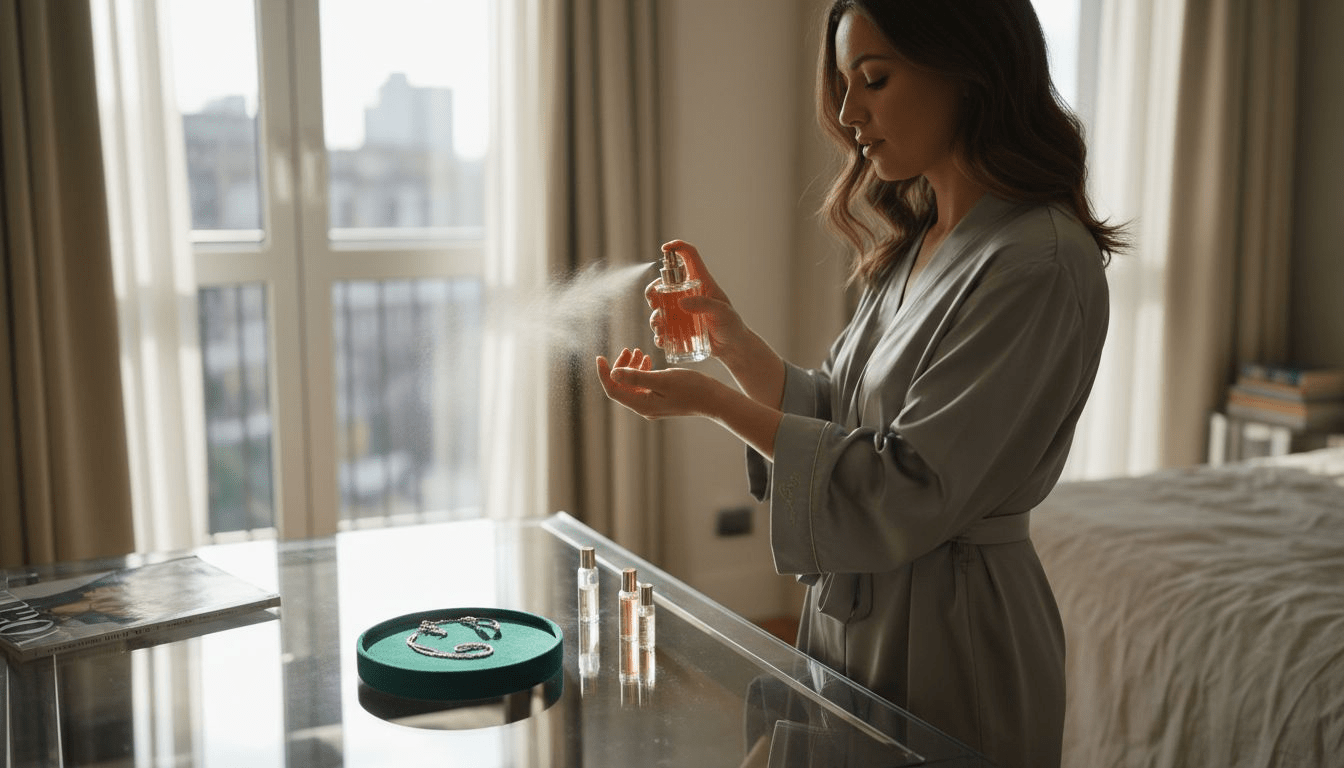
Types of Perfumes for Ladies: Quality and Value
Finding the perfect scent can feel confusing when myths and marketing cloud the facts about fragrance. For UK fragrance lovers searching for affordable yet high-quality perfumes, understanding olfactory perception and the rich craft behind scent creation is the key to making confident choices. By debunking common misconceptions and exploring how trained artisans shape fragrance families, this guide uncovers the science and artistry that transform each bottle into a true sensory experience.
Table of Contents
- Perfume Basics And Common Misconceptions
- Perfume Types And Scent Families Explained
- Concentration Levels And Longevity Factors
- Quality And Safety In UK Perfume Dupes
- Choosing Affordable Yet Lasting Fragrances
Key Takeaways
| Point | Details |
|---|---|
| Understanding Perfume Layers | Recognising the three layers of perfume—top notes, heart notes, and base notes—enhances appreciation of fragrance complexity and informs purchasing decisions. |
| Impact of Fragrance Families | Familiarising oneself with fragrance families (floral, oriental, woody, fresh) allows individuals to select scents that reflect their personal style and emotional resonance. |
| Importance of Concentration Levels | Knowing perfume concentrations—such as Parfum/Extrait and Eau de Parfum—can guide consumers to choose long-lasting fragrances effectively. |
| Quality in Perfume Dupes | Affordable perfume dupes can maintain high quality while adhering to strict UK safety regulations, providing excellent alternatives to designer fragrances. |
Perfume basics and common misconceptions
Perfumery is a nuanced art form that extends far beyond simply smelling pleasant. At its core, fragrance creation involves understanding how olfactory perception works and recognising the complex science behind scent detection.
Our sense of smell relies on detecting tiny airborne particles called odorants, which evaporate from their source and allow our nose to recognise an extraordinary range of scents. These microscopic molecules interact with specialised receptors in our nasal cavity, triggering complex neurological responses that translate into what we perceive as specific fragrances.
Common misconceptions about perfumes often stem from a lack of understanding about fragrance composition. Many people believe perfumes are simple mixtures, when in reality they represent intricate artistic compositions with multiple layers:
- Top notes: Initial scents perceived immediately after application
- Heart notes: Fragrances that emerge after 10-15 minutes
- Base notes: Long-lasting foundational scents that provide depth and longevity
Understanding these layers helps consumers make more informed purchasing decisions and appreciate the complexity behind each bottle. Perfume isn’t just about smelling good—it’s about crafting a sensory experience that tells a story through carefully selected aromatic compounds.
Professional perfumers spend years studying botanical extracts, understanding molecular interactions, and developing sophisticated blending techniques. The Perfume Handbook highlights how trained artisans meticulously select ingredients, considering not just individual scent profiles but how different components interact and evolve over time.
Perfume classification goes beyond simple categorisations, involving intricate knowledge of fragrance families such as floral, oriental, woody, and fresh. Each family represents a distinct olfactory character, allowing individuals to find scents that genuinely resonate with their personality and style.
Pro tip: Always test a perfume on your skin and wait at least 30 minutes to understand its true character, as fragrances interact uniquely with individual body chemistry.
Perfume types and scent families explained
Perfume classification is an intricate art that transforms olfactory experiences into structured categories. Scientists categorise odours based on their chemical composition and perceived sensory characteristics, creating a sophisticated framework for understanding fragrances.
The primary fragrance families represent distinct aromatic landscapes, each with unique personality and emotional resonance:
-
Floral Family: Dominated by flower-inspired scents
- Roses, jasmine, lily, and gardenia notes
- Typically feminine and romantic
-
Oriental Family: Rich, warm, and sensual fragrances
- Includes vanilla, amber, and spice elements
- Often complex and luxurious
-
Woody Family: Earthy and grounding scents
- Featuring sandalwood, cedar, and patchouli
- Provides depth and sophistication
-
Fresh Family: Light, clean, and invigorating
- Citrus, green, and aquatic notes
- Perfect for daytime and summer wear
The Perfume Handbook provides exceptional insights into how professional perfumers meticulously craft these families, considering not just individual scent profiles but the intricate interactions between different aromatic compounds.
Understanding these families allows individuals to select fragrances that genuinely reflect their personality, mood, and personal style. Each family offers a unique sensory narrative, enabling wearers to communicate without words through their chosen scent.
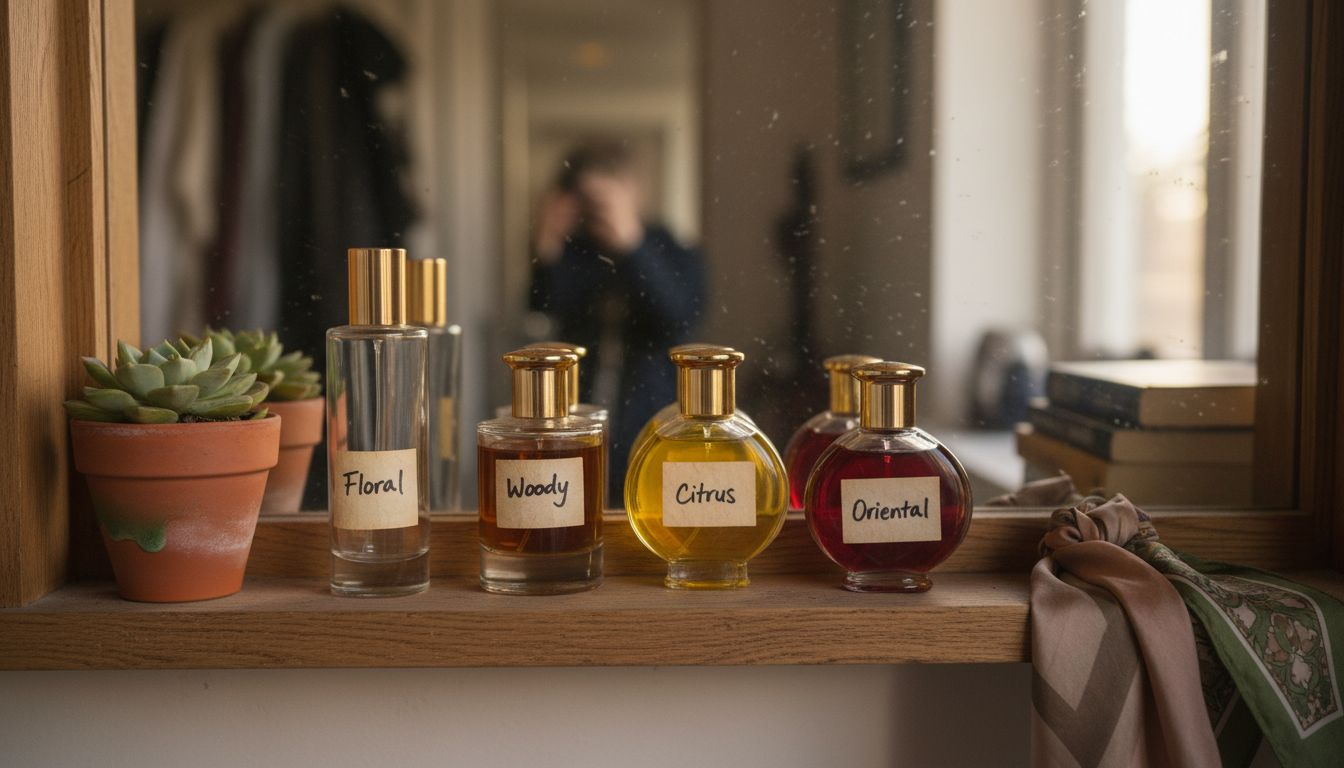
To better understand fragrance families, here’s a comparison of their characteristics and typical occasions:
| Fragrance Family | Character Traits | Typical Wearers | Best Occasions |
|---|---|---|---|
| Floral | Feminine, romantic | Classic, elegant | Evenings, events |
| Oriental | Warm, luxurious | Confident, sensual | Special occasions |
| Woody | Earthy, sophisticated | Modern, mature | Autumn, winter |
| Fresh | Light, energising | Active, youthful | Daytime, summer |
Pro tip: When exploring perfume families, sample fragrances from multiple categories to discover the nuanced layers that resonate most authentically with your personal essence.
Concentration levels and longevity factors
Understanding perfume concentration is crucial for selecting the right fragrance. Advanced perfumery education reveals the intricate relationship between aromatic compound percentages and scent performance.
Perfume concentration levels are typically categorised into distinct hierarchies:
-
Parfum/Extrait: Highest concentration (20-40% aromatic compounds)
- Most intense and longest-lasting
- Typically most expensive
- Requires minimal application
-
Eau de Parfum: Moderate concentration (15-20% aromatic compounds)
- Balanced longevity and intensity
- Most popular consumer choice
-
Eau de Toilette: Lower concentration (5-15% aromatic compounds)
- Lighter, more subtle fragrance
- Ideal for daily wear
-
Eau de Cologne: Lowest concentration (2-4% aromatic compounds)
- Very light and refreshing
- Shortest lasting duration
The Perfume Handbook highlights that longevity isn’t solely determined by concentration. Multiple factors interact to influence how long a fragrance remains perceptible, including molecular complexity, skin chemistry, and environmental conditions.
Key longevity factors extend beyond simple concentration metrics. Individual variables such as body temperature, skin moisture, and personal pH levels dramatically affect how a fragrance develops and persists throughout the day.
Below is an overview comparing perfume concentration levels and expected longevity:
| Type | Scent Strength | Duration on Skin | Ideal Use Case |
|---|---|---|---|
| Parfum/Extrait | Very intense | 8+ hours | Special events |
| Eau de Parfum | Balanced, noticeable | 5-7 hours | Daily wear |
| Eau de Toilette | Subtle, refreshing | 3-5 hours | Casual occasions |
| Eau de Cologne | Light and fleeting | 1-3 hours | Quick refresh |
Pro tip: Apply fragrance to pulse points and moisturised skin to maximise longevity and scent projection.
Quality and safety in UK perfume dupes
Perfume dupes represent an increasingly sophisticated market segment, offering consumers affordable alternatives to designer fragrances. Chemical sensors can now distinguish between genuine and replicated fragrances with remarkable precision, challenging traditional perceptions of product quality.
Under UK regulations, perfume dupes must meet stringent safety requirements:
-
Ingredient Transparency
- Complete disclosure of all chemical compounds
- Mandatory allergen declarations
- Precise labelling of fragrance components
-
Safety Testing
- Comprehensive chemical composition analysis
- Dermatological screening for skin compatibility
- Evaluation of potential long-term health impacts
-
Regulatory Compliance
- Adherence to UK cosmetic product regulations
- Mandatory safety assessments before market entry
- Regular product notifications to regulatory bodies
UK cosmetic product regulations mandate that manufacturers and importers bear complete responsibility for ensuring product safety. This means rigorous testing, transparent labelling, and continuous monitoring of potential health risks.
Quality assessment goes beyond chemical composition. Advanced research demonstrates that many high-quality dupes can closely mimic the molecular structure of designer fragrances, offering consumers sophisticated alternatives without compromising safety or olfactory experience.
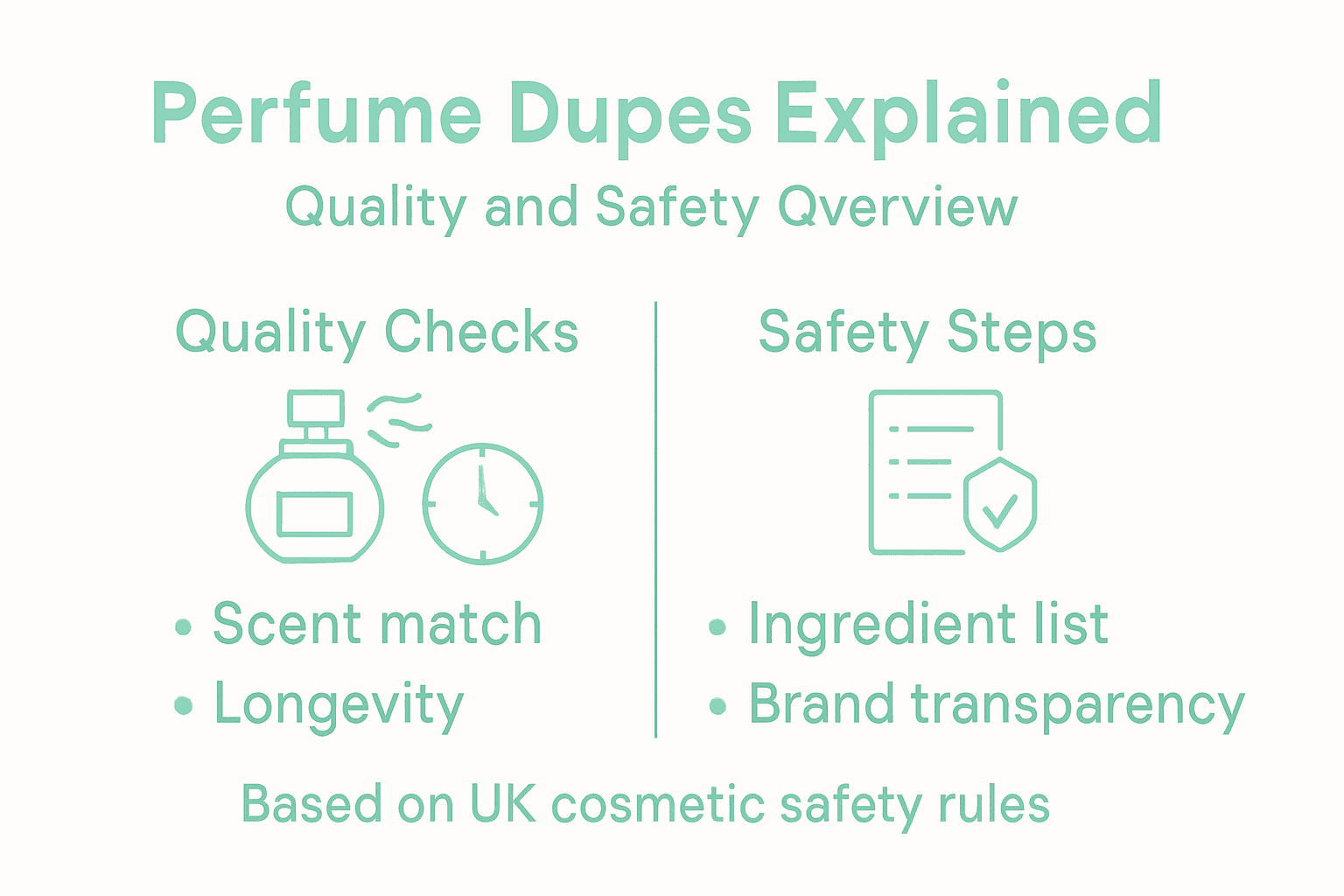
Pro tip: Always check the ingredient list and look for brands that provide transparent information about their fragrance composition and safety testing procedures.
Choosing affordable yet lasting fragrances
Fragrance selection requires a strategic approach that balances quality, longevity, and budget considerations. Value for money principles guide consumers towards making intelligent purchasing decisions that extend beyond mere price point.
Key strategies for selecting affordable, long-lasting fragrances include:
-
Concentration Matters
- Opt for eau de parfum over eau de toilette
- Higher concentration means fewer applications
- More economical in the long term
-
Smart Sampling
- Request free perfume samples
- Test longevity before full purchase
- Reduces wasteful spending
-
Seasonal Considerations
- Choose lighter scents for summer
- Select deeper fragrances for winter
- Maximises fragrance performance and value
Consumer protection guidelines emphasise transparency in pricing, encouraging consumers to look beyond initial cost and evaluate the overall performance and longevity of fragrances.
Sophisticated fragrance enthusiasts understand that affordability doesn’t compromise quality. Many budget-friendly perfumes offer remarkable complexity and staying power, challenging the notion that expensive always equates to superior.
Pro tip: Purchase smaller bottles and rotate between 2-3 fragrances to prevent olfactory fatigue and extend your perfume collection’s overall value.
Discover Quality and Value in Perfumes for Ladies with Alexandria UK
Choosing the perfect perfume can feel overwhelming when faced with complex fragrance families, concentration levels, and concerns about authenticity and longevity. This article has highlighted key challenges such as understanding the differences between floral, oriental, woody, and fresh scents as well as selecting affordable yet lasting perfumes without compromising on quality. If you are seeking expert-crafted fragrances that balance these factors, Alexandria UK offers an inspiring range focused on quality perfume sales inspired by designer scents and high-quality dupes.
Explore our thoughtfully curated collection at Alexandria UK and enjoy perfumes that truly capture your personal essence while respecting your budget. Our dedication to transparency and safety means you can trust every fragrance. Don’t miss the chance to redefine your scent story with expert guidance on quality and value. Start now by visiting our landing page and unlock special offers designed for your unique preferences.
Frequently Asked Questions
What are the different types of perfume concentrations?
Perfumes are categorised based on concentration levels which include Parfum/Extrait (20-40%), Eau de Parfum (15-20%), Eau de Toilette (5-15%), and Eau de Cologne (2-4%). Each type varies in scent strength and longevity.
How can I choose a perfume that lasts longer?
To select a long-lasting fragrance, opt for perfumes with higher concentrations, such as Eau de Parfum or Parfum. Applying them to pulse points and moisturised skin can also enhance their staying power.
What are the main fragrance families for women’s perfumes?
The primary fragrance families include Floral (romantic scents), Oriental (rich and warm), Woody (earthy and sophisticated), and Fresh (light and clean). Each offers a unique olfactory experience suitable for different preferences.
How do I know if a perfume suits my body chemistry?
To determine if a perfume complements your body chemistry, always test it on your skin and wait at least 30 minutes. Fragrance development can vary based on individual skin moisture, pH levels, and temperature.
Recommended
- Best Perfume for Women: Discover Quality Dupes
- Kinds of Perfume Brand: Unlocking Scented Value
- Best Perfume Choices: Quality Dupes for UK Enthusiasts
- 7 Best Cheap Long Lasting Perfume for Ladies in the UK
- Hair Extension Quality – Impact on Look and Longevity
- Understanding Essential Oils Good for Hair: Nature’s Solutions | MyHair


