Parfum-Chemie: Warum Duplikate so überzeugend sind
Over 90 percent of all fragrance lovers in the UK now pay close attention to the chemical structure of their perfumes. Those seeking the highest quality and authentic fragrance duplicates know just how much small molecular differences can change a perfume's character. Here, you will learn how the precise chemistry behind every scent works, the differences between nature-based and synthetic ingredients, and what quality testing truly means for modern duplicates.
Table of Contents
- Definition and Basic Principles of Perfume Chemistry
- Types of Natural and Synthetic Fragrances
- Fragrance Structure: Top, Heart, and Base Notes
- Quality Factors in Fragrance Duplicates
- Safety and Labeling Requirements in the UK
Key Takeaways
| Point | Details |
|---|---|
| Chemical Structure of Perfume | Perfume consists of top, heart, and base notes that unfold over time. |
| Natural vs. Synthetic Fragrances | Natural fragrances are authentic, while synthetic ones offer consistency and variety. |
| Fragrance Structure & Perception | Test perfume for at least 30 minutes to fully experience all fragrance notes. |
| UK Safety Regulations | Pay attention to allergens in the ingredient list to avoid skin reactions. |
Definition and Basic Principles of Perfume Chemistry
Perfume is a complex chemical composition that is far more than just a pleasant scent. The science behind perfumes is based on precise molecular interactions and subtle chemical processes. Perfume extracts consist of a carefully balanced blend of essential oils, alcohol, and other solvents that work together to create a unique sensory experience.
The fundamental structure of a perfume can be divided into three essential components: top note, heart note, and base note. This chemical layering allows the scent to develop and change over time. Each note represents different volatile molecules with varying evaporation rates, which are released sequentially to create a complex olfactory journey.
The chemical composition of scents is based on organic compounds such as terpenes, esters, and aldehydes. These molecules interact with our olfactory receptors and trigger specific sensory responses. Interestingly, tiny changes in the molecular structure can cause dramatic differences in the overall scent—a testament to the precision and art of perfume chemistry.
Pro Tip: When buying a perfume, always pay attention to the ingredients and their quality. The chemical composition determines not only the scent but also the longevity and the potential for development on your skin.
Types of Natural and Synthetic Fragrances
In the world of perfumery, there are two main categories of fragrance ingredients: natural and synthetic. Natural aromatic substances come directly from nature—from plants, flowers, fruits, herbs, and even animal sources like musk. These fragrances are traditionally obtained through distillation, extraction, or cold pressing and are characterized by their complex and authentic composition.
Synthetic fragrances, on the other hand, are developed in a lab and offer perfumers incredible variety and consistency. These artificially created molecules can produce scents that do not exist in nature or are difficult to extract. Fragrance technologies allow chemists to construct precise molecules that are identical to natural scents or create entirely new olfactory experiences.

The main difference between natural and synthetic fragrances lies in their production, complexity, and cost-effectiveness. While natural scents are often more expensive and less consistent, synthetic variants offer standardization, durability, and creative flexibility. Modern perfumes frequently combine both approaches to develop unique and fascinating fragrance compositions.
Pro Tip: When buying perfumes, look for the term "nature-identical"—these scents combine the authenticity of natural aromas with the precision of synthetic production techniques.
The following overview shows the differences and advantages of natural and synthetic fragrances:
| Characteristic | Natural Fragrances | Synthetic Fragrances |
|---|---|---|
| Origin | Plants, animals | Lab-created molecules |
| Availability | Seasonal and limited | Available year-round |
| Cost | Often higher | Generally more cost-effective |
| Scent Variety | Natural complexity | Expanded creativity |
| Consistency | Fluctuates with harvest | Stable scent profiles |
| Allergy Risk | Natural potential | Can be specifically reduced |
Fragrance Structure: Top, Heart, and Base Notes
The structure of a perfume is like an olfactory symphony played in three precisely coordinated movements. Fragrance notes form the framework of every perfume composition and allow for a complex sensory journey that unfolds over hours. The top note, also called the head accord, is the first impression a perfume leaves upon application—usually fresh, light, and fleeting.
The heart note, the core of a fragrance, unfolds about 10-30 minutes after application and represents the actual character of the perfume. Here, the light top notes meet the deeper base notes and create a harmonious bridge. Typical heart notes include floral scents like rose, jasmine, or ylang-ylang, which add warmth and softness to the composition.
The base note is the final and longest-lasting impression of a scent. These notes develop slowly and often remain on the skin for several hours. Characteristic base notes like vanilla, musk, sandalwood, or patchouli give the perfume depth, complexity, and longevity. Perfume notes are like chemical choreographies that are precisely matched to create a unique olfactory experience.
Pro Tip: Always test a perfume on your skin for at least 30 minutes to experience and understand all three fragrance notes in their full development.
This table summarizes the most important chemical fragrance notes and their function:
| Fragrance Note | Typical Molecules | Perception Duration | Effect in Perfume |
|---|---|---|---|
| Top Note | Aldehydes, light esters | 5–15 minutes | Freshness, first impression |
| Heart Note | Terpenes, floral compounds | 30–60 minutes | Character, harmony |
| Base Note | Resins, heavy alcohols | Several hours | Depth, longevity |
Quality Factors in Fragrance Duplicates
The production of high-quality fragrance duplicates requires a precise scientific approach that goes far beyond simple imitation. International quality standards define strict guidelines for the development of perfume duplicates, ensuring safety, authenticity, and sensory quality. Crucial quality factors include molecular similarity, raw material selection, and chemical precision.
Chemical composition is the key to a scent's persuasive power. High-quality duplicates analyze original perfumes on a molecular level and reconstruct their complex scent signature. Factors such as ingredient purity, evaporation behavior, and the balance between natural and synthetic components play a decisive role. Cosmetic research standards emphasize the importance of precise sensory tests to guarantee the quality and authenticity of fragrance copies.
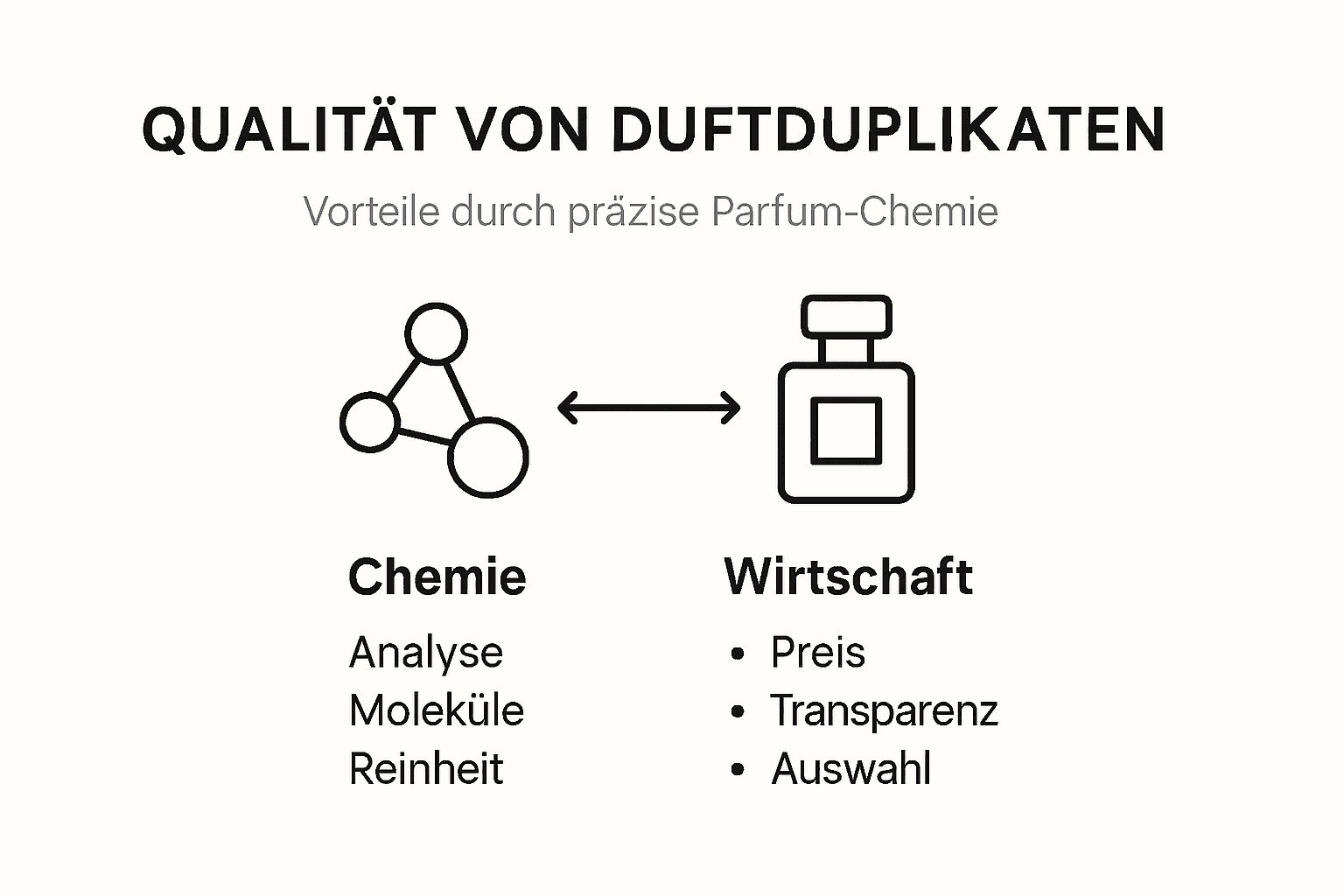
Besides chemical precision, economic aspects also play an important role. High-quality duplicates must not only impress olfactorily but also offer an attractive price-performance ratio. This requires innovative production techniques, efficient raw material procurement, and a deep understanding of fragrance compositions. The best duplicates achieve a nearly perfect balance between fidelity to the original, quality, and affordability.
Pro Tip: When buying fragrance duplicates, look for manufacturers who provide transparent information about their ingredients and production processes—a sign of quality and trustworthiness.
Safety and Labeling Requirements in the United Kingdom
The British cosmetics market is subject to strict safety regulations that prioritize consumer protection. International safety standards play a decisive role here, especially for perfumes and fragrances. In the UK, all cosmetic products, including perfume duplicates, must undergo extensive safety tests and meet specific labeling requirements.
Labeling requirements include detailed information about ingredients, allergens, and production data. Consumers have a right to full transparency, which is why manufacturers are required to list all ingredients in descending order of their concentration. Particularly critical are allergens, which must be explicitly labeled if their concentration exceeds a certain threshold. This applies to substances such as cinnamal, eugenol, or certain essential oils that can trigger potential allergies.
Regulatory authorities in the UK, primarily the Health and Safety Executive (HSE) and Trading Standards, monitor compliance with these regulations. After Brexit, while regulations have diverged slightly from EU directives, they remain largely identical. Manufacturers must provide comprehensive safety documentation that includes risk assessments, stability tests, and detailed analyses of the ingredients used.
Pro Tip: Check the ingredient list of every perfume and be aware of potential allergens. A careful review can prevent allergic reactions and protect your skin health.
Experience the Fascination of High-Quality Fragrance Duplicates
The secret of convincing perfume duplicates lies in the precise chemistry of the top, heart, and base notes as well as the perfect balance between natural and synthetic ingredients. Many customers face the challenge of finding a scent that comes close to the original without compromising on quality or longevity. Our passion at Alexandria UK is to offer you exactly these finely tuned, high-quality fragrance duplicates. We pay attention to exact ingredients and chemical precision that you can feel and smell.

Discover our carefully selected perfumes now, which exceed your expectations for quality and authenticity. Take the opportunity to experience how modern fragrance technologies combined with nature-identical ingredients create unique olfactory experiences. Visit Alexandria UK and convince yourself how good a high-quality fragrance duplicate can be. Let the variety inspire you and find your new favorite scent today.
Frequently Asked Questions
What are the main components of perfume?
The main components of perfume are essential oils, alcohol, and other solvents that together form a complex chemical composition.
What is the difference between natural and synthetic fragrances?
Natural fragrances originate from nature, while synthetic fragrances are developed in the lab. Natural scents are often more expensive and vary by harvest, while synthetic scents offer consistency and creative flexibility.
How are a perfume's fragrance notes structured?
A perfume consists of three main components: top note (first impression), heart note (character), and base note (lasting impression). Each note unfolds over different timeframes and influences the scent experience.
How is the quality of fragrance duplicates ensured?
The quality of fragrance duplicates is ensured by international standards, precise molecular analyses, and the selection of pure raw materials. Manufacturers must provide clear information about ingredients and production processes.