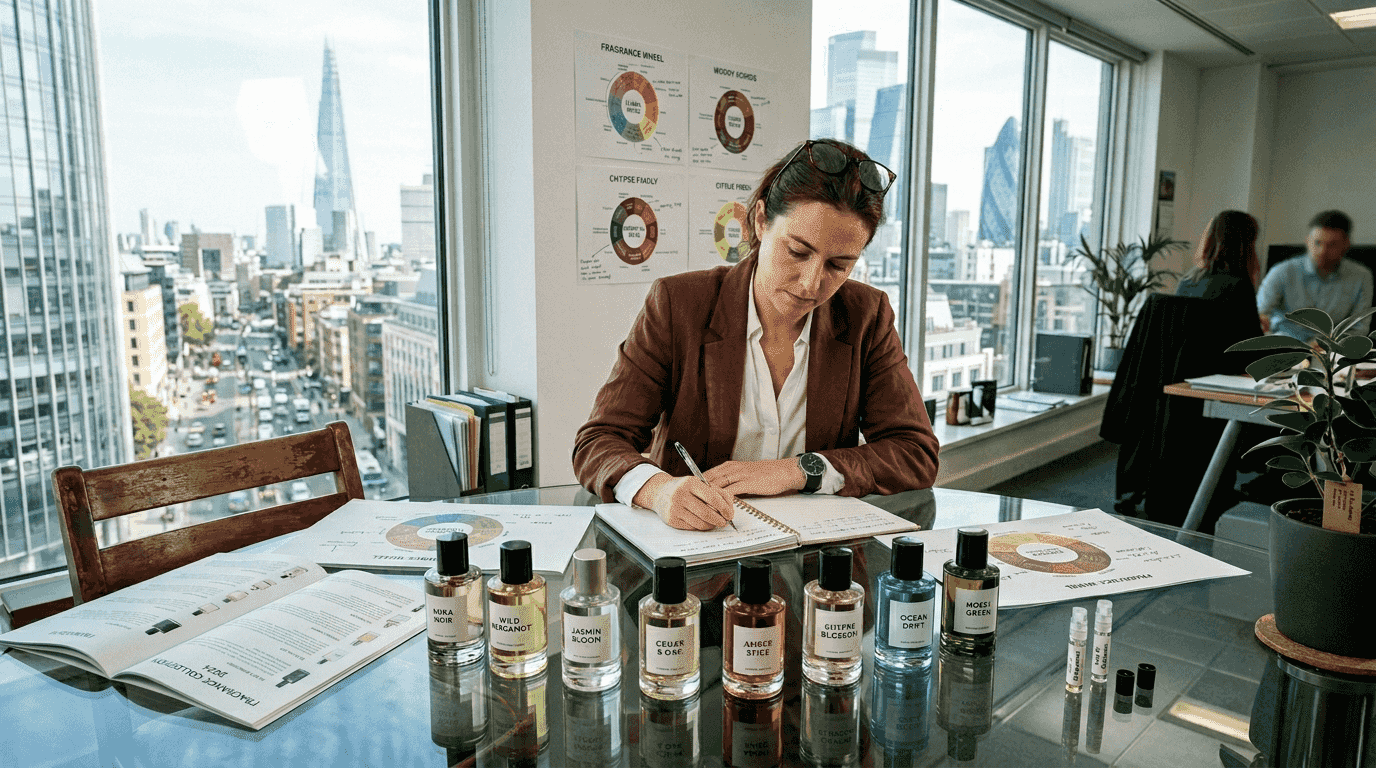
How long can perfume last? Your 2026 fragrance guide
Many believe perfume only lasts a few hours, but that’s far from the complete picture. Perfume longevity varies dramatically based on fragrance type, application method, and how you care for it. This guide reveals exactly how long different perfumes last on your skin and provides expert strategies to maximise their lasting power throughout your day.
Table of Contents
- Understanding How Long Perfume Lasts On Your Skin
- Comparing Perfume Types And Their Lasting Power
- How Storage And Application Affect Perfume Lifespan And Scent Duration
- Choosing Perfumes And Applying Them For Maximum Lasting Effect
- Discover Premium Fragrances And Expert Guidance At Alexandria UK
- Frequently Asked Questions
Key takeaways
| Point | Details |
|---|---|
| Typical lasting time | Most perfumes last 4-8 hours on skin depending on concentration and application |
| Longest lasting type | Extrait de Parfum can last up to 24 hours with proper application |
| Storage matters | Cool, dark, dry storage extends both bottle lifespan and scent quality |
| Application technique | Moisturised pulse points and avoiding rubbing maximises fragrance duration |
Understanding how long perfume lasts on your skin
The truth about perfume longevity often surprises fragrance enthusiasts. Perfumes typically last between 4 and 8 hours on the skin, but this timeframe shifts considerably based on multiple factors working together. Your unique skin chemistry, the surrounding environment, fragrance concentration, and application method all influence how long that beautiful scent lingers.
Think of perfume longevity as a partnership between the fragrance itself and your body. Oily skin holds scent molecules longer than dry skin. Warm, humid conditions can intensify fragrances initially but cause faster evaporation. Cold weather often preserves perfume longer but makes it less noticeable.
Different perfume types deliver vastly different lasting power. Understanding long lasting perfume explained helps you choose fragrances matching your lifestyle needs. A quick spritz of Eau de Toilette might refresh you for a few hours, whilst a quality Extrait de Parfum can accompany you from morning through evening.
Factors influencing perfume duration:
- Fragrance oil concentration determines base longevity potential
- Skin type and moisture level affect how scent molecules bind
- Environmental temperature and humidity impact evaporation rates
- Application technique and targeted body areas influence projection
- Time since last skin moisturising affects fragrance adherence
Comparing perfume types and their lasting power
Perfume categories aren’t just marketing terms. They represent specific oil concentration ranges that directly impact how long fragrances last on your skin. The difference between Eau de Parfum and Extrait de Parfum lies primarily in these concentration levels, which determine both intensity and duration.
Eau de Parfum generally lasts 6 to 10 hours with 15% to 20% fragrance oils. This concentration strikes an excellent balance between longevity and affordability, making it the most popular choice for daily wear. Meanwhile, Extrait de Parfum typically lasts up to 24 hours with 20% to 40% oil concentration, offering exceptional staying power for special occasions or those wanting maximum value per application.
Perfume type comparison:
| Type | Oil concentration | Typical duration | Best for |
|---|---|---|---|
| Eau de Cologne | 2-4% | 2-3 hours | Quick refreshment, hot weather |
| Eau de Toilette | 5-15% | 3-5 hours | Light daily wear, office environments |
| Eau de Parfum | 15-20% | 6-10 hours | All day wear, versatile occasions |
| Extrait de Parfum | 20-40% | 12-24 hours | Special events, maximum longevity |
Higher concentrations mean fewer sprays needed. Two spritzes of Extrait can outlast five sprays of Eau de Toilette whilst delivering richer depth. This makes premium concentrations surprisingly economical over time, despite higher initial costs.
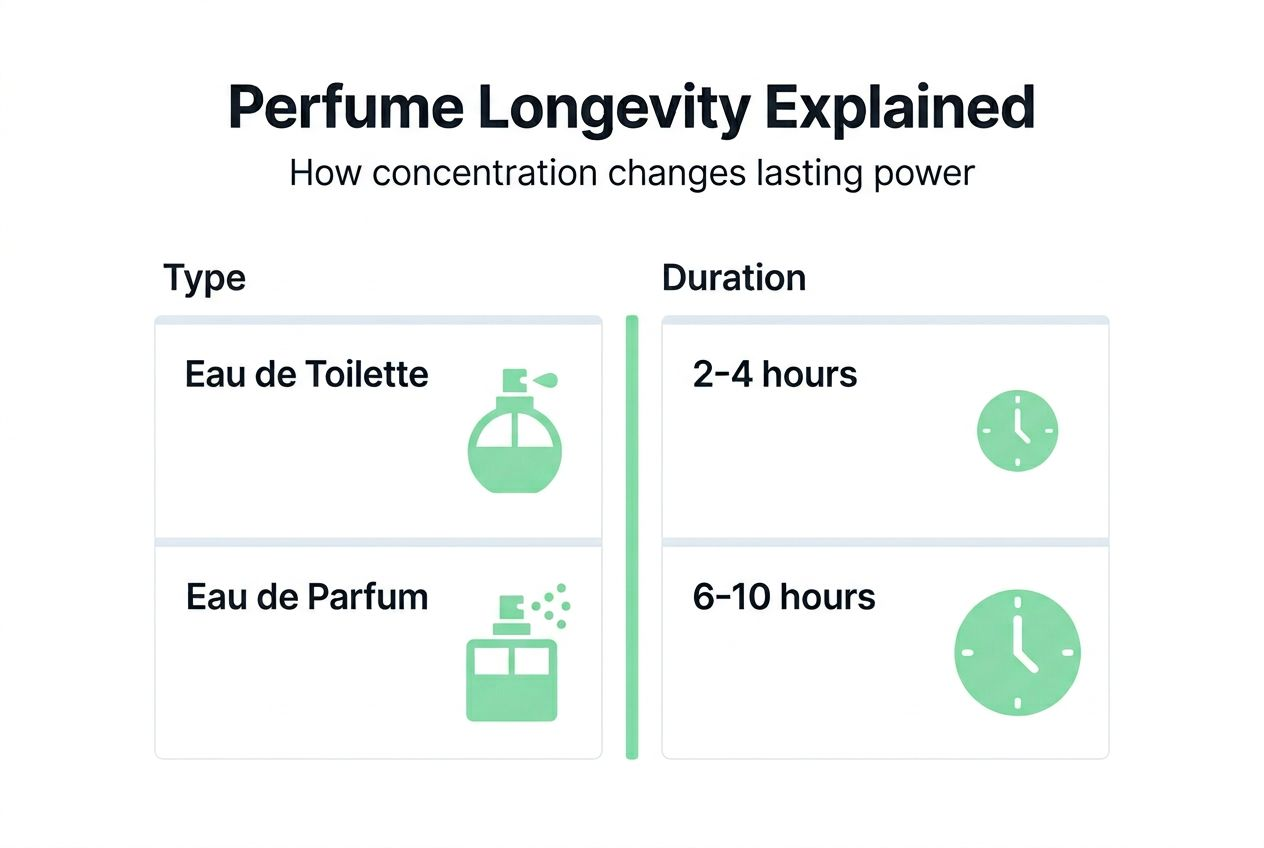
Pro Tip: Match perfume concentration to your schedule. Extrait works brilliantly for long workdays or events, whilst Eau de Toilette suits shorter outings where you can reapply easily.
How storage and application affect perfume lifespan and scent duration
Your perfume’s longevity begins before you even open the bottle. Correct storage in a cool, dark, and dry environment can notably extend perfume’s lifespan from months to years. Heat, light, and humidity are fragrance enemies, breaking down delicate scent molecules and altering the carefully balanced composition perfumers spent months creating.
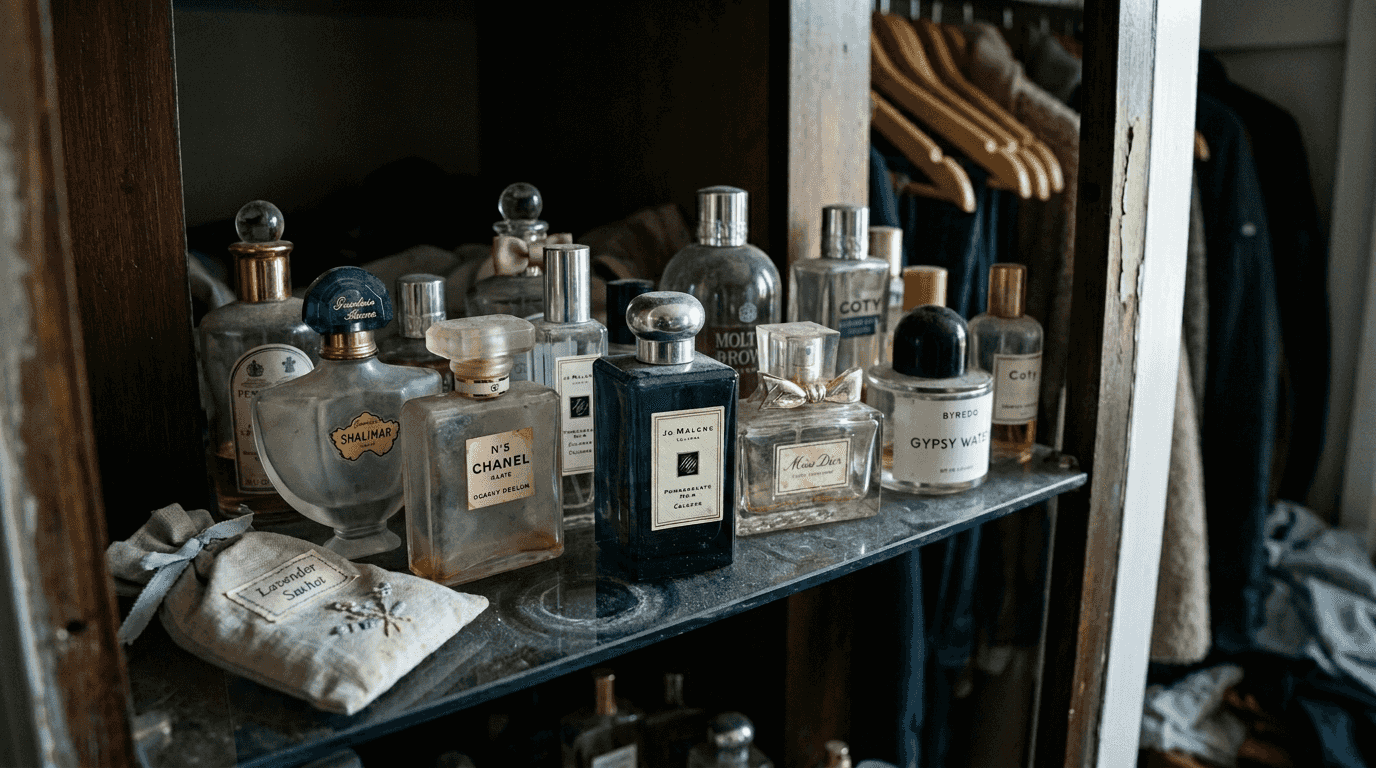
Most quality perfumes maintain their integrity for two to five years when stored properly. Bathroom shelves, despite their convenience, represent the worst storage location. Temperature fluctuations from showers and direct light exposure accelerate degradation. Instead, consider storing perfume correctly in bedroom drawers or wardrobe shelves where conditions remain stable.
Application technique dramatically influences how long scent lasts on your skin. Enhance fragrance longevity by applying perfume to moisturised skin, targeting pulse points, and refraining from rubbing wrists together. These practices help fragrance molecules bind effectively to your skin rather than evaporating rapidly into the air.
Storage best practices:
- Keep bottles in original packaging away from direct sunlight
- Maintain consistent cool temperatures between 15 and 20 degrees Celsius
- Store upright to prevent seal deterioration and leakage
- Avoid bathroom storage due to humidity and temperature swings
- Keep caps tightly sealed to minimise air exposure
Pulse points emit gentle warmth that helps diffuse fragrance naturally. Wrists, neck, behind ears, and inner elbows work wonderfully. Rubbing wrists together breaks down top notes, crushing the fragrance structure. Instead, let perfume settle naturally for optimal development.
Pro Tip: Apply unscented moisturiser to pulse points before spraying perfume. This creates a hydrated base that grips scent molecules, potentially doubling how long your fragrance lasts.
Choosing perfumes and applying them for maximum lasting effect
Selecting the right perfume type transforms your fragrance experience. Longevity depends greatly on how the fragrance is applied and the type of fragrance you choose. Consider your daily routine, typical environments, and how often you can reapply when making purchase decisions.
Office workers benefit from moderate Eau de Parfum concentrations that last through meetings without overwhelming colleagues in close quarters. Those with active lifestyles or long days might invest in Extrait de Parfum to avoid carrying bottles. Understanding these nuances helps you make perfume last longer through informed selection rather than excessive application.
Strategic application steps for maximum longevity:
- Shower with unscented or lightly scented products to create a clean base
- Apply unscented body lotion whilst skin remains slightly damp
- Wait two minutes for moisturiser to absorb completely
- Spray perfume from 15 to 20 centimetres away onto pulse points
- Target wrists, neck sides, behind ears, and inner elbows
- Let fragrance dry naturally without rubbing or touching
- Consider spraying a light mist on hair or clothing for extended presence
Layering fragrances creates dimension whilst extending wear time. Use matching scented body wash, lotion, and perfume from the same line. This builds fragrance intensity gradually, making it last longer than perfume alone.
Clothing holds scent longer than skin but test on inconspicuous areas first. Natural fibres like cotton, wool, and silk absorb and release fragrance beautifully. Synthetic materials may react unpredictably or retain scent through multiple washes.
Discover premium fragrances and expert guidance at Alexandria UK
Now that you understand perfume longevity fundamentals, explore quality fragrances designed for lasting performance. Alexandria UK offers carefully curated perfume selections focusing on exceptional quality and impressive staying power. Each fragrance undergoes rigorous testing to ensure it meets high standards for both scent quality and duration.
Beyond premium perfumes, Alexandria UK provides comprehensive resources helping you maximise every bottle’s potential. Discover detailed guides on the best ways to store perfume and access expert perfume tips covering application techniques, seasonal considerations, and fragrance layering strategies that extend wear time significantly.
Frequently asked questions
What makes some perfumes last longer than others?
Fragrance concentration determines base longevity, with Extrait de Parfum lasting longest due to 20% to 40% oil content. Ingredient quality also matters, as natural essences and synthetic molecules vary in volatility. Base notes like sandalwood, vanilla, and amber persist longer than citrus or light florals.
Can perfume expire or go bad over time?
Yes, perfumes deteriorate over two to five years depending on storage conditions. Signs include colour darkening, scent changing, or reduced projection. Proper storage in cool, dark places significantly extends shelf life. Some vintage perfumes remain excellent for decades when stored properly.
Does applying perfume to clothes make it last longer?
Clothing typically holds fragrance longer than skin because fabric fibres trap scent molecules. However, test on hidden areas first as perfume can stain delicate materials. Natural fibres work best, whilst synthetic fabrics may react unpredictably or retain scent through washing.
How many sprays of perfume should I use?
Two to four sprays suffice for most Eau de Parfum concentrations, targeting key pulse points. Extrait de Parfum needs only one to two applications due to higher concentration. Over spraying wastes product and can overwhelm rather than enhance your presence.
Why does perfume smell different throughout the day?
Perfumes unfold in three stages: top notes last 15 to 30 minutes, heart notes persist two to four hours, and base notes linger longest. This intentional structure creates evolving complexity. Your body chemistry, activities, and environment also influence how these stages develop and fade.
Should I store perfume in the fridge?
Refrigeration works for long term storage but isn’t necessary for regular use. Consistent cool temperatures matter more than extreme cold. Standard fridge temperatures around 4 degrees Celsius can preserve perfume for years, but condensation from temperature changes when removing bottles can cause issues. A cool, dark cupboard typically suffices.