
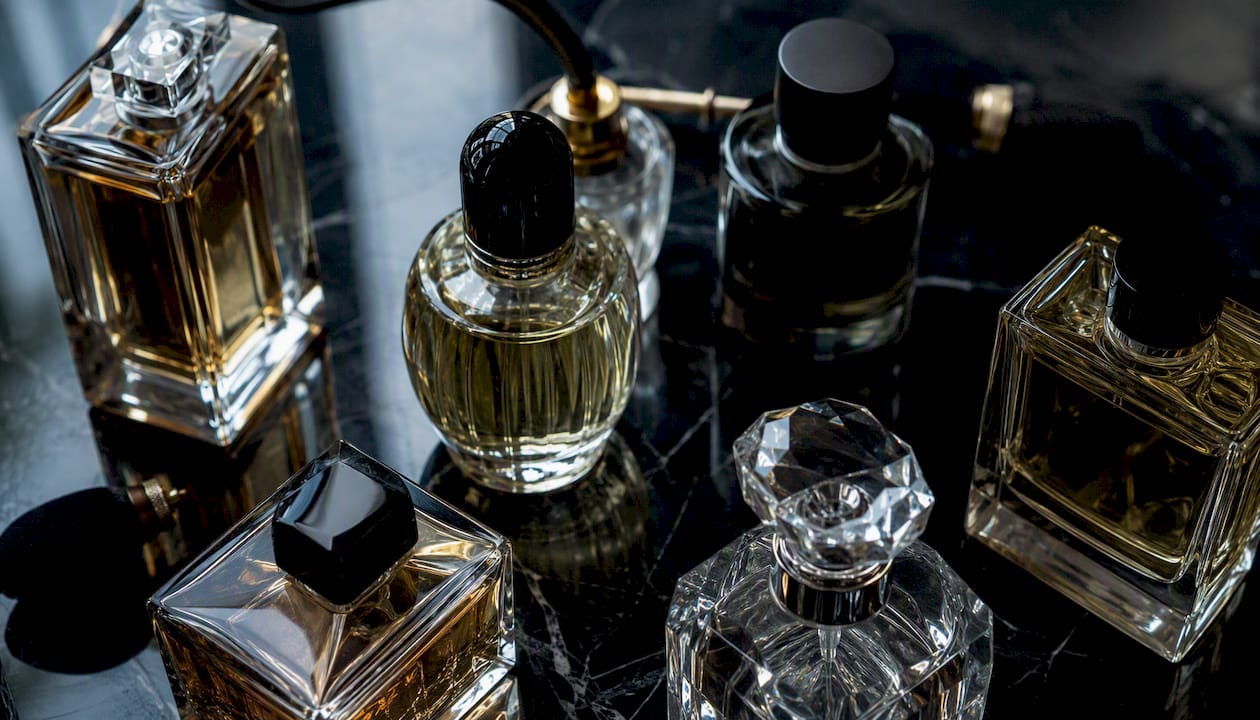
Different types of perfume bottles: identify and choose
Perfume bottles divide cleanly across three axes: dispensing mechanism (atomiser, splash/flacon, rollerball, travel/refillable), material (glass, crystal, metal, plastic) and shape/style (flacon, figural, minimalist, decanter). Knowing which axis matters most for your situation is the fastest route to the right choice.
The four main dispensing categories at a glance:
- Atomiser/spray — fine mist, even skin coverage, most common retail format
- Splash/stopper flacon — dabbed or poured; favoured by extrait collectors for ritual application
- Rollerball — targeted, precise application; ideal for pulse points and handbag carry
- Travel/miniature/refillable spray — compact, portable, typically 1–15 ml for sampling or carry-on use
Pro Tip: Match your applicator to your concentration. A rich parfum or extrait benefits from a dabber or rollerball, which deposits the oil-heavy juice directly onto skin without dispersing it into the air. Lighter eaux de toilette and body mists bloom best through a fine-mist atomiser.
Table of Contents
- Why do classic bottle formats still dominate the market?
- How does bottle material affect your fragrance?
- What are the main dispensing mechanisms and which suits you?
- How do bottle shapes and styles signal quality and intent?
- How to choose and use a perfume bottle: a practical checklist
- Alexandriauk’s expert guide to travel atomisers and safe refilling
- Key takeaways
- A connoisseur’s view on collecting versus using
- The Alexandriauk travel atomiser: a practical next step
Why do classic bottle formats still dominate the market?
The stopper-sealed flacon predates the pump atomiser by centuries, yet both sit side by side on dressing tables today. The reason is not inertia; it is that each format serves a genuinely different ritual. Collectors prize splash bottles for the ceremony of application. Designers retain signature silhouettes because the bottle is, in many cases, the first sensory encounter with a fragrance.
Key moments that shaped the formats you see now:
- Pre-20th century: hand-blown glass flacons with ground-glass stoppers; the dominant vessel for perfume oils and early alcohol-based scents
- 1920s–1950s: the rise of the pump atomiser, coinciding with Art Deco geometry and the designer flacon as a brand statement (think architectural shoulders and faceted glass)
- 1960s–1980s: mass-market spray bottles and the democratisation of fragrance; figural and sculptural bottles emerge as collector pieces
- 2000s–present: refillable and biodegradable options enter mainstream packaging as sustainability becomes a purchasing criterion
Splash bottles have not disappeared because extrait de parfum concentrations are too precious to mist into the air. The stopper flacon is the correct vessel for the most concentrated, expensive juice a house produces.
How does bottle material affect your fragrance?
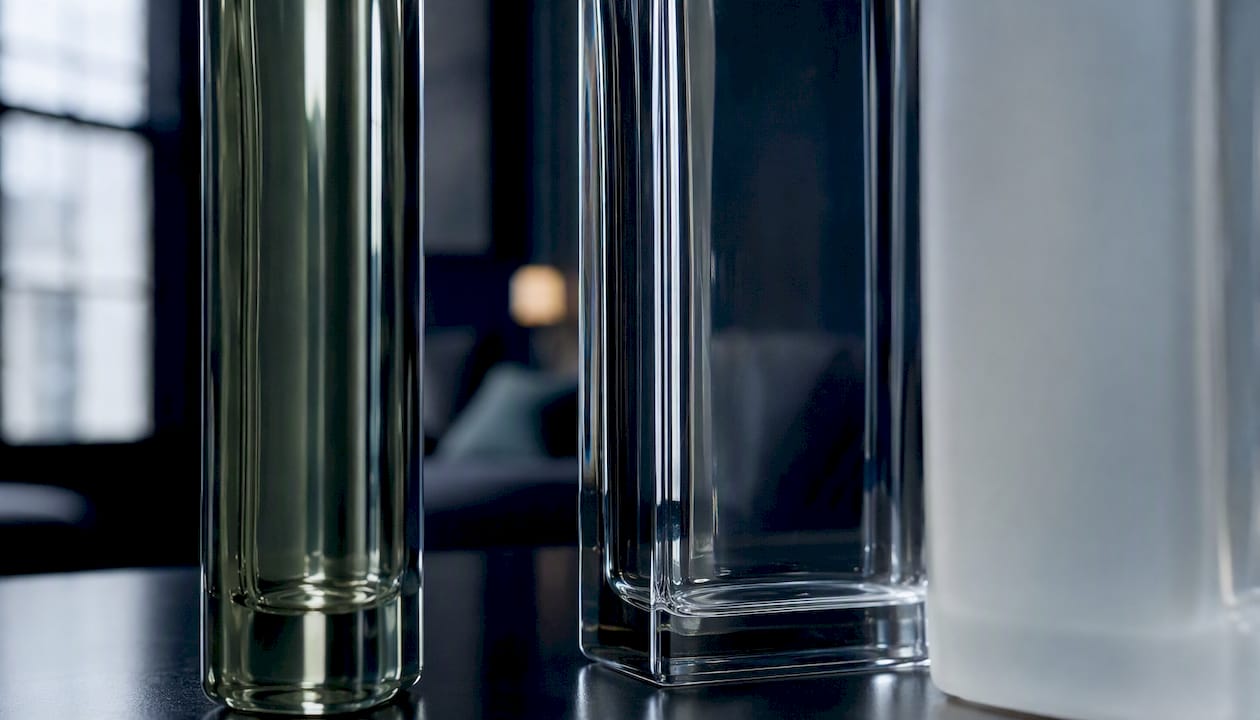
Glass is the industry standard for chemical inertness, meaning it will not react with ethanol or fragrance compounds regardless of concentration. Crystal and high-flint glass are premium choices; plastics serve specific travel and mass-market roles; metals appear mainly in caps and protective casings.
| Material | Chemical stability | UV protection | Typical application |
|---|---|---|---|
| Standard glass | Excellent | Low (clear) | Retail, everyday wear |
| High-flint / crystal glass | Excellent | Low | Luxury, collector editions |
| Opal glass | Excellent | High | Vintage-style, sensitive formulas |
| PET / PP plastic | Good | Variable | Travel, mass-market |
| Metal (aluminium, brass) | Good | High | Caps, travel casings, niche formats |
High-flint glass reduces the faint greenish tint present in standard glass, helping to preserve visual clarity. Opal glass, by contrast, is specified precisely for its UV-blocking properties, making it a considered choice for photosensitive or natural-ingredient formulas.
Caps and internal components deserve equal scrutiny. Premium concentrates benefit from fluoropolymer-lined internals and external-spring pumps, which keep the fragrance away from metal springs and prevent plastic-ethanol interactions over time. Dip tubes should reach the bottle’s base cleanly; a poorly fitted tube wastes the last quarter of expensive juice.
Pro Tip: Tap the cap gently on a hard surface. A hollow, lightweight sound suggests thin plastic that may crack or warp with repeated use. A dense, weighted cap with a firm click indicates quality materials and a proper seal — both matter for preserving high-ethanol fragrances.
What are the main dispensing mechanisms and which suits you?
Authoritative fragrance guides identify five primary dispensing systems, each with a distinct application profile.
- Pump atomiser — the workhorse of retail perfumery; delivers a metered, fine mist; suited to eaux de toilette and eaux de parfum; typical retail volumes 30–100 ml
- Bulb atomiser — the vintage rubber-bulb spray; produces a softer, diffuse cloud; largely decorative today but still used in niche and collector formats
- Rollerball — a stainless-steel or glass ball in a threaded neck; deposits fragrance directly; best for parfum concentrations and targeted pulse-point application; typical volumes 5–10 ml
- Splash/stopper flacon — no mechanical dispenser; the stopper is removed and the bottle tilted or a fingertip used; the connoisseur’s choice for extraits; volumes range from 7.5 ml to 100 ml
- Pipette/dropper — a glass or plastic pipette for laboratory-precise application; common in niche and artisan houses for high-concentration oils
| Mechanism | Best concentration | Best use-case |
|---|---|---|
| Pump atomiser | EdT, EdP | Daily wear, home, gifting |
| Rollerball | Parfum, EdP | Travel, handbag, pulse points |
| Splash/stopper | Extrait, parfum | Collector, ritual, home display |
| Pipette/dropper | Perfume oil, extrait | Artisan, niche, layering |
| Travel refillable spray | EdT, EdP, EdC | Carry-on, gym, commute |
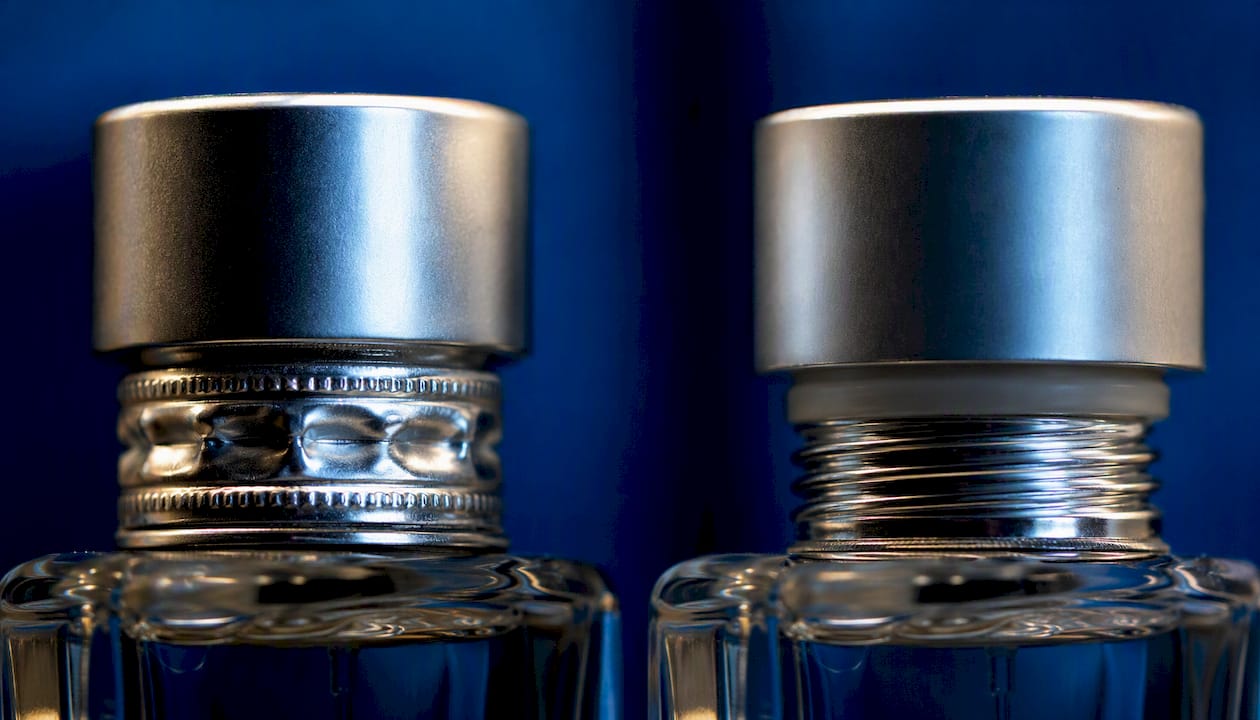
One practical distinction worth knowing: crimp-neck assemblies (the FEA 15 standard used in luxury atomisers) create a hermetic, tamper-evident seal by permanently deforming an aluminium ferrule onto the glass lip. Screw-neck assemblies are more common in refill systems and allow the pump to be removed, but they require a well-fitted gasket to avoid leakage. If refillability matters to you, check the neck type before buying.
How do bottle shapes and styles signal quality and intent?
Shape is not purely aesthetic. It communicates brand identity, signals the concentration tier inside, and determines how comfortably the bottle sits in your hand or on a shelf.
- Rectangular/square flacon — the classic workhorse silhouette; projects formality and precision; associated with masculine and unisex releases
- Oval/teardrop — softer, more feminine associations; ergonomically comfortable to hold; a perennial choice for floral and gourmand accords
- Figural — bottle moulded into a recognisable form (a torso, a flower, an object); primarily a collector format; design-era classifications include Art Nouveau organic curves and Art Deco geometric angularity
- Minimalist cylinder or cube — clean lines, no ornamentation; signals contemporary niche positioning; lets the juice speak rather than the vessel
- Decanter/amphora — large, display-oriented; often hand-blown or hand-cut; the centrepiece of a collection rather than a daily-use bottle
Pro Tip: When photographing bottles for a collection or resale, shoot from a three-quarter angle with side lighting. This reveals the glass thickness, any faceting, and the quality of the stopper or pump head — the details that separate a decorative piece from a genuinely fine flacon.
How to choose and use a perfume bottle: a practical checklist
Choose by intended use first, then material and mechanism. A bottle destined for daily travel has entirely different requirements from one displayed on a dressing table.
Purchase checklist:
- Neck type — screw-neck for refillable systems; crimp-neck for sealed luxury atomisers
- Cap fit — press and twist; no wobble, no gap at the base of the cap
- Spray quality — test the pump; the mist should be fine and even, not a stream or a drip
- Material — glass for home use; lightweight plastic or aluminium casing for travel
- Refill compatibility — confirm threading standard matches your refill system before committing
For screw-neck refill systems, the process is straightforward: remove the pump head by unscrewing it anti-clockwise, insert a refill funnel or the nozzle of your source bottle, fill slowly to avoid air pockets, then reseal firmly. Wipe the neck threads before replacing the pump to prevent residue build-up that can compromise the gasket seal over time.
Crimp-neck bottles cannot be refilled at home without specialist tools. Attempting to lever off the ferrule risks shattering the glass lip.
Pro Tip: UK and EU carry-on rules cap liquids at 100 ml per container in a single clear resealable bag. A 10–15 ml travel atomiser sits well within that limit and protects your full-size bottle from the pressure changes and temperature swings of the hold.
For fragrance lovers who want to understand how concentration affects which bottle format to choose, the guide to perfume concentrations on the Alexandriauk Fragrance Academy covers the full spectrum from eau de cologne to extrait.
Alexandriauk’s expert guide to travel atomisers and safe refilling
For most travellers, the right choice is a refillable travel atomiser with a screw-neck threaded assembly: portable, TSA and UK carry-on compliant, and compatible with virtually any retail bottle.
Refilling a travel atomiser safely:
- Remove the pump head from the travel atomiser by unscrewing anti-clockwise.
- Place a small funnel or the dedicated refill nozzle into the atomiser neck.
- Press the source bottle’s nozzle firmly against the funnel and depress slowly; fill to roughly 80% capacity to allow for pressure changes.
- Withdraw the funnel cleanly and wipe the neck threads with a dry cloth.
- Reseal the pump head firmly, then test with one pump over a tissue before use.
- Label the atomiser with the fragrance name if you carry more than one.
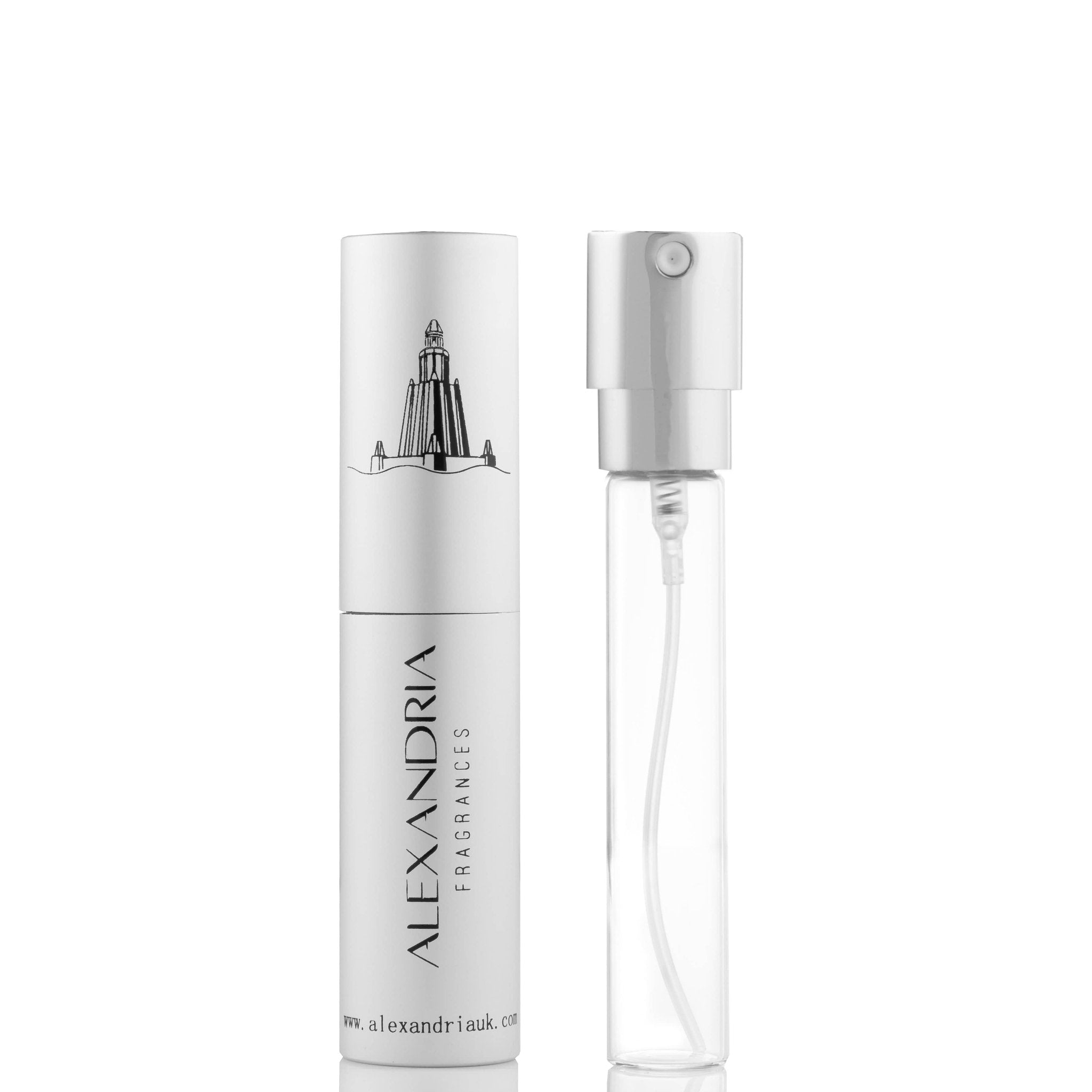
Alexandriauk’s EMPTY Travel Atomiser (£8.99) is a practical example of this format: a refillable, screw-neck spray designed for everyday portability. At that price point, it makes sense to keep one dedicated to each fragrance you rotate on the road.
Safety notes:
- Never fill a travel atomiser over a flame or near heat sources; ethanol is flammable.
- Pressure changes in aircraft holds can cause leakage; always carry atomisers in your cabin bag, sealed in a clear plastic bag.
- When switching fragrances, rinse the atomiser with a small amount of unscented alcohol and allow it to dry fully before refilling.
The sustainability angle is worth noting: a single quality travel atomiser, refilled repeatedly from a large retail bottle, generates a fraction of the packaging waste of buying multiple miniatures.
Key takeaways
The most practical way to navigate perfume bottle types is to classify by dispensing mechanism first, then confirm material and shape suit your use-case and storage conditions.
| Point | Details |
|---|---|
| Three classification axes | Every bottle type falls under mechanism, material, or shape — identify all three before buying. |
| Glass is the gold standard | Glass is chemically inert and preserves fragrance integrity; crystal and opal glass add UV protection or optical clarity. |
| Match mechanism to concentration | Rollerballs and dabbers suit parfum; fine-mist atomisers suit eaux de toilette and eaux de parfum. |
| Check neck type for refills | Screw-neck assemblies support home refilling; crimp-neck (FEA 15) bottles cannot be safely refilled without specialist tools. |
| Alexandriauk’s travel atomiser | The EMPTY Travel Atomiser (£8.99) is a refillable, screw-neck option built for UK carry-on compliance and daily portability. |
A connoisseur’s view on collecting versus using
There is a temptation, particularly among those who love fragrance deeply, to treat every beautiful bottle as a display object. The figural flacons, the hand-cut crystal decanters, the Art Deco geometric masterpieces — they deserve to be seen. But a bottle kept sealed and unsprayed is, in a very real sense, incomplete. Fragrance is an olfactory art form, and the vessel exists to deliver it.
The most satisfying approach is a deliberate split: one or two genuinely exceptional flacons displayed for their sculptural merit, and the rest of the collection in practical, refillable formats that see daily use. A rollerball of your favourite parfum in your coat pocket is worth more than a pristine bottle on a shelf that you are afraid to open. For those who want to go deeper into the architecture of fragrance selection and bottle pairing, the types of perfume bottles guide on the Alexandriauk Fragrance Academy is the natural next step.
The Alexandriauk travel atomiser: a practical next step
For fragrance lovers who carry their scent daily, the gap between a beautiful full-size bottle and a practical travel companion is exactly what Alexandriauk’s EMPTY Travel Atomiser fills. At £8.99, it is a refillable, screw-neck spray that meets UK carry-on liquid rules and protects your investment in a full-size bottle from the rigours of travel.
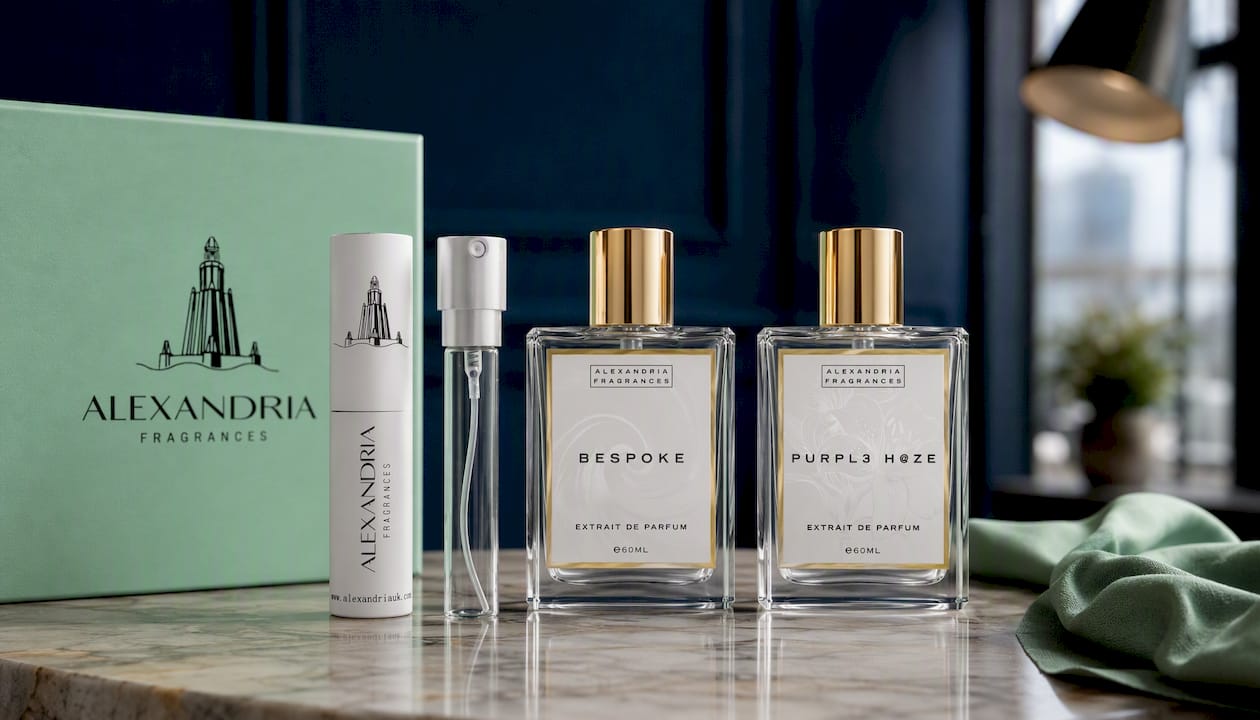
If you are drawn to something more personal, Alexandriauk’s bespoke service offers a route to a bottle and fragrance tailored to your preferences. And for a vivid example of the creative range the catalogue spans, the Purpl3 H@Ze — inspired by Psychedelic Love by Initio Parfums — shows how far inspired-by perfumery can reach in terms of both scent and presentation.
To find your next travel companion or explore the full range, visit alexandriauk.com.
Useful sources
- Perfume packaging materials: an engineer’s guide — Daxing Glass — technical breakdown of glass grades, UV properties and material specifications
- The ultimate guide to perfume bottle types — Nuvole Glass — size matrix from micro vials to flagship 100 ml bottles
- Understanding different types of perfume bottles — Pau Packing — practical B2B overview including refillable and biodegradable categories
- Understanding different types of perfume bottles — Cospacks — design-era classifications and shape terminology
- Alexandriauk Fragrance Academy — Types of perfume bottles — pillar guide for deeper reading on bottle selection and collection

,%20material%20(glass,%20crystal,%20metal,%20plastic)%20and%20shape/style%20(flacon,...)