
Different Types of Perfume: Essential Guide
Did you know that the fragrance oil concentration in perfumes can vary by more than twenty times between different types? These differences shape not only how long your scent lingers but also how it develops throughout your day. A basic understanding of perfume concentrations and scent families helps you confidently select the right fragrance for any occasion, making every spray a personal statement.
Table of Contents
- What Are Perfume Concentration Types
- Comparing Perfume Formats And Longevity
- Perfume Families And Scent Profiles
- Choosing Fragrance For Use Cases
- Risks And Skin Sensitivity Factors
- Alternatives: Oils, Solids, Dupes
Key Takeaways
| Type of Concentration | Description |
|---|---|
| Fragrance Oil Composition | Perfume concentrations range from Pure Parfum (20-40%) to Eau Fraîche (1-3%), impacting scent intensity and longevity. |
| Scent Profiles | Fragrances are categorized into families such as Floral, Oriental, and Woody, each conveying unique emotional experiences and memories. |
| Selection for Occasions | Different concentrations serve various scenarios; Pure Parfum is ideal for special events, while Eau de Toilette suits daily wear. |
| Skin Sensitivity Consideration | Higher concentration perfumes can be gentler on sensitive skin due to lower alcohol content, yet individual reactions can vary. |
What Are Perfume Concentration Types
Perfume concentrations are the secret language of fragrance, determining how intensely and long a scent will embrace your skin. According to rosasalas, these concentrations range from delicate whispers to profound olfactory statements, with fragrance oil percentages defining their character and staying power.
The primary perfume concentration types create a fascinating hierarchy of scent intensity:
- Pure Parfum/Extrait de Parfum: 20-40% fragrance oil concentration
- Eau de Parfum: 15-20% fragrance oil concentration
- Eau de Toilette: 5-15% fragrance oil concentration
- Eau de Cologne: 2-5% fragrance oil concentration
- Eau Fraîche: 1-3% fragrance oil concentration
As scentstore confirms, the higher the concentration of fragrance oils, the more intense and longer-lasting the perfume becomes. Pure Parfum represents the most luxurious and potent form, often requiring just a single drop to create a profound sensory experience.
 These concentrated formulations not only last significantly longer but also develop more complex scent profiles as they interact with your skin’s unique chemistry.
Here’s a comparison of the main perfume concentration types and their characteristics:
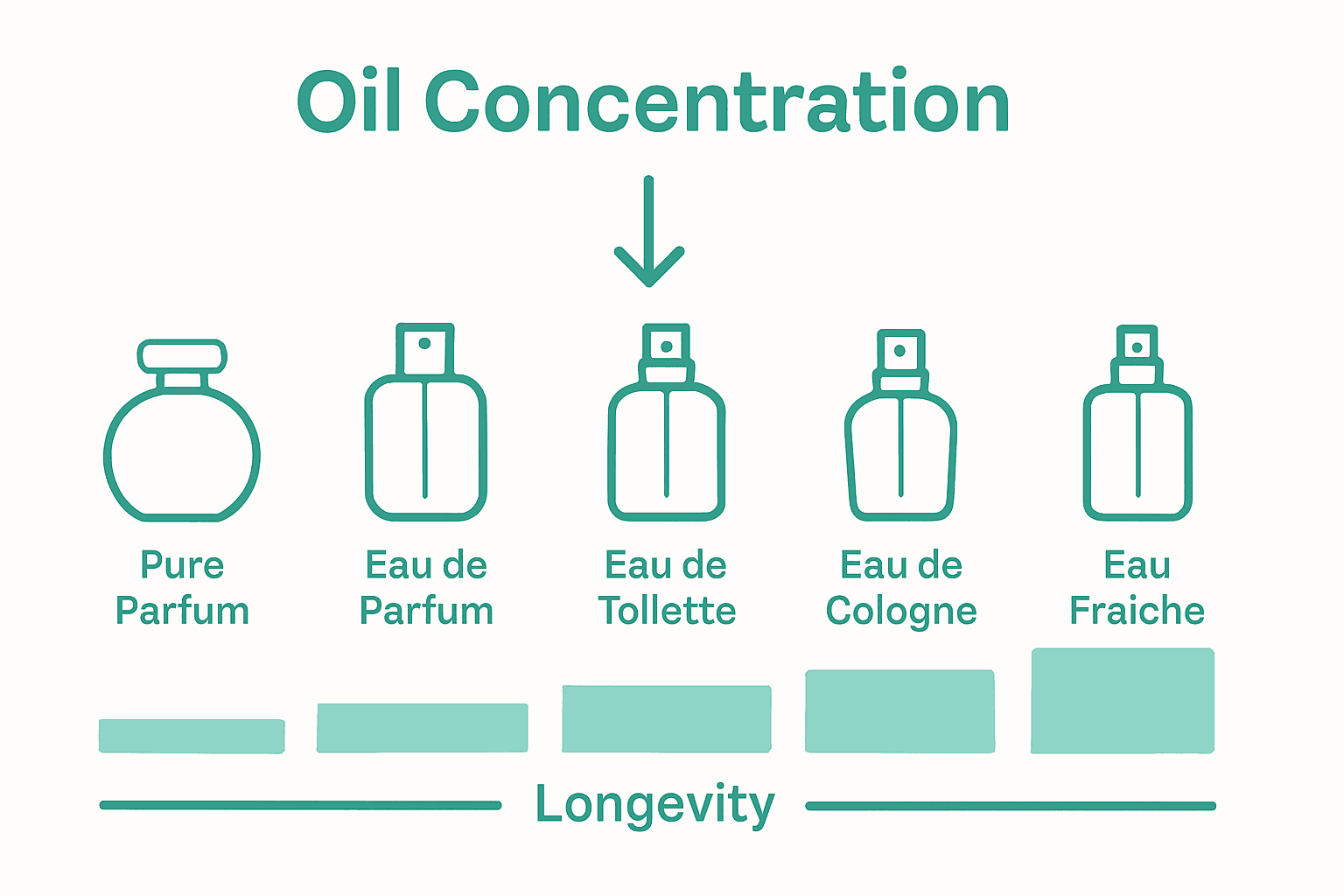
| Perfume Type | Fragrance Oil % | Longevity (Hours) | Intensity Level |
|---|---|---|---|
| Pure Parfum/Extrait | 20-40% | 6-8 | Very Strong |
| Eau de Parfum | 15-20% | 4-5 | Strong |
| Eau de Toilette | 5-15% | 2-3 | Moderate |
| Eau de Cologne | 2-5% | Up to 2 | Light |
| Eau Fraîche | 1-3% | Less than 2 | Very Light |
Understanding these concentration types allows fragrance enthusiasts to select the perfect scent for their lifestyle and preferences. For a deeper exploration of specific perfume types, check out our guide on Eau de Parfum and Extrait de Parfum.
Comparing Perfume Formats And Longevity
Fragrance enthusiasts know that not all perfumes are created equal. According to escentual, different perfume formats offer unique experiences in terms of concentration and lasting power, transforming how we perceive and wear scents.
Perfume Longevity Breakdown
Here’s a detailed comparison of perfume formats and their typical duration:
- Parfum/Extrait de Parfum: 20-30% concentration, lasts 6-8 hours
- Eau de Parfum: 15-20% concentration, lasts 4-5 hours
- Eau de Toilette: 5-15% concentration, lasts 2-3 hours
- Eau de Cologne: 2-4% concentration, lasts up to 2 hours
As stylemeetsstory confirms, the higher the concentration of fragrance oils, the longer the scent will persist on your skin. This means that a pure parfum will not only provide a more intense initial experience but will also maintain its complexity and depth throughout the day.
Understanding these variations helps you choose the perfect fragrance for different occasions.
Perfume Families And Scent Profiles
Perfume is a fascinating world of olfactory art, where each fragrance tells a unique story through its distinctive scent profile. According to gyansanchay, perfumes are meticulously categorized into distinct fragrance families that capture the essence of different sensory experiences.
The Six Core Fragrance Families
Each perfume family represents a distinct aromatic universe:
- Floral: Romantic and delicate, featuring notes of rose, jasmine, and lily
- Oriental: Warm and sensual, with rich vanilla and amber undertones
- Woody: Earthy and sophisticated, highlighting sandalwood and cedarwood
- Fresh: Crisp and clean, showcasing citrus and green leaf notes
- Fruity: Playful and vibrant, with berry and apple essences
- Gourmand: Deliciously sweet, incorporating chocolate and caramel notes
As msuniv confirms, these families are not just classifications but gateways to understanding the complex world of fragrance. Each family tells a different story, evoking unique emotions and memories through carefully crafted scent combinations.
For fragrance enthusiasts looking to dive deeper into the nuanced world of perfume classifications, explore our guide to fragrance families, which offers an enlightening journey through the intricate landscape of scent profiles.
Choosing Fragrance For Use Cases
Perfume selection is an art form that goes beyond personal preference, extending into strategic choices for different life scenarios. According to rosasalas, the concentration and type of fragrance play a crucial role in determining its suitability for various occasions.
Fragrance Selection Strategy
Here’s a comprehensive breakdown of perfume choices for different use cases:
- Special Events: Pure Parfum (rich, long-lasting intensity)
- Day-to-Evening Wear: Eau de Parfum (balanced, versatile strength)
- Casual Daily Use: Eau de Toilette (light, fresh application)
- Professional Settings: Subtle, understated scents
- Romantic Evenings: Deeper, more sensual fragrance concentrations
As escentual confirms, understanding the nuanced differences between perfume types allows you to curate a sophisticated fragrance wardrobe that adapts seamlessly to your lifestyle. The right scent can elevate your presence, communicating volumes without uttering a single word.
Navigating the complex world of fragrances becomes more intuitive when you match your scent to your specific use case. For a more in-depth exploration of occasion-based fragrance selection, discover our guide to matching scents with scenarios.
Risks And Skin Sensitivity Factors
Navigating the complex world of fragrances requires more than just understanding scent profiles; it demands careful consideration of how perfumes interact with individual skin types. According to stylemeetsstory, skin sensitivity plays a crucial role in determining which fragrance concentration will work best for you.
Skin Sensitivity and Fragrance Compatibility
Key factors affecting skin sensitivity include:
- Alcohol Content: Higher alcohol percentages can cause irritation
- Fragrance Oil Concentration: More concentrated formulas may trigger reactions
- Individual Skin Chemistry: Personal biochemistry impacts fragrance absorption
- Existing Skin Conditions: Eczema, psoriasis, or allergies increase sensitivity
- Previous Fragrance Reactions: Past sensitivities indicate potential future risks
As rosasalas confirms, higher concentration perfumes like Pure Parfum often have less alcohol and more natural oils, making them potentially gentler for those with sensitive skin. This counterintuitive insight suggests that sometimes a more concentrated fragrance might actually be more skin-friendly.
For individuals concerned about potential skin reactions, conducting a patch test is essential before fully committing to a new fragrance. Discover more about managing fragrance sensitivity in our comprehensive skin sensitivity guide.
Alternatives: Oils, Solids, Dupes
The fragrance world extends far beyond traditional perfume bottles, offering innovative alternatives that cater to diverse preferences and needs. According to ibsprays, oil-based perfumes represent a luxurious departure from conventional alcohol-based scents, promising a rich and enduring olfactory experience.
Fragrance Alternative Landscape
Key alternatives to traditional perfumes include:
- Oil-Based Perfumes: Concentrated aromatic oils with deep, lasting scents
- Solid Perfumes: Portable, subtle application options
- Fragrance Dupes: Budget-friendly alternatives to designer scents
- Roll-On Perfumes: Convenient, travel-friendly application
- Natural Essence Oils: Pure, minimally processed fragrance options
As rosasalas confirms, these alternatives offer unique benefits, providing fragrance enthusiasts with flexible options beyond traditional spray perfumes. Oil-based perfumes, in particular, deliver a richer and more concentrated scent profile that resonates differently with individual skin chemistry.
For those intrigued by budget-friendly and creative fragrance options, explore our guide to DIY dupe perfume recipes that allow you to craft personalized scent experiences at home.
Discover Your Perfect Scent with Alexandria UK
Choosing the right perfume concentration and fragrance family can feel overwhelming. Whether you seek the lasting intensity of Pure Parfum or the light freshness of Eau de Toilette, understanding these types is the first step toward a scent that truly fits your lifestyle. At Alexandria UK, we celebrate quality with a wide range of perfumes and expertly crafted dupes designed to match your unique preferences and skin sensitivity.
Experience the rich world of fragrances with confidence:
- Find oils, solids, and alternative formats that suit sensitive skin
- Choose from luxurious concentrations for special occasions or everyday wear
- Explore affordable dupes inspired by designer scents
Start your scent journey today at Alexandria UK, where quality meets variety in perfume sales inspired by timeless fragrances and innovative dupes. Explore our essential guide on Different Types of Perfume and elevate your fragrance wardrobe now.
Frequently Asked Questions
What are the different types of perfume concentrations?
Perfume concentrations include Pure Parfum (20-40% fragrance oil), Eau de Parfum (15-20%), Eau de Toilette (5-15%), Eau de Cologne (2-5%), and Eau Fraîche (1-3%). Each type varies in intensity and longevity.
How long do different types of perfumes typically last?
Pure Parfum lasts 6-8 hours, Eau de Parfum lasts 4-5 hours, Eau de Toilette lasts 2-3 hours, and Eau de Cologne lasts up to 2 hours, with Eau Fraîche lasting less than 2 hours.
How do I choose the right perfume for different occasions?
For special events, opt for Pure Parfum for richness. Eau de Parfum works well for day-to-evening wear, Eau de Toilette is great for casual use, and subtle scents are best for professional settings.
What should I consider regarding skin sensitivity when choosing a fragrance?
Consider alcohol content, fragrance oil concentration, individual skin chemistry, and any existing skin conditions. Patch testing a new fragrance can help identify potential reactions.


