

Why perfumes tell stories: scent's narrative power
Perfumes possess an extraordinary ability to unlock vivid memories and emotions, acting as invisible storytellers that connect us to our past experiences and personal narratives. This phenomenon occurs because scent molecules travel directly to the brain’s limbic system, bypassing rational filters and triggering involuntary recollections known as the Proust Effect. Beyond simply smelling pleasant, fragrances serve as powerful narrative devices that evoke complex emotional landscapes and personal histories. This article explores the scientific foundations, artistic craftsmanship, cultural dimensions, and practical approaches that transform perfumes into compelling storytellers, helping you appreciate the profound narrative power residing in every bottle.
Table of Contents
- Key takeaways
- How scent connects to memory and emotion
- Crafting fragrance narratives: the perfumer’s art
- The role of storytelling in perfume marketing and cultural context
- Experiencing and appreciating perfume stories
- Discover quality fragrances and storytelling at Alexandria UK
- Frequently asked questions
Key Takeaways
| Point | Details |
|---|---|
| Scent memory link | Scent molecules travel directly to brain regions governing emotion and memory, triggering vivid recollections. |
| Fragrance storytelling framework | Perfumers craft scents as evolving stories with top, heart and base notes guiding a narrative arc. |
| Brand storytelling impact | Brand narratives deepen emotional resonance and strengthen consumer connections. |
| Cultural context shaping narratives | Cultural context shapes scent narratives while risking misinterpretation across different audiences. |
| Narrative awareness | Being mindful of the fragrance narrative can deepen your experience and appreciation. |
How scent connects to memory and emotion
The extraordinary storytelling power of perfumes stems from unique neurological pathways that distinguish smell from all other senses. When you inhale a fragrance, odour molecules bind to receptors in your olfactory bulb, which connects directly to the amygdala and hippocampus without passing through the thalamus. This direct route to emotional and memory centres explains why perfume’s influence on memory feels immediate and visceral rather than intellectually processed.
This biological architecture enables what researchers call the Proust Effect, named after Marcel Proust’s famous passage describing how the scent of a madeleine cake triggered a flood of childhood memories. The Proust Effect represents involuntary, vivid recollections sparked by specific smells, often transporting you instantly to past moments with remarkable emotional clarity. Unlike visual or auditory memories that can feel distant or abstract, scent memories arrive complete with emotional texture and sensory detail.
The storytelling capacity of perfumes extends beyond mere nostalgia into active mood enhancement and cognitive influence:
- Positive scent associations can elevate mood states and reduce stress responses
- Familiar fragrances enhance creative thinking by activating associated memory networks
- Pleasant odours improve cognitive performance on tasks requiring sustained attention
- Scent narratives create emotional anchors that strengthen personal identity
Fragrance nostalgia operates on both personal and collective levels, connecting individual experiences to broader cultural stories. A perfume worn by your grandmother becomes a portal to childhood visits, whilst certain ingredients like lavender or vanilla carry universal associations shaped by widespread cultural use. This dual nature makes perfumes uniquely powerful storytellers, weaving together private memories and shared cultural narratives into a single olfactory experience.
“Scent is the only sense that bypasses the rational brain entirely, delivering stories directly to our emotional core without intellectual mediation.”
The immediacy of scent storytelling explains why certain fragrances can trigger unexpected emotional responses or transport you to forgotten moments. Your brain doesn’t analyse perfume intellectually before responding emotionally; instead, the story arrives fully formed, complete with feelings and associations you may not have consciously recalled in years.
Crafting fragrance narratives: the perfumer’s art
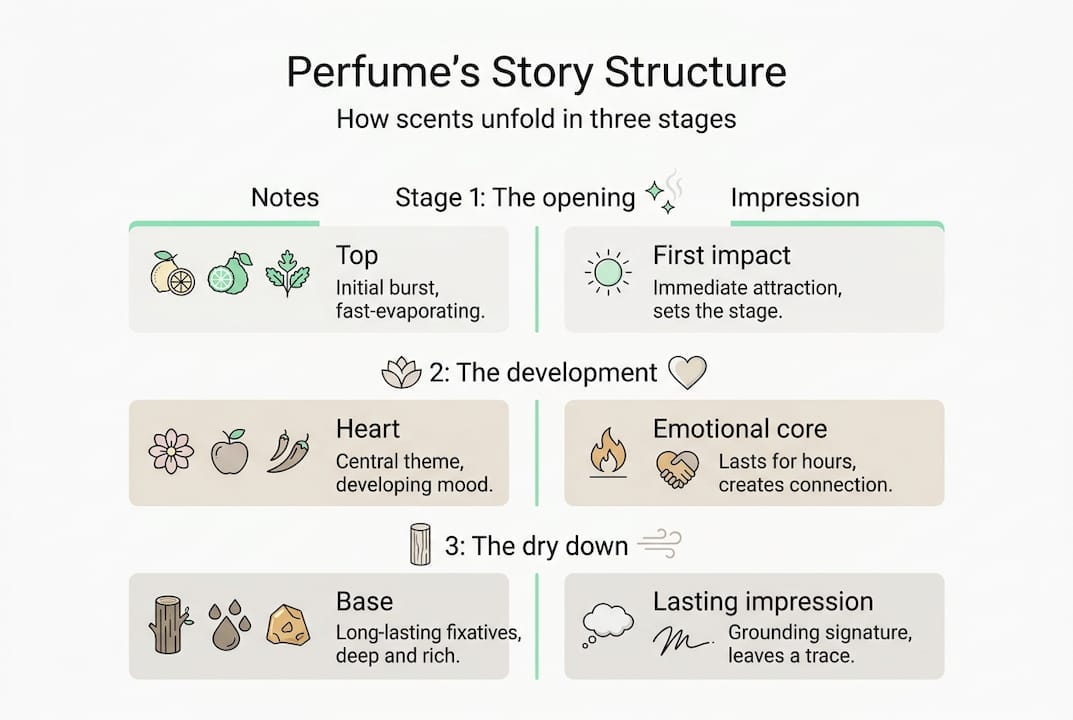
Perfumers approach scent creation as composers approach symphonies, deliberately structuring fragrances to unfold over time like narrative arcs. The olfactory pyramid structure mirrors literary plot progression, with top notes providing opening impressions, heart notes developing emotional depth, and base notes delivering resolution and lasting impact. This architectural approach transforms random pleasant smells into coherent stories with beginning, middle, and end.
Top notes serve as your first encounter with a perfume’s narrative, typically featuring bright, volatile ingredients that evaporate within 15 to 30 minutes. These opening chapters grab attention and establish mood, much like a novel’s compelling first paragraph. Common top notes include citrus oils, light florals, and fresh herbs that create immediate impressions but intentionally fade to reveal deeper layers.
Heart notes emerge as top notes dissipate, representing the fragrance’s emotional core and thematic development. This middle chapter typically lasts several hours, featuring more complex ingredients like jasmine, rose, or spices that reveal the perfumer’s central vision. Understanding how perfumers create scents helps you appreciate how these middle notes carry the narrative weight, developing themes introduced in the opening.
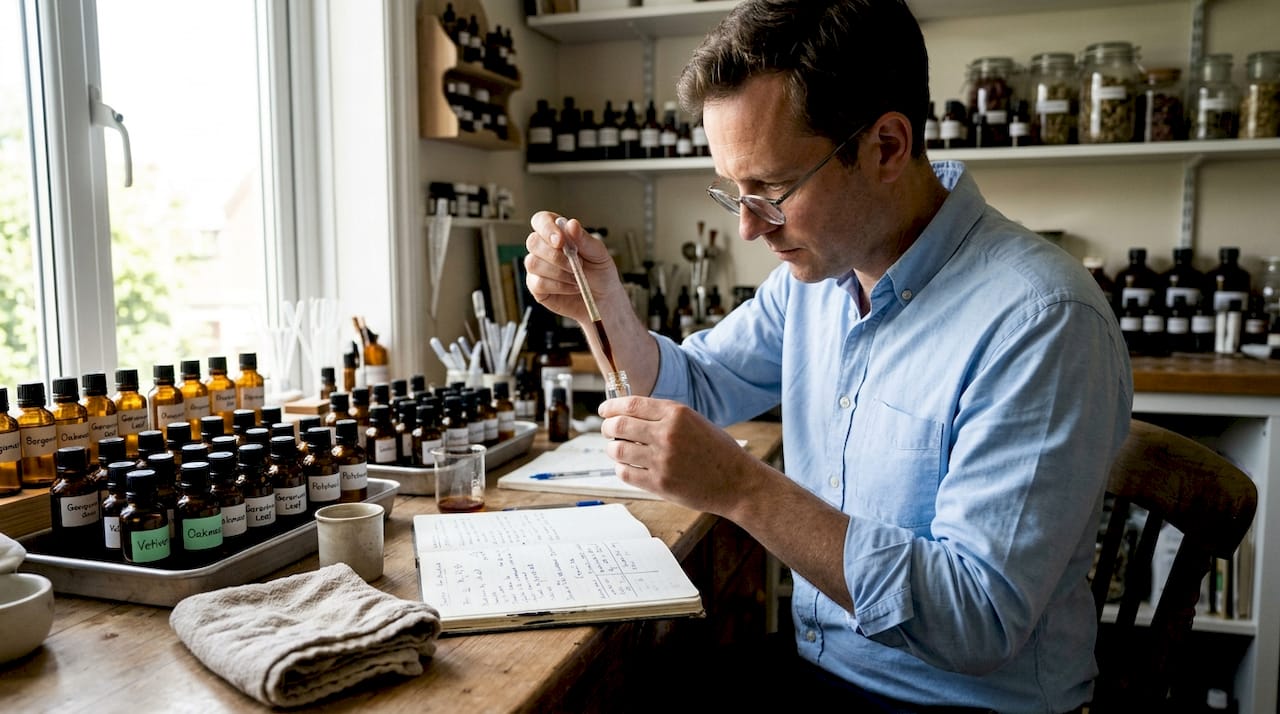
Base notes provide depth, longevity, and narrative resolution, often persisting for six hours or longer. These foundational elements include woods, musks, ambers, and resins that anchor the entire composition and determine how the story concludes on your skin. The base represents the perfume’s lasting impression, the emotional resonance that remains after the initial excitement fades.
Pro Tip: Smell a perfume at three intervals—immediately, after 15 minutes, and after two hours—to experience its complete narrative arc from opening through resolution.
Modern perfumery expands storytelling possibilities through molecular accords that recreate scents impossible to extract naturally. For example, lily-of-the-valley accord uses synthetic molecules to capture a delicate floral scent that cannot be extracted from the actual flower. These innovations allow perfumers to tell stories previously beyond olfactory reach, crafting narratives limited only by imagination rather than natural extraction constraints.
| Note Type | Characteristics | Duration | Common Examples |
|---|---|---|---|
| Top notes | Light, volatile, immediate impact | 15-30 minutes | Bergamot, lemon, lavender, mint |
| Heart notes | Complex, emotional core | 2-4 hours | Rose, jasmine, cinnamon, cardamom |
| Base notes | Deep, persistent, grounding | 6+ hours | Sandalwood, vanilla, musk, amber |
Exploring different fragrance categories reveals how perfumers adapt this narrative structure across genres, from fresh colognes that tell brief, energetic stories to oriental perfumes that unfold complex, hours-long narratives. Each category employs the pyramid structure differently, adjusting pacing and emphasis to suit its intended emotional journey.
The role of storytelling in perfume marketing and cultural context
Brands leverage narrative techniques to transform perfumes from mere products into emotional experiences that foster loyalty and differentiation in crowded markets. Marketing stories prime your perception, shaping how you experience scents before you even smell them. Research shows that storytelling in fragrance marketing builds emotional bonds and enhances scent experiences by providing context that influences interpretation.
Effective perfume narratives typically employ several strategic approaches:
- Origin stories connecting fragrances to exotic locations or rare ingredients
- Celebrity or designer associations that transfer existing emotional connections
- Lifestyle narratives positioning scents within aspirational identities
- Heritage tales emphasising tradition, craftsmanship, or family legacy
- Conceptual stories exploring abstract themes like freedom, passion, or mystery
These narratives serve legitimate purposes when authentic, helping consumers understand a perfumer’s vision and connect emotionally with artistic intent. Understanding scent storytelling in marketing reveals how brands use narrative to communicate complex olfactory experiences that resist simple description.
However, cultural dimensions complicate perfume storytelling in ways that demand sensitivity and awareness. Scent preferences and symbolic associations vary dramatically across cultures, meaning a narrative that resonates powerfully in one context may confuse or offend in another. Cultural influences on fragrances shape both ingredient selection and story framing, requiring brands to navigate diverse interpretive frameworks.
Problematic practices emerge when brands appropriate cultural elements without understanding or respecting their origins. The clean fragrance movement’s cultural challenges illustrates how Western marketing narratives can inadvertently marginalise or misrepresent non-Western scent traditions. Inauthentic stories breed consumer scepticism, undermining the emotional connections that effective narratives should foster.
Another contemporary tension involves longevity obsession, where consumers prioritise hours of projection over appreciating a perfume’s ephemeral narrative journey. This mindset can diminish appreciation for delicate, beautifully crafted scents that tell their stories quietly or briefly. The cultural fixation on performance metrics sometimes overshadows the artistic and emotional dimensions that make perfumes meaningful storytellers.
Pro Tip: Before reading a perfume’s marketing story, smell it blind and note your immediate impressions, then compare how the narrative influences your subsequent experience.
Cultural biases also shape which stories gain legitimacy and commercial success. Western perfumery traditions dominate global markets, often overshadowing equally sophisticated scent storytelling from Middle Eastern, Asian, or indigenous cultures. Recognising these power dynamics helps you appreciate diverse olfactory narratives beyond mainstream marketing.
Experiencing and appreciating perfume stories
Your personal experience of fragrance narratives varies based on individual memory associations, cultural background, and physiological differences in scent perception. What tells a romantic story to one person might evoke completely different narratives for another, making perfume appreciation fundamentally subjective. Research confirms that perception varies individually, with personal memories and cultural contexts shaping how you interpret scent stories.
To experience perfumes authentically and discover their genuine narratives, follow these testing practices:
- Apply fragrance to pulse points where body heat develops the scent naturally
- Wait at least 15 minutes before forming opinions, allowing top notes to settle
- Smell coffee beans between fragrances to reset your olfactory palate
- Test no more than three perfumes per session to avoid sensory fatigue
- Return to samples over several days, experiencing how stories evolve with repeated wearing
- Note your emotional responses and memory associations without judgement
Marketing narratives can bias your scent perception in several ways:
- Priming effects cause you to detect ingredients mentioned in descriptions
- Luxury branding influences quality perceptions independent of actual scent
- Visual packaging shapes expectations about fragrance character
- Celebrity associations transfer feelings about personalities to perfumes
- Price anchoring affects perceived sophistication and longevity
Building a fragrance collection that narrates your personal scent journey enhances enjoyment and creates an olfactory autobiography. Rather than chasing trends or accumulating bottles randomly, curating a fragrance collection thoughtfully allows you to assemble scents that represent different aspects of your identity, memories, and aspirations. Each perfume becomes a chapter in your ongoing story.
Consider organising your collection around personal narratives rather than conventional categories. Group fragrances by the memories they evoke, the moods they express, or the versions of yourself they represent. This approach transforms your collection from a product inventory into a living narrative archive that grows and evolves with you.
Pro Tip: Occasionally wear perfumes without revisiting their backstories or marketing materials, allowing yourself to discover genuine, unmediated reactions based purely on scent experience.
Developing your appreciation requires patience and curiosity. Testing perfume effectively means giving fragrances time to reveal their complete narratives rather than judging them on initial impressions alone. The most compelling scent stories often unfold slowly, rewarding sustained attention with unexpected depth and complexity.
Discover quality fragrances and storytelling at Alexandria UK
Exploring the narrative dimensions of perfumery becomes more rewarding when you have access to thoughtfully curated fragrances that embody these storytelling principles. Alexandria UK offers collections featuring quality scents that demonstrate how fragrances can evoke memories, express emotions, and narrate personal journeys. Whether you seek inspired interpretations of classic narratives or distinctive scents that tell new stories, you’ll find options that honour the artistry and emotional depth discussed throughout this article.
The collections showcase fragrances across diverse categories, allowing you to experience how different olfactory structures create varied narrative effects. Expert guidance helps you navigate these options, connecting your personal preferences and memories with scents that resonate authentically rather than following trends or marketing hype.
Frequently asked questions
Why do perfumes evoke personal memories?
Scents connect directly to the amygdala and hippocampus, brain centres processing emotions and memories, without passing through rational filters. This unique neurological pathway triggers involuntary, vivid recollections known as the Proust Effect. The biological wiring makes perfume scents deeply personal narrative triggers that arrive complete with emotional texture.
How do perfumers create a story through scent?
Perfumers structure fragrances using top, heart, and base notes that function like literary chapters, creating narrative progression from opening impression through emotional development to lasting resolution. Each note group represents a distinct stage in the fragrance’s evolving story. This architectural approach transforms random pleasant smells into coherent narratives with beginning, middle, and end.
Can cultural differences affect how a perfume’s story is received?
Yes, cultural traditions and biases significantly influence how fragrance narratives are perceived and interpreted across different communities. Scent associations that feel universal in one culture may carry completely different meanings elsewhere. Misusing cultural elements or appropriating traditions without understanding can cause consumer backlash or misinterpretation.
What should I keep in mind when choosing a perfume story to follow?
Recognise that perfume stories remain fundamentally subjective, shaped by your unique memories and experiences rather than universal meanings. Marketing narratives can bias perception, so testing perfume effectively includes smelling fragrances without knowing their backstories to discover authentic preferences. Trust your personal responses and memory associations when selecting scents that genuinely resonate with your individual narrative.


