

What Is Fragrance? Impact On Perfume Choices
Most people think fragrances are just pleasant smells, yet the world of british perfumery reveals a far richer story. Over 95 percent of perfumes contain a blend of both natural and synthetic molecules, carefully crafted to influence emotion and memory on a scientific level. Learning how fragrances are defined, what sets them apart, and why misconceptions linger helps you appreciate the artistry behind every bottle and strengthens your ability to choose scents that truly resonate.
Table of Contents
- Defining Fragrance And Common Misconceptions
- Types Of Fragrance And Scent Families
- How Fragrances Are Made And Assessed
- UK Fragrance Regulations And Safety Standards
- Choosing Quality Fragrances And Avoiding Pitfalls
Key Takeaways
| Point | Details |
|---|---|
| Understanding Fragrance | Fragrance is a complex blend of aromatic molecules that evoke emotional responses, requiring precise interactions between ingredients. |
| Dynamic Scent Experience | Fragrances transform over time through top, heart, and base notes, offering a nuanced olfactory journey rather than a static scent. |
| Personal Chemistry Matters | Individual body chemistry affects how each fragrance is perceived, making personal exploration essential for the perfect scent match. |
| Regulatory Compliance | UK fragrance production is governed by stringent regulations ensuring ingredient safety and consumer protection, reflecting ongoing scientific developments. |
Defining Fragrance And Common Misconceptions
A fragrance represents a complex sensory composition crafted from aromatic molecules that stimulate olfactory perception and evoke emotional responses. Unlike simplistic assumptions, fragrances are sophisticated scientific formulations involving precise chemical interactions between natural and synthetic ingredients. Understanding luxury fragrance classifications reveals the intricate artistry behind these sensorial experiences.
The fundamental misconception surrounding fragrances is that they are merely pleasant scents. In reality, fragrances constitute carefully engineered molecular structures designed to interact with human neurological and psychological systems. Perfumers meticulously select compounds that trigger specific emotional and memory pathways, creating complex olfactory narratives that transcend mere pleasant aromas. Professional fragrance development involves understanding molecular interactions, base notes, top notes, and the delicate balance required to create a harmonious sensory experience.
Most individuals erroneously believe fragrances are static compositions, when they are dynamic sensory journeys. A fragrance transforms through multiple stages: the initial top notes provide an immediate impression, heart notes emerge after several minutes, and base notes develop over hours, creating a nuanced olfactory progression. Understanding the types of fragrance notes illuminates this sophisticated process of molecular storytelling, demonstrating how professional perfumers craft experiences that evolve and engage the senses.
Common fragrance misconceptions include assumptions that more expensive equals better quality, or that a single scent suits everyone universally. Professional perfumers understand that fragrances interact uniquely with individual body chemistry, skin pH, and personal biochemical signatures. What smells extraordinary on one person might feel completely different on another, making finding your perfect fragrance match a personalised journey of sensory exploration.
Types Of Fragrance And Scent Families
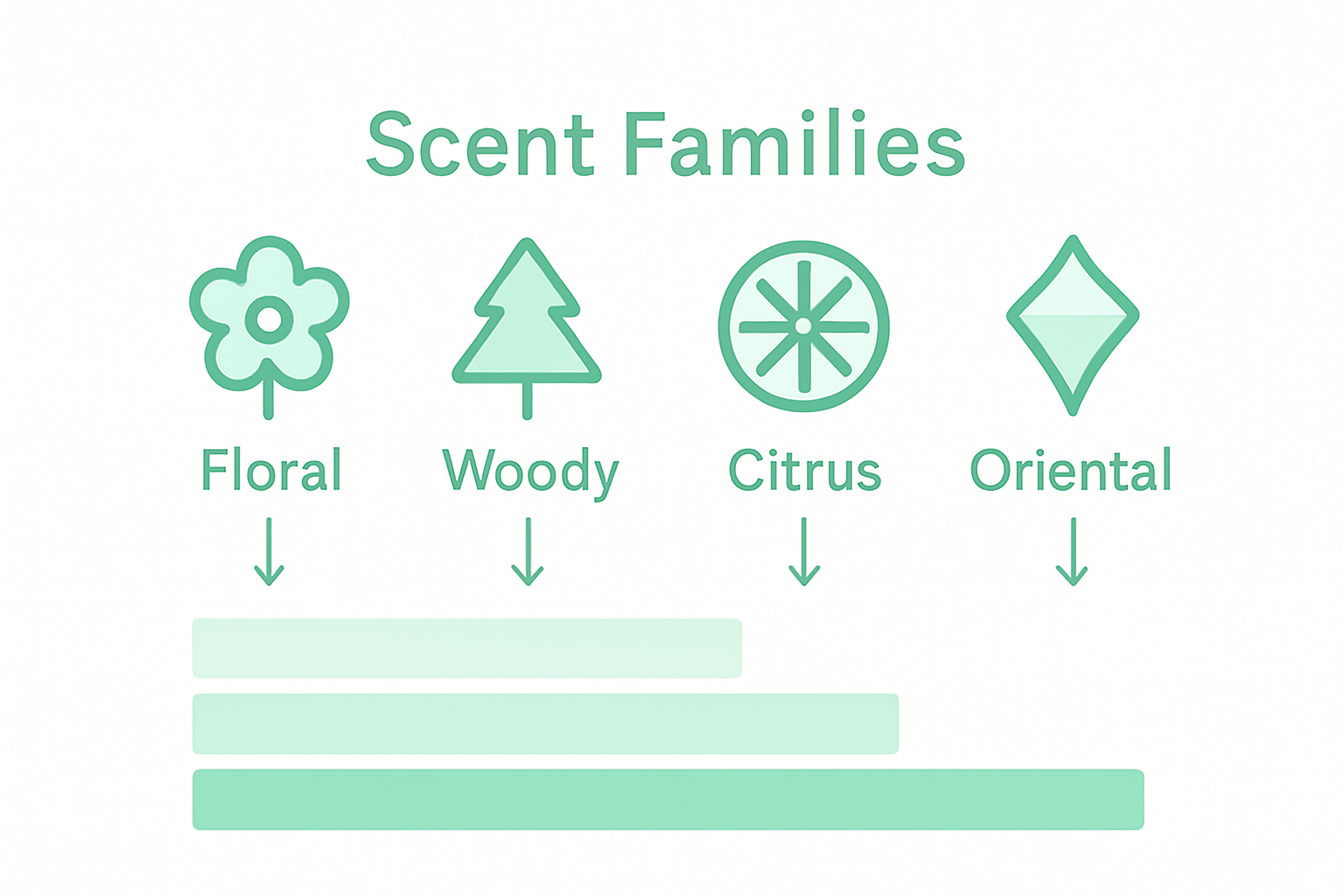
Fragrance families represent sophisticated olfactory classifications that group scents based on their dominant molecular characteristics and sensory profiles. Explore fragrance families through a beginner’s lens, revealing the intricate world of aromatic compositions that range from delicate and ethereal to bold and complex. These classifications help perfume enthusiasts understand the nuanced language of scent, transforming seemingly random aromas into structured, comprehensible experiences.
Classic fragrance families typically include several primary categories that capture distinct sensory experiences. Floral families encompass rose, jasmine, and lily notes, representing soft and romantic olfactory profiles. Woody fragrances feature cedar, sandalwood, and patchouli, offering earthy and grounded sensations. Oriental scents introduce rich, warm notes like vanilla, amber, and spices, creating luxurious and opulent experiences. A comprehensive guide to scent profiles demonstrates how these categories interact and overlap, creating complex sensory narratives.

Beyond traditional classifications, contemporary perfumery explores innovative fragrance families that challenge conventional boundaries. Gourmand fragrances, for instance, incorporate food-inspired notes like caramel, chocolate, and almond, transforming culinary experiences into wearable scents. Aquatic families capture marine and fresh elements, while green fragrances evoke crisp, herbaceous qualities. Understanding unique fragrance categories reveals the remarkable creativity of modern perfumers who continuously push sensory boundaries.
Personal fragrance selection becomes an intimate journey of self-discovery when understanding these diverse scent families. Each individual’s unique body chemistry interacts differently with fragrance notes, making the selection process deeply personal. Some people might find woody fragrances complement their natural scent, while others discover that floral or oriental families resonate more profoundly. The key is experimentation, exploration, and understanding that fragrance is not just about smelling pleasant, but about expressing one’s inner essence through olfactory art.
How Fragrances Are Made And Assessed
Fragrance creation is a sophisticated scientific and artistic process that transforms raw materials into complex olfactory experiences. The anatomy of crafting fine fragrances reveals an intricate journey involving precise molecular selection, extraction techniques, and masterful blending. Perfumers, often called ‘noses’, meticulously combine natural essential oils, synthetic aromatic compounds, and specialty molecules to create harmonious scent compositions that tell unique sensory stories.
The fragrance production process involves multiple sophisticated stages of development and assessment. Essential oils form the foundational building blocks, extracted through methods like steam distillation, cold pressing, and solvent extraction. Synthetic molecules complement these natural extracts, allowing perfumers to create more stable, innovative, and complex scent profiles. Sustainable fragrance production techniques are increasingly important, with modern perfumers focusing on environmentally conscious extraction and formulation methods that minimise ecological impact while maintaining exceptional quality.
Assessing fragrance quality requires a multifaceted approach that evaluates numerous sensory and technical characteristics. Perfume experts analyse several critical parameters including molecular stability, volatility, longevity, and how different notes interact over time. Professional perfume identification techniques involve sophisticated olfactory evaluation, where trained professionals examine the scent’s progression through top, heart, and base notes. This rigorous assessment ensures that only the most exceptional fragrances meet the highest standards of complexity, balance, and emotional resonance.
Modern fragrance creation represents a delicate balance between scientific precision and artistic creativity. Perfumers must understand complex chemistry, molecular interactions, and sensory psychology while simultaneously channelling creative vision. The result is not merely a pleasant aroma, but a carefully constructed emotional experience that can evoke memories, communicate personality, and create powerful sensory connections. Each fragrance becomes a unique narrative, crafted through meticulous research, innovative technology, and profound understanding of human olfactory perception.
UK Fragrance Regulations And Safety Standards
The United Kingdom maintains rigorous regulatory frameworks governing fragrance production, ensuring consumer safety and product integrity. Navigating complex regulations in the perfume industry reveals a sophisticated system of oversight that protects both consumers and manufacturers. These regulations encompass comprehensive guidelines addressing ingredient safety, labelling requirements, allergen disclosure, and chemical composition standards that must be meticulously followed by all fragrance producers operating within British markets.
Chemical compliance represents a critical aspect of UK fragrance regulations. Manufacturers must adhere to stringent European Union and UK-specific standards that limit potentially harmful substances and mandate transparent ingredient reporting. Safety standards for perfume dupes highlight the importance of ensuring that alternative and replicated fragrances meet identical safety benchmarks as their premium counterparts. The regulatory landscape requires comprehensive testing for skin sensitivity, potential allergenic compounds, and long-term chemical stability.
Consumer protection mechanisms in the UK fragrance industry extend beyond initial product development. Manufacturers must provide detailed ingredient lists, potential allergen warnings, and clear usage instructions. Quality benchmarks for UK perfume production emphasise that safety standards are not merely bureaucratic requirements but essential consumer protection measures. These regulations mandate that every fragrance undergoes rigorous scientific assessment, ensuring that products meet exacting health and environmental standards before reaching market shelves.
The evolving nature of fragrance regulation reflects ongoing scientific research and consumer awareness. British regulatory bodies continually update guidelines to incorporate emerging scientific understanding about chemical interactions, potential health impacts, and sustainable production methods. This dynamic approach ensures that UK fragrance standards remain among the most progressive globally, balancing innovation with consumer safety and environmental consciousness. The result is a robust regulatory environment that protects consumer interests while supporting creative and responsible fragrance development.
Choosing Quality Fragrances And Avoiding Pitfalls
Selecting an exceptional fragrance requires more than casual sampling; it demands a nuanced understanding of personal chemistry, scent profiles, and sensory perception. Choosing quality fragrances effectively involves a strategic approach that goes beyond initial impressions. Sophisticated fragrance selection means understanding how different scent molecules interact with individual body chemistry, skin pH, and personal style.
Sensory evaluation forms the cornerstone of intelligent fragrance selection. Perfume enthusiasts must learn to distinguish between superficial first impressions and genuine olfactory compatibility. Perfume shopping strategies for men emphasise the importance of testing fragrances over extended periods, allowing the scent to develop through its various molecular stages. Common pitfalls include making hasty decisions based on initial top notes, which rapidly evaporate, rather than evaluating the fragrance’s complete olfactory journey.
Navigating the complex world of fragrances requires methodical testing and personal introspection. Essential perfume shopping techniques recommend several critical steps: testing fragrances on personal skin rather than paper strips, allowing sufficient time for molecular development, and understanding how individual body chemistry transforms scent profiles. Experts advise avoiding overwhelming yourself with multiple fragrances simultaneously and creating controlled testing environments that reveal a scent’s true character.
Ultimately, fragrance selection is an intimate, personal journey that transcends generic recommendations. Each individual’s unique biochemical signature means that a universally acclaimed perfume might perform differently from person to person. The key lies in patient exploration, understanding one’s own sensory preferences, and recognising that true fragrance quality emerges through personal resonance, not marketing claims or price points. Developing a discerning approach transforms fragrance selection from a random purchase into a sophisticated expression of personal identity.
Discover Your Perfect Fragrance Match with Alexandria UK
Choosing the right fragrance goes beyond simply smelling pleasant. This article highlights the complex journey of scent evolution and personal chemistry that defines your ultimate perfume experience. Many struggle with identifying how fragrance notes interact with their unique body chemistry and often fall into the trap of making quick decisions based on initial impressions. Understanding these challenges is key to finding a scent that truly resonates with your personality and style.

Embark on a personalised fragrance journey today by exploring our quality-inspired selections at Alexandria UK. Benefit from expert advice on finding your perfect fragrance match and deepen your knowledge through guides like understanding luxury fragrance classifications. Take control of your scent story now and experience fragrances crafted to evolve with you. Visit us at Alexandria UK for the finest perfume selections and start transforming your fragrance choices today.
Frequently Asked Questions
What is fragrance and how does it work?
Fragrance is a complex composition of aromatic molecules designed to stimulate olfactory perception and evoke emotional responses. It involves a blend of natural and synthetic ingredients, carefully formulated to interact with the human neurological system.
How do I choose a fragrance that suits me?
Choosing a fragrance involves understanding how different scent profiles react with your body chemistry. Experimenting with various scent families (like floral, woody, or oriental) and testing perfumes on your skin rather than on paper strips can help you find a fragrance that complements your unique character.
Why do fragrances smell different on different people?
Fragrances interact uniquely with individual body chemistry, skin pH, and personal biochemistry. This means that a fragrance that smells wonderful on one person may develop differently on another, creating varied olfactory experiences.
What are fragrance families and why are they important?
Fragrance families are classifications that group scents based on their dominant molecular characteristics. Understanding these families helps consumers navigate the complexities of fragrance and select scents that resonate with their personal preferences.