
What does a woody scent smell like? A 2026 guide
Many fragrance newcomers dismiss woody scents as monotonous or overly masculine, missing their remarkable depth and versatility. The truth is, woody fragrances offer an extraordinary spectrum of aromas, from creamy sandalwood to smoky vetiver, each bringing unique character to your perfume wardrobe. This guide reveals what woody scents truly smell like, how to identify their distinct profiles, and practical ways to select and layer them for your collection. Whether you’re building your first fragrance library or refining an established one, understanding woody notes transforms how you experience and appreciate perfume.
Table of Contents
- The Essence Of Woody Scents: What They Smell Like And Why
- Comparing Common Woody Notes And Their Unique Aromas
- How To Blend And Layer Woody Scents For Personalised Fragrance
- Choosing Woody Scents: Tips For Perfume Buyers And Enthusiasts
- Explore Quality Woody Fragrances And Expert Tips At Alexandria UK
- Frequently Asked Questions About Woody Scents
Key takeaways
| Point | Details |
|---|---|
| Natural warmth | Woody scents deliver warm, dry, and resinous aromas sourced from tree-based ingredients like sandalwood and cedar |
| Diverse profiles | Common woody notes include sandalwood, cedarwood, and vetiver, each offering distinct scent characteristics |
| Layering potential | Woody fragrances blend beautifully with florals, spices, and citrus to create personalised scent combinations |
| Selection clarity | Understanding woody scent characteristics helps you choose perfumes that suit your preferences and occasions |
The essence of woody scents: what they smell like and why
Woody scents derive from natural sources like sandalwood, cedar, and vetiver, creating warm, dry, and earthy aromas that anchor countless perfumes. These ingredients come from tree bark, roots, and wood itself, each contributing distinctive sensory notes to fragrances. The extraction methods, whether steam distillation or solvent extraction, influence the final aroma profile you experience when sampling perfumes.
When you smell woody fragrances, you’ll notice several characteristic qualities. The warmth feels comforting rather than sweet, whilst the dryness creates a grounded, sophisticated impression. Many woody scents carry resinous undertones that add depth, and some introduce smoky or leathery nuances depending on the specific wood source. Sandalwood tends towards creamy smoothness, whilst cedarwood offers fresh, pencil shavings dryness.
Perfumers value woody notes primarily as base notes, the foundation layer that provides longevity and structure to fragrances. These molecules evaporate slowly from your skin, meaning woody perfumes often last six to twelve hours or longer. The staying power makes them excellent investment pieces for your collection, as a single application carries you through entire days or evenings.
Variability in woody scents emerges from both the wood species and geographical origin. Australian sandalwood smells different from Indian sandalwood, just as Virginia cedarwood differs from Atlas cedarwood. This diversity means the woody fragrance examples guide you explore reveals dozens of interpretations within the same family.
Pro Tip: When sampling woody perfumes, smell them on a blotter first, then on your skin after twenty minutes. The initial impression often emphasises top notes, but the true woody character develops as the fragrance settles and warms on your body chemistry.
Key woody ingredients you’ll encounter include:
- Sandalwood: creamy, milky, soft with subtle sweetness
- Cedarwood: dry, fresh, reminiscent of pencil shavings
- Vetiver: smoky, earthy, green with rooty depth
- Oud: intense, animalic, resinous with medicinal facets
- Patchouli: earthy, slightly sweet, musty with herbal tones
Comparing common woody notes and their unique aromas
Each woody note brings distinct personality to fragrances, and recognising these differences elevates your ability to select perfumes confidently. Sandalwood presents creamy softness, cedarwood offers fresh dryness, and vetiver delivers smoky earthiness, creating a spectrum of woody experiences. Understanding these profiles helps you articulate preferences when shopping and identify notes in complex compositions.
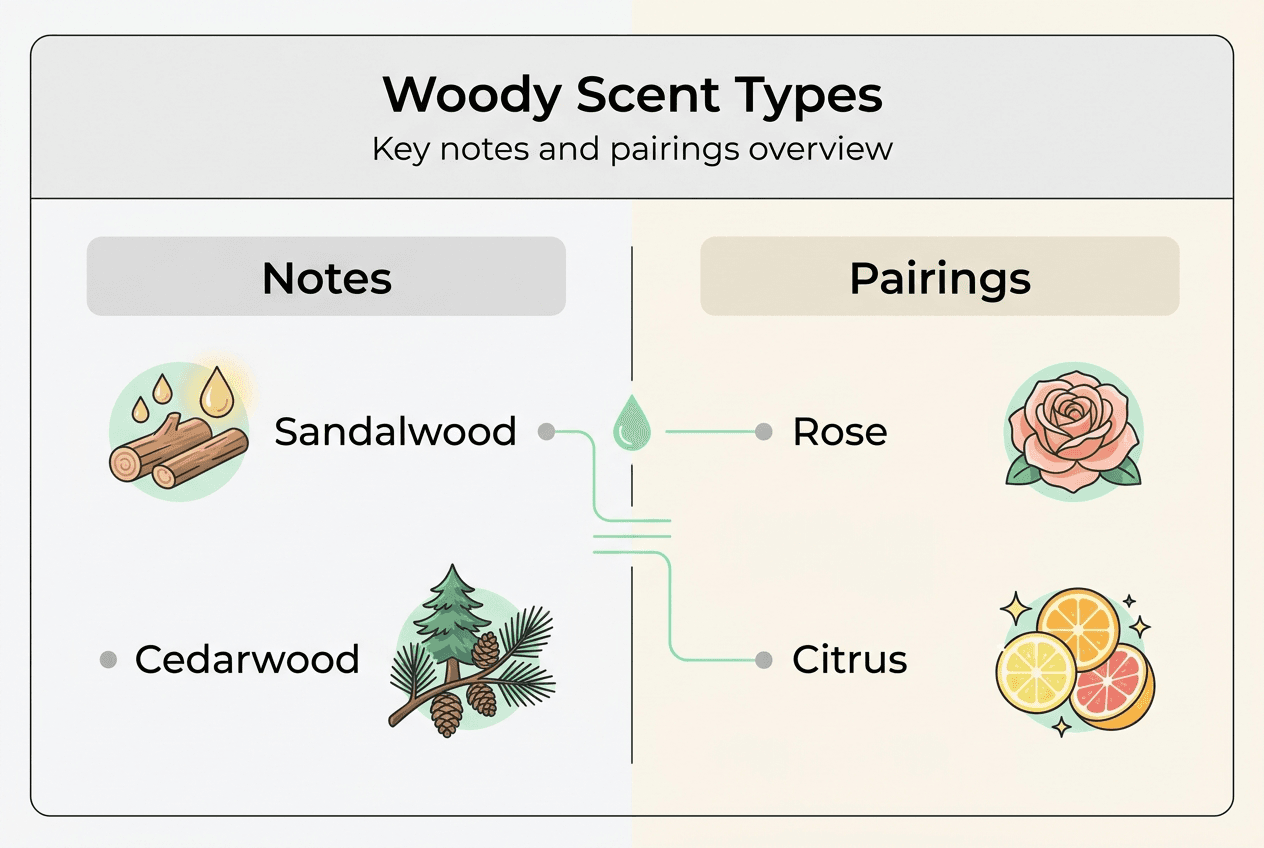
Sandalwood, perhaps the most beloved woody note, originates primarily from India and Australia. Indian sandalwood carries richer, creamier qualities with subtle milky sweetness, whilst Australian varieties lean drier and slightly sharper. Perfumers prize sandalwood for its ability to soften harsh edges in compositions whilst adding luxurious warmth. It pairs beautifully with roses, jasmine, and vanilla.
Cedarwood varieties include Atlas, Virginia, and Texas types, each with signature characteristics. Atlas cedarwood smells drier and more aromatic, with camphoraceous facets that add freshness. Virginia cedarwood evokes pencil shavings and cigar boxes, creating nostalgic, comforting impressions. These cedars work brilliantly in masculine and unisex fragrances, often combined with citrus or lavender.

Vetiver comes from grass roots rather than trees, but perfumery classifies it as woody due to its earthy, rooty character. Haitian vetiver smells cleaner and greener, whilst Javanese vetiver carries smokier, more complex nuances. This note adds sophisticated depth to fragrances and works exceptionally well in fresh, sporty compositions or rich, evening scents.
| Woody Note | Aroma Profile | Common Pairings | Cultural Origin |
|---|---|---|---|
| Sandalwood | Creamy, milky, soft, subtly sweet | Rose, jasmine, vanilla, amber | India, Australia |
| Cedarwood | Dry, fresh, aromatic, pencil shavings | Citrus, lavender, vetiver | Atlas Mountains, Virginia |
| Vetiver | Smoky, earthy, green, rooty | Citrus, ginger, oakmoss | Haiti, Java, India |
| Oud | Intense, animalic, resinous, medicinal | Rose, saffron, leather | Middle East, Southeast Asia |
| Patchouli | Earthy, musty, herbal, slightly sweet | Vanilla, chocolate, florals | Indonesia, India |
Oud, also called agarwood, represents the most expensive and intense woody note. It forms when Aquilaria trees become infected with specific moulds, producing dark, fragrant resin. The aroma ranges from animalic and medicinal to sweet and balsamic, depending on quality and origin. Middle Eastern perfumery celebrates oud extensively, whilst Western fragrances often use synthetic versions for accessibility.
Patchouli bridges earthy and woody territories with its distinctive musty, herbal character. Vintage patchouli carries stronger camphoraceous notes, whilst modern fractioned versions smell cleaner and woodier. It gained fame in the 1960s counterculture but now appears in sophisticated gourmand and oriental fragrances.
Lesser known woody ingredients worth exploring include:
- Guaiac wood: smoky, slightly medicinal, rose-like facets
- Cypriol: woody, earthy, leathery undertones
- Cashmeran: musky, woody, synthetic with velvety softness
- Iso E Super: transparent, woody, skin-like (synthetic)
- Hinoki: clean, spiritual, Japanese cypress character
How to blend and layer woody scents for personalised fragrance
Layering transforms woody perfumes from beautiful standalone scents into completely unique olfactory signatures that reflect your personality. Combining woody bases with florals, spices, and citrus unlocks customised profiles and extends longevity through complementary molecule interactions. The technique suits woody notes particularly well because their stable base character supports more volatile top and heart notes.
Scent layering works by applying multiple fragrances to your skin, allowing them to mingle and create hybrid aromas. Woody notes excel in this role because they provide grounding depth without overwhelming delicate florals or fresh citrus. Start with your woody fragrance as the foundation, then add lighter scents on pulse points to create dimension.
Follow these steps to layer woody scents successfully:
- Apply your woody base fragrance to warm areas like wrists, neck, and chest, where heat helps diffusion
- Wait two to three minutes for the woody scent to settle and begin developing on your skin
- Choose a complementary fragrance from a different family, such as floral, citrus, or spicy
- Apply the second scent to different pulse points or layer it directly over the woody base
- Assess the combination after ten minutes, as the true blended character emerges gradually
- Adjust ratios in future applications based on which scent dominates or recedes
Popular layered combinations demonstrate woody versatility brilliantly. Sandalwood paired with rose creates romantic, luxurious impressions perfect for special occasions. Cedarwood combined with bergamot delivers fresh, clean sophistication suitable for professional settings. Vetiver layered with ginger produces spicy, energetic profiles that work wonderfully in active lifestyles.
Pro Tip: Test your layered combinations on a small skin area first, as body chemistry affects how fragrances interact. What smells harmonious on a blotter might clash on skin, whilst unexpected pairings sometimes create magic through your unique chemistry.
Seasonal considerations enhance layering success significantly. Autumn and winter welcome richer woody combinations with amber, vanilla, or leather, creating cosy warmth against cold weather. Spring and summer suit lighter woody blends with citrus, aquatic notes, or white florals, maintaining sophistication without heaviness. Adjust your layering intensity by varying application amounts rather than changing fragrances entirely.
Occasion awareness guides appropriate layering choices too. Professional environments benefit from subtle woody citrus combinations that project confidence without overwhelming colleagues. Evening events allow bolder woody oriental or woody spicy blends that make memorable impressions. Casual settings suit playful woody floral or woody fruity experiments that express creativity.
Experimentation remains key to discovering your signature layered scent. Keep notes about successful combinations, including which fragrances you used, application order, and how long the blend lasted. This record helps you recreate favourites and identify patterns in what works for your preferences and chemistry.
Choosing woody scents: tips for perfume buyers and enthusiasts
Selecting the right woody fragrance requires understanding your scent preferences, testing methodology, and how different woods suit various occasions and seasons. Knowing woody profiles and layering techniques enables confident perfume selection and enhances your collection strategically. Whether you’re purchasing your first woody scent or adding to an established wardrobe, these practical tips streamline the decision process.
Identify your woody preference category first. Do you gravitate towards dry, fresh woods like cedar and cypress, or creamy, soft woods like sandalwood? Perhaps smoky, earthy options like vetiver appeal more to your taste. Sampling across these categories reveals patterns in what resonates with you, making future selections more targeted and satisfying.
Testing perfumes properly makes enormous difference in selection accuracy. Spray woody fragrances on your inner wrist or forearm rather than paper blotters alone, as your skin chemistry significantly alters how woods develop. Wait at least thirty minutes before judging, since woody notes often smell sharp initially but mellow beautifully as they warm. Many perfume enthusiasts make purchasing mistakes by assessing fragrances too quickly.
If you’re new to woody fragrances, start with subtle, approachable options rather than intense oud or patchouli. Lighter woody florals or woody aromatics introduce the family gently whilst building your appreciation for more complex compositions later. This gradual approach prevents overwhelming your nose and helps you develop nuanced preferences over time.
Seasonal selection enhances how you experience and enjoy woody perfumes throughout the year. Warmer months suit fresher woody scents with citrus, aquatic, or green notes that feel light and breathable. Autumn and winter welcome richer, more resinous woody fragrances with amber, vanilla, or spice that create comforting warmth. Having both warm weather and cold weather woody options maximises your collection’s versatility.
Consider these questions when choosing woody perfumes:
- Does the woody note feel natural or synthetic to your nose?
- How long does the fragrance last on your skin before fading?
- Does the intensity suit your lifestyle and environments?
- Can you layer this woody scent with fragrances you already own?
- Does the price reflect quality ingredients and satisfying performance?
- Will this woody profile work across multiple seasons or occasions?
Longevity and projection matter differently to various buyers. Some prefer subtle woody scents that stay close to skin, creating intimate olfactory experiences. Others want bold projection that announces their presence and lasts twelve hours or more. Test fragrances in realistic conditions, wearing them through your typical daily activities to assess performance accurately.
Quality indicators help distinguish exceptional woody fragrances from mediocre ones. Natural ingredients typically smell richer and more complex than synthetic alternatives, though modern synthetics can be beautiful too. Check reviews from trusted sources and fragrance communities to learn about performance, authenticity, and value. Investing in quality pays dividends through superior enjoyment and longevity.
Building a woody fragrance collection strategically means selecting complementary rather than redundant scents. If you own a creamy sandalwood fragrance, your next woody purchase might explore dry cedar or smoky vetiver territories. This approach creates versatility whilst avoiding the disappointment of similar-smelling bottles.
Explore quality woody fragrances and expert tips at Alexandria UK
Now that you understand what woody scents smell like and how to select them confidently, exploring curated collections helps you find your perfect match. Alexandria UK offers carefully selected woody and layered fragrances that showcase quality ingredients and expert blending, whether you’re seeking subtle sandalwood elegance or bold oud intensity. The collection caters to both newcomers discovering woody notes and experienced enthusiasts expanding sophisticated wardrobes.

Beyond fragrances themselves, Alexandria UK provides expert guides and layering advice that deepen your appreciation and skill. These resources help you understand composition techniques, identify quality markers, and experiment with creative combinations that express your unique style. The expertise supports your fragrance journey from initial curiosity through confident connoisseurship, making perfume selection enjoyable rather than overwhelming.
Frequently asked questions about woody scents
What makes a scent woody?
A scent becomes woody through ingredients derived from trees, bark, roots, and wood itself, creating warm, dry, and earthy aromatic profiles. Common woody materials include sandalwood, cedarwood, vetiver, oud, and patchouli, each contributing distinct characteristics. These notes typically serve as base notes in perfumes, providing longevity and grounding depth that supports more volatile top notes. The woody family differs from florals through its drier, less sweet character, and from orientals through reduced spice intensity, though overlap exists in complex compositions.
Is a woody scent always masculine?
Woody scents are remarkably versatile and suit all genders beautifully, despite historical marketing that positioned them as masculine. Modern perfumery celebrates woody notes in feminine, masculine, and unisex fragrances equally, recognising that scent preferences transcend gender boundaries. Creamy sandalwood appears in elegant feminine florals, whilst fresh cedar enhances sporty unisex compositions. Your personal preference and how a fragrance interacts with your unique chemistry matter far more than outdated gender classifications.
How can you tell if a fragrance has woody notes?
Identifying woody notes requires attention to warm, dry, earthy, and resinous aromatic qualities when smelling a fragrance. Look for characteristics like pencil shavings dryness, creamy smoothness, smoky depth, or rooty earthiness that signal woody ingredients. Checking the perfume’s official notes description helps confirm your nose’s assessment, though blind smelling develops your identification skills over time. Testing fragrances on skin rather than blotters alone reveals woody notes more accurately, as these base materials develop fully only after warming on your body.
What are good scents to pair with woody fragrances?
Floral, spicy, and citrus scents create beautiful pairings with woody fragrance bases, each combination producing distinct effects. Rose and jasmine add romantic softness to sandalwood, whilst bergamot and lemon bring freshness to cedar. Ginger and cardamom introduce warmth to vetiver, creating dynamic, energetic profiles. Layering woody bases with complementary families allows you to create personalised, unique fragrance signatures that evolve throughout the day and reflect your individual style perfectly.