Artikel: What Is Eau De Parfum? Complete Breakdown for UK Buyers
What Is Eau De Parfum? Complete Breakdown for UK Buyers
Nearly 70 percent of fragrance shoppers misunderstand what Eau de Parfum actually means. This confusion leads many to make costly mistakes while picking a signature scent. Understanding the real qualities of Eau de Parfum and clearing up common myths can guide you toward better, longer-lasting choices that match your lifestyle and taste. With the right insight, you can enjoy fragrance that not only lasts but also feels uniquely yours.
Key Takeaways
| Point | Details |
|---|---|
| Eau de Parfum Overview | EDP contains 12–20% fragrance essence, offering a balance of longevity and intensity lasting typically 4–6 hours. |
| Fragrance Concentration Variability | EDP isn’t strictly regulated, leading to variations in strength and duration across brands. |
| Application Techniques | To enhance longevity, apply EDP on moisturized skin and store in a cool, dark place. |
| Safety Considerations | Perform patch tests for allergens and rotate application sites to minimize skin sensitivity. |
Table of Contents
- Defining Eau De Parfum And Common Myths
- Eau De Parfum Vs Other Fragrance Types
- How Eau De Parfum Is Made And Lasts
- Typical Uses And Ideal Occasions
- Choosing And Wearing Eau De Parfum Safely
- Comparing Eau De Parfum To Affordable Alternatives
Defining Eau De Parfum and Common Myths
An Eau de Parfum (EDP) represents a sophisticated fragrance concentration sitting elegantly between lighter eau de toilette and more intense parfum extracts. According to research from Marie Claire, UK industry experts recognise that EDP typically contains 12–20% pure fragrance essence, delivering a robust olfactory experience that balances longevity and intensity.
Contrary to popular myths, Eau de Parfum isn’t strictly regulated by legal definitions. Brands often have nuanced interpretations of concentration levels, which means the strength and duration can vary significantly between different perfume houses. This flexibility allows for creative interpretation, but it also means consumers should approach fragrance selections with an educated perspective.
Key characteristics of Eau de Parfum include:
- Typically lasts 4–6 hours on skin
- Higher concentration of aromatic compounds
- More intense and longer-lasting than eau de toilette
- Often considered the “standard” concentration for designer fragrances
While many assume EDP automatically means superior quality, this isn’t always true. The concentration guide on fragrance differences reveals that personal preference, individual body chemistry, and specific fragrance composition matter more than concentration alone. Sophisticated fragrance enthusiasts understand that an exceptional scent transcends mere percentage points of aromatic intensity.
Eau De Parfum vs Other Fragrance Types
Fragrance concentration levels create a nuanced spectrum of olfactory experiences, with Eau de Parfum (EDP) occupying a strategic middle ground. According to research from the International Fragrance Association, international industry practices categorise EDP at approximately 10–20% aromatic compounds, offering a balanced sensory profile that bridges lighter and more intense fragrance types.
Compared to other concentrations, EDP demonstrates distinct characteristics:
Here’s a comparison of the main fragrance concentrations:
| Fragrance Type | Concentration (%) | Longevity (hrs) | Typical Usage |
|---|---|---|---|
| Eau de Toilette (EDT) | 5–15 | 2–4 | Daily wear Casual settings |
| Eau de Parfum (EDP) | 10–20 | 4–8 | Day & evening Work & events |
| Extrait de Parfum | 15–40 | 6–12+ | Special occasions Evenings |
- Eau de Toilette (EDT): Lighter concentration (5–15% aromatic compounds)
- Eau de Parfum (EDP): Medium concentration (10–20% aromatic compounds)
- Extrait de Parfum: Highest concentration (15–40% aromatic compounds)
As our comprehensive fragrance comparison guide reveals, these variations significantly impact fragrance performance. Research from Diva in Parfums highlights that EDP typically provides 6–8 hours of longevity, making it an ideal compromise for those seeking a lasting scent without the intensity of pure parfum extracts.
Understanding these distinctions helps fragrance enthusiasts make more informed choices.
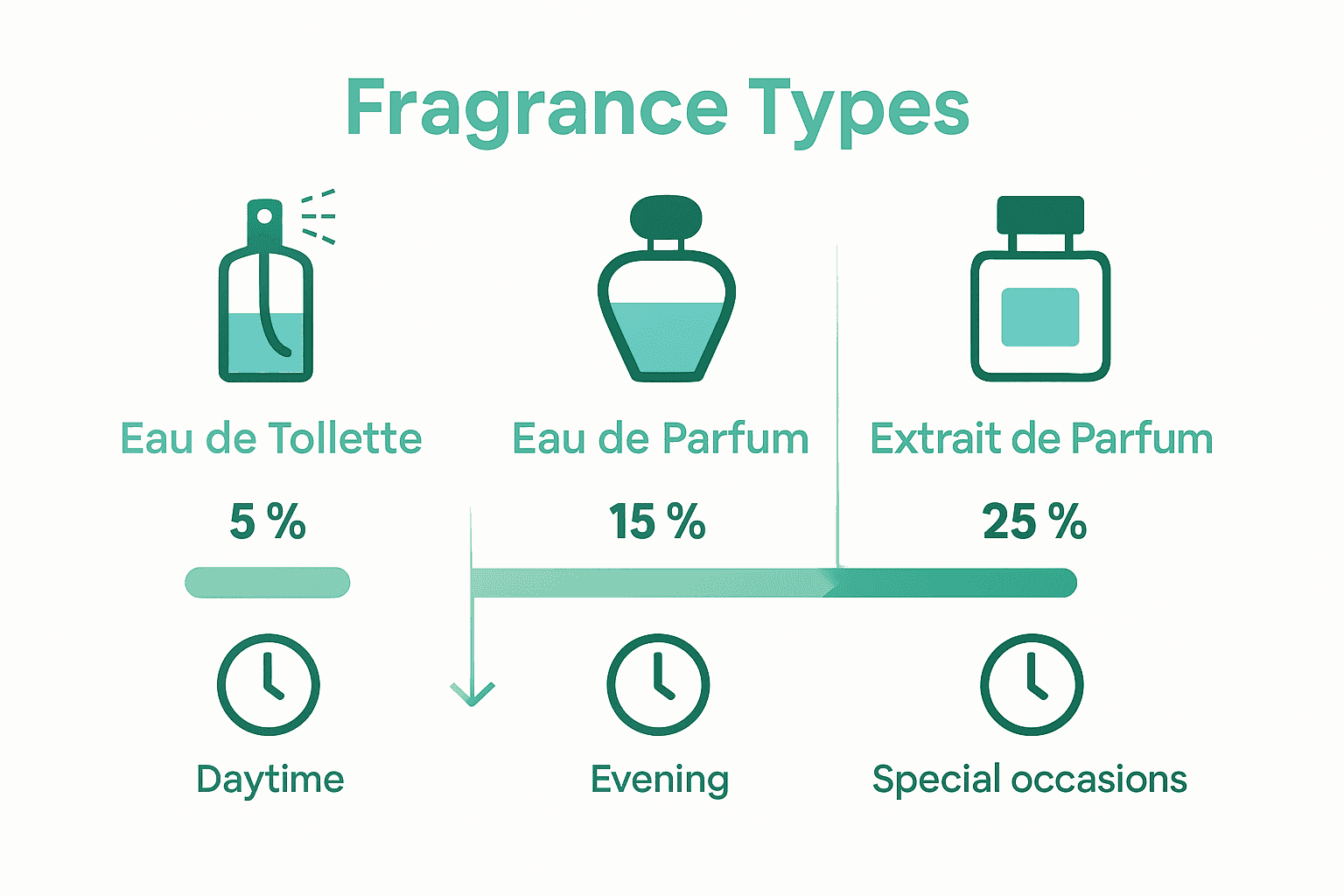 While higher concentration doesn’t automatically guarantee superior quality, it does influence projection, longevity, and overall olfactory experience. The right concentration depends on personal preference, skin chemistry, and the specific occasions for which you’re selecting a fragrance.
How Eau De Parfum Is Made and Lasts
Eau de Parfum emerges from a meticulous blending process that transforms raw aromatic ingredients into a sophisticated sensory experience. According to research on perfume longevity, EDP typically contains 15–20% perfume oils carefully dissolved in a precise alcohol and water mixture, creating a concentration that balances intensity and wearability.
The composition of Eau de Parfum involves several critical stages:
- Selection of high-quality essential oils and aromatic compounds
- Precise measurement of concentration (15–20% fragrance oils)
- Careful blending of top, middle, and base notes
- Stabilization and aging of the fragrance blend
Longevity is a hallmark of Eau de Parfum. Our comprehensive guide to understanding perfume duration reveals that EDP typically lasts 4–6 hours on skin, with potential extension through strategic application techniques. Research indicates that factors like skin moisture, body temperature, and individual chemistry dramatically influence a fragrance’s staying power.
Storage matters as much as application. Perfume experts recommend keeping your EDP in a cool, dark place to preserve its integrity. The typical bottle of Eau de Parfum maintains its quality for 3–5 years when stored correctly, ensuring you can enjoy your favorite scent without rapid degradation of its exquisite aromatic profile.
Typical Uses and Ideal Occasions
Eau de Parfum represents a versatile fragrance concentration that adapts seamlessly across various social settings and personal contexts. According to Aroma Concepts’ comprehensive guide, UK fragrance enthusiasts appreciate EDP’s remarkable flexibility for different occasions, making it a sophisticated choice for both professional and personal environments.
Typical EDP usage scenarios include:
- Professional office environments
- Daytime social gatherings
- Evening events and dinners
- Special occasions like weddings or celebrations
- Romantic date nights
The nuanced composition of Eau de Parfum allows for strategic selection based on occasion. As GQ Magazine’s fragrance experts highlight, lighter floral and citrus EDPs work brilliantly for daytime and workplace settings, while deeper notes featuring woods, resins, and musks become ideal for evening and more intimate social interactions.
Choosing the right EDP involves understanding its aromatic profile and matching it to your specific context. Lighter, fresher fragrances suit professional and daytime scenarios, whereas richer, more complex scents elevate evening experiences. The key is selecting an Eau de Parfum that not only complements your personal style but also resonates with the specific atmosphere and emotional tone of your intended occasion.
Choosing and Wearing Eau De Parfum Safely
Fragrance safety requires a thoughtful approach, particularly when selecting and applying Eau de Parfum. According to regulatory guidelines from the European Commission, UK and EU consumers must be aware of potential allergen risks associated with fragrances, with 26 specific fragrance allergens requiring mandatory labelling.
Key safety considerations when choosing and wearing Eau de Parfum include:
- Perform a patch test before full application
- Check ingredient labels for known allergens
- Avoid applying on broken or sensitive skin
- Test fragrances on a small area first
- Rotate application sites to prevent skin sensitivity
Our comprehensive best practices guide recommends strategic application techniques that minimise potential skin irritation. Sensitive individuals should be especially cautious, as fragrance reactions can be immediate or develop over time, particularly when applied to delicate areas like the face, hands, or armpits.
Mindful application goes beyond safety—it’s about creating a personalised, comfortable fragrance experience. Start with minimal quantities, understand your skin’s unique chemistry, and always prioritise your body’s response. If you notice any unusual reactions such as redness, itching, or discomfort, discontinue use immediately and consult a healthcare professional. Your comfort and well-being should always take precedence over any fragrance choice.
Comparing Eau De Parfum to Affordable Alternatives
Fragrance alternatives offer budget-conscious enthusiasts intelligent options for experiencing premium scent profiles without breaking the bank. Exploring affordable perfume options reveals a sophisticated landscape of high-quality, wallet-friendly fragrance experiences that can rival more expensive Eau de Parfum selections.
Key differences between premium EDP and affordable alternatives include:
- Concentration levels (typically lower in budget options)
- Ingredient complexity
- Longevity of scent
- Molecular sophistication of fragrance composition
- Price point and accessibility
Bargain hunters can strategically navigate the fragrance market by understanding these nuanced differences. Our comprehensive guide to knock-off perfumes highlights that many affordable alternatives successfully capture the essence of designer fragrances, offering remarkable value for discerning consumers.
The art of selecting an alternative lies in recognising that price doesn’t always dictate quality. Smart shoppers should prioritise personal chemistry, scent profile, and individual preference over brand prestige. Sampling multiple options, understanding your skin’s unique interaction with different fragrances, and remaining open to unexpected discoveries can lead to finding exceptional scents that deliver luxurious experiences at a fraction of the cost.
Elevate Your Scent Journey with Inspired Eau de Parfum Alternatives
Are you tired of searching for quality Eau de Parfum that truly lasts, only to find confusing labels and high price tags? This article explained how finding the right concentration, like EDP, is about more than numbers on a bottle. Readers often feel frustrated by inconsistent longevity, worries about allergens or irritation, and the assumption that luxury always means expensive. At Alexandria UK, we understand your desire for sophistication that feels personal and accessible.
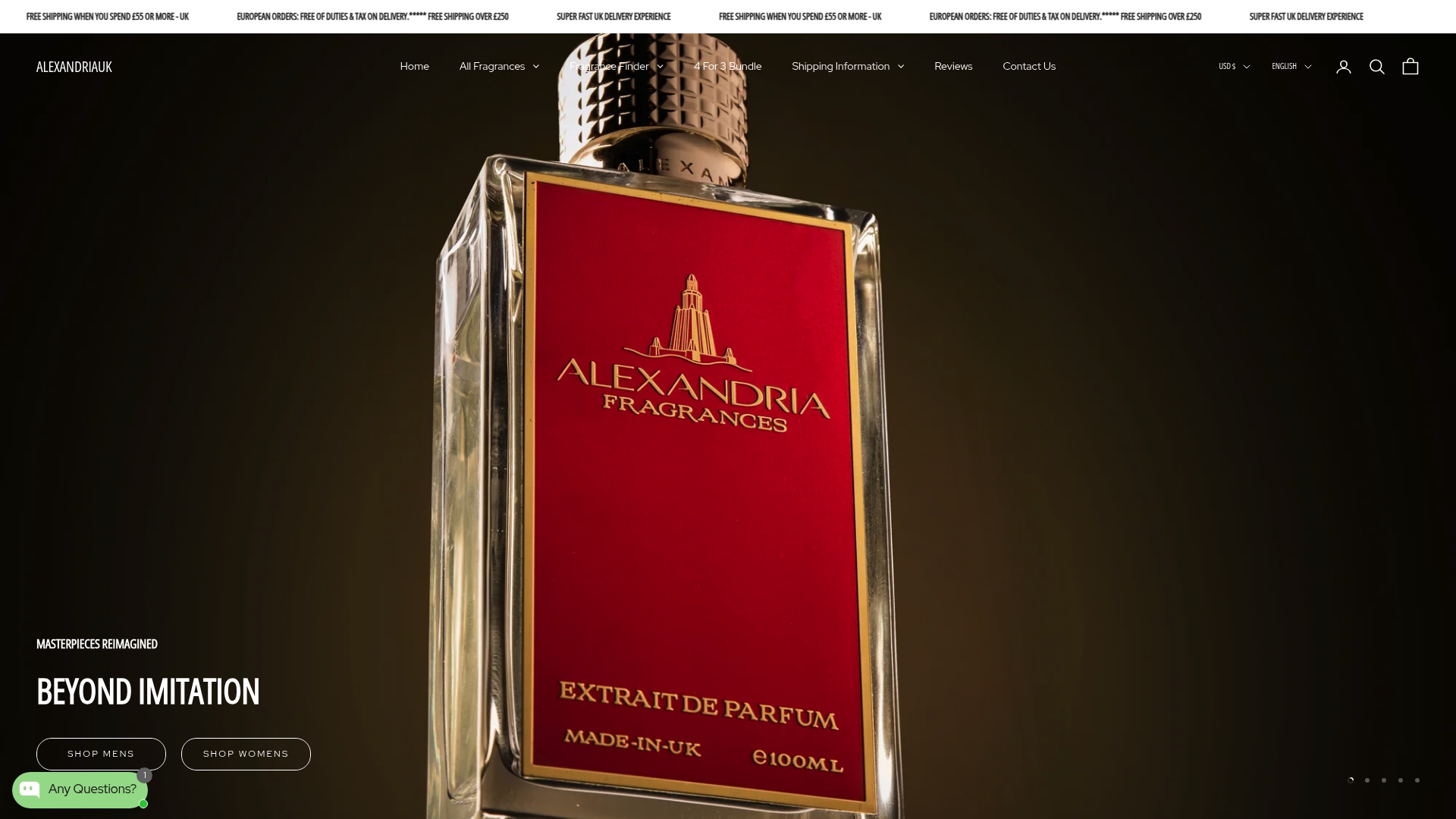
Discover inspired fragrances and high-quality dupes directly at Alexandria UK. Our collection mirrors those cherished Eau de Parfum notes, offering distinctive scents with impressive performance without the designer price. Looking for more? Visit our comprehensive fragrance academy to explore safe application tips and affordable alternatives. Do not wait. Let your scent express your individuality today and experience just how effortless truly refined fragrance can be.
Frequently Asked Questions
What is Eau de Parfum?
Eau de Parfum (EDP) is a fragrance concentration that typically contains 12–20% pure fragrance essence, offering a balanced combination of longevity and intensity in scent.
How long does Eau de Parfum last on the skin?
Eau de Parfum typically lasts between 4 to 8 hours on the skin, depending on factors like body chemistry and application techniques.
What is the difference between Eau de Parfum and Eau de Toilette?
Eau de Parfum has a higher concentration of aromatic compounds (10–20%) compared to Eau de Toilette, which generally contains 5–15%. This results in EDP being more intense and longer-lasting than EDT.
How should I apply Eau de Parfum for optimal longevity?
For optimal longevity, apply Eau de Parfum on pulse points such as wrists and behind the ears, and consider layering with unscented lotions to enhance staying power.