Artikel: Understanding Why Perfume is Expensive and Its Value

Understanding Why Perfume is Expensive and Its Value
Luxury perfume is more than just something you wear on your skin. Think about this. Some rare ingredients like ambergris can fetch over £20,000 per kilogram and just a few drops of natural Damask rose oil require thousands of petals. You might expect the price tag to be all about how rare or pricey the ingredients are. Yet, the true value often lies in the craftsmanship, intricate artistry, and captivating stories bottled inside each scent.
Table of Contents
- What Makes Perfume A Luxurious Product?
- The Role Of Ingredients In Perfume Pricing
- Craftsmanship And Artistry In Perfume Creation
- The Impact Of Branding And Marketing On Cost
- Understanding The Market: Why Price Varies
Quick Summary
| Takeaway | Explanation |
|---|---|
| Luxury perfumes use rare, natural ingredients | Ingredients like Florentine iris and Damask rose are costly due to their rarity and complex extraction processes. |
| Master perfumers blend artistry with science | Creating a fragrance is an intricate process involving years of training and experimentation to achieve the ideal scent balance. |
| Branding amplifies perfume value and perception | Exclusive positioning and sophisticated marketing strategies turn fragrances into luxury items, enhancing their desirability and pricing. |
| Market dynamics shape perfume pricing | Geopolitical and environmental factors, along with regional consumer preferences, significantly influence how perfumes are priced globally. |
| Packaging contributes substantially to costs | Premium packaging, representing 15-30% of production costs, transforms perfume bottles into luxury items themselves. |
What Makes Perfume a Luxurious Product?
Perfume transcends mere fragrance, embodying a complex blend of artistry, science, and cultural sophistication. Explore the intricacies of luxury fragrances that transform a simple scent into an expensive, coveted accessory.
The Alchemy of Rare Ingredients
Luxury perfumes are distinguished by their extraordinary ingredient selection. Master perfumers source rare, exotic botanical extracts and precious natural essences from specific global regions. These ingredients are not merely fragrances but narrative elements representing geographical heritage and meticulous cultivation.
Consider ingredients like Florentine iris, Haitian vetiver, or Damask rose - each costing hundreds of pounds per kilogram. Their rarity and complex extraction processes significantly contribute to perfume’s elevated pricing. Some exclusive ingredients require specific climatic conditions and years of careful cultivation, making them incredibly expensive.
Craftsmanship and Artistic Expression
Perfume creation resembles high art, with master perfumers comparable to renowned composers or painters. These professionals, often trained in prestigious French institutions, spend years mastering their craft. A single luxury fragrance might represent months or even years of intricate development, involving hundreds of experimental compositions before achieving the perfect olfactory balance.
The creative process involves complex layering techniques, understanding molecular interactions between different essences, and creating unique sensory experiences. Each fragrance tells a story, evoking emotions and memories through carefully orchestrated scent combinations.
Heritage and Brand Positioning
Luxury perfume brands leverage their historical reputation and exclusive positioning to justify premium pricing. Brands like Chanel, Creed, and Clive Christian have cultivated narratives of exceptional quality, limited production, and unparalleled craftsmanship.
Their marketing strategies emphasise exclusivity, positioning fragrances not just as products but as personal statements of sophistication and individual identity. The packaging, design, and brand heritage further elevate the perceived value, transforming perfume from a simple cosmetic item into a luxury experience.
This table outlines the key factors contributing to luxury perfume pricing, detailing examples and their effects as discussed in the article.
| Factor | Example(s) | Effect on Price |
|---|---|---|
| Rare Ingredients | Ambergris, Damask rose, Florentine iris | Dramatically increases cost |
| Craftsmanship | Master perfumer expertise, detailed composition | Premium for artistry and expertise |
| Brand Positioning | Chanel, Creed, Clive Christian narratives | Premium pricing for exclusivity |
| Packaging & Presentation | Hand-blown glass bottles, Swarovski embellishments | 15-30% of total cost, luxury appeal |
| Marketing & Endorsements | Celebrity campaigns, limited editions | Increases perceived and real value |
| Global Supply Chain | Ingredient sourcing, logistics challenges | Drives up price due to complexity |
The Role of Ingredients in Perfume Pricing
Ingredients are the fundamental building blocks that transform a simple fragrance into a luxurious sensory experience. Discover the nuances of niche perfume ingredients and understand why certain components dramatically elevate perfume pricing.
Natural vs Synthetic Ingredients
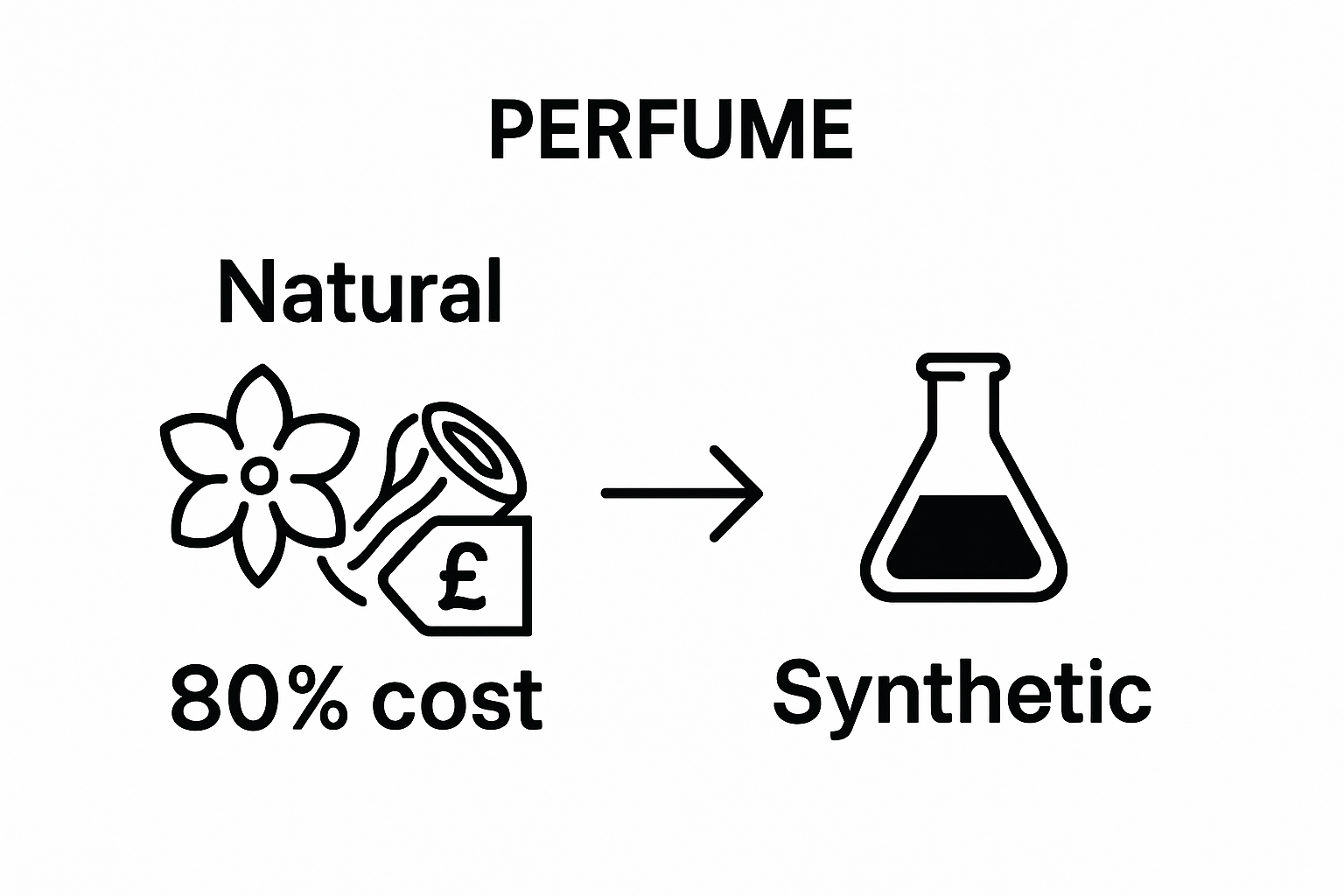
Perfume ingredients are categorised into two primary classifications: natural and synthetic essences. Natural ingredients like oud, jasmine, and sandalwood are harvested from specific global regions, requiring intricate extraction processes. These rare botanical extracts demand meticulous cultivation, sophisticated harvesting techniques, and substantial investment.
The following table compares natural and synthetic ingredients in luxury perfumery, summarising their characteristics and impact on pricing.
| Ingredient Type | Key Characteristics | Impact on Pricing |
|---|---|---|
| Natural Ingredients | Harvested from rare botanicals, complex extraction required, regional origin | Significantly increases |
| due to cost and scarcity | ||
| Synthetic Ingredients | Produced in laboratories, consistent quality, broader availability | Reduces cost and ensures |
| consistency | ||
| Rare Botanical Extracts | Requires specific climate, often limited harvests | Substantial price rise |
| Complex Extraction Process | Involves distillation, cold pressing, or other methods with low yield | Higher production costs |
| Geographical Limitations | Sourced from particular countries or regions | Affects ingredient price |
Synthetic ingredients, created in advanced laboratories, offer consistency and affordability. However, luxury perfume houses often prioritise natural ingredients for their complex molecular structures and unique sensory profiles. According to scientific fragrance research, some natural essences can cost thousands of pounds per kilogram, significantly influencing perfume pricing.
Rarity and Extraction Complexity
The procurement of premium perfume ingredients involves extraordinary challenges. Consider ambergris, a rare substance produced by sperm whales, which can command prices exceeding £20,000 per kilogram. Similarly, Damask rose oil requires approximately 4,000 kilograms of rose petals to produce just one kilogram of essential oil.
Extraction methods further contribute to ingredient expenses. Traditional techniques like steam distillation and cold pressing demand significant time, labour, and specialised equipment. Some precious ingredients require weeks or months of processing, with minimal yield, driving up production costs exponentially.
Geographical and Seasonal Limitations
Certain perfume ingredients are geographically and seasonally restricted, creating additional complexity in sourcing. Ingredients like Florentine iris require specific soil conditions in Tuscany, Italy, and take three to four years of cultivation before harvest. Climate changes, agricultural challenges, and limited growing regions create natural scarcity, further inflating ingredient prices.
These geographical constraints mean perfumers must navigate complex global supply chains, invest in sustainable cultivation practices, and sometimes negotiate with local agricultural communities to secure their rare botanical essences.
Craftsmanship and Artistry in Perfume Creation
Perfume creation represents a sophisticated fusion of scientific precision and artistic imagination. Explore the intricate world of fragrance crafting and discover the remarkable skills behind every luxurious scent.
The Master Perfumer’s Expertise
Master perfumers, known as ‘Noses’ in the fragrance industry, undergo rigorous training comparable to classical musicians or advanced scientific researchers. These professionals typically spend a decade honing their craft, developing an extraordinary sensory palette that allows them to distinguish between thousands of subtle aromatic nuances.
Their expertise involves understanding complex molecular interactions, recognising how different chemical compounds blend and transform. A master perfumer can identify hundreds of individual scent notes, understanding how temperature, skin chemistry, and environmental conditions impact fragrance perception.
The Composition Process
Fragrance composition resembles musical arrangement, with top, middle, and base notes creating a harmonious olfactory experience. Perfumers meticulously layer ingredients, balancing volatile essential oils that evaporate at different rates. This intricate process requires understanding molecular weight, volatility, and chemical compatibility.
According to fragrance industry research, a single luxury perfume might involve 50-250 different ingredients, with some complex fragrances requiring up to two years of continuous development and refinement.
Innovative Techniques and Emotional Design
Contemporary perfume creation transcends traditional boundaries, incorporating advanced technological techniques like molecular distillation and headspace technology. These methods allow perfumers to capture and reproduce incredibly delicate scent profiles that were previously impossible to extract.
Moreover, master perfumers approach fragrance as an emotional language, designing scents that evoke specific memories, feelings, and psychological states. Each perfume becomes a narrative, telling a story through carefully orchestrated molecular interactions that trigger complex neurological and emotional responses.
The Impact of Branding and Marketing on Cost
Marketing and branding strategies play a pivotal role in transforming perfumes from mere fragrances into coveted luxury experiences. Learn more about discounted perfume strategies and understand how brand perception influences pricing.
Luxury Brand Positioning
Luxury perfume brands meticulously craft their market positioning through sophisticated storytelling and emotional marketing techniques. Brands like Chanel, Dior, and Tom Ford invest substantial resources in creating narratives that transcend simple product marketing, positioning fragrances as personal statements of identity and sophistication.
These brands leverage several strategic approaches to justify premium pricing:
- Creating exclusive, limited edition collections
- Collaborating with renowned designers and celebrities
- Developing intricate packaging and presentation
- Establishing heritage and historical credibility
Packaging and Presentation Costs
The visual and tactile experience of luxury perfumes contributes significantly to their pricing. According to luxury marketing research, premium packaging can represent 15-30% of a perfume’s total production cost.
High-end perfume bottles are often designed by renowned artists and designers, using premium materials like hand-blown glass, Swarovski crystals, and intricate metalwork. These design elements transform perfume bottles from mere containers into collectible art pieces, justifying higher price points.
Celebrity and Artistic Endorsements
Celebrity partnerships and artistic collaborations substantially elevate perfume brand perception and pricing. Major fashion houses invest millions in marketing campaigns featuring global celebrities, creating aspirational narratives around their fragrances.
These marketing strategies extend beyond traditional advertising, incorporating complex storytelling that connects emotional experiences with specific fragrances. By positioning perfumes as more than products - but as lifestyle statements and personal expressions - brands can command significantly higher prices in the competitive fragrance market.
Understanding the Market: Why Price Varies
Perfume pricing represents a complex ecosystem influenced by multiple interconnected factors. Discover insights into perfume market dynamics and unravel the intricate pricing mechanisms that determine fragrance value.
Global Supply Chain Complexities
The perfume market operates within a sophisticated global supply chain that dramatically impacts pricing. Raw ingredient sourcing involves navigating intricate international networks, with procurement challenges arising from geopolitical tensions, environmental regulations, and agricultural limitations.
Key factors influencing market pricing include:
- Seasonal agricultural variations
- Climate change impacts on botanical harvests
- International trade regulations
- Currency exchange fluctuations
- Transportation and logistics expenses
Market Segmentation and Consumer Preferences
Fragrance markets are stratified into distinct consumer segments, each with unique pricing expectations. According to market research analysis, luxury perfume markets demonstrate significant regional variations in consumer spending and preferences.
Consumer segments typically include:
- Luxury consumers seeking exclusive, high-end fragrances
- Mid-range consumers valuing quality and affordability
- Budget-conscious buyers seeking accessible alternatives
- Niche fragrance enthusiasts exploring unique, limited production scents
Economic and Technological Influences
Economic trends and technological advancements continuously reshape perfume market dynamics. Emerging economies are witnessing rapid growth in luxury fragrance consumption, while technological innovations in synthetic ingredient production are gradually transforming traditional pricing models.
Additionally, digital marketing platforms and e-commerce have democratised fragrance access, enabling smaller brands to compete with established luxury houses. This technological shift has introduced more competitive pricing strategies and expanded consumer choices, creating a more dynamic and responsive global perfume marketplace.
Discover True Value Behind Exceptional Perfume
Many readers wonder why the finest fragrances carry such a premium price. As the article explains, every luxurious perfume is crafted from rare ingredients, refined expertise, and timeless artistry, turning scent into an unforgettable experience. If you crave this sense of exclusivity and want a fragrance that truly reflects your individuality, the real challenge is finding quality without the inflated price tag. At Alexandria UK, we bridge the gap between costly luxury and accessible excellence. Explore the world of expertly inspired scents that capture the essence of prestigious brands, using premium materials and cutting-edge methods without sacrificing value.
Why pay more for the name alone when you can own fragrances crafted with care, imagination, and integrity? Find your next signature scent today by browsing our expertly formulated perfume collection at Alexandria UK, or learn more about the art of fragrance crafting. Experience the luxury of high-end perfume at a fraction of the cost and make your next fragrance choice a statement of both sophistication and smart value.
Frequently Asked Questions
Why are luxury perfumes so expensive?
Luxury perfumes are expensive due to the use of rare, high-quality ingredients, intricate crafting processes, and the artistry involved in their creation. Exclusive branding and unique packaging also contribute significantly to the overall cost.
What role do natural ingredients play in perfume pricing?
Natural ingredients, often harvested from specific regions and requiring complex extraction methods, are typically more costly than synthetic options. Their rarity and the labour-intensive processes necessary for their extraction significantly impact the pricing of luxury perfumes.
How does the craftsmanship of a master perfumer affect the scent of a perfume?
The expertise of a master perfumer is crucial in fragrance creation. Their knowledge of molecular interactions and scent layering results in a balanced and harmonious olfactory experience, making luxury scents unique and desirable.
Why is packaging important in the perceived value of perfumes?
Packaging enhances the overall experience of luxury perfumes. High-quality materials and artistic design can account for a substantial portion of the perfume’s cost, as they elevate the product from a simple cosmetic item to a premium experience.
Recommended
- What is the Most Expensive Perfume? Understanding Luxury Fragrance
- Understanding Why Buy Discounted Perfume for Great Value
- How to Identify Quality Perfume: A Step-by-Step Guide
- AROMAS ENCAPSULADOS - kolorguide
- Luxury Brands in 2025: Why Buying Top Luxury Brands Is the Ultimate Investment in Yourself – You’ll Never Look Back!