Artikel: Transparent Fragrance Notes: Why They Matter in Perfumery

Transparent Fragrance Notes: Why They Matter in Perfumery
More than one in three British fragrance lovers now gravitate toward subtle, airy scents that feel modern and understated. While traditional perfumes often linger heavily, transparent fragrance notes have reinvented the way people experience personal scent. This fresh approach appeals to anyone searching for sophistication without overwhelming those nearby. Here, discover what makes transparent notes unique, why they stand out, and how their delicate complexity is reshaping the British perfume scene.
Table of Contents
- Defining Transparent Fragrance Notes
- Key Ingredients Creating Airy Scents
- Why Transparent Notes Appeal To Consumers
- Risks And Misconceptions Around Transparency
- How To Choose And Layer Transparent Scents
Key Takeaways
| Point | Details |
|---|---|
| Transparent Fragrance Notes | These notes offer a subtle, ethereal scent experience, differing from traditional heavy fragrances by emphasising minimalism and lightness. |
| Ingredient Selection | Perfumers utilise a blend of synthetic chemicals and natural oils, such as citrus and soft musks, to create delicate and airy scents. |
| Consumer Appeal | Modern consumers prefer understated fragrances that reflect simplicity and elegance, allowing for personal expression without overwhelming environments. |
| Application Technique | Care should be taken not to over-apply transparent fragrances; minimal application enhances the nuance of these delicate scents. |
Defining Transparent Fragrance Notes
In the sophisticated world of perfumery, transparent fragrance notes represent a nuanced and delicate approach to scent composition. These ethereal olfactory elements are characterised by their gossamer-light quality, creating an aroma that whispers rather than shouts. Contemporary perfumers utilise specific aroma chemicals to craft scents that are remarkably subtle and refined.
Transparent fragrance notes distinguish themselves through an intentional minimalism that challenges traditional perfumery techniques. Unlike dense, heavy fragrances that overwhelm the senses, these notes provide a clean, almost weightless olfactory experience. They are engineered to deliver a fresh, ethereal sensation that feels like a gentle breeze rather than a forceful wind. The technique involves carefully selected essential oils and synthetic molecules that create an impression of lightness and sophistication.
The art of developing transparent fragrance notes requires exceptional skill and precision. Perfumers must balance delicate aromatic compounds to achieve a scent profile that feels both present and almost imperceptible. These notes often incorporate elements like soft musks, light florals, and crystalline woody undertones that create an impression of translucence. By using advanced molecular techniques, perfumers can now construct fragrances that seem to float around the wearer, creating an intimate and personal sensory experience.
Expert Tip: When selecting a transparent fragrance, test it on your skin and observe how it evolves. The true character of these delicate scents emerges through subtle interaction with individual body chemistry, revealing their sophisticated complexity.
Here is a comparison of traditional fragrances and transparent fragrance notes:
| Aspect | Traditional Fragrances | Transparent Fragrance Notes |
|---|---|---|
| Sillage | Strong, projects widely | Subtle, forms an intimate aura |
| Complexity | Dense, multifaceted layers | Nuanced, minimalist construction |
| Longevity | Often long-lasting | Lighter but skilfully balanced |
| Suitable Occasions | Bold statement settings | Versatile, understated elegance |
Key Ingredients Creating Airy Scents
Creating transparent and ethereal fragrances requires a sophisticated understanding of specific aromatic compounds. Perfumers strategically select ingredients like citrus oils and specific molecular structures to craft scents that feel delicate and almost weightless. The science behind these airy fragrances involves precise manipulation of essential oils and synthetic molecules that interact harmoniously to produce a gossamer-like olfactory experience.
The palette of ingredients for crafting transparent scents is remarkably nuanced. Synthetic aroma chemicals play a crucial role in this delicate process. Aldehydes and specialised musks contribute significantly to generating light, almost imperceptible fragrance profiles. Ingredients such as linalool, a naturally occurring terpene alcohol found in lavender and bergamot, provide crisp, clean undertones that enhance the scent’s ethereal quality.
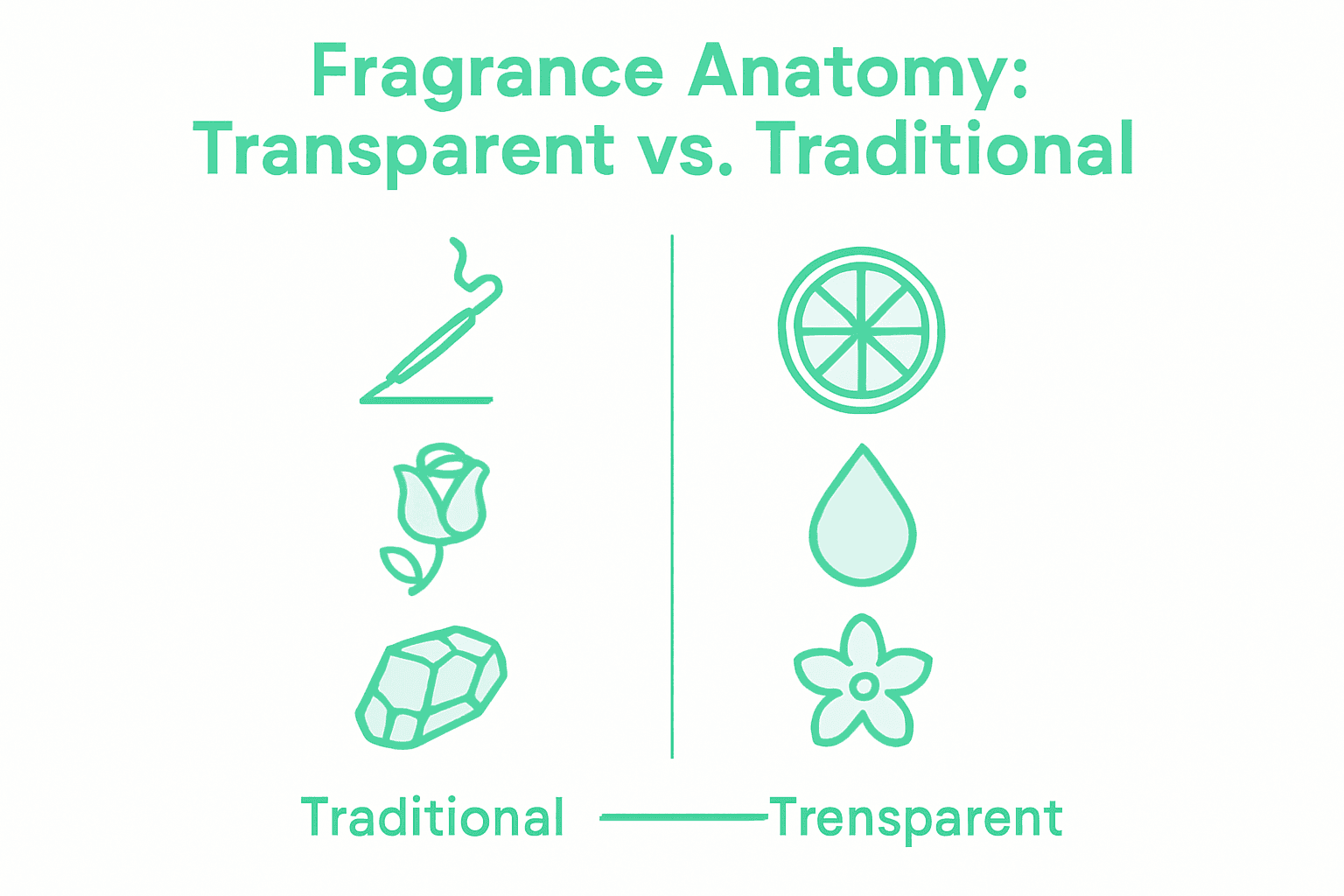
Molecular engineering has revolutionised the creation of transparent fragrances. Perfumers now employ advanced techniques to break down traditional heavy scent structures, replacing them with intricate, lightweight molecular combinations. Specific esters and carefully selected essential oils are strategically blended to create an impression of lightness that seems to float effortlessly around the wearer. These ingredients work in concert, producing a scent that is simultaneously present and elusive.
Expert Tip: When exploring transparent fragrances, focus on scents with high concentrations of citrus, light florals, and soft musky notes. These ingredients will provide the most delicate and sophisticated olfactory experience.
Here is a summary of the principal ingredient types found in transparent fragrances and their typical effects:
| Ingredient Type | Common Examples | Effect on Scent |
|---|---|---|
| Synthetic Chemicals | Aldehydes, musks | Adds freshness and clean texture |
| Natural Terpenes | Linalool, nerol | Creates light floral undertones |
| Citrus Oils | Lemon, bergamot | Imparts crisp, zesty sensation |
| Esters | Ethyl acetate | Enhances volatility and brightness |
Why Transparent Notes Appeal To Consumers
Consumer preferences for fragrance have evolved dramatically, with modern individuals seeking scents that complement rather than dominate their personal space. Transparent notes have emerged as a sophisticated solution for those desiring understated elegance. These delicate fragrances offer a nuanced approach to personal scent, providing a whisper of aroma that feels simultaneously intimate and unobtrusive.

The appeal of transparent notes extends beyond mere olfactory experience. Contemporary consumers are drawn to fragrances that embody minimalism and purity, reflecting broader lifestyle trends towards simplicity and authenticity. These scents communicate a sense of refined restraint, allowing individuals to express themselves without overwhelming their environment. The subtle nature of transparent notes means they can be worn across diverse settings - from professional workplaces to casual social gatherings - without creating sensory discomfort.
Psychologically, transparent fragrances tap into deeper consumer desires for cleanliness and freshness. They evoke sensations of pristine environments, suggesting a crisp, well-curated personal presentation. The lightweight molecular structures create an impression of effortless sophistication, enabling wearers to feel confident without appearing artificially constructed. By prioritising subtle complexity over bold statements, these fragrances reflect a mature understanding of personal style and sensory communication.
Expert Tip: When selecting a transparent fragrance, sample the scent on your skin and observe how it interacts with your natural body chemistry. The most exceptional transparent notes will adapt seamlessly, creating a personalised olfactory signature that feels completely natural.
Risks And Misconceptions Around Transparency
Fragrance transparency comes with several nuanced challenges that consumers and perfume enthusiasts must understand. The primary misconception surrounding transparent fragrances is their perceived lack of depth and staying power. Many individuals assume that a light, ethereal scent cannot possibly provide the same olfactory complexity or longevity as traditional, more robust perfume compositions. However, modern molecular engineering has dramatically transformed this perception, enabling perfumers to create delicate scents with remarkable structural integrity.
Improper application represents a significant risk with transparent fragrance notes, as their subtle nature can lead consumers to over-apply in an attempt to enhance perceptibility. The delicate molecular structure of these fragrances requires a more nuanced approach to application. Wearers must understand that these scents are designed to create a gentle aura around the body, not to announce their presence with overwhelming intensity. The art of wearing transparent fragrances lies in understanding their inherent subtlety and respecting their minimalist design.
Psychologically, transparent fragrances challenge traditional perfumery paradigms, which can create resistance among consumers accustomed to more pronounced scent profiles. Some individuals mistake subtlety for weakness, failing to recognise the sophisticated engineering behind these seemingly simple compositions. The complexity of transparent notes lies not in their volume, but in their intricate molecular construction. They represent a more evolved approach to personal fragrance, prioritising individual chemistry and nuanced sensory interaction over brute olfactory force.
Expert Tip: Start with a minimal application of transparent fragrances, applying just one spray to pulse points. Observe how the scent develops over several hours, allowing your body chemistry to interact naturally with the fragrance’s delicate molecular structure.
How To Choose And Layer Transparent Scents
Selecting transparent fragrances requires a nuanced understanding of personal chemistry and environmental context. The art of choosing these delicate scents involves carefully matching fragrance notes to your individual skin type, personal style, and intended occasion. Unlike traditional heavy perfumes, transparent fragrances demand a more sophisticated approach, requiring wearers to consider the subtle interplay between molecular structures and individual body chemistry.
Layering transparent scents is an intricate process that demands precision and restraint. The key to successful fragrance layering lies in creating harmonious combinations that complement rather than compete. Begin with a lightweight base note - typically a soft musk or delicate floral essence - and gradually introduce complementary scents that enhance rather than overwhelm. The goal is to create a nuanced olfactory experience that feels organic and effortless, with each layer adding depth without losing the inherent transparency of the original composition.
Understanding the molecular architecture of transparent fragrances is crucial for effective selection and layering. Different scent families - such as citrus, light florals, and clean musks - interact uniquely with individual body chemistry. Some individuals may find that certain transparent notes resonate more strongly with their natural scent profile, while others might require more strategic blending. Experimental approaches, such as testing fragrances on pulse points and observing their evolution over several hours, can provide invaluable insights into creating a personalised scent narrative.
Expert Tip: When experimenting with transparent fragrance layering, start with no more than two complementary scents and apply them to different pulse points. Allow each layer to develop naturally, and resist the temptation to over-apply, as subtlety is the hallmark of exceptional transparent fragrances.
Discover the Elegance of Transparent Fragrance Notes with Alexandria UK
Navigating the subtle world of transparent fragrance notes can be challenging. The delicate balance between ethereal freshness and lasting presence requires expertly crafted scents that honour minimalism without sacrificing sophistication. At Alexandria UK, we understand the unique desire for fragrances that whisper instead of shout, providing understated elegance perfectly suited for every occasion. Experience the refined artistry behind soft musks, light florals, and crisp citrus notes that react beautifully with your skin.
Explore our carefully curated collection where quality meets innovation. Whether you seek a delicate scent to match your everyday style or a nuanced combination for special moments, our perfumes and carefully inspired dupes offer a premium solution. Do not miss the chance to elevate your fragrance experience today. Begin your journey now by visiting Alexandria UK and immerse yourself in scents that celebrate subtlety and sophistication.
Discover more about our exclusive offerings at Alexandria UK and embrace the art of wearing transparent fragrances with confidence.
Frequently Asked Questions
What are transparent fragrance notes?
Transparent fragrance notes are ethereal olfactory elements that create a delicate and subtle aroma, providing a clean and almost weightless scent experience.
How do transparent fragrance notes differ from traditional fragrances?
Unlike traditional fragrances which are often dense and complex, transparent fragrance notes feature a minimalist approach, offering a more nuanced and intimate olfactory experience.
What ingredients are commonly used in transparent fragrances?
Common ingredients in transparent fragrances include synthetic aroma chemicals like aldehydes and musks, natural terpenes such as linalool, citrus oils like bergamot, and esters that enhance freshness and brightness.
How can I effectively wear and apply transparent fragrances?
When applying transparent fragrances, use a minimal amount and test it on pulse points to observe how it interacts with your body chemistry, allowing the layered scent to develop over time.