Artikel: How to choose a perfume for a woman: expert guide

How to choose a perfume for a woman: expert guide
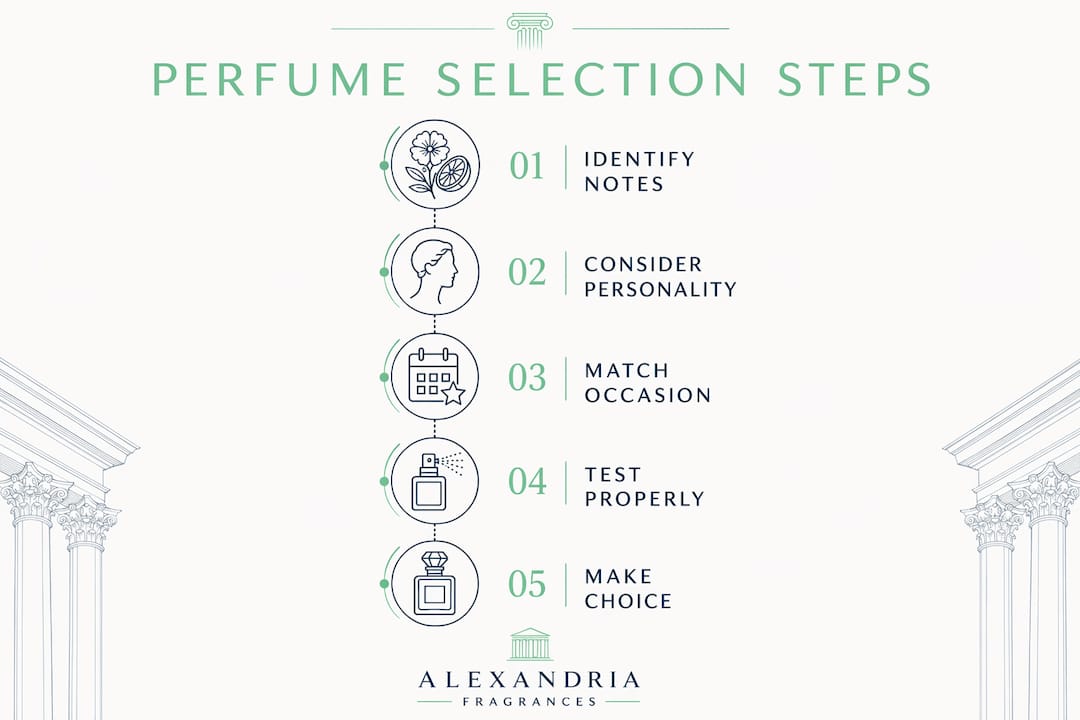
Choosing a perfume for a woman comes down to five essentials: identifying the olfactory family that resonates with her, matching the scent to her personality and lifestyle, considering the occasion and season, understanding concentration levels, and testing on skin over time. Get those five right, and the choice becomes far less daunting.
Before reaching for a bottle, consider these guiding principles:
- Identify the dominant scent family she gravitates towards: citrus, floral, amber, woody, or gourmand.
- Match fragrance to personality — a bold, confident character often suits rich ambers or dark woods; a romantic soul leans towards soft florals.
- Consider the occasion — daytime and office wear calls for lighter, fresher accords; evenings invite deeper, more sensual compositions.
- Choose the right concentration — Eau de Parfum (EDP) offers greater longevity than Eau de Toilette (EDT), making it better suited to all-day wear.
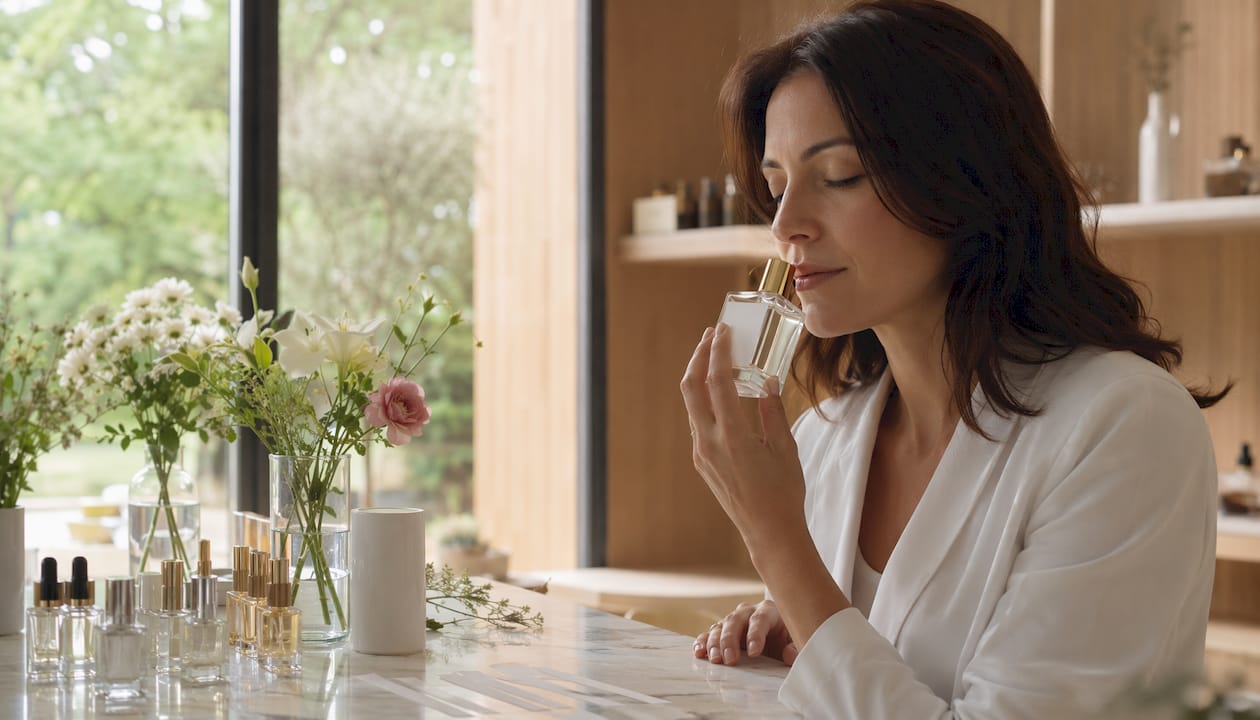
- Test on skin, not paper — skin chemistry transforms every fragrance, so a strip impression is only the beginning of the story.
Table of Contents
- What do the main scent families tell you about perfume choice?
- How do personality, style, and occasion shape the right fragrance?
- How should you test and wear perfume for the best result?
- What Alexandriauk knows about buying perfume in the UK
- Alexandriauk: quality-led perfumery for discerning women
- Key takeaways
What do the main scent families tell you about perfume choice?
The fragrance wheel organises the perfume world into families, and understanding them is the single most efficient shortcut to narrowing your options. Rather than smelling everything in sight, knowing which family appeals immediately halves the search.
The five families most relevant to selecting women’s fragrance in the UK are:
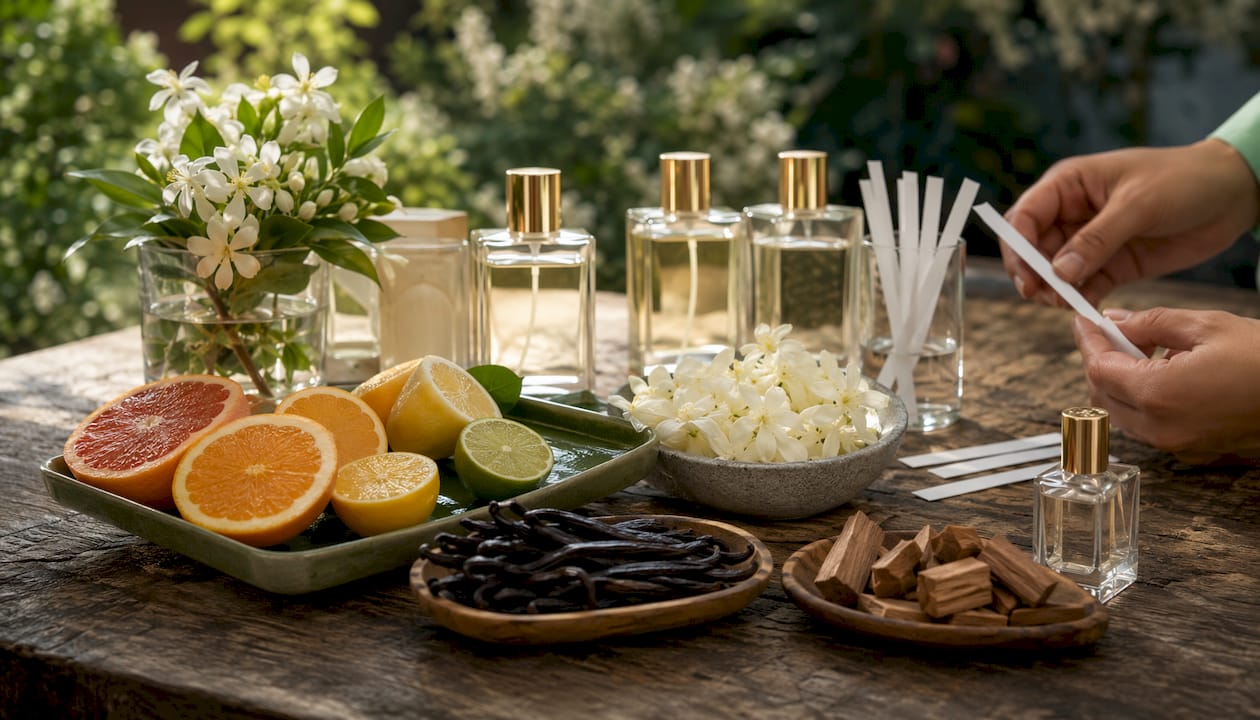
- Citrus — fresh, zesty, and uplifting, built on bergamot, lemon, and orange. Ideal for daytime wear and warmer months; the quintessential morning scent.
- Floral — the most enduring family, anchored by rose, jasmine, peony, and gardenia. Versatile enough for any occasion, from a spring afternoon to a formal dinner.
- Amber — warm, voluptuous, and seductive, with spiced or resinous bases. These compositions tend to feel more grown-up and are particularly luminous on cool autumn and winter evenings.
- Woody — grounded and sophisticated, drawing on sandalwood, cedar, and oud. Woods pair beautifully with almost any other note, which explains why they appear across popular perfume families in the UK market.
- Gourmand — the newest family, built on edible notes like caramel, vanilla, and chocolate. Warm, cosy, and deeply comforting, these scents have a particular pull in colder British weather.
Understanding fragrance structure deepens the picture further; exploring a variety of fragrance options helps you discover the perfect scent match. A common rule describes how a perfume is composed by balancing top notes (the first impression), heart notes (the character), and base notes (the lasting impression). This explains why a citrus opening can give way to a rich floral heart and a warm amber base — the fragrance you smell in the first minute is rarely the one you wear all day.
How do personality, style, and occasion shape the right fragrance?
Scent preference aligns closely with the image a woman wishes to project, making personality-scent matching one of the most reliable tools in fragrance selection. Younger wearers often gravitate towards gourmand or fruity notes, while those who prefer complexity tend towards chypre or white florals. Neither is more sophisticated — they simply reflect different chapters of a fragrance life.
A few personality archetypes worth considering:
- The romantic — drawn to soft, powdery florals or luminous white musks. Think peony, magnolia, and clean skin-like accords.
- The bold individualist — at home in dark, hedonistic ambers or smoky ouds that command attention without apology.
- The free spirit — fresh citrus or green aquatic notes that feel effortless and uncontrived.
- The classicist — complex chypre or woody florals that reward patience and develop beautifully over hours.
Occasion matters just as much as personality. A fragrance that captivates at a candlelit dinner can feel overpowering in a shared office. For daywear and professional settings, citrus and light florals project without overwhelming. Evenings and special occasions invite the full depth of amber and woody compositions. Seasonally, the British climate plays a real role: heavier, resinous scents feel natural in autumn and winter, while fresh and aquatic accords breathe more freely in spring and summer.
The question of a signature scent versus a rotation warrants thought. A signature scent becomes part of how others recognise you — a considered, personal statement. A rotation, by contrast, allows mood and occasion to guide the choice daily. Neither approach is wrong; the key is selecting with intention rather than impulse.
How should you test and wear perfume for the best result?
Testing perfume properly is less about having a trained nose and more about controlling variables. Skin chemistry — including pH level, hydration, and diet — influences how a fragrance develops and projects, which is why the same scent can smell creamy on one person and sharp on another.
Follow this sequence for a reliable skin test:
- Start with clean, unscented skin — residue from scented lotion or body wash compromises the result before it begins.
- Apply to pulse points — inner wrist or inner elbow, one fragrance per arm at most.
- Never rub your wrists together — friction disrupts the molecular structure and flattens the top notes before they can unfold naturally.
- Check at timed intervals — smell at one minute for the opening, 15–20 minutes for the transition, and 45–60 minutes for the early dry-down. For a serious purchase, revisit at the three-hour and six-hour marks.
- Limit sessions to 3–4 fragrances — olfactory fatigue sets in quickly; fresh air resets the nose better than coffee beans.
The dry-down is where the real character of a perfume lives. Judging a fragrance only on its opening is like forming an opinion of a novel from its first paragraph. Testing on skin for 4–6 hours reveals the heart and base notes that represent the true, lasting scent.
On concentration: EDP formulations carry a higher proportion of fragrance oil than EDT, translating to longer wear and stronger projection. For everyday British use, an EDP suits those who want their scent to carry through a full working day without reapplication. EDT works well for lighter, casual wear where subtlety is the goal.

Pro Tip: Keep a simple fragrance journal — note the time of application and your impressions at each stage. After testing several scents across a week, the entries reveal patterns in what genuinely appeals versus what merely impressed in the moment.
Sampling before committing to a full bottle is the most sensible approach. Testing perfumes across varied conditions — indoors, outdoors, across different days — gives a far more honest picture than a single in-store impression.
What Alexandriauk knows about buying perfume in the UK
The British climate and lifestyle genuinely influence which fragrances perform best. Heavier base notes like vanilla, amber, and woods hold well in cooler, damper conditions, while volatile citrus top notes can evaporate quickly on cold skin. Choosing a fragrance with a rich, lasting base is particularly wise for the UK’s autumn and winter months.
Budget is a practical consideration that rarely gets discussed with enough candour. Niche and luxury perfumes carry premium price tags, but the cost-per-wear calculation often favours a concentrated EDP that lasts all day over a cheaper EDT requiring constant reapplication. Sampling before spending is not just sensible — it is the professional approach.
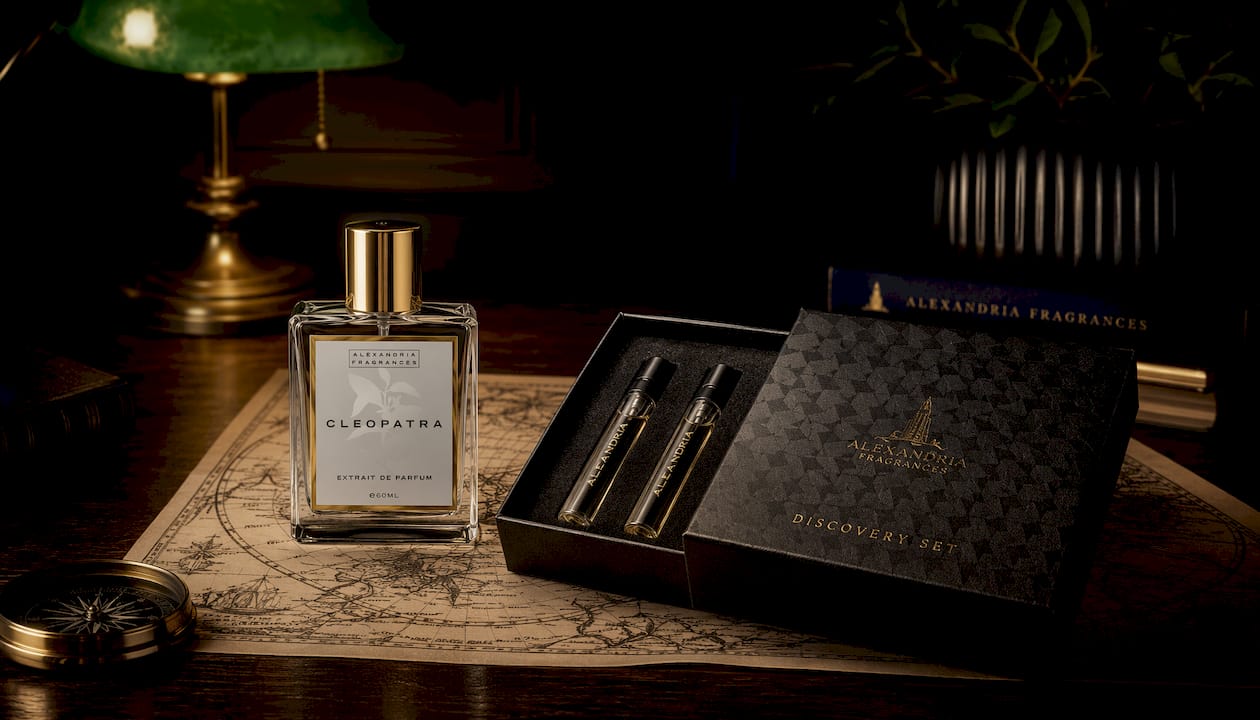
Alexandriauk’s Discovery Set addresses this directly. It offers a curated selection of niche extrait de parfum samples at an accessible price point, allowing you to test multiple compositions at home across different days and conditions before committing to a full bottle. This is precisely how informed fragrance decisions are made.
For those seeking a standout feminine fragrance, Cleopatra (For Her) is a compelling starting point — a rich, sophisticated composition that rewards those who appreciate depth and character in a scent. It exemplifies the quality and craftsmanship that Alexandriauk brings to inspired, accessible perfumery.
For deeper guidance on finding your signature scent, Alexandriauk’s Fragrance Academy offers a wealth of expert knowledge built around the UK market.
Alexandriauk: quality-led perfumery for discerning women
Where most fragrance retailers ask you to commit blind, Alexandriauk takes a different approach. The brand specialises in quality-led, inspired fragrances that deliver the character and depth of luxury perfumery at a price that makes exploration genuinely possible. For anyone navigating the process of selecting a women’s fragrance, that distinction is meaningful.
The Discovery Set is the natural first step: a curated kit of niche extrait de parfum samples that lets you test, compare, and decide at home, without pressure or guesswork. If a richer, more singular statement is what you are after, Cleopatra (For Her) offers a masterful accord that speaks to femininity with quiet authority. Browse the full collection at alexandriauk.com and find the fragrance that is genuinely, unmistakably hers.
Key takeaways
Choosing a perfume for a woman requires matching the olfactory family to her personality, testing on skin across multiple hours, and selecting a concentration suited to the occasion and lifestyle.
| Point | Details |
|---|---|
| Start with scent families | Identify whether she gravitates towards citrus, floral, amber, woody, or gourmand before smelling anything. |
| Match personality to fragrance | Younger wearers often prefer gourmand or fruity notes; complex chypre and white florals suit those who favour depth. |
| Test on skin, not paper | Skin chemistry shapes the dry-down; check at 4–6 hours to assess the true base note character. |
| Never rub wrists together | Friction disrupts molecular structure and flattens the top notes, compromising the full scent development. |
| Alexandriauk Discovery Set | Sample niche extrait de parfum compositions at home before committing to a full bottle. |