Artikel: How to choose a men's fragrance: a beginner's guide
How to choose a men's fragrance: a beginner's guide
Choosing a men’s fragrance comes down to four decisions: pick a scent family, select the right concentration for your occasion, test on skin and wait for the dry-down, then apply no more than two sprays. That sequence works whether you are buying for yourself or choosing a gift.
Quick checklist to shortlist a fragrance now:
-
Pick a scent family — fresh/citrus, woody, aromatic/fougère, spicy/oriental, or gourmand/amber.
-
Choose concentration by occasion — eau de toilette (EDT) for daytime and work; eau de parfum (EDP) for evenings and cold weather.
-
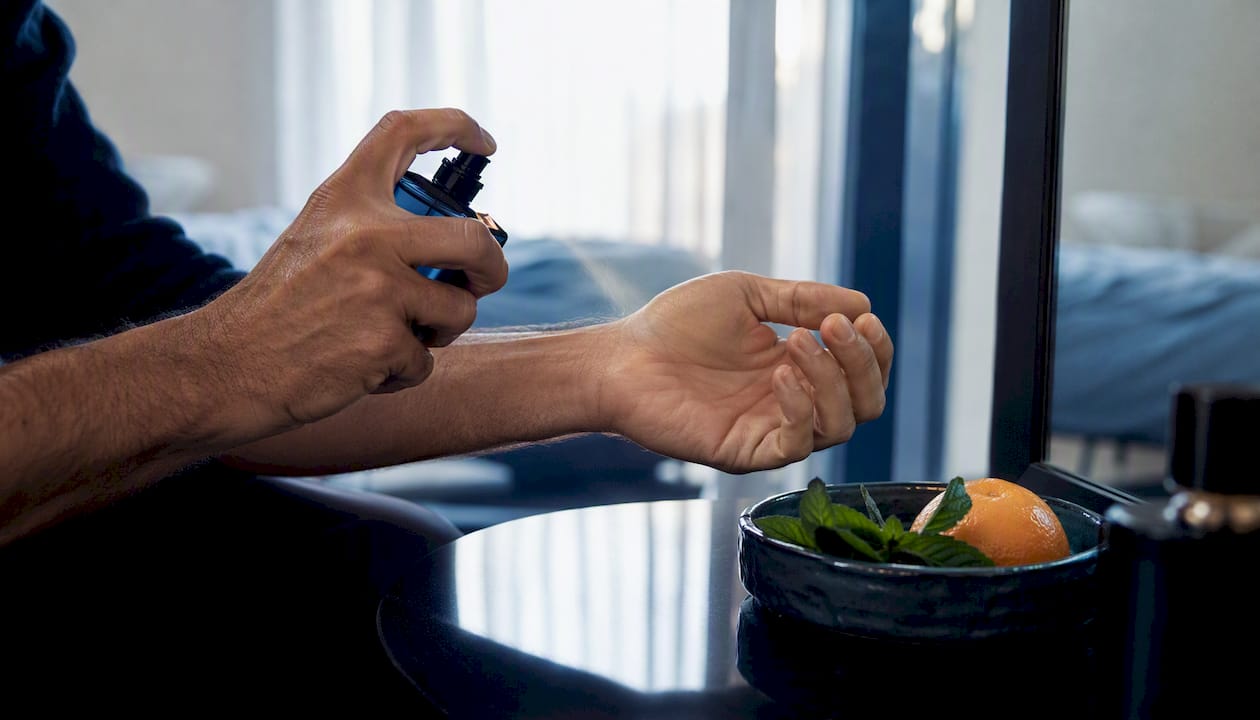
Test on skin, not paper — spray once on the inner wrist, wait 20–30 minutes for the dry-down, then decide.
-
Follow the two-sprays rule — two sprays to pulse points is the standard; more is rarely better.
-
Gift-buying shortcut — a fresh or woody EDP from a brand with a clear returns policy, or a sample set, reduces risk considerably.
Pro Tip: For gifts, a fresh/woody EDP is the safest choice because it suits the widest range of skin types and occasions without polarizing anyone.
Key takeaways
Choosing a men’s fragrance with confidence comes down to matching scent family and concentration to occasion, testing on skin through a full dry-down, and applying with restraint.
| Point | Details |
|---|---|
| Start with scent family | Identify whether you prefer fresh, woody, oriental, or aromatic before testing anything. |
| Match concentration to occasion | EDT for daytime and work; EDP for evenings, dates, and cold weather. |
| Always test on skin | Spray once, wait 20–30 minutes for the dry-down, and judge the heart note rather than the opening. |
| Two-sprays rule | Apply two sprays to pulse points; the goal is a scent circle at arm’s length, not across a room. |
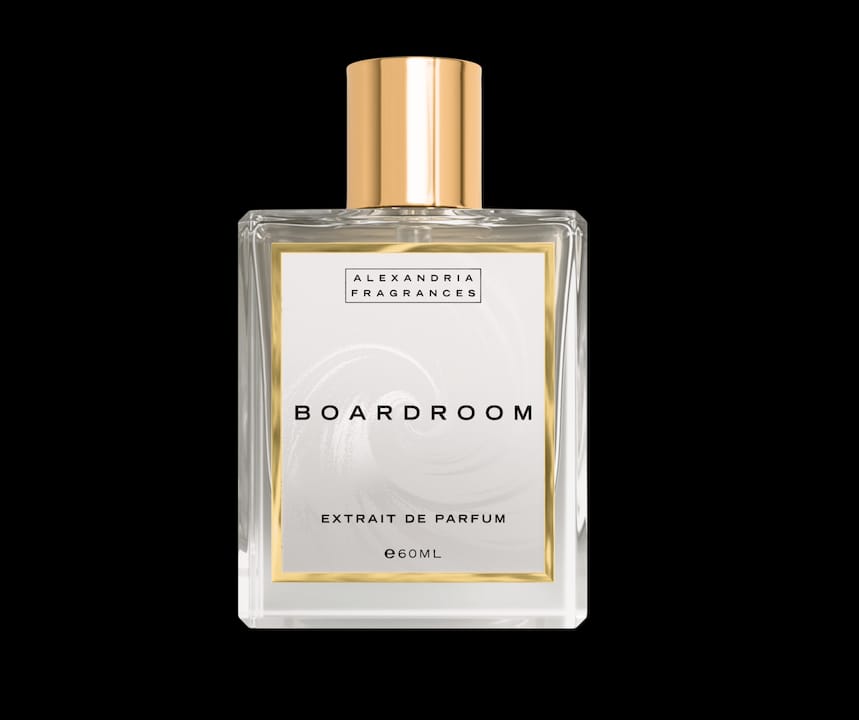
| Alexandriauk for next steps | Boardroom, Brasilia Cologne, and the Bespoke service offer occasion-matched options with sample availability. |
Table of Contents
- How to choose a men’s fragrance: understanding types and concentration
- How fragrance notes work: top, heart and base explained
- How to test a fragrance properly, in-store and at home
- Matching scent to occasion, season and personality
- Applying fragrance correctly: etiquette and the two-sprays rule
- Designer vs niche: getting real value from your budget
- A simple three-week plan to find your signature scent
- Alexandriauk’s five-step expert drill for picking a winning scent fast
- Why restraint and consistency define a great fragrance choice
- Alexandriauk: samples, bespoke blends and ready-to-wear options
- Sources
How to choose a men’s fragrance: understanding types and concentration
Concentration is the single most practical variable when choosing a men’s cologne. It determines how long a fragrance lasts, how far it projects, and how much you pay per millilitre.
The House of Fraser fragrance buying guide summarises the four main concentration bands clearly:
| Type | Oil concentration | Typical longevity | Best occasion |
|---|---|---|---|
| Eau de Cologne (EDC) | 2–4% | 1–2 hours | Gym, hot weather, casual daytime |
| Eau de Toilette (EDT) | Moderate concentration | Lasts a few hours | Suitable for office, daytime, travel |
| Eau de Parfum (EDP) | 15–20% | 6 hours | Evenings, dates, cold weather |
| Parfum (Extrait) | 20% | 8 hours | Special occasions, winter |
A higher concentration also means a denser, more complex sillage — the scented trail you leave behind. EDTs project brightly and fade gracefully, which makes them forgiving in shared spaces. EDPs linger and deepen, which suits cooler air and lower-light settings where richness reads as sophistication rather than excess.
For most beginners, an EDT or EDP covers every situation. Parfum is a considered investment, best reserved once you already know a fragrance intimately and want its fullest expression.
How fragrance notes work: top, heart and base explained
A fragrance is not a single smell — it is a performance in three acts. Understanding this is what separates a confident buyer from someone who sprays once in a shop and commits to the wrong bottle.
The note pyramid works like this: top notes are the first impression, lasting roughly 5–15 minutes; heart (middle) notes emerge as the top fades and define the fragrance’s character for 20–60 minutes; base notes are the foundation, anchoring the scent for hours. According to Luxaro’s perfume rules guide, a well-constructed fragrance typically balances these layers in approximate proportions, with the heart note generally dominant.
Common masculine scent families:
- Fresh/citrus — bright bergamot, lemon, grapefruit; clean and energising.
- Aromatic/fougère — lavender, geranium, oakmoss; the classic barbershop accord, timeless and versatile.
- Woody — cedarwood, sandalwood, vetiver; warm, grounded, and deeply masculine.
- Spicy/oriental — cardamom, oud, amber; rich, heady, and commanding.
- Gourmand/amber — vanilla, tonka bean, benzoin; warm and enveloping, often with a sweet depth.
The Perfume Society’s beginner guide recommends identifying which family appeals instinctively before testing anything, so you can narrow the field before your nose tires.
Pro Tip: Wait at least 20–30 minutes after spraying before making any judgement. The top notes are often the least representative part of a fragrance.
How to test a fragrance properly, in-store and at home
In-store testing
- Limit yourself to 3–4 fragrances per session — olfactory fatigue sets in quickly and judgement deteriorates after that.
- Spray each fragrance on a paper strip first to get a rough impression, then narrow to one or two you want to test on skin.
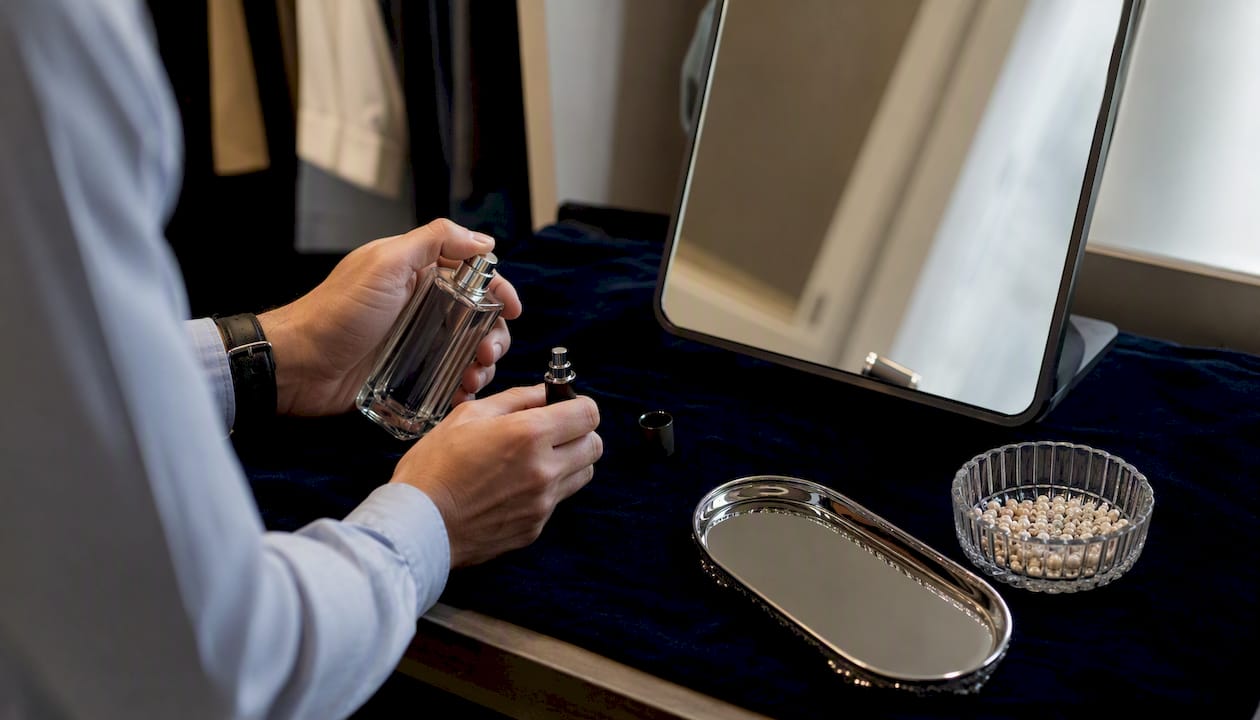
- Apply to the inner wrist or inner elbow — never both wrists for different scents, as they will bleed together.
- Do not rub your wrists together. Friction breaks down the molecular structure of the top notes and distorts the opening.
- Wait 20–30 minutes before smelling again. Walk around the shop, let the dry-down happen naturally.
At-home sampling
- Order samples or decants before committing to a full bottle. Wearing a fragrance through a full day, across different temperatures and activities, tells you far more than five minutes in a shop.
- Keep a fragrance journal: note the top, heart and base impressions separately, and record how the scent interacts with your skin chemistry.
- To reset your nose between tests, smell fresh air or your own forearm — coffee grounds are a popular myth and add little.
- For blind testing, ask someone else to apply a sample without telling you the name. Removing the label removes bias.
Matching scent to occasion, season and personality
The right fragrance for a job interview is rarely the right one for a date. Context shapes perception as much as the scent itself.

| Occasion | Recommended family | Concentration |
|---|---|---|
| Office / daytime | Aromatic, fresh, light woody | EDT |
| Date / evening | Woody, oriental, gourmand | EDP |
| Gym / sport | Fresh/citrus, aquatic | EDC or EDT |
| Summer | Citrus, aquatic, green | EDT |
| Winter | Oriental, spicy, rich woody | EDP or Parfum |
Seasonally, lighter citrus and aromatic scents perform well in heat because warmth amplifies projection — a heavy oriental in July can become genuinely oppressive. In cold weather, the skin’s reduced warmth means richer, denser accords need that extra concentration to project at all.
Personality prompts to guide your choice:
- Do you prefer clean and fresh, or warm and enveloping? Fresh leans citrus/aromatic; warm leans woody/oriental.
- Do you want to be noticed immediately, or remembered after you leave? Sillage-heavy EDPs linger; lighter EDTs are more intimate.
- Is your style classic and understated, or bold and expressive? Fougères and light woods suit the former; spicy orientals suit the latter.
Applying fragrance correctly: etiquette and the two-sprays rule
Application technique matters as much as the fragrance itself. The Telegraph’s guide to fragrance etiquette is clear on the fundamentals.
Where to apply:
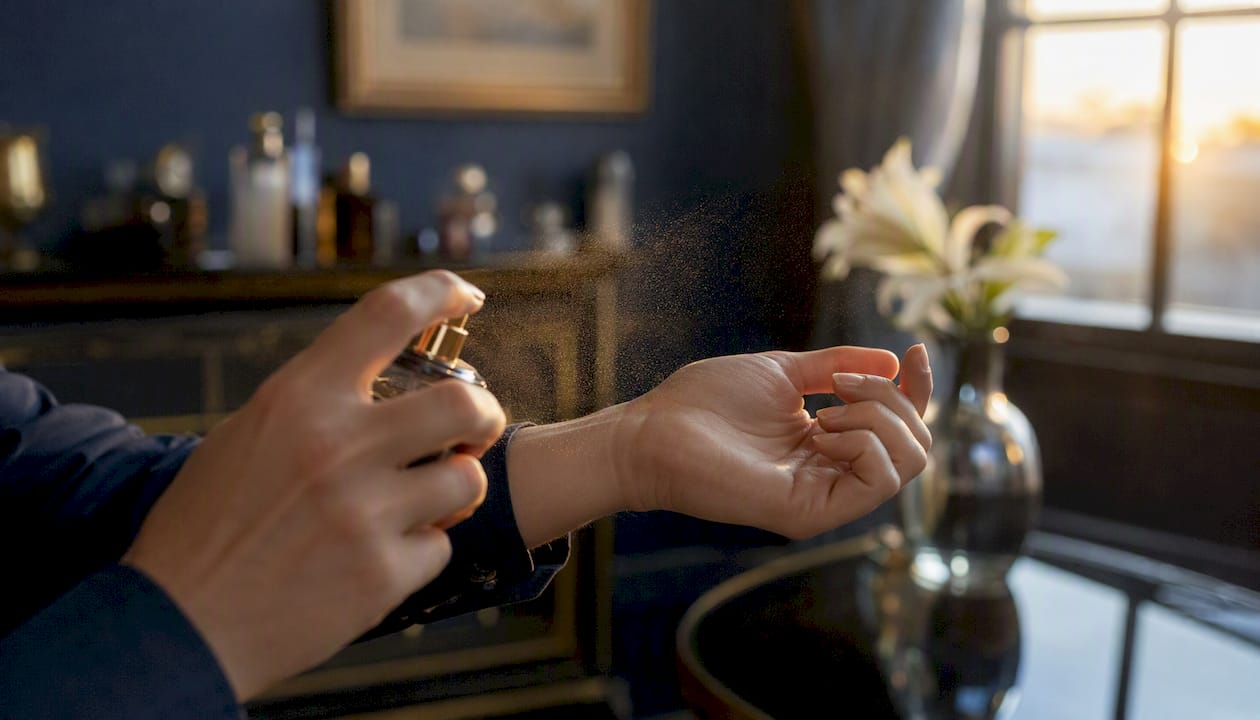
- Pulse points — chest, inner biceps, base of the throat. These areas radiate heat and project the scent naturally.
- Avoid spraying directly onto clothing — many fragrances stain fabric and the scent develops differently on textile than on skin.
- Apply to areas partially covered by clothing (the chest, for instance) for a subtler, longer-lasting trail.
The two-sprays rule and scent circle:
Two sprays is the standard. The goal is a scent circle — people should detect your fragrance at roughly arm’s length, not across a room. If someone can smell you before they see you, that is too much.
When to skip fragrance entirely:
- Hospital wards and clinical environments.
- Packed flights and enclosed public transport.
- Swimming pools and saunas (water and heat will amplify and distort the scent).
- Any setting where someone has declared a fragrance sensitivity.
For lower-impact situations, roll-on or solid fragrance formats offer more control over application volume.
Designer vs niche: getting real value from your budget
Price does not always equal quality, but it does correlate with ingredient concentration and longevity. A well-chosen EDP from a quality-focused brand will outlast a cheaper EDT applied four times a day.
Designer fragrances offer consistency, wide availability, and recognisable profiles — a reliable choice when you want something proven and easy to replace. Niche or artisan fragrances prioritise unusual ingredients and smaller-batch production, which can mean a more distinctive scent but also a steeper price and less predictable longevity.
The most practical approach for beginners: start with samples and decants. A decant of 5–10ml lets you wear a fragrance across multiple occasions before spending £60–£150 on a full bottle. Sample sets from quality-focused retailers are particularly useful for gift buyers who want to present options rather than a single gamble. For long-lasting affordable choices, concentration and skin preparation (moisturised skin holds scent longer) matter more than the price tag.
A simple three-week plan to find your signature scent
GQ’s guide to finding a signature scent advocates a staged approach, and it works. Here is a structured version:
- Week 1 — sample widely. Order or collect 5–6 samples across at least three different scent families. Wear one per day and journal your impressions at the top, heart and base stages.
- Week 2 — narrow to two or three contenders. Wear each on different days and in different settings (work, weekend, evening). Note which one you reach for most readily.
- Week 3 — confirm under pressure. Wear your top choice to the most important occasion of that week. If it feels right there, it is your signature.
Journal prompts:
- What does the top note remind you of? Is it pleasant or jarring?
- How does the heart feel after 30 minutes — warmer, cooler, more or less interesting than the opening?
- Does the base feel like you, or does it feel like a costume?
On the question of rotating versus a single signature: a consistent scent builds emotional association and becomes part of how others remember you. Seasonal rotation (one lighter scent for spring/summer, one richer for autumn/winter) is a sensible middle ground that preserves that consistency without monotony.
Alexandriauk’s five-step expert drill for picking a winning scent fast
This quick method is particularly useful for gift buyers or anyone with limited time in a shop. For deeper study, the fragrance layering guide on the Alexandriauk Fragrance Academy covers how to build and personalise a scent once you have found your base.
- Identify the family. Before touching a bottle, decide whether you want fresh, woody, oriental, or aromatic. This eliminates 80% of the shelf immediately.
- Check the concentration. EDT for daytime or gifting; EDP for evenings or cold climates. Parfum only if you know the fragrance well.
- Single-spray dry-down. One spray on the inner wrist. Walk away. Return after 20 minutes and smell the heart note, not the opening.
- Wear for 2–4 hours. If you are sampling at home, wear the fragrance through a normal morning. Does it still feel right at hour three?
- Final gut check. Would you wear this to the occasion that matters most to you this week? If yes without hesitation, buy it.
This drill removes the emotional noise of packaging, marketing, and top-note bias — the three forces most likely to lead a novice to the wrong bottle.
Why restraint and consistency define a great fragrance choice
There is a tendency among beginners to treat fragrance as a novelty — to collect, rotate constantly, and chase the next interesting bottle. The Independent’s grooming commentary makes a point worth absorbing: a consistent signature scent builds genuine emotional association. People remember you by it. It becomes part of your presence in a way that a rotating wardrobe of scents never quite achieves.
Over-application is the other common error, and it is more socially costly than wearing nothing at all. Fragrance applied with restraint — two sprays, pulse points, covered by clothing — creates an intimate trail that draws people closer. Applied without restraint, it announces itself before you do, and not always favourably.
The most sophisticated fragrance choice is rarely the most complex or the most expensive. It is the one that fits the wearer so naturally that it seems to belong to them.
Alexandriauk: samples, bespoke blends and ready-to-wear options
For anyone ready to move from research to purchase, Alexandriauk offers a range of entry points that reduce risk and reward curiosity.
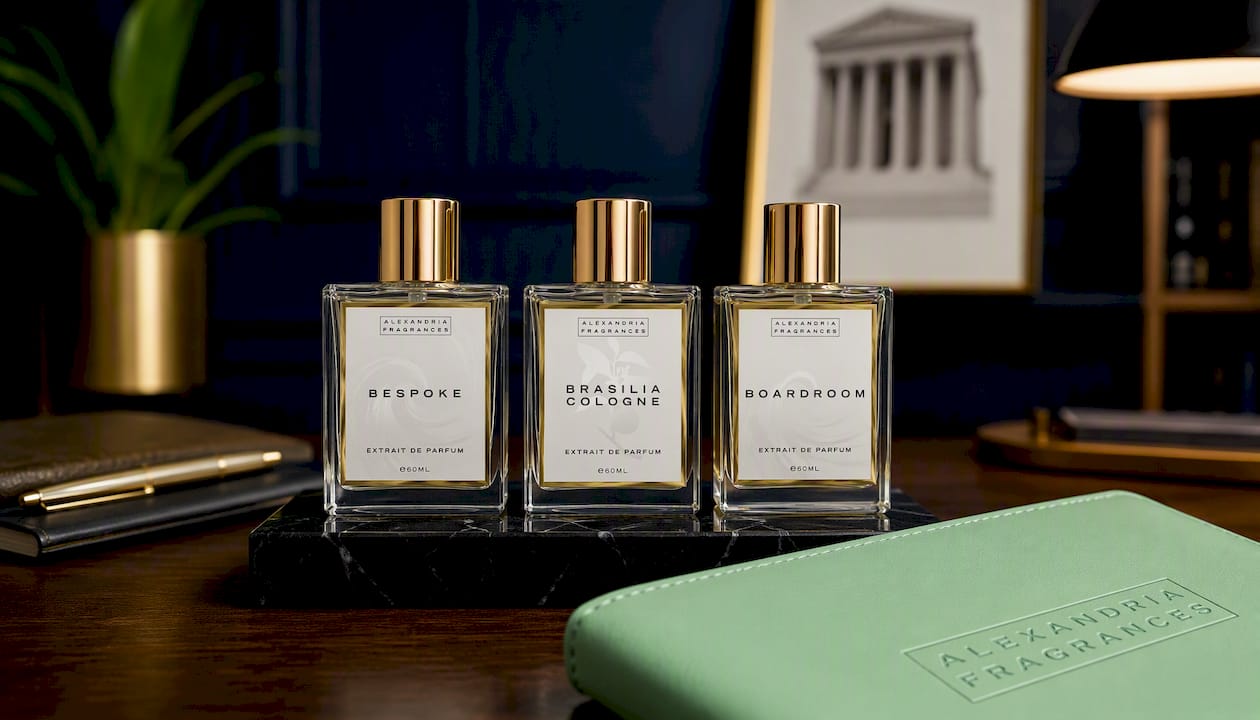
The Boardroom fragrance is a confident, professional accord built for exactly the kind of occasion-matched wear this guide describes — clean, authoritative, and entirely appropriate for the office or a formal evening. For a fresh, giftable profile with broad appeal, Brasilia Cologne offers a luminous woody-fresh accord that suits a wide range of skin types and occasions, making it one of the safer gift choices in the range. And for those who want something genuinely their own, the Bespoke service creates a personalised blend built around your preferences, skin chemistry, and lifestyle — the most considered answer to the question of what cologne you should wear.
Browse the range, request samples, or begin the bespoke consultation at Alexandriauk.
Sources
- How to choose a men’s fragrance
- The modern man’s guide to fragrance etiquette
- How to Find Your Signature Scent