Artikel: How long does perfume last? 3-5 years opened lifespan

How long does perfume last? 3-5 years opened lifespan
Many believe perfumes remain pristine forever if left unopened, but this assumption oversimplifies the reality. Perfume longevity depends on multiple factors including composition, storage, and handling. You’ll learn how to identify when perfume expires, what influences its lifespan, and proven methods to extend the life of your favourite fragrances through proper care and storage.
Table of Contents
- Perfume Longevity Basics
- Factors Influencing Perfume Longevity
- How Perfume Changes Over Time
- Detecting Perfume Expiration
- Maximising Perfume Longevity With Proper Storage
- Safety And Sensory Considerations When Using Expired Perfume
- Practical Tips To Extend Perfume Longevity
- Enhance Your Fragrance Experience With Alexandriauk
- Frequently Asked Questions
Key takeaways
| Point | Details |
|---|---|
| Unopened perfumes last decades but best within 36 months of opening | Ideal storage preserves quality, though companies recommend using opened bottles within three years |
| Fragrance composition affects longevity significantly | Base notes like musk last longer than citrus or floral top notes due to oxidation rates |
| Expiration signs include sour smell and colour changes | Vinegar-like odours, darkening to brown, and cloudiness indicate spoilage |
| Cool, dark storage extends perfume life | Keep bottles between 17-20°C away from light and humidity to slow degradation |
| Expired perfumes may irritate skin but aren’t toxic | Patch testing older fragrances prevents adverse reactions in sensitive users |
Perfume longevity basics
Understanding perfume shelf life starts with recognising how long fragrances remain viable. Unopened perfumes can potentially last for decades if stored properly, but companies typically recommend using them within 36 months after opening. The alcohol content in perfumes acts as a natural preservative, slowing the breakdown of fragrance molecules and maintaining scent integrity for years.
Once you break the seal, oxidation accelerates as air interacts with the liquid. Most opened perfumes last between three and five years when stored correctly, though this varies based on composition and care. The fragrance expert reveals how long you can use your scents depending on these critical factors.
Proper storage becomes your strongest ally in maximising longevity. Temperature fluctuations, light exposure, and humidity all accelerate degradation, shortening the usable life of your collection. Following best ways to store perfume ensures you protect your investment.
Key longevity factors include:
- Alcohol concentration acts as preservative, extending shelf life naturally
- Sealed bottles resist oxidation far better than opened ones
- Storage conditions determine whether perfumes reach their maximum lifespan
- Recommended use period helps ensure optimal scent quality and safety
Factors influencing perfume longevity
Fragrance composition plays the primary role in determining how long perfumes maintain their character. Perfumes with citrus and aldehyde top notes deteriorate fastest due to high susceptibility of their monoterpenes and unsaturated aldehydes to oxidation. Meanwhile, base notes rich in musk, amber, or oud demonstrate remarkable stability over time.
Oxidation remains the main enemy of fragrance longevity. When perfume molecules interact with oxygen, chemical bonds break down and alter the scent profile. This process accelerates with exposure to air, light, and heat, causing once-vibrant top notes to fade while base notes become more prominent.
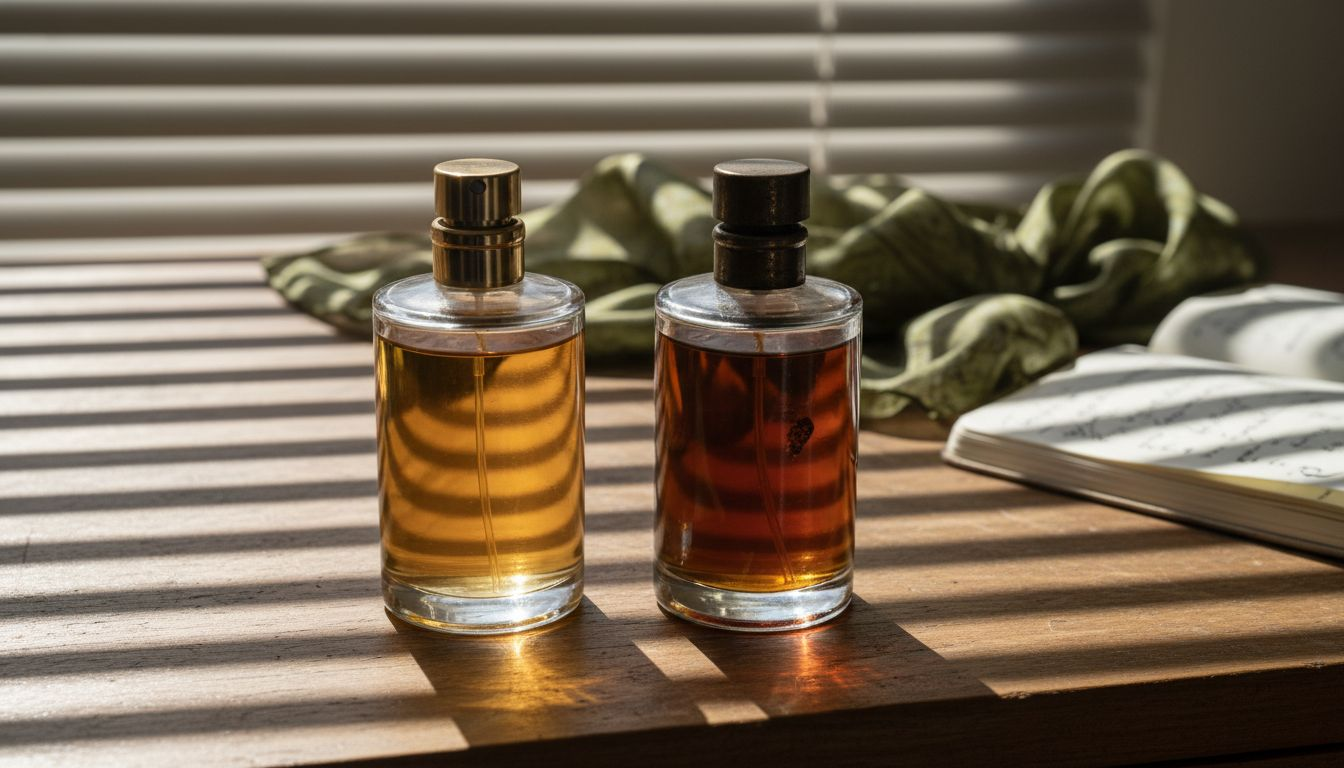
Perfume concentration directly impacts durability. Eau de Parfum formulations contain higher fragrance oil percentages than Eau de Toilette, providing better resistance to degradation. This concentration difference explains why understanding what perfume lasts the longest often leads consumers toward more concentrated options.
Chemical structure matters significantly:
- Light citrus compounds oxidise rapidly, losing freshness within months
- Floral notes containing delicate esters degrade faster than woody elements
- Synthetic molecules often outlast natural equivalents due to structural stability
- Heavy base notes resist oxidation through molecular complexity
Packaging quality influences oxidation speed considerably. Atomiser bottles limit air exposure compared to splash bottles, while dark glass protects contents from light damage. Consulting perfume expiration expert advice reveals how these packaging choices affect your collection’s longevity.
How perfume changes over time
Perfumes undergo fascinating transformations as they age, resembling wine’s evolution in complexity. Oxidation breaks down volatile compounds, causing top notes to dissipate whilst base notes intensify. This molecular shift creates a heavier, sometimes richer scent profile that differs markedly from the original composition.
Discolouration serves as the most visible indicator of chemical change. Perfumes often darken to amber or brown hues as oxygen interacts with fragrance molecules. Whilst this colour shift signals ageing, it doesn’t always mean the perfume has spoiled completely. Some vintage fragrances develop appealing depth through careful oxidation over decades.
Scent dilution occurs when alcohol evaporates through microscopic bottle imperfections. The remaining liquid becomes more concentrated in certain notes whilst losing others entirely. This imbalance disrupts the perfumer’s intended harmony, potentially rendering the fragrance unpleasant or unrecognisable.
Texture changes signal advanced degradation. Cloudiness indicates suspended particles from broken-down compounds, whilst oily separation suggests the emulsion has failed. These physical transformations accompany chemical breakdown and warrant discarding the product.
Common ageing patterns include:
- Top notes vanish first, leaving dominant middle and base elements
- Fresh citrus transforms into bitter, medicinal characteristics
- Floral bouquets develop musty, dried-flower qualities
- Sweet vanilla notes can turn cloying or caramelised
When you test multiple perfumes for lasting quality, comparing fresh and aged samples reveals these evolutionary patterns clearly. Understanding these changes helps you recognise when transformation enhances or diminishes your fragrance.
Detecting perfume expiration
Your nose provides the most reliable expiration detection tool. Signs a perfume has expired include a sour, vinegar-like sharp smell, musty odour, colour darkening to brown or murky hues, and changes in texture such as cloudiness. These sensory cues indicate chemical breakdown has progressed beyond acceptable limits.
A sour or acrid smell replacing the original scent character signals oxidation has corrupted the fragrance molecules. This vinegar-like quality emerges as esters break down into acidic compounds. Once this transformation occurs, the perfume cannot be restored and should be discarded.
Visual inspection complements olfactory assessment. Perfume shifting from clear or pale gold to deep brown or developing murky cloudiness indicates molecular degradation. Whilst some natural darkening occurs in aged perfumes, dramatic colour changes accompanied by smell alterations confirm expiration.
Checking the Period After Opening symbol helps prevent using expired products. This small jar icon with a number indicates recommended months of use after opening, typically reading 30M or 36M. Tracking when you first spray a bottle lets you stay within safe usage windows.
Key expiration indicators:
- Sharp, vinegar-like smell replacing original scent
- Musty or stale odours suggesting microbial activity
- Dramatic darkening to brown or murky appearance
- Cloudiness or visible particle suspension
Implementing strategies to make perfume last longer includes regular quality checks. Monthly assessments catch deterioration early, preventing skin irritation from expired products whilst maximising your collection’s usable life.
Maximising perfume longevity with proper storage
Storage conditions determine whether your perfumes reach their maximum lifespan or degrade prematurely. Maintaining temperatures between 17-20°C provides ideal conditions for fragrance preservation. This cool environment slows molecular movement, reducing oxidation rates significantly compared to warmer settings.
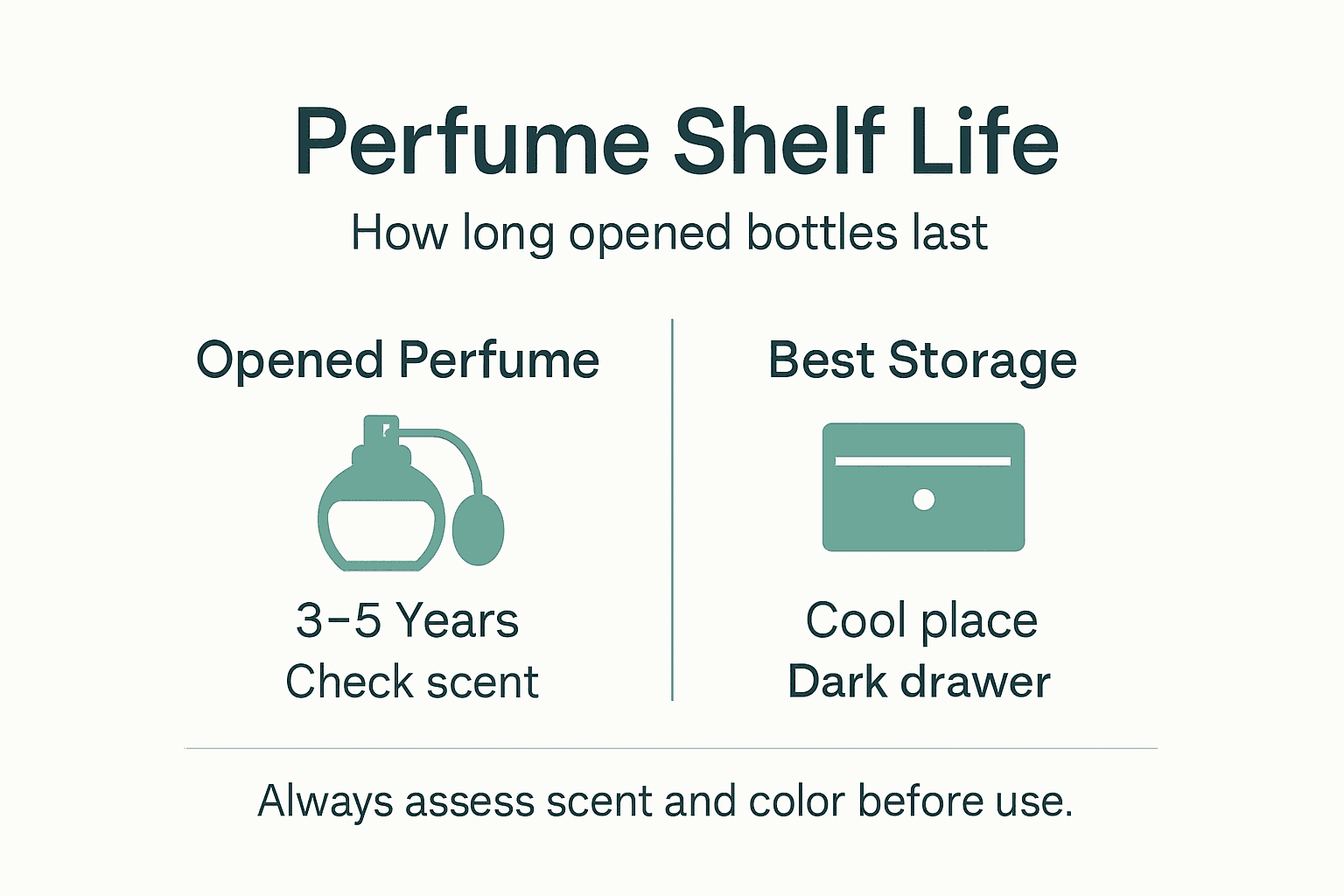
Light exposure accelerates chemical breakdown dramatically. Ultraviolet rays break molecular bonds in fragrance compounds, particularly affecting delicate top notes. Keeping bottles in original boxes or dark cupboards shields them from this damaging radiation.
Humidity and heat create perfect conditions for degradation. Bathrooms represent the worst possible storage location despite their convenience. Steam, temperature fluctuations, and moisture compromise bottle seals and accelerate oxidation. Choose bedroom drawers or wardrobe shelves instead.
Bottle design influences longevity significantly. Atomiser sprays minimise air exposure compared to splash bottles, preserving contents longer. Ensuring caps seal tightly after each use prevents oxygen infiltration that speeds deterioration.
Optimal storage practices include:
- Select a cool, dry location away from windows and heating vents
- Maintain consistent temperatures without daily fluctuations
- Store bottles upright to prevent seal degradation from liquid contact
- Keep perfumes in original packaging for added light protection
- Avoid transferring fragrances to decorative bottles that lack proper seals
Pro Tip: Store your most precious or rarely used perfumes in a dedicated drawer lined with felt. This creates a stable, dark microenvironment that extends their life by years whilst protecting bottles from accidental knocks.
Following guidelines to store perfume for lasting fragrance quality makes the difference between enjoying fragrances for years or watching them spoil within months. Research on perfume storage impact on longevity confirms these methods preserve both scent integrity and safety. Combining proper storage with long-lasting perfume tips ensures maximum value from every bottle.
Safety and sensory considerations when using expired perfume
The Period After Opening symbol typically suggests 30 to 36 months as the safe usage window after breaking the seal. This recommendation balances quality maintenance with realistic usage patterns for most consumers. Whilst perfumes rarely become toxic after this period, their chemical changes can trigger unwanted reactions.
Expired perfume poses minimal toxicity risk but may cause skin irritation or allergic responses. Degraded fragrance molecules can behave differently on skin compared to fresh formulations. Those with sensitive skin face higher reaction risks when using aged products.
Patch testing provides a simple safety check for older fragrances. Apply a small amount to your inner wrist and wait 24 hours before full use. This precaution identifies potential irritation before applying perfume to larger skin areas or pulse points.
Avoid using perfumes displaying obvious degradation signs. Unpleasant odours, dramatic colour changes, or texture alterations indicate the product has exceeded safe usage limits. Prioritising fresh fragrances over expired ones prevents discomfort and maintains the sensory pleasure perfumes should provide.
Safety guidelines include:
- Respect PAO recommendations even if perfume smells acceptable
- Conduct patch tests with fragrances over three years old
- Discontinue use immediately if irritation or redness develops
- Never apply expired perfumes to broken or sensitive skin areas
Integrating awareness of expiration into your self-care and fragrance longevity routine ensures both safety and enjoyment. Understanding these considerations lets you make informed decisions about which bottles to keep and which to replace.
Practical tips to extend perfume longevity
Selecting perfumes with higher fragrance concentrations provides built-in longevity advantages. Eau de Parfum formulations contain 15-20% fragrance oils compared to Eau de Toilette’s 5-15%, offering better projection and staying power. This concentration difference translates to longer wear time both on skin and in the bottle.
Choosing fragrances built around heavy base notes maximises durability. Scents featuring musk, amber, sandalwood, or oud resist degradation far better than those dominated by citrus or light florals. These robust molecules maintain their character for years when properly stored.
Skin preparation dramatically affects how long fragrance lasts throughout the day. Applying perfume to moisturised skin creates a better base for scent adhesion. The oils in moisturiser slow evaporation, helping fragrance molecules linger longer on your pulse points.
Pulse points naturally enhance perfume performance. Wrists, neck, behind ears, and inner elbows generate warmth that activates fragrance molecules, projecting scent more effectively. Targeting these areas ensures optimal diffusion without over-application.
Effective longevity strategies include:
- Choose Eau de Parfum over lighter concentrations for durability
- Select fragrances with dominant base notes like amber or musk
- Moisturise skin before application to improve scent retention
- Apply to pulse points where warmth amplifies projection
- Store properly between uses to preserve bottle contents
Pro Tip: Layer your fragrance by using matching body lotion before applying perfume. This technique creates scent depth whilst providing the moisturising base that extends wear time significantly.
Implementing expert tips how to make your perfume last combines selection, application, and storage wisdom. Following expert tips for long lasting perfumes ensures you maximise every bottle’s potential whilst enjoying consistent scent quality.
Enhance your fragrance experience with AlexandriaUK
Navigating the world of quality fragrances becomes simpler with expert guidance. AlexandriaUK offers comprehensive resources helping enthusiasts make informed perfume choices whilst maximising value.
Whether you’re seeking tips to identify quality scents or strategies for shopping perfume sales effectively, our guides provide the knowledge you need. Discover how to shop perfume sales guide to find exceptional fragrances at accessible prices. Our perfume selection tips for bargain hunters ensure you secure lasting quality without compromising on scent integrity. AlexandriaUK combines expert advice with curated selections, supporting your journey toward building a collection that brings daily joy whilst standing the test of time.
Frequently asked questions
How long does unopened perfume last?
Unopened perfumes can last several decades if stored in cool, dark, dry conditions away from temperature fluctuations. However, manufacturers recommend using them within 36 months after opening for optimal freshness and scent fidelity.
What are the signs my perfume has expired?
Expired perfumes develop sour, vinegar-like or musty smells that replace the original scent character. Colour darkening to brown or murky hues and cloudiness in the liquid texture signal chemical degradation requiring disposal.
Can I use perfume past its expiration date safely?
Expired perfume is not generally toxic but may cause skin irritation or allergic reactions, particularly in sensitive individuals. Conduct a patch test on your inner wrist before full application if using fragrances beyond their Period After Opening recommendation.
How does perfume concentration affect its lasting power?
Eau de Parfum contains 15-20% fragrance oils and lasts longer both on skin and in storage compared to Eau de Toilette’s 5-15% concentration. Higher concentration provides better resistance to degradation and more persistent scent projection.
What is the best way to store perfume to extend its longevity?
Store perfumes in cool, dry, dark places between 17-20°C away from heat sources, humidity, and direct sunlight. Keep bottles sealed tightly and upright in original packaging to minimise oxidation and preserve scent integrity for years.