
Artikel: Best Ways to Store Perfume for Long-Lasting Fragrance

Best Ways to Store Perfume for Long-Lasting Fragrance
Storing a british perfume collection the right way makes a surprising difference in how long those beautiful scents last. Even a few weeks of poor storage can shorten a fragrance’s shelf life by up to forty percent. Caring for your british perfumes goes beyond style or luxury—it protects your investment and preserves the delicate blends you love. Discover practical steps that keep your treasured bottles in perfect condition for years of enjoyment.
Table of Contents
- Stage 1: Choose The Ideal Storage Location
- Stage 2: Control Temperature And Light Exposure
- Stage 3: Seal Bottles Properly After Use
- Stage 4: Organise Fragrances For Easy Access
- Stage 5: Check Perfume Freshness Regularly
Quick Summary
| Important Insight | Explanation |
|---|---|
| 1. Store perfumes in cool, dark places | Choose locations away from heat and light, ideally between 16-18 degrees Celsius, to protect fragrance integrity. |
| 2. Seal bottles tightly after use | Ensure caps are securely closed to prevent oxidation and exposure to air, which can degrade the scent. |
| 3. Organise your collection systematically | Arrange perfumes by fragrance family or season for easy access while maintaining their quality and condition. |
| 4. Regularly check for signs of degradation | Monitor colour and scent changes to identify when a fragrance has deteriorated or reached its optimal usage window. |
| 5. Avoid high-humidity environments | Steer clear of bathrooms and kitchens, as steam can accelerate the breakdown of perfume molecules. |
Stage 1: Choose the ideal storage location
Selecting the perfect storage spot for your treasured perfume collection requires strategic thinking about environmental conditions. Your goal is to protect these delicate aromatic compositions from elements that could degrade their precious molecular structures.
The most critical factor is temperature stability. Aim for a consistent, cool environment between 16 18 degrees Celsius. Avoid areas with dramatic temperature fluctuations like windowsills, bathrooms, or near heating vents. These locations can cause rapid chemical breakdown in your fragrances, transforming their intricate scent profiles into something unrecognisable.
Seek out dark, enclosed spaces that shield your perfumes from direct sunlight and ambient light exposure. A dedicated drawer in your bedroom, a closed cabinet in a cool hallway, or a specialised perfume storage box are ideal choices. These locations maintain consistent temperature and protect against UV rays that can alter fragrance molecules. Pro tip: Always store bottles upright to prevent potential leakage or cork degradation.
While a dedicated perfume storage solution might seem like an extravagance, think of it as an investment in preserving your olfactory treasures. Your carefully curated collection deserves protection from environmental threats that could compromise their exquisite compositions.
Stage 2: Control temperature and light exposure
Mastering the delicate art of perfume preservation demands careful management of temperature and light conditions. Your mission is to create an environment that protects these liquid treasures from environmental degradation.
Chemical changes in fragrance compounds occur rapidly when exposed to fluctuating temperatures and direct light. Ultraviolet rays can break down complex molecular structures, fundamentally altering your perfume’s carefully crafted composition. Create a sanctuary for your fragrances by investing in light-blocking storage solutions like tinted glass containers or opaque boxes that shield against harmful radiation.
Think of temperature control as creating a microclimate for your perfumes. The ideal range sits between 15 and 18 degrees Celsius with minimal humidity. Research on environmental factors emphasises how ambient conditions dramatically impact fragrance stability. Consider using a dedicated perfume refrigerator or a climate controlled drawer to maintain consistent conditions.
Warning: Avoid storing perfumes in bathrooms or kitchens where steam, heat, and dramatic temperature shifts can accelerate molecular breakdown. Your perfume collection is a sensory investment that deserves meticulous protection from environmental threats.
Stage 3: Seal bottles properly after use
Preserving the integrity of your precious perfume collection requires meticulous attention to sealing techniques. Your goal is to minimise oxidation and prevent gradual fragrance degradation that can occur through improper bottle closure.
After each use, ensure the bottle cap is tightly secured with gentle but firm pressure. Avoid overtightening, which can damage delicate spray mechanisms or cork stoppers. A proper seal acts as a protective barrier against external contaminants and air exposure that might compromise your perfume’s molecular structure.
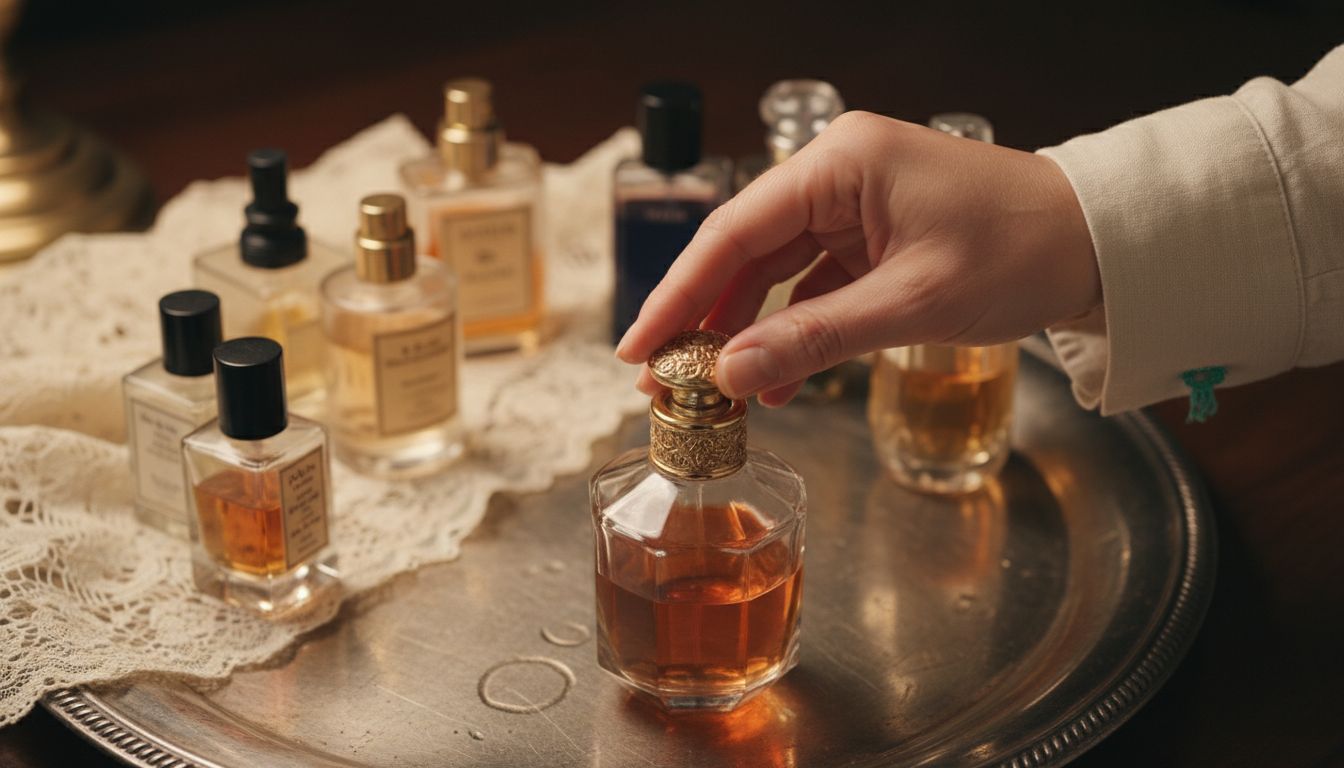
Pay special attention to the bottle’s neck and cap interface. Wipe away any residual droplets or condensation before sealing to prevent potential cork corrosion or liquid crystallisation. For spray bottles, always replace the protective cap immediately after use. If your perfume comes with an original box or protective sleeve, store the bottle inside this additional layer of defence.
Warning: Loose or improperly sealed bottles invite moisture, dust, and air that can rapidly degrade your fragrance. Treat each perfume bottle like a delicate instrument requiring precision and care. Your diligence in sealing will reward you with fragrances that maintain their original captivating essence for years to come.
Stage 4: Organise fragrances for easy access
Curating a well-organised perfume collection transforms your storage approach from mundane preservation to an artful display of olfactory treasures. Your mission is to create a systematic arrangement that not only protects your fragrances but also makes selection effortless.
Efficient organization of fragrance collections can significantly impact the longevity and quality of your perfumes. Consider arranging your bottles by fragrance family aromatic profile scent intensity or seasonal appropriateness. A strategic approach to perfume storage allows you to create a personalised cataloguing system that protects and showcases your collection.
Implement a tiered storage solution using clear acrylic organisers or dedicated perfume trays that allow visual access without direct handling. Group similar fragrances together horizontal organisers work brilliantly for spray bottles while vertical stands can accommodate different bottle shapes. Consider creating separate sections for daytime fresh scents and evening complex fragrances.
Warning: Avoid overcrowding your storage space. Each perfume needs breathing room to prevent accidental damage and maintain its pristine condition. Your carefully curated collection deserves a thoughtful display that celebrates each unique fragrance while protecting its molecular integrity. With the best place to store perfume in mind, you are now ready to transform your storage approach into an art form.
Stage 5: Check perfume freshness regularly
Maintaining the quality of your perfume collection requires vigilant monitoring and periodic assessment. Your mission is to develop a systematic approach to evaluating the integrity and performance of each fragrance in your carefully curated ensemble.
Learn to recognise the subtle signs of perfume degradation. Colour changes indicate potential chemical breakdown fragrance molecules can shift from clear to slightly amber or murky. Smell is your most reliable diagnostic tool checking for any deviation from the original scent profile suggests oxidation or molecular transformation. Understanding perfume longevity helps you discern when a fragrance has reached its optimal consumption window.
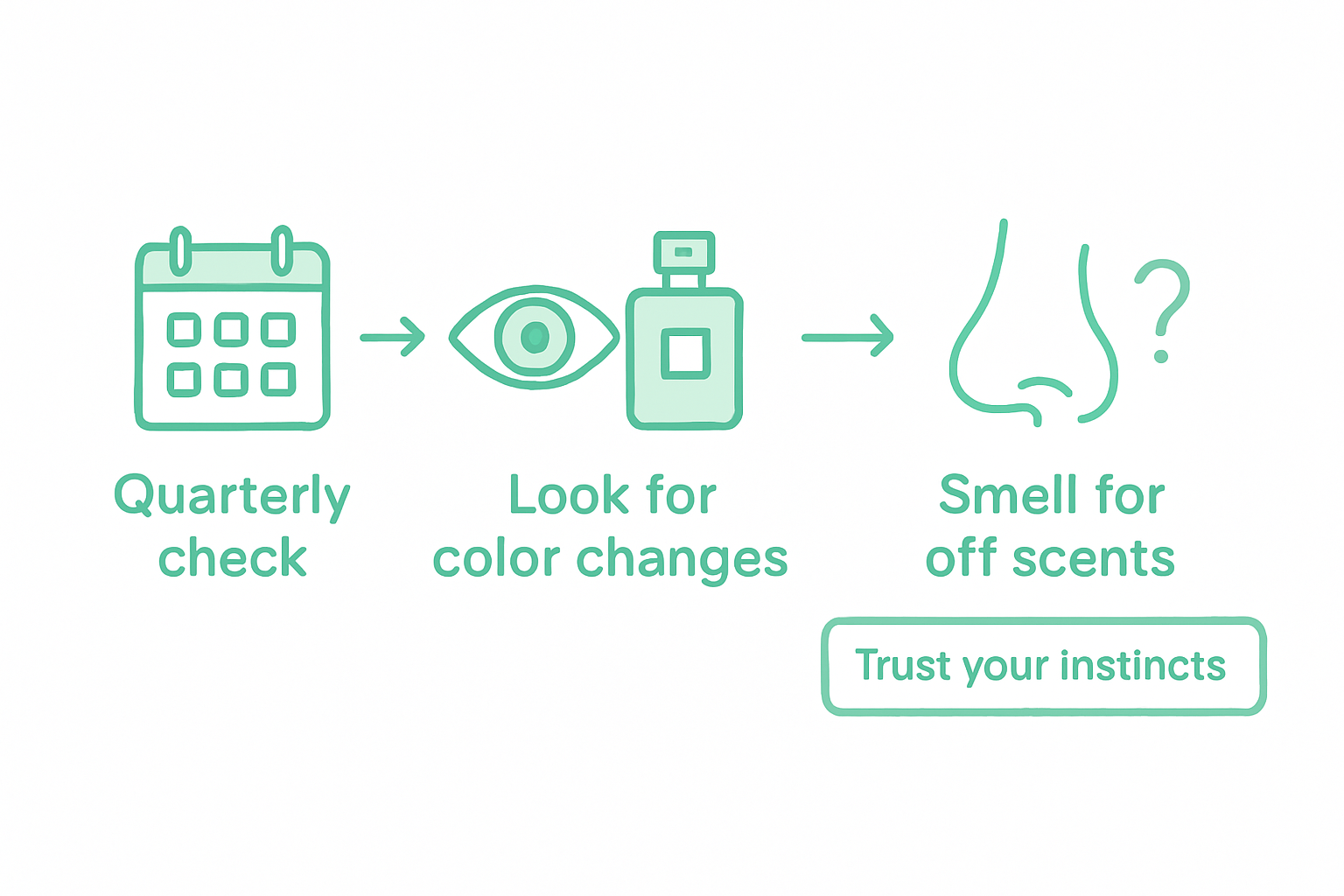
Establish a quarterly inspection routine. Gently rotate your bottles to prevent sediment settlement and examine the liquid’s transparency. Check the spray mechanism for consistency and test the fragrance on a paper strip to compare its current profile with your memory of its original character. Pay special attention to perfumes stored in areas with variable temperature or light exposure these environments accelerate molecular degradation.
Warning: Trust your sensory instincts. If a perfume smells off metallic strange or significantly different from its original composition it is time to retire that bottle. Your olfactory memory is a powerful tool in preserving the quality of your fragrance collection.
Protect Your Perfume Investment with Expert Storage Solutions
Long-lasting fragrance depends on more than just choosing the right scent. As the article highlights, maintaining the ideal temperature, protecting bottles from light, and sealing them properly are essential steps to preserve your perfume’s unique aroma and quality. Avoid common pitfalls like storing bottles near heat or humidity and ensure every cap fits snugly to prevent oxidation and chemical breakdown.
Discover high-quality, fragrance-inspired perfumes and dupes at AlexandriaUK where every bottle is crafted with longevity in mind. Start organising your collection with confidence and enjoy scents that stay true for longer. Visit AlexandriaUK now to experience perfumes designed for durability and delight. Protect your fragrances and embrace the full sensory experience today.
Frequently Asked Questions
What is the best temperature range for storing perfume?
The ideal temperature range for storing perfume is between 15 and 18 degrees Celsius. Make sure to keep your perfumes in a stable environment, away from heating vents or windows, to prevent any damage to the fragrance.
How should I protect my perfume from light exposure?
To protect your perfume from light exposure, store it in a dark, enclosed space, such as a cabinet or a dedicated box. Consider using tinted glass containers or opaque boxes to shield your fragrances from harmful UV rays.
How can I ensure my perfume bottles remain properly sealed?
To ensure your perfume bottles are properly sealed, always secure the cap tightly after each use, but be careful not to overtighten. Wipe away any residual liquid around the neck of the bottle before sealing to prevent degradation of the cork or sprayer.
What is the best way to organise my perfume collection?
Organise your perfume collection by grouping similar scents together or categorising them by fragrance family or intensity. Use clear acrylic organisers or trays to maintain visibility and avoid overcrowding, allowing for easy access and protection against accidental damage.
How often should I check the freshness of my perfumes?
You should check the freshness of your perfumes at least once every three months. This allows you to monitor for any changes in colour or scent, ensuring that you use each fragrance while it maintains its original quality.
What signs indicate that a perfume has degraded?
Signs that a perfume has degraded include changes in colour, such as turning slightly amber or murky, and deviations in scent. Trust your sense of smell; if it smells metallic or strange, it may be time to retire the bottle.


