
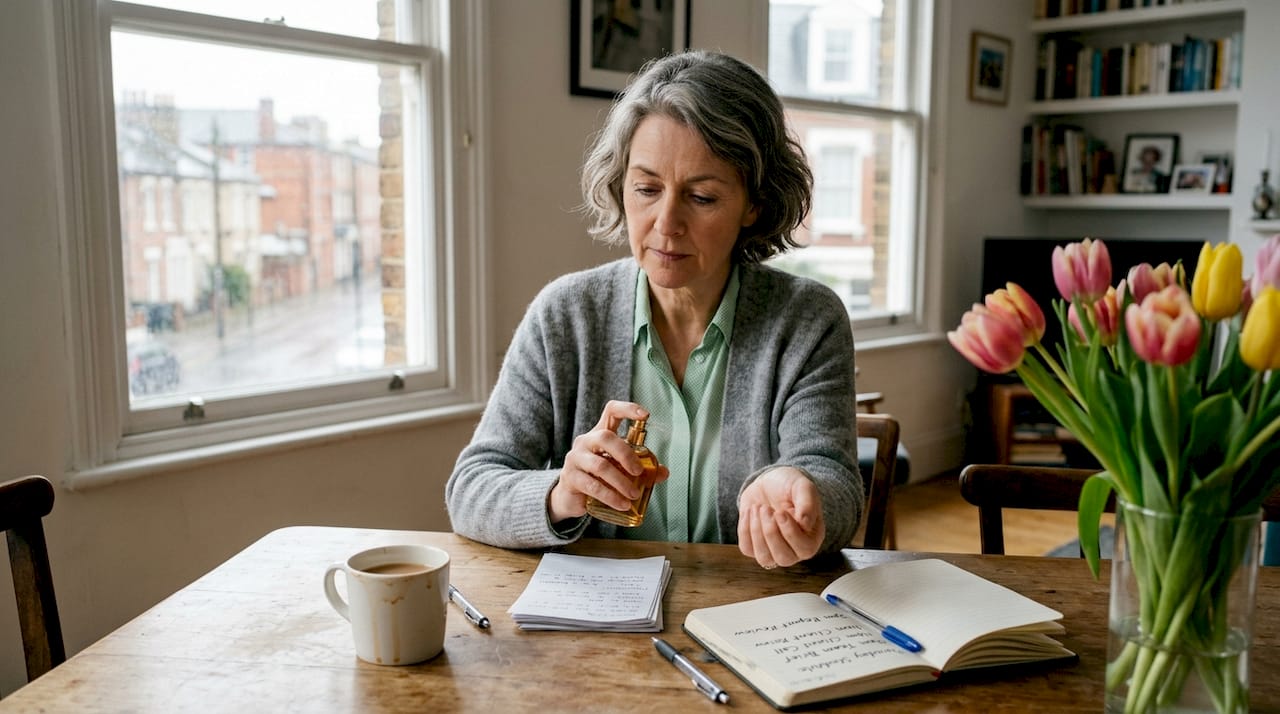
Why perfume is timeless: the enduring power of scent
TL;DR:
- Perfume has a 3000-year-old history rooted in religious and cultural rituals.
- Fragrance influences self-identity, confidence, and emotional well-being through personal storytelling.
- The global perfume market continues to grow, driven by demand for originality and authentic narratives.
Perfume is far more than a finishing touch applied before leaving the house. It is a 3,000-year-old tradition woven into the fabric of human civilisation, shaping identity, ritual, and culture across every era and continent. Yet many still regard it as a fleeting fashion accessory, something to be swapped out with the seasons. This article unpacks why that view misses the point entirely. From its ancient ceremonial roots to its remarkable influence on confidence and memory, perfume occupies a singular place in human experience, one that no trend cycle can diminish.
Table of Contents
- Tracing perfume’s roots: From ritual to the everyday
- Perfume and identity: Scent as self-expression and confidence boost
- Memory, emotion and nostalgia: The hidden power of scent
- The market endures: Perfume trends, innovation and lasting value
- A perspective: Why the world will always crave perfume
- Find your timeless scent with us
- Frequently asked questions
Key Takeaways
| Point | Details |
|---|---|
| Ancient roots | Perfume’s legacy dates back thousands of years, influencing rituals, medicine, and everyday self-care. |
| Scent and self | Fragrance actively shapes our confidence, identity, mood, and emotional well-being. |
| Nostalgia power | Perfume evokes unique, powerful memories by interacting directly with the brain’s memory centres. |
| Market resilience | Despite fast-moving trends, the global fragrance market continues to grow, blending classics with innovations. |
| Personal storytelling | Choosing and curating scents allows you to express your individuality and anchor precious moments. |
Tracing perfume’s roots: From ritual to the everyday
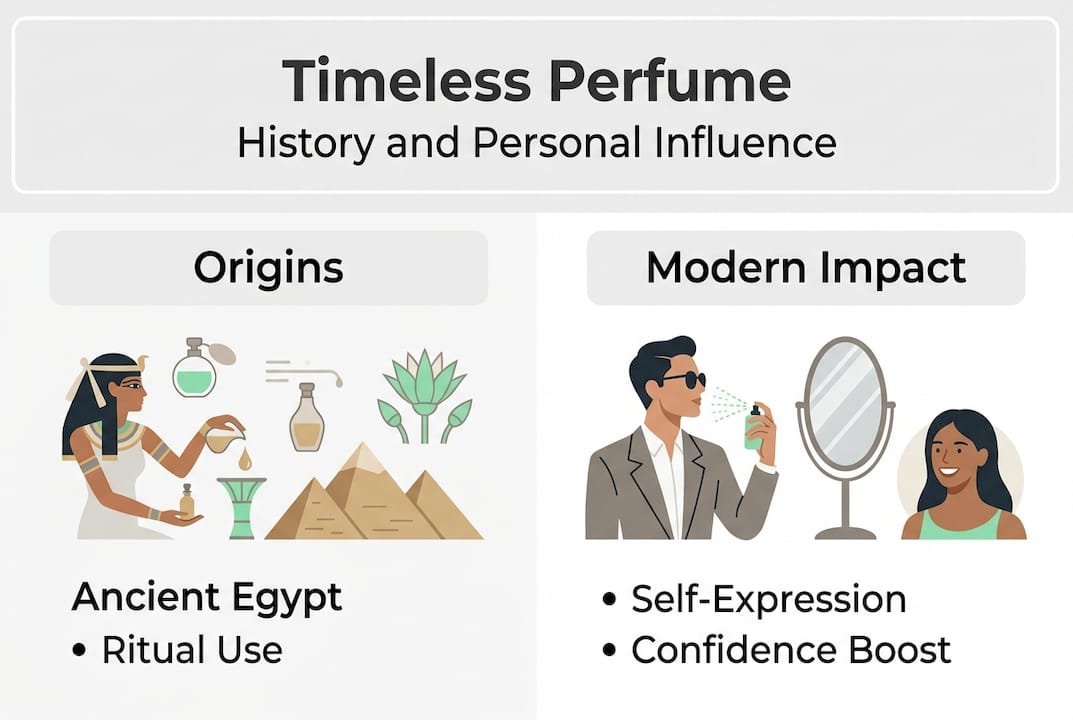
To fully appreciate why perfume still resonates, let’s first explore its remarkable origins and cultural trajectory. The story of scent is not a modern one. Perfume’s origins span ancient Mesopotamia, Egypt, and the Middle East, where aromatic resins, woods, and florals were burned as offerings to the gods, used in burial rites, and worn as markers of social standing. Scent was power. It was sacred.
Ancient Egypt is perhaps the most celebrated early chapter in perfumery. Pharaohs and priests burned kyphi, a complex blend of resins, honey, and wine, during temple ceremonies. Cleopatra is said to have scented the sails of her ships with rose water to announce her arrival. These were not acts of vanity. They were deliberate, culturally loaded gestures that communicated authority and divinity.
As trade routes expanded, aromatic ingredients travelled from the East into Persia and eventually into Renaissance Europe. The distillation of alcohol as a fragrance carrier, pioneered in the Middle East, transformed perfumery from a smoky, resinous art into the refined liquid form we recognise today. By the 17th century, the French town of Grasse had become the perfume capital of the world, cultivating jasmine, rose, and lavender on an industrial scale.
Key revolutionary moments in perfumery history:
- Ancient Mesopotamia and Egypt: scent used in religious ceremony and medicine
- 10th century Persia: distillation technique refined by Ibn Sina, enabling alcohol-based fragrance
- 17th century France: Grasse establishes itself as the global centre of fine perfumery
- 1921: Chanel No. 5 introduces synthetic aldehydes, redefining modern fragrance
- Late 20th century: niche and artisan perfumery rises as a counter to mass-market sameness
| Era | Primary use | Key ingredient || |—|—|—| | Ancient Egypt | Religious ritual | Kyphi resin blend | | Medieval Middle East | Medicine and trade | Oud, rose water | | Renaissance Europe | Status and courtly life | Ambergris, musk | | Modern era | Self-care and identity | Synthetic accords |
“Perfume is the most intense form of memory.” This sentiment, echoed across cultures and centuries, captures why scent has never merely been a commodity. It is a living archive.
Exploring the fragrance collection benefits of building a considered scent wardrobe reveals just how deeply this ancient practice has woven itself into contemporary self-care. Perfume’s journey from sacred smoke to daily ritual is one of the most quietly extraordinary stories in human culture.
Perfume and identity: Scent as self-expression and confidence boost
Building on its rich past, perfume’s modern influence is most evident in how it shapes our sense of self. Choosing a fragrance is rarely a neutral act. It is an assertion. A declaration of mood, aspiration, or belonging. Fragrance enthusiasts understand this intuitively, but the science supports it too.

Empirical research confirms that applying fragranced grooming products improves self-perceived body image and measurably boosts confidence. This is not simply a placebo effect. The act of applying scent is ritualistic, intentional, and self-affirming. It signals to the brain that you are prepared, composed, and present.
Beyond the psychological mechanics, perfume functions as a form of personal storytelling. The psychology of perfume reveals that people select fragrances to communicate aspects of their personality they wish to project: warmth, sensuality, authority, playfulness. Some layer multiple scents to create a bespoke accord that belongs to no one else. This is perfume as a tool for self-expression at its most refined.
How fragrance shapes identity and social perception:
- A warm, woody base note can project groundedness and reliability
- A luminous citrus opening signals energy and approachability
- A dark, hedonistic oriental accord communicates mystery and confidence
- Layering scents creates a wholly unique olfactory signature
The concept of curating a scent wardrobe is gaining traction among enthusiasts who treat fragrance the way they treat clothing: with intention, seasonality, and a clear sense of personal narrative.
Pro Tip: When selecting a signature scent, consider not just how it smells on the skin in the first five minutes, but how it evolves over three to four hours. The dry-down, where the base notes settle, is where a fragrance truly reveals its character and whether it aligns with the image you wish to project.
The global fragrance market reflects this growing personal investment. Consumers are spending more deliberately, seeking scents that feel authentic rather than simply fashionable. Perfume, for many, has become as essential to daily identity as any other element of personal style.
Memory, emotion and nostalgia: The hidden power of scent
Beyond self-image, scent’s ability to revive vivid memories sets it apart from other sensory experiences. No other sense operates quite like smell. Sight, sound, touch, and taste are all processed through the thalamus before reaching the cortex. Scent bypasses this relay entirely.
Perfume’s direct connection to the brain’s limbic system, the region governing emotion and memory, means a single inhale can transport you decades into the past with startling immediacy. This is the neurological basis of what Marcel Proust described so eloquently: the involuntary, overwhelming rush of memory triggered by a familiar smell.
“Smell is the only sense that goes directly to the emotional and memory centres of the brain without filtering.” This directness is what makes fragrance so emotionally potent and so personally meaningful.
Research into semantic mediation in perfumery continues to illuminate how language, culture, and personal history shape the way we interpret and remember scents. A fragrance does not smell the same to everyone. It is filtered through lived experience.
| Sense | Memory strength | Emotional immediacy |
|---|---|---|
| Smell | Very high | Immediate, unfiltered |
| Sound | High | Moderate |
| Sight | Moderate | Variable |
| Touch | Moderate | Context-dependent |
| Taste | High | Moderate |
How to harness scent for emotional wellbeing:
- Choose a dedicated fragrance for a meaningful ritual, such as morning meditation or evening wind-down, to create a conditioned emotional anchor.
- Revisit a scent from a significant period of your life to reconnect with the emotional state of that time.
- Introduce a new fragrance during a positive, memorable experience to build a fresh emotional association.
- Explore fragrance and emotional wellbeing through intentional scent layering for different moods.
Understanding how scent triggers memory allows enthusiasts to move beyond passive wearing and begin using fragrance as a genuinely purposeful tool for emotional regulation and self-care.
The market endures: Perfume trends, innovation and lasting value
Scent’s emotional allure is matched by its market longevity; let’s examine how perfume endures as both commodity and art. The numbers are striking. The global perfume market is projected to grow from approximately USD 60 billion in 2025 to USD 101.47 billion by 2034, representing a compound annual growth rate of between 5 and 8 per cent. This is not a category in decline. It is one in confident, sustained ascent.
| Year | Estimated market value |
|---|---|
| 2025 | ~USD 60 billion |
| 2028 | ~USD 75 billion |
| 2031 | ~USD 89 billion |
| 2034 | USD 101.47 billion |
What drives this growth? Partly demographics, partly premiumisation. Consumers are increasingly unwilling to settle for mass-market sameness. They seek originality, provenance, and narrative. Brands are reviving archives to tap into nostalgia and authenticity, blending heritage with modern technology to differentiate themselves in a saturated market.
Trends shaping the modern fragrance landscape:
- Scent layering: wearing two or more fragrances simultaneously to create a personalised accord
- The fragrance wardrobe: maintaining a curated collection for different occasions and seasons
- Niche and artisan perfumery: prioritising storytelling and rare ingredients over mass appeal
- Sustainable sourcing: growing consumer demand for ethical and transparent ingredient supply chains
Exploring modern fragrance trends reveals how the category is evolving without losing its essential character. Meanwhile, the niche fragrance benefits of investing in lesser-known houses are becoming widely appreciated, both for the olfactory rewards and the sense of discovery they offer.
Pro Tip: Investing in one or two classic, well-regarded fragrances alongside niche or inspired alternatives gives you the best of both worlds. Classics offer proven longevity and cultural resonance, while niche options deliver individuality and, often, exceptional quality at more accessible price points. Explore 2026 scent trends to stay informed without being enslaved to them.
A perspective: Why the world will always crave perfume
Having explored the many dimensions of perfume’s appeal, it is time for a candid look at what truly makes scent timeless. The honest answer is this: perfume endures because it serves a need that no other product can replicate. It is the only luxury that is simultaneously invisible and profoundly present. It requires no audience. It works even when you are alone.
The rise of mass-market dupes has sparked a fascinating tension in the fragrance world. On one hand, accessibility is a genuine good. On the other, when everything smells vaguely similar, the art of olfactory storytelling is diminished. The most enduring fragrances, whether from historic houses or the artisan perfumery evolution now flourishing in the UK and beyond, succeed because they carry meaning. They are not simply pleasant. They are specific.
The drive to wear scent is older than commerce, older than fashion, older than the very concept of luxury. It is rooted in something far more primal: the human need to mark moments, communicate identity, and connect with memory. That need will not fade. Perfume is, and always will be, the silent universal language.
Find your timeless scent with us
Ready to turn lifelong appreciation into discovery? Here’s how you can continue your fragrance journey.
At Alexandria UK, we believe every person deserves a fragrance that feels entirely their own. Whether you are drawn to the luminous elegance of classic accords or the bold originality of inspired alternatives, our curated collection offers quality without compromise. Browse timeless perfumes from Alexandria UK and discover scents that speak to your identity. Deepen your understanding of fragrance and self-expression through our expert guides, and begin building a scent wardrobe that tells your story, beautifully and authentically.
Frequently asked questions
How long has perfume been part of human culture?
Perfume has been used for over 3,000 years, featuring prominently in the rituals and daily lives of ancient civilisations including Egypt and Mesopotamia, where scent carried religious and social significance.
Does wearing perfume really affect confidence?
Yes. Studies confirm that fragrance boosts confidence and can measurably alter self-perceived body image, making it one of the most psychologically potent elements of a grooming routine.
Why do certain scents evoke strong memories or emotions?
Perfume is processed by the limbic system directly, bypassing the brain’s usual sensory relay, which is why scent triggers emotion and memory with an immediacy that no other sense can match.
Is the perfume industry still growing despite changing trends?
Absolutely. The global perfume market is projected to surpass USD 101 billion by 2034, demonstrating that consumer appetite for fragrance remains robust and is, in fact, accelerating.
What makes a fragrance truly timeless?
A timeless fragrance balances quality ingredients with nostalgic resonance and personal significance. Brands reviving archives demonstrate that authenticity and heritage, combined with modern craft, are the true hallmarks of enduring appeal.
Recommended
- Understanding Long-Lasting Perfume Explained: The Secrets Behind Scent
- Why perfumes tell stories: scent’s narrative power
- Why Some Scents Last Longer: What Every UK Perfume Lover Should Know
- Classic Fragrances Explained: Why They Still Captivate
- Wie lange hält Parfum auf der Haut? Tipps für maximalen Duft – Pure Parfüm


