Why Fragrance Lasts: Science, Quality, and Choices
Most fragrance enthusiasts are surprised to learn that even the most luxurious British scents can fade within hours, while others linger well into the night. This difference leaves many wondering why some bottles deliver a lasting impression and others only a fleeting trace. Understanding what makes a perfume truly endure helps you shop smarter and enjoy every spritz more, whether you are seeking a signature scent or craving something uniquely British.
Table of Contents
- What Makes Fragrance Lasting Or Fleeting
- Types Of Fragrance Concentration Explained
- Key Ingredients Affecting Longevity
- How Skin Chemistry Changes Scent Wear
- Choosing High-Quality Dupes For Longevity
Key Takeaways
| Point | Details |
|---|---|
| Fragrance Longevity Factors | The longevity of a fragrance is influenced by concentration, environmental conditions, skin chemistry, and application technique. Higher concentrations like Parfum last longer due to stable molecular structures. |
| Concentration Types | Understanding fragrance concentration types, such as Parfum and Eau de Toilette, helps in choosing the right scent for specific occasions and environments. Higher concentrations are suited for evening wear, while lighter options are ideal for daytime. |
| Ingredient Impact on Longevity | Using fragrances with strong base notes like vanilla and musk enhances staying power, while skin type and hydration levels significantly affect scent performance. Oily skin retains fragrances better than dry skin. |
| Testing Fragrance Dupes | When searching for high-quality fragrance dupes, pay close attention to their concentration levels and test for performance over time to ensure they match or exceed original designer fragrances. |
What Makes Fragrance Lasting Or Fleeting
Fragrance longevity is a complex interplay of scientific principles, ingredient composition, and personal physiological factors. Understanding why some perfumes linger beautifully while others quickly dissipate requires examining multiple critical variables that influence scent persistence.
The concentration of aromatic compounds plays a fundamental role in determining how long a fragrance will last. Perfume molecular structures significantly impact evaporation rates, with heavier molecules providing greater staying power. Parfum, containing 20-40% pure fragrance oils, typically endures far longer than eau de toilette or cologne variants. These concentrated formulations create a more stable olfactory experience, slowly releasing aromatic notes throughout the day.
Environmental conditions dramatically influence fragrance performance. Temperature, humidity, and light exposure can accelerate or decelerate scent molecular breakdown. Higher temperatures cause faster evaporation, causing fragrances to dissipate more rapidly, while cooler environments help preserve the intricate scent profile. Skin chemistry also plays a pivotal role - individuals with oilier skin types tend to retain fragrances longer, as the natural sebum creates an optimal environment for scent molecules to bind and develop.
The application technique can further enhance fragrance longevity. Pulse points like wrists, neck, and behind the ears provide optimal warmth and blood circulation, helping to diffuse and sustain the scent. Layering fragrances through complementary body products and avoiding excessive rubbing can help maintain the integrity of delicate aromatic compounds.
Pro Tip: Moisturise your skin before applying fragrance to create a better molecular binding surface, which will help your chosen scent last significantly longer throughout the day.
Types Of Fragrance Concentration Explained
Fragrance concentration represents the fundamental architecture of perfumery, determining the intensity, longevity, and overall sensory experience of a scent. Fragrance types are meticulously categorised by their precise perfume oil percentages, creating a nuanced spectrum of olfactory expressions that cater to diverse preferences and occasions.
At the pinnacle of concentration sits Parfum (Extrait de Parfum), containing 20-40% pure perfume oils and delivering an extraordinary 8-12 hours of sustained fragrance. This premium category offers the most intense olfactory experience, with rich, deeply complex notes that unfold gradually. Eau de Parfum (EDP) follows, featuring 15-20% concentration and providing a robust 6-8 hours of scent projection. These higher concentration formulations are ideal for evening events, special occasions, and individuals seeking a more pronounced aromatic statement.
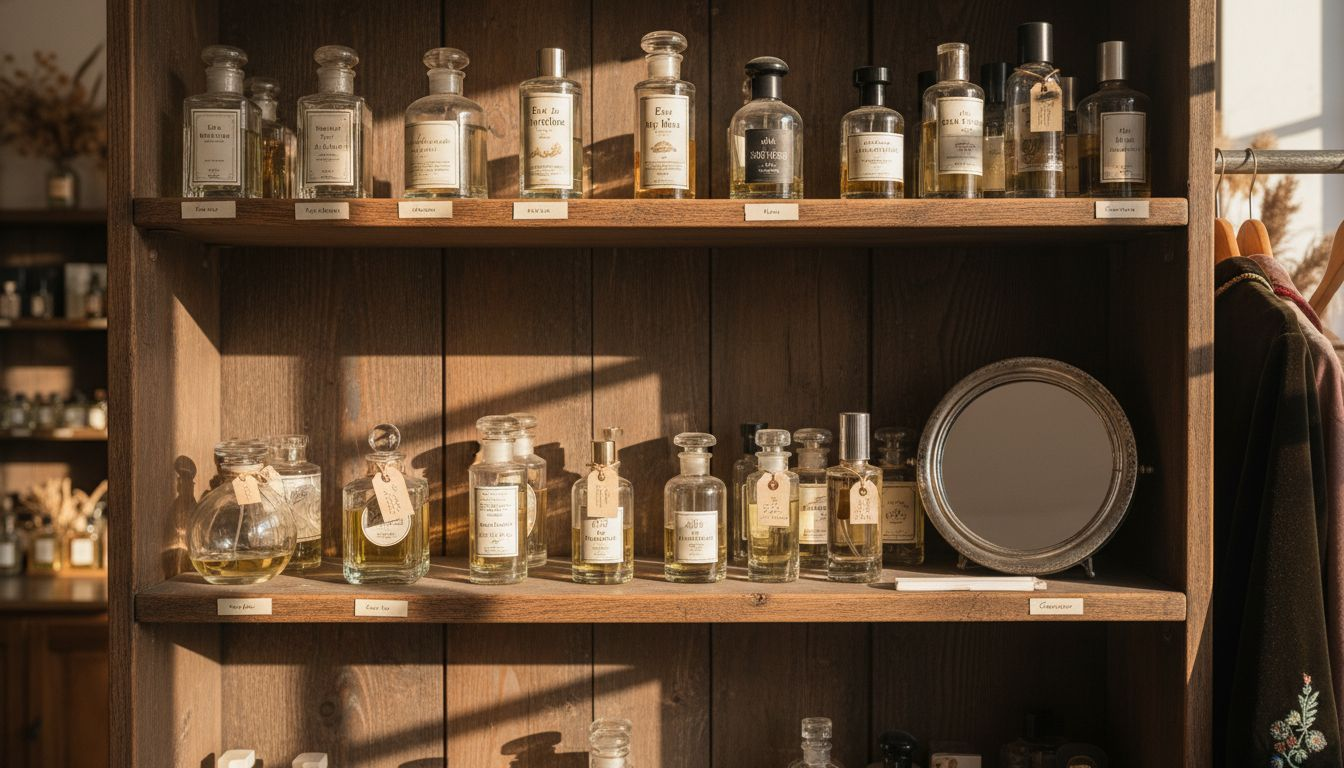
Lighter concentration variants like Eau de Toilette (EDT) and Eau de Cologne (EDC) offer more subtle, versatile options. Different Types of Perfume typically include EDT with 5-15% concentration, lasting 3-5 hours, and EDC with 2-5% concentration, providing a brief 2-3 hour aromatic experience. These lighter formulations are perfect for daytime wear, professional environments, and warmer climates where intense fragrances might feel overwhelming.
The most delicate category, Eau Fraîche, contains merely 1-3% perfume oils and offers a fleeting 1-2 hours of light sillage. This concentration is ideal for individuals preferring a whisper of fragrance or those with sensitive skin who desire minimal olfactory impact.
Here is a comparison of fragrance concentration types and their typical uses:
| Concentration Type | Oil Percentage | Typical Duration | Best Use Case |
|---|---|---|---|
| Parfum (Extrait) | 20-40% | 8-12 hours | Special occasions, evenings |
| Eau de Parfum | 15-20% | 6-8 hours | Daily wear, cooler weather |
| Eau de Toilette | 5-15% | 3-5 hours | Office, daytime, warmer climates |
| Eau de Cologne | 2-5% | 2-3 hours | Light, refreshing daytime use |
| Eau Fraîche | 1-3% | 1-2 hours | Sensitive skin, subtle scent |
Pro Tip: Match your fragrance concentration to the occasion and environment - choose higher concentrations like Parfum for evening events and lighter options like EDT for daytime professional settings.
Key Ingredients Affecting Longevity
Fragrance longevity is a complex interplay of molecular complexity, ingredient selection, and structural composition. The science behind long-lasting fragrances centres on strategic ingredient combinations that determine how a scent evolves and persists on the skin.
At the foundation of fragrance persistence are base notes, which serve as the critical anchoring elements of any perfume composition. These heavier molecular compounds including vanilla, patchouli, sandalwood, and musk create a robust aromatic foundation that lingers significantly longer than lighter top and middle notes. Synthetic molecules like iso-e-super and ambroxan have been specifically engineered to enhance molecular stability, providing extended scent projection and remarkable longevity.
Natural ingredients present a nuanced challenge in fragrance durability. Essential oils, while rich and complex, typically evaporate more rapidly compared to their synthetic counterparts. Perfumers often employ sophisticated techniques like molecular encapsulation and controlled release mechanisms to extend the olfactory experience. Ingredients such as benzoin, amber, and woody accords demonstrate exceptional staying power, creating a sophisticated base that gradually unfolds throughout the wearing experience.
The molecular weight and polarity of ingredients play a crucial role in determining fragrance persistence. Heavier, less volatile molecules tend to create more stable aromatic profiles, whereas lighter, more volatile compounds dissipate quickly. This scientific approach allows perfumers to craft intricate scent journeys that evolve gracefully over several hours.
Pro Tip: When selecting a long-lasting fragrance, prioritise compositions featuring prominent base notes like vanilla, patchouli, and sandalwood, which naturally provide extended aromatic performance.
How Skin Chemistry Changes Scent Wear
Fragrance is a deeply personal experience, transforming uniquely on each individual’s skin through a complex biochemical interaction. Individual skin chemistry profoundly influences how perfume molecules develop and persist, creating a remarkable olfactory fingerprint that varies from person to person.
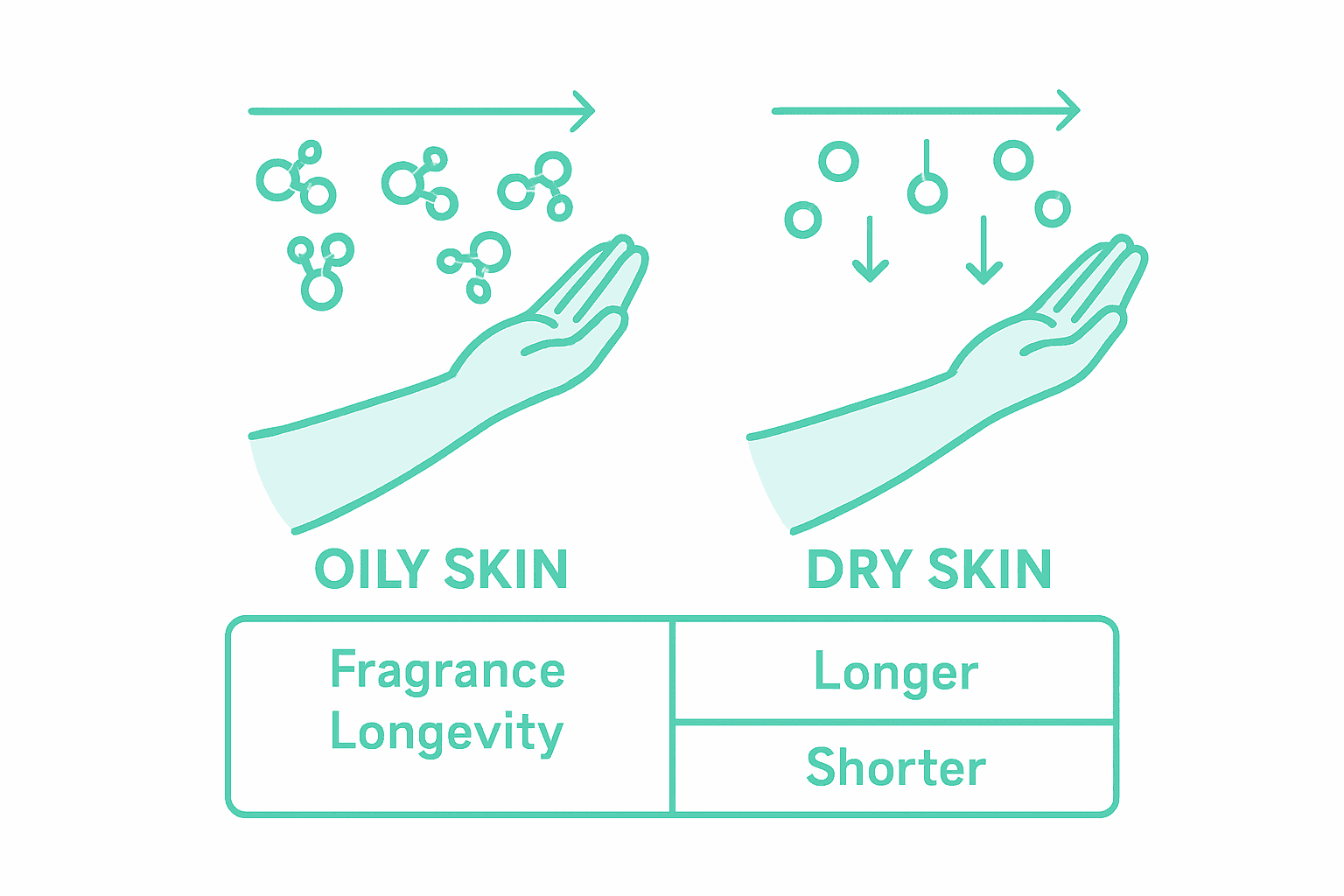
The primary determinant of fragrance performance lies in skin physiology. Sebum production, pH levels, and moisture content create a unique biological environment that dramatically alters scent perception. Individuals with oily skin typically experience longer-lasting fragrances, as the natural oils act as a binding agent and molecular solvent, slowing the evaporation process. Conversely, those with dry skin may notice fragrances dissipating more quickly, as the lack of natural lipids prevents effective scent retention and molecular anchoring.
Beyond surface-level characteristics, internal factors such as diet, hydration, and metabolic rate subtly influence how a fragrance interacts with one’s body chemistry. Hormonal fluctuations, stress levels, and even genetic predispositions can create subtle variations in how a scent develops. Some individuals might experience a fragrance becoming warmer and more pronounced, while others might find the same perfume becoming lighter and more ethereal as it interacts with their unique biochemical landscape.
Metabolic processes and body temperature play crucial roles in fragrance development. Warmer skin temperatures accelerate molecular volatility, causing faster scent diffusion, while cooler skin temperatures create a more controlled, gradual release. This intricate dance between fragrance molecules and individual biochemistry explains why a single perfume can smell remarkably different from person to person.
The following table summarises how skin chemistry impacts fragrance longevity and character:
| Skin Factor | Effect on Longevity | Effect on Scent Profile |
|---|---|---|
| Oily Skin | Extends longevity | Richer, more intense smell |
| Dry Skin | Reduces longevity | Lighter, less noticeable scent |
| High Temperature | Faster evaporation | Scent becomes brighter, dissipates quickly |
| Low Temperature | Slower evaporation | Notes develop gradually, linger longer |
Pro Tip: Enhance fragrance performance by maintaining well-hydrated skin and applying a lightweight, unscented moisturiser directly before spraying your preferred perfume, creating an optimal molecular binding surface.
Choosing High-Quality Dupes For Longevity
Selecting high-quality fragrance dupes requires a sophisticated approach that goes beyond simple price comparison. Understanding the intricate nuances of perfume composition enables fragrance enthusiasts to discover exceptional alternatives that rival their designer counterparts in both performance and olfactory complexity.
The primary consideration in selecting a superior dupe lies in concentration levels. Extrait de parfum and Eau de Parfum formulations offer more robust molecular structures, providing significantly enhanced longevity. Sophisticated dupe creators meticulously analyse original fragrances, reconstructing their complex molecular profiles using high-quality synthetic and natural ingredients. Woody, musky, and amber base notes serve as critical anchors, ensuring the fragrance maintains its character and projection throughout wear.
Beyond technical specifications, personal skin chemistry remains a crucial factor in dupe selection. What performs brilliantly on one individual might behave differently on another. Experienced fragrance enthusiasts recommend thorough testing, allowing the dupe to develop across multiple hours and observing its unique transformation. Reputable dupe brands invest extensively in understanding molecular interactions, creating alternatives that closely mirror the original’s sophisticated olfactory journey.
Quality assessment extends beyond immediate sensory experience. Sophisticated dupe creators consider factors like ingredient sourcing, molecular complexity, and performance consistency. Advanced fragrance houses employ chromatography and spectrometry to deconstruct and recreate complex scent profiles, ensuring their alternatives provide comparable depth and nuance to original designer fragrances.
Pro Tip: Always test a fragrance dupe on your skin for at least four hours, observing its evolution and interaction with your unique body chemistry before making a final purchasing decision.
Unlock the Secret to Long-Lasting Fragrance Enjoyment
Struggling to find a perfume that truly lasts throughout your busy day? The science behind fragrance longevity reveals that concentration levels, quality ingredients, and personal skin chemistry all play vital roles in how your scent performs. Whether you seek the richness of Parfum or prefer lighter options like Eau de Toilette, selecting the right formula can transform your fragrance experience and keep you confidently smelling fresh for hours.
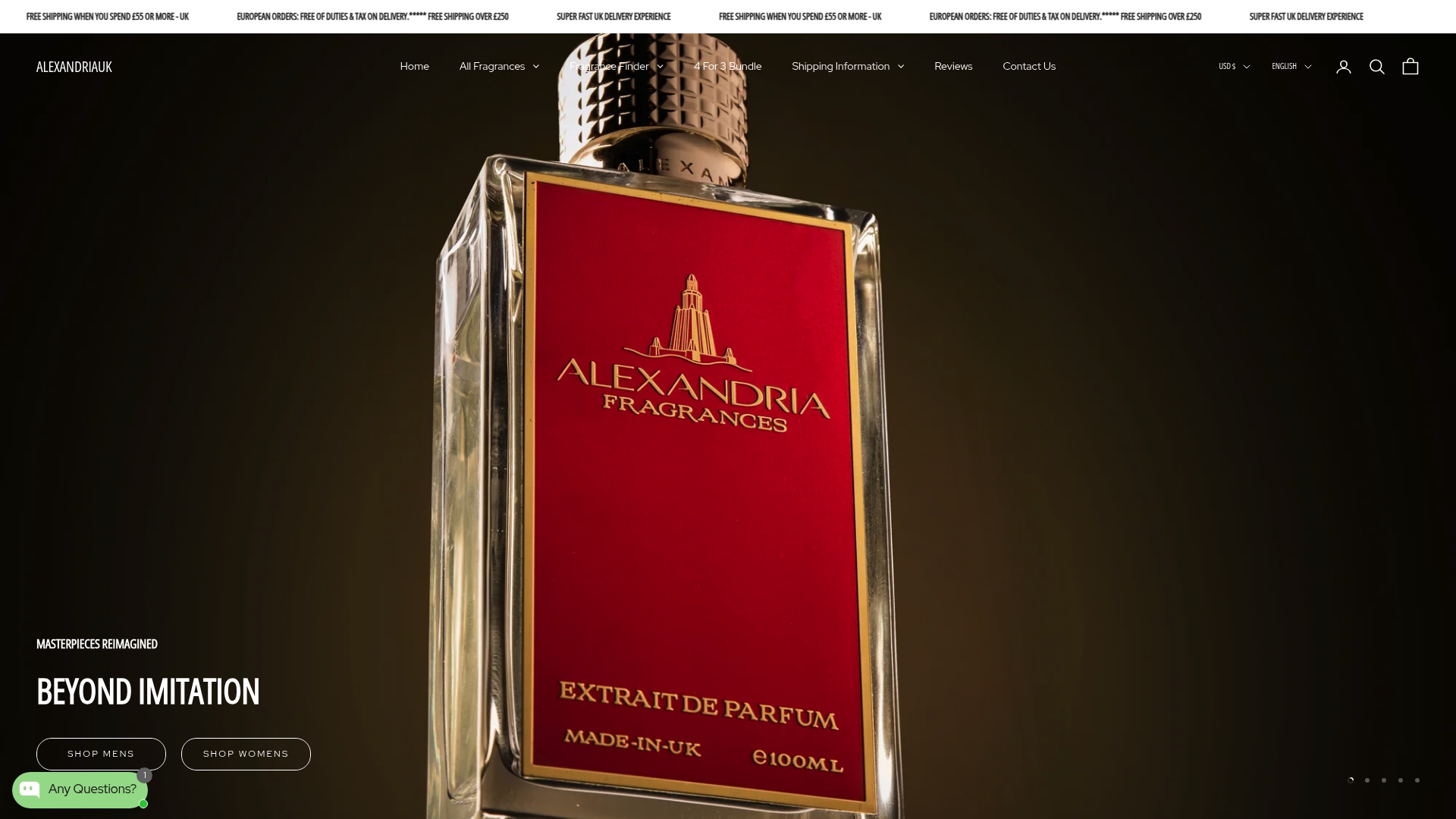
Discover a wide selection of expertly crafted fragrances and high-quality dupes designed with lasting power in mind at Alexandria UK. Take control of your scent journey today by exploring fragrances tailored to your lifestyle and preferences. Visit https://alexandriauk.com now to find your perfect match and enjoy premium quality that truly endures.
Frequently Asked Questions
What factors affect how long a fragrance lasts?
Fragrance longevity is influenced by the concentration of aromatic compounds, environmental conditions, skin chemistry, and application technique, all of which can cause a fragrance to last longer or dissipate quickly.
How do different fragrance concentrations impact longevity?
Higher concentrations like Parfum (20-40% oil) typically last 8-12 hours, while lighter versions like Eau de Toilette (5-15% oil) last 3-5 hours. The type you choose should match the occasion and environment.
What ingredients should I look for in a long-lasting fragrance?
Focusing on base notes such as vanilla, patchouli, and sandalwood can enhance longevity. Additionally, synthetic molecules designed for stability can also extend scent projection.
How does skin chemistry affect how a fragrance smells on me?
Your unique skin chemistry, including factors like oil production and pH level, can alter how a fragrance develops and lasts. Generally, oilier skin retains scents longer, while dry skin may lead to quicker evaporation.