Store It Right: Most Perfumes Last 3–5 Years, and How to Keep Them
Most opened perfumes stay at their best for a few years, and unopened bottles kept cool and dark can last far longer, sometimes decades. The single habit that protects that lifespan more than any other is simple: store the bottle upright, capped, away from light and heat. If a fragrance ever smells sour, vinegary, or oddly thin on the skin, trust your nose over the calendar and consider retiring it.
TL;DR:
- Proper storage, such as keeping bottles upright, in cool dark places, and sealed, significantly extends perfume lifespan beyond the manufacturer’s recommended windows.
- Fragrances with higher oil concentrations or woody, resinous notes tend to last longer, while citrus and floral top notes fade faster over months.
- Sniffing, examining color, and testing on skin are the most reliable ways to determine if a perfume has spoiled or degraded.
- Discard any perfume that smells sour or metallic, darkens in color, or causes skin irritation, but faded scents can often be reused in diffusers or sprays.
- Using smaller decants and travel atomizers minimizes exposure to air, slowing oxidation and evaporation, and prolonging fragrance freshness.
Table of Contents
- How long do perfumes usually last: opened versus unopened?
- What causes perfumes to degrade over time?
- How can you tell if a perfume has gone bad?
- Practical storage steps to extend perfume life
- What should you do with a perfume that has changed?
- A connoisseur’s honest take on shelf life
- Keep your fragrances fresher, longer, with the right tools
- Sources
- FAQ
How long do perfumes usually last: opened versus unopened?
An opened bottle of eau de parfum or eau de toilette typically performs beautifully for three to five years once the seal is broken, though that window shifts depending on concentration and composition. Unopened, in original packaging, away from heat and light, a fragrance can remain genuinely wearable for many years beyond that. There’s no single universal expiry date stamped by law, because manufacturers determine longevity through their own stability testing rather than a fixed rule.
That’s where the Period After Opening symbol earns its keep. That little open jar icon, marked “24M” or “36M”, tells you the manufacturer’s recommended usage window once air first meets the juice. It is guidance rather than gospel. Many well-stored fragrances comfortably outlast their PAO marking, particularly when the concentration and storage conditions are favourable.
Concentration matters more than most people realise:
- Eau de parfum (EDP) carries a higher oil concentration, generally giving it more resilience against oxidation than lighter formulations.
- Eau de toilette (EDT) contains less oil and more alcohol, which can mean a slightly shorter comfortable lifespan once opened.
- Note composition plays its own role too. A fragrance built on resinous, woody, or gourmand accords tends to age more gracefully than one led by sparkling citrus.
The takeaway isn’t a rigid countdown. It’s an informed expectation, adjusted by what’s actually in the bottle.
What causes perfumes to degrade over time?
Fragrance is a delicate chemical composition, and three forces conspire against it: light, heat, and oxygen. Ultraviolet light triggers photooxidation, a process that quietly rearranges molecular bonds and dulls the top notes long before you’d notice a colour change. Heat accelerates that same oxidative process and speeds up evaporation of the more volatile aromatic compounds, which is precisely why a windowsill or a car glovebox is a death sentence for a bottle you love.
Oxygen exposure compounds the problem, and here bottle geometry genuinely matters. Every time a bottle is opened, a small volume of air enters and reacts with the juice inside. A nearly empty bottle has a far higher air-to-liquid ratio than a full one, which is why smaller decants and near-finished bottles age noticeably faster than a sealed, full bottle of the same fragrance.
Heat, light, and humidity accelerate degradation through oxidation and evaporation. Retailer and consumer guidance is consistent on this point: a cool, dark, dry environment is the single biggest lever you control.
Composition offers a further clue to durability:
- Citrus and delicate floral top notes are the first to fade, often within the opening months of regular use.
- Base notes such as oud, amber, and musk have far greater staying power, both on the skin and in the bottle over years.
- Natural extracts tend to be more reactive than stabilised synthetic molecules, which is one reason niche naturals often carry shorter recommended windows.
How can you tell if a perfume has gone bad?
Your nose is the most reliable instrument you own, and it rarely lies. Follow this sequence when a fragrance feels uncertain:
- Smell it straight from the bottle first. A sour, vinegary, or sharply metallic note in place of the original opening accord is the clearest warning sign.
- Check the liquid itself. Noticeable darkening in colour, or a texture that has turned syrupy rather than fluid, both point to oxidative breakdown.
- Compare against a stored reference sample if you have one, ideally in a neutral, unscented room rather than somewhere with competing smells.
- Test on skin, briefly, on a small patch, rather than committing to full application, particularly if the bottle is old or has been poorly stored.
- Stop immediately at any sign of irritation. Redness, itching, or a burning sensation means the fragrance comes off, full stop, regardless of how much you paid for it.
Cosmetic guidance is reassuring on one front: expired perfume is rarely toxic, even when it has clearly turned. The risk is skin irritation, not poisoning, but that risk is real, and fragrance allergy can present as genuine contact dermatitis in sensitised skin.
Pro Tip: Keep a small unworn sample of a favourite fragrance tucked away as a reference. Comparing an older bottle against that untouched benchmark makes any change in smell or colour instantly obvious.
Practical storage steps to extend perfume life
Storage discipline does more for a fragrance’s longevity than any product claim on the box. The essentials:
- Keep bottles in a cool spot, ideally between 15 and 20°C, away from radiators and direct sun.
- Store upright, in the original box where practical. The packaging was designed to block light for a reason.
- Always replace the cap fully and promptly after use to limit oxygen exposure.
- Decant a small amount into a travel atomiser for daily carrying rather than opening and closing your main bottle repeatedly.
- Never store perfume in the bathroom, a car, or on a windowsill. Humidity and heat swings in bathrooms are especially damaging during warmer months.
- Rotate through a collection rather than letting one bottle sit half full for years. A bottle running low has more air inside it, and more air means faster ageing.
- Label older bottles with a purchase or opening date so you’re never guessing.
| Storage factor | Recommended approach | Why it matters |
|---|---|---|
| Temperature | 15–20°C, away from radiators | Slows thermal oxidation and evaporation |
| Light exposure | Original box, dark drawer or cupboard | Prevents photooxidation of top notes |
| Bottle position | Upright, cap fully closed | Limits leakage and oxygen contact |
| Air exposure | Decant into a small atomiser for daily use | Keeps the main bottle sealed longer |
| Location to avoid | Bathroom, car, windowsill | Heat and humidity swings accelerate decay |
For a deeper collector’s approach to shelving, rotation, and long-term preservation, the best ways to store perfume for lasting fragrance quality is worth a proper read.
What should you do with a perfume that has changed?
Not every altered bottle belongs in the bin. Weaker projection after a few years, without any change in colour or smell, is often just natural fading rather than spoilage, and a scent like that can still be worn with confidence.
- Discard any bottle showing a sour or metallic smell, visible colour darkening, or a syrupy texture, and definitely anything that has caused skin irritation.
- Repurpose a fragrance that’s merely faded, but not spoiled, by diluting a small amount into a linen spray or room mist rather than wearing it on skin.
- Never reapply directly to skin a scent that previously caused any reaction, even diluted, even on a different day.
- Dispose of liquid responsibly through household hazardous waste guidance where available, rather than pouring large quantities down the drain.
A connoisseur’s honest take on shelf life
Fragrance longevity is treated as a fixed number online far too often, when it’s really a conversation between chemistry and habit. A beautifully composed eau de parfum, stored with a little discipline, will outlive its stated window with ease. Don’t take cheap oxidation shortcuts. My advice to every reader of the pillar guide on storing perfume: decant your daily wear, keep the main bottle sealed and shaded, and never let a calendar override your nose.
— dave
Keep your fragrances fresher, longer, with the right tools
Everything above points to one practical truth: minimising how often air meets your fragrance is the cheapest, most effective way to protect it. The EMPTY Travel Atomiser, priced at £8.99, does exactly that. Fill it from your main bottle, carry it daily, and keep the original sealed and undisturbed in a dark drawer.
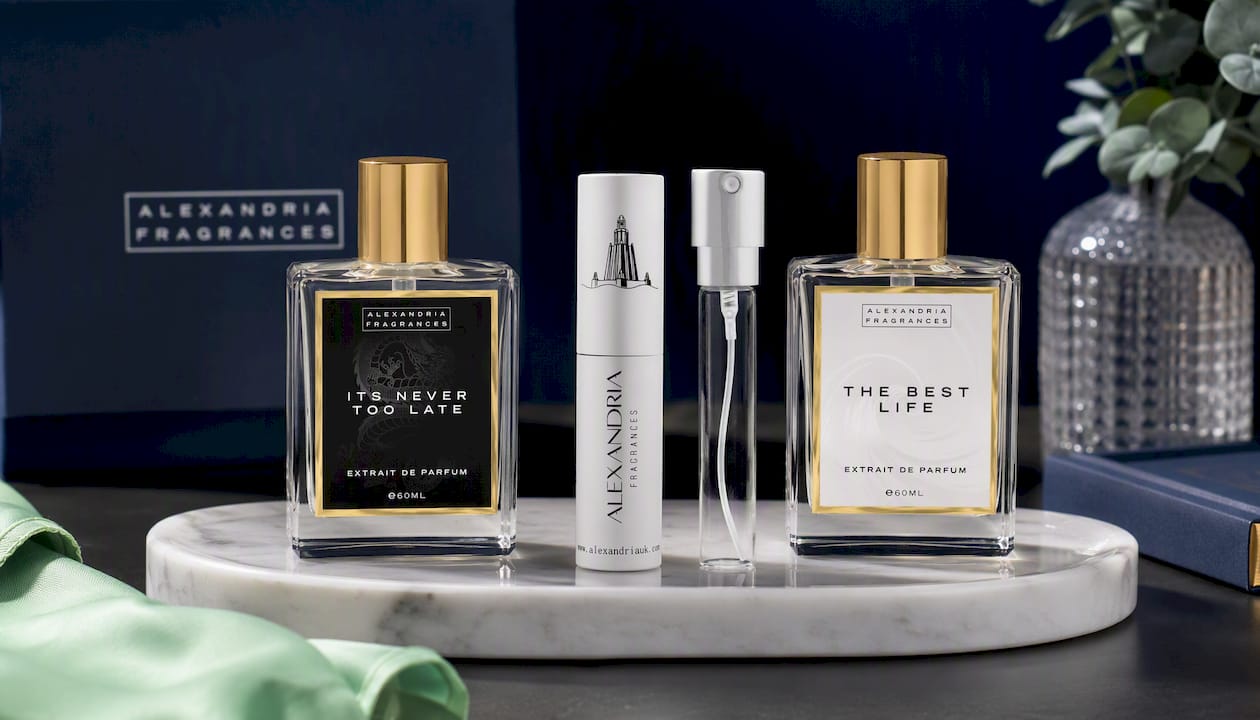
If you’re building or refreshing a collection, Alexandriauk’s inspired fragrances are formulated with the same storage principles in mind, so what you buy today is still worth wearing years from now. Its Never Too Late (Meraki) is a warm, gourmand-leaning option that suits everyday wear beautifully, while The Best Life inspired by Davidoff Good Life offers a fresher, more energetic alternative for those wanting a signature scent that lasts the distance. Explore the Meraki-inspired fragrance and add an atomiser to your basket before you check out, so your next bottle is protected from day one.
Sources
For readers who want the primary guidance behind this article: the gov.uk cosmetic safety guidance covers skin irritation risks, the NCBI reference on stability testing explains how PAO windows are set, and Good Housekeeping’s storage advice explains why bathrooms are the worst place to keep a bottle.
- Stability testing and cosmetic product guidance (NCBI reference)
- The bathroom is the worst place to store your perfume, especially during a heatwave – here’s why
FAQ
Is it okay to use 20 year old perfume?
Possibly, if it was unopened and stored cool and dark throughout. Check colour, smell, and texture first, and patch test on skin before wearing it fully.
Is it okay to use 10 year old perfume?
A well-stored, unopened bottle at ten years is often still perfectly usable. If it was opened and stored poorly, sensory checks matter more than the number.
Is a 7 year old perfume still good?
Many opened perfumes will have faded somewhat by seven years, though heavier base-note fragrances often fare better than light citrus scents. Smell and appearance are the real test, not the age alone.
Can I use 30 year old perfume?
It’s possible for an unopened bottle kept in ideal conditions, but always check for a sour or vinegary smell, colour darkening, or a syrupy texture before applying it to skin. Expired perfume is rarely toxic, but it can still irritate sensitive skin.