Best way to store perfume: protect your fragrance
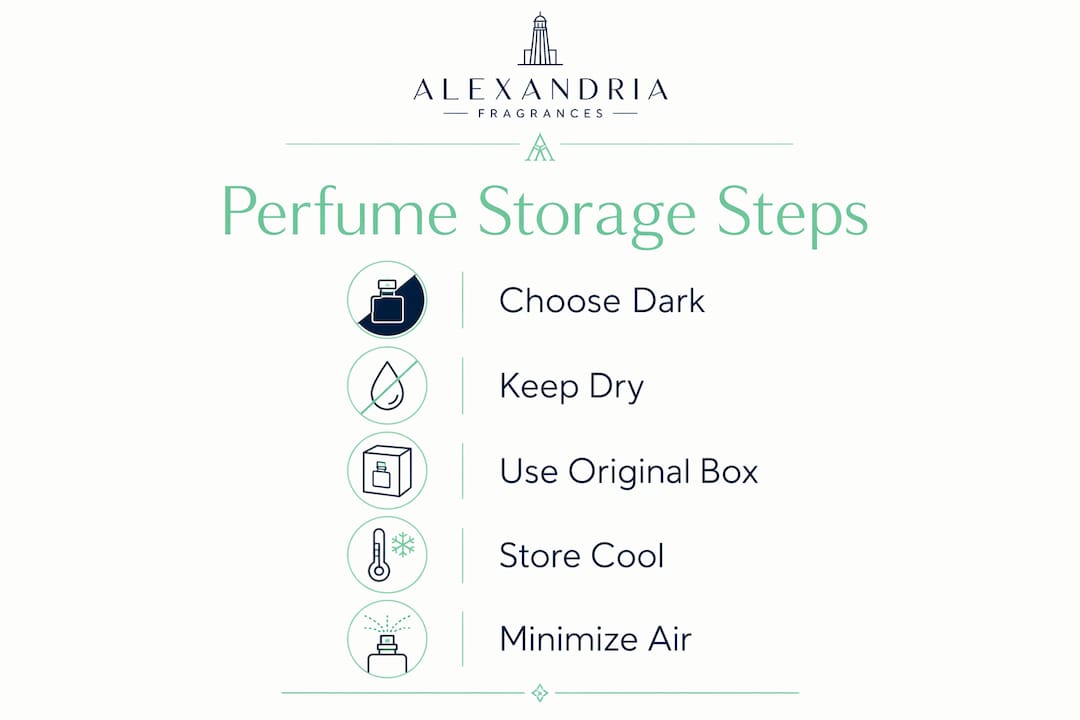
The best way to store perfume is in a cool, dark, dry place with the bottle tightly sealed and kept in its original box from trusted fragrance brands. That single habit protects the fragrance from its four primary enemies: light, heat, humidity, and air. Get those four factors under control, and a well-composed scent can remain at its luminous best for years.
Here is what ideal perfume storage looks like in practice:
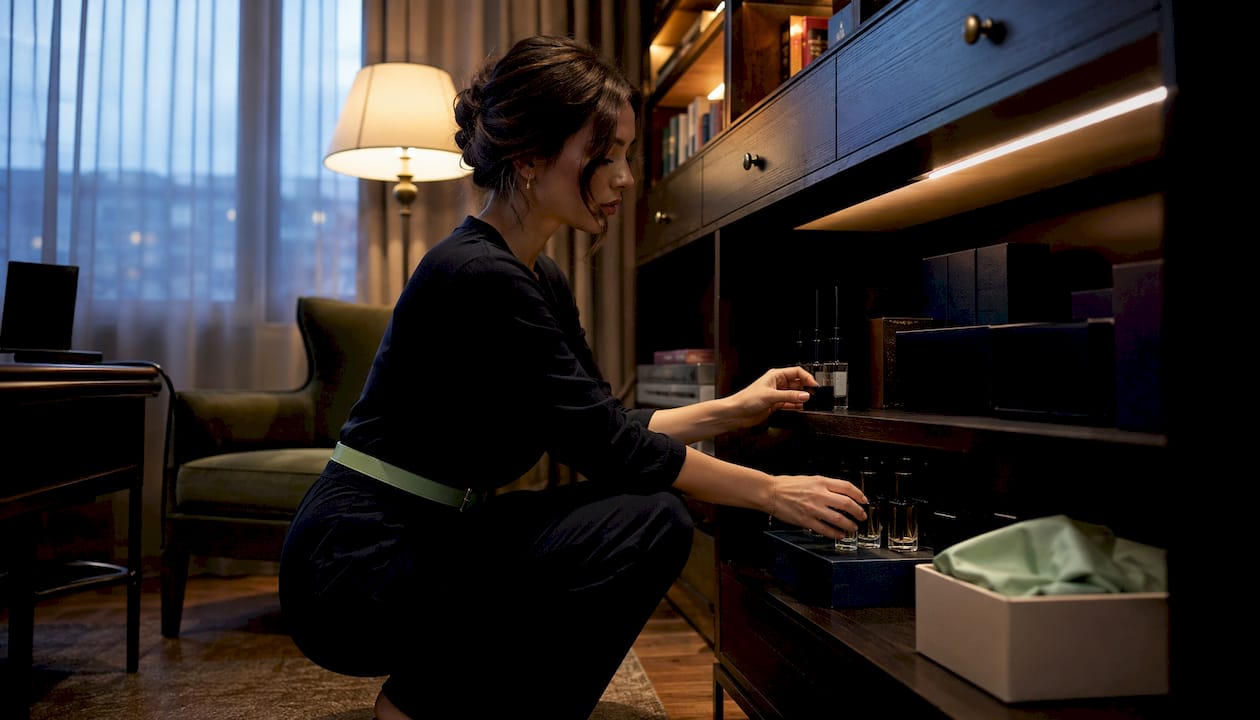
- Keep bottles in a bedroom drawer, wardrobe shelf, or closed cabinet, away from windows and radiators
- Maintain a consistent temperature within a moderate range suitable for fragrance stability
- Store bottles upright with caps firmly closed after every use
- Keep perfume in its original box whenever possible
- Avoid bathrooms, sunny windowsills, and car glove compartments entirely
For a deeper look at the principles behind these habits, Alexandriauk’s fragrance storage guide covers the full picture with expert detail.
Why darkness and dryness are the best way to store perfume
Light exposure degrades perfume molecules, causing loss of scent and visible changes to the liquid’s colour and clarity. UV rays are particularly destructive to essential oils, breaking down the delicate accords that give a fragrance its character. A bottle left on a sunny dressing table can lose its top notes within weeks, even if the cap stays on.
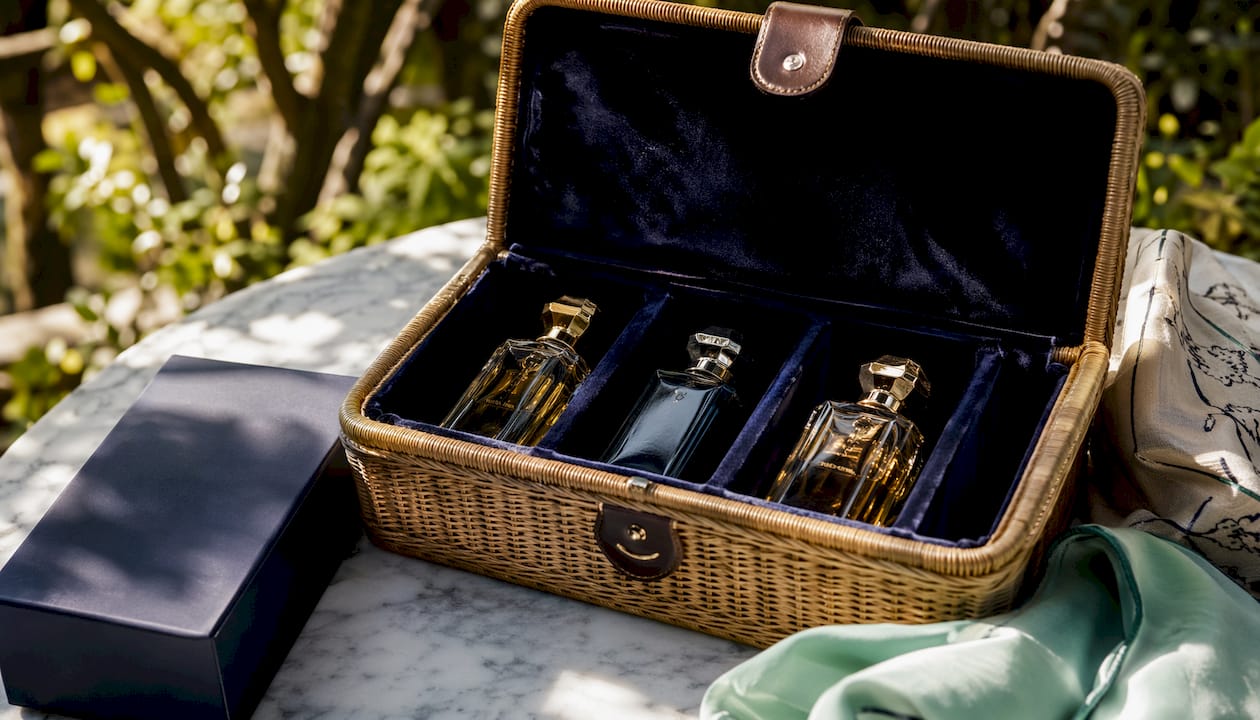
Humidity compounds the damage. Moisture in the air accelerates evaporation of the volatile solvents that carry a fragrance’s luminous opening notes, and over time it can promote sediment formation at the base of the bottle. A closed bedroom drawer or a wardrobe shelf offers both darkness and stable, dry air without any effort.
The cardboard box that came with your fragrance is not decorative packaging to be discarded. It is a purpose-built barrier against light and environmental fluctuation. Keeping bottles boxed is one of the simplest and most effective storage habits available to any collector.
Pro Tip: If you have lost the original box, wrap the bottle loosely in a soft cloth or store it inside an opaque bag. Any barrier between the glass and ambient light slows degradation.
Why the bathroom is one of the worst places for your perfume
The bathroom feels like the logical home for fragrance, given that most people apply perfume after a shower. The environment, however, is actively hostile to delicate scent compositions.
“Bathroom conditions can change quickly, from hot showers and bright vanity lights to open windows or a running exhaust fan. These fluctuations in temperature, humidity, and light can alter a product’s formula by speeding up the evaporation of volatile ingredients or causing fragrance ingredients to degrade when exposed to heat or UV light.” — Sabina Wizemann, Good Housekeeping Institute Beauty, Health & Sustainability Lab Director
Bathroom humidity and temperature fluctuations accelerate evaporation and degrade perfume ingredients, leading to scent changes and sediment formation. The citruses and florals that give many fragrances their sparkling opening character are the first casualties, oxidising under the influence of repeated steam and heat cycles. What remains can smell flat, sour, or simply unlike the fragrance you purchased.
Wizemann notes that these changes can make a perfume “less fragrant or have a completely different scent, or it can look more cloudy or darker, or even have some precipitation on the bottom of the bottle.” That is not a gradual, barely noticeable shift. It is a measurable deterioration that shortens the life of an expensive bottle considerably.
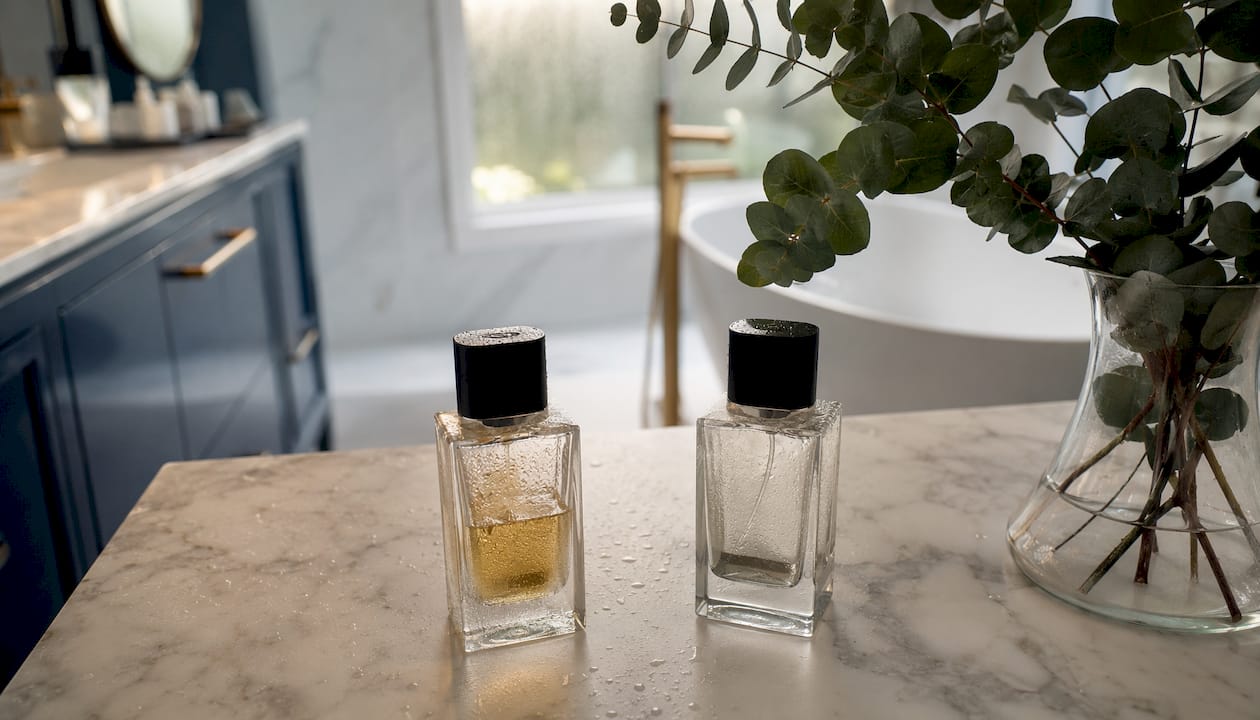
How keeping bottles sealed and boxed preserves scent integrity
Air is a slow but relentless adversary. Once oxygen reaches the fragrance compounds inside a bottle, oxidation begins, and the scent profile starts to shift away from the perfumer’s original intention. Sealing the cap firmly after every use is one of the most straightforward ways to slow that process.
- Always replace the cap immediately after spraying, never leave the bottle open on a surface
- Store bottles upright to protect the nozzle seal and prevent slow leakage around the sprayer
- Keep the original box; original packaging blocks UV light and provides an insulating layer against temperature shifts
- If a bottle is nearly empty, consider transferring the remaining fragrance to a smaller atomiser to reduce the air-to-liquid ratio inside the vessel
- Spray bottles are preferable to splash bottles for the same reason: they introduce less air and less contamination with each application
Pro Tip: Treat a perfume bottle the way you would treat a fine wine after uncorking. Minimise air contact, keep it in the dark, and return it to a stable environment after each use.
What temperature should you store perfume at?
Temperature stability matters as much as the temperature itself. Repeated swings between warm and cool cause oxidation and fragrance breakdown far more quickly than a consistently moderate environment ever would.
- Aim for 15°C to 20°C. This range keeps fragrance molecules stable without muting the delicate top notes that define a scent’s character.
- Avoid refrigeration for most collections. Fridges introduce condensation, food odours, and repeated temperature shocks every time the door opens. Fridge storage can distort the fragrance rather than preserve it.
- Choose the most thermally stable room in your home. In most UK homes, that is a bedroom away from south-facing walls and radiators.
- Reassess seasonally. A drawer that stays cool in february may warm considerably in july if it sits against a sun-facing wall.
Pro Tip: Never move a perfume bottle repeatedly between very different temperatures, such as from a warm bedroom to a cold garage and back. Temperature shock accelerates chemical instability faster than a consistently warm environment would.
Handling, travel, and spotting the signs of spoilage
Gentle handling is a genuine part of ideal perfume storage, not an affectation. Shaking a bottle introduces air bubbles and actively accelerates oxidation, disrupting the delicate balance of the accord inside.
- Never shake a perfume bottle before use; the formula does not benefit from agitation
- When travelling, wrap bottles in clothing or a padded pouch and keep them in carry-on luggage rather than a hot car boot
- Avoid leaving travel atomisers in a warm bag or on a sun-exposed surface for extended periods
- Check bottles periodically for residue around the sprayer, loose caps, or signs of evaporation in frequently used bottles
Spotting spoilage: a fragrance that has turned will often smell sour, metallic, or simply “off” compared to how it opened. Visual cues include a noticeably darker colour, cloudiness, or sediment at the base of the bottle. A rash or allergic reaction to a fragrance you have worn comfortably for years can also indicate that the formula has degraded.
How to store eau de parfum, eau de toilette, and solid perfume
The core storage principles apply across all fragrance concentrations, but each format has its own nuances worth knowing.
Eau de parfum (EDP) carries a higher concentration of fragrance oil, which gives it greater natural resilience. Stored correctly in a dark, cool drawer, a well-formulated EDP can remain at peak quality for several years after opening.
Eau de toilette (EDT) contains a lighter concentration and a higher proportion of alcohol and water. That makes it more vulnerable to evaporation and oxidation, so consistent sealing and dark storage matter even more. Citrus-forward or green EDTs are particularly susceptible to fading.
Solid perfume presents a different challenge entirely. Wax-based formulas can melt or soften in warm conditions, and they absorb ambient odours more readily than liquid fragrances. Store solid perfumes in a cool, dry place with the lid firmly closed, and keep them away from any heat source.
Signs that your perfume has expired or gone bad
Most fragrances can last several years depending on their composition and how they are stored. Heavier, resin-based scents, think rich ouds and dark musks, tend to age more gracefully than light citrus or fresh floral compositions.
Watch for these signs that a fragrance has passed its prime:
- Scent shift: the opening accord smells sour, vinegary, metallic, or simply unlike the original
- Colour change: the liquid has darkened noticeably or taken on an amber tint it did not have when new
- Cloudiness or sediment: visible particles or a murky appearance in what was once a clear formula
- Skin reaction: a new rash or irritation from a fragrance you have worn without issue before
The PAO symbol, a small open-jar icon printed on the box or bottle base, shows how many months the fragrance is guaranteed stable after first opening, typically marked as 12M, 24M, or 36M. Excellent storage habits can extend well beyond that figure; poor storage can cut it short.
Key takeaways
Storing perfume correctly comes down to one consistent principle: protect the formula from light, heat, humidity, and air at every stage of its life.
| Point | Details |
|---|---|
| Dark, dry location | A closed bedroom drawer or wardrobe shelf protects against UV damage and humidity. |
| Stable temperature | Aim for 15°C to 20°C; avoid temperature swings more than a fixed warm or cool extreme. |
| Original box | Purpose-built to block UV light and buffer temperature shifts; keep it whenever practical. |
| Seal after every use | Replacing the cap immediately limits oxidation and slows scent deterioration. |
| Shelf life awareness | Most fragrances last 3 to 5 years; monitor for colour change, sediment, or scent shift. |
Discover fragrances worth protecting
When you invest in a fragrance that genuinely moves you, the care you give it becomes part of the pleasure. Alexandriauk’s collection is built around that conviction: quality compositions that reward attentive ownership.
Explore the collection and find a scent that deserves a place in your drawer. The resinous depth of Mysterio De Myrrh and the luminous freshness of Mediterranean Coast are both crafted to last, provided they are stored with the care this guide describes. For those who want to go further, Alexandriauk’s long-term storage guide covers collection-scale care in full.