
Complete Guide to Different Kinds of Cologne
Over 300 years ago, a single fragrance changed the way the world thinks about scent. Cologne, first crafted in 1709, sparked a global fascination that still shapes personal style today. This classic fragrance has evolved from a simple, refreshing formula into a vast universe of scents, concentrations, and creative expressions. Understanding cologne’s origins, types, and qualities not only deepens appreciation but also helps you choose a scent that truly fits your lifestyle.
Table of Contents
- Defining Cologne: Origins And Key Concepts
- Fragrance Categories: Types Of Cologne Explained
- Understanding Perfume Concentrations And Strengths
- Comparing Designer, Niche, And Dupe Fragrances
- Choosing Quality Cologne: Tips And Common Mistakes
Key Takeaways
| Point | Details |
|---|---|
| Origin of Cologne | Cologne originated in 1709 in Germany by Giovanni Maria Farina, intended as a light fragrance capturing Italian spring essence. |
| Fragrance Concentrations | Understanding the differences in perfume concentrations (Eau de Cologne, Eau de Toilette, Eau de Parfum, Extrait de Parfum) is essential for selecting the right scent for various occasions. |
| Fragrance Categories | Colognes are categorized into families like Citrus, Floral, and Gourmand, each with distinct characteristics that cater to personal preferences. |
| Shopping Tips | Avoid common fragrance shopping mistakes by testing scents on skin and considering personal chemistry to find a quality cologne that complements your style. |
Defining Cologne: Origins and Key Concepts
The story of cologne begins in the charming German city that gave this fragrance category its name. According to Wikipedia, cologne was first crafted in 1709 by Giovanni Maria Farina, an Italian perfumer working in Cologne, Germany. Farina described his revolutionary creation as a fragrance that captured the essence of an Italian spring morning, with delicate notes of mountain daffodils and fresh orange blossoms after rainfall.
Originally, Eau de Cologne represented a specific type of light, refreshing fragrance with a lower concentration of aromatic compounds compared to traditional perfumes. Over time, the term evolved dramatically. Wikipedia notes that in modern American English, ‘cologne’ has become a generic descriptor for perfumes primarily marketed towards men, representing a significant linguistic and cultural transformation from its original meaning.
Today, cologne encompasses a rich and diverse world of fragrances. Its journey from a singular German-Italian creation to a global fragrance category reflects the dynamic nature of perfumery. Modern colognes typically feature:
- Lower fragrance oil concentration (2-4%)
- Lighter, more subtle scent profiles
- Shorter longevity compared to perfumes
- Designed for daily wear and casual settings
For fragrance enthusiasts seeking to deepen their understanding, our Types Of Colognes: Everything You Need To Know guide offers comprehensive insights into this fascinating olfactory landscape. Understanding cologne’s rich heritage helps appreciate the nuanced artistry behind each carefully crafted scent.
Fragrance Categories: Types of Cologne Explained
Fragrances represent a complex and fascinating world of olfactory experiences, with diverse categories that appeal to different sensibilities and preferences.
Among these captivating categories, gourmand fragrances stand out as a particularly intriguing segment. According to Wikipedia, these scents are distinguished by their synthetic edible notes, which can include delectable elements like honey, chocolate, vanilla, and candy. What makes gourmand fragrances truly fascinating is their sophisticated blending technique - they harmoniously combine these sweet, edible top notes with deeper, non-edible base notes such as patchouli, musk, or tonka bean.
The primary fragrance families you’ll encounter in cologne include:
- Citrus: Light, fresh, and energetic scents
- Floral: Delicate, romantic fragrances inspired by flowers
- Fougère: Aromatic, herbaceous compositions
- Chypre: Complex, woody, and mossy profiles
- Oriental: Warm, spicy, and exotic notes
- Woody: Rich, earthy, and grounding fragrances
- Leather: Robust, masculine, and intense scents
- Gourmand: Sweet, edible, and indulgent aromas
For fragrance enthusiasts seeking a deeper understanding of these intricate categories, our Complete Guide to Different Types of Cologne offers comprehensive insights into the nuanced world of cologne classifications. Understanding these categories helps you navigate the rich landscape of fragrances and select scents that truly resonate with your personal style and sensory preferences.

Understanding Perfume Concentrations and Strengths
Navigating the world of fragrances requires understanding the subtle nuances of perfume concentrations, which directly impact a scent’s intensity, longevity, and overall character. Perfume concentrations are essentially the percentage of aromatic compounds dissolved in a solvent, typically alcohol, which determines how potent and long-lasting a fragrance will be.
The fragrance industry recognizes several standard concentration levels, each offering a unique olfactory experience. From lightest to most concentrated, these typically include:
- Eau de Cologne: 2-4% fragrance oils
- Eau de Toilette: 5-15% fragrance oils
- Eau de Parfum: 15-20% fragrance oils
- Extrait de Parfum/Pure Perfume: 20-40% fragrance oils
These concentration levels dramatically influence a fragrance’s performance. Lower concentration options like Eau de Cologne offer a light, refreshing touch perfect for casual daytime wear, while Extrait de Parfum provides an intense, long-lasting experience that lingers throughout the day. Understanding these variations helps fragrance enthusiasts select the perfect scent for their lifestyle and personal preferences.
For those seeking a deeper dive into the nuanced world of fragrance strengths, our Eau de Parfum vs. Extrait de Parfum guide offers comprehensive insights into the subtle distinctions between different perfume concentrations. Selecting the right concentration can transform your fragrance experience from ordinary to extraordinary.
Here’s a comparison of the main perfume concentration types:
| Type | Fragrance Oil % | Scent Longevity | Typical Usage |
|---|---|---|---|
| Eau de Cologne | 2-4% | 1-3 hours | Light, daily wear |
| Eau de Toilette | 5-15% | 3-6 hours | Everyday, versatile |
| Eau de Parfum | 15-20% | 6-8 hours | Evening, special events |
| Extrait de Parfum | 20-40% | 8+ hours | Intense, long-lasting |
Comparing Designer, Niche, and Dupe Fragrances
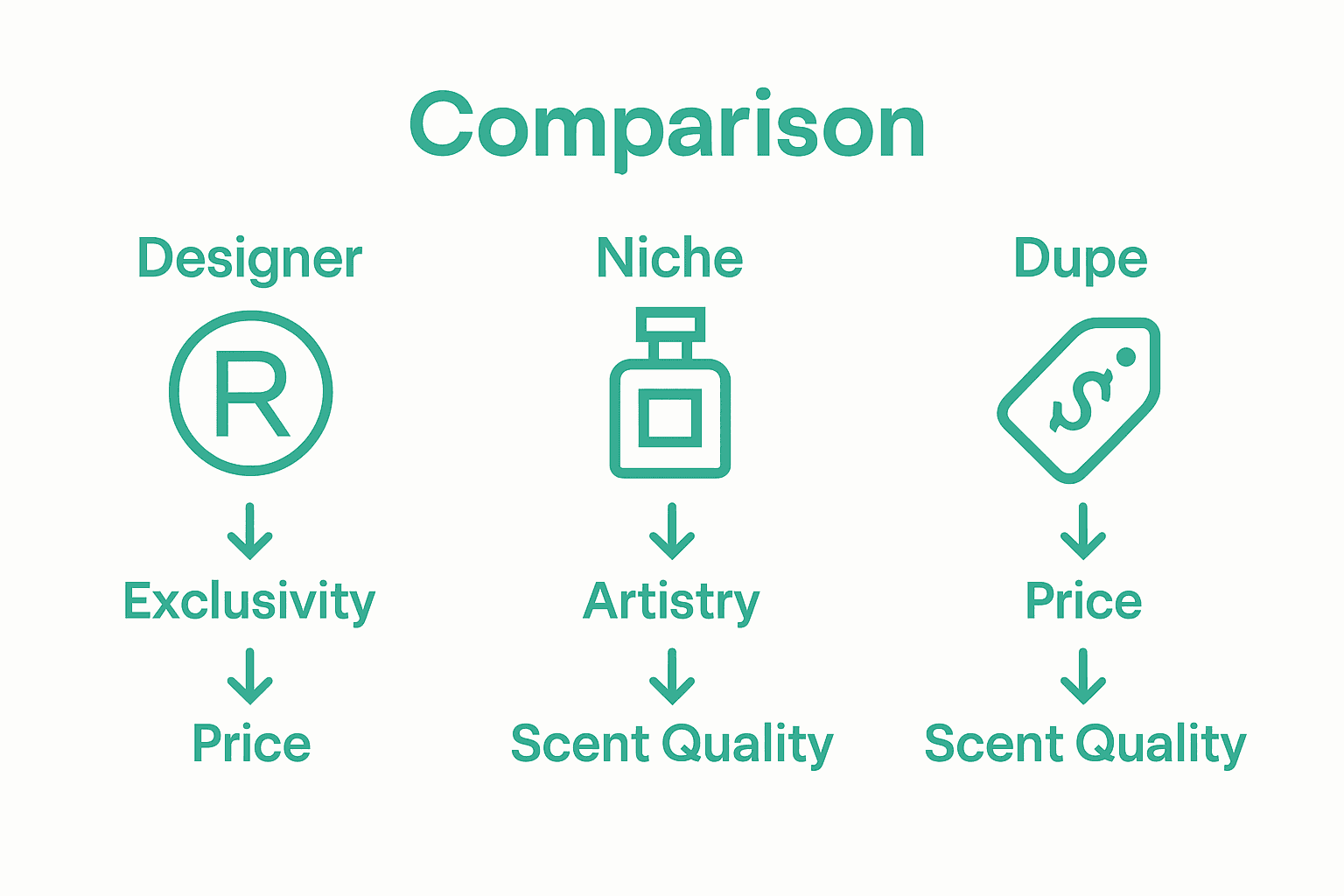
The fragrance world is a rich tapestry of scent experiences, with three primary categories defining the landscape: designer, niche, and dupe fragrances. Each category offers unique characteristics that cater to different preferences, budgets, and olfactory desires, creating a complex and fascinating marketplace for fragrance enthusiasts.
Designer fragrances represent luxury brand creations, typically produced by well-known fashion houses and perfume brands. These scents are crafted with high-end ingredients, extensive marketing support, and often carry significant brand prestige. Niche fragrances, in contrast, are more exclusive productions. Created by specialized perfume houses, they prioritize artistic expression and unique compositions over mass market appeal, often featuring rare ingredients and more experimental scent profiles.
The emerging dupe fragrance market offers an intriguing alternative for budget-conscious fragrance lovers. These carefully crafted alternatives provide:
- Similar scent profiles to high-end designer fragrances
- Significantly lower price points
- Comparable quality and longevity
- Accessibility for consumers seeking luxury experiences
For those eager to explore the nuanced world of fragrance alternatives, our Dupes vs Designer Scents: Unveiling the Truth guide offers comprehensive insights into selecting the perfect scent that balances quality, affordability, and personal style. Whether you’re a luxury connoisseur or a savvy fragrance hunter, understanding these categories empowers you to make informed choices in your olfactory journey.
Choosing Quality Cologne: Tips and Common Mistakes
Selecting the perfect cologne is an art form that requires keen sensory awareness, understanding of personal style, and strategic shopping techniques. Fragrance selection goes far beyond simply picking a pleasant scent - it involves understanding your unique body chemistry, lifestyle, and the subtle nuances that transform a good fragrance into an exceptional one.
When hunting for quality cologne, several critical factors demand careful consideration. Experienced fragrance enthusiasts recommend evaluating a scent through multiple lenses: initial impression, development over time, longevity, and how it interacts with your individual skin chemistry. Skin testing is paramount - never rely solely on paper strips or bottle impressions. Apply the fragrance to your pulse points and observe how it evolves over several hours, paying attention to how the scent transforms and settles.
Common mistakes fragrance shoppers often make include:
- Purchasing based exclusively on brand reputation
- Testing too many fragrances in one shopping session
- Ignoring personal body chemistry
- Failing to understand fragrance concentration levels
- Impulse buying without proper evaluation
- Neglecting to consider seasonal appropriateness
For those seeking a comprehensive roadmap to intelligent fragrance selection, our How to Identify Quality Perfume: A Step-by-Step Guide provides an invaluable resource. Remember, the perfect cologne is not just about smelling good - it’s about creating a personal olfactory signature that speaks to your unique personality and style.
Discover Your Signature Scent with Confidence
Choosing the right cologne can feel overwhelming given the many fragrance families and concentration levels discussed in the “Complete Guide to Different Kinds of Cologne”. You want a scent that truly matches your personality and stands the test of time rather than just another fleeting fragrance. Understanding terms like Eau de Cologne, niche perfumes or even gourmand notes is only the first step toward making an informed choice that feels personal and lasting.
Ready to explore expertly crafted fragrances inspired by timeless classics and quality dupes? At Alexandria UK, we focus on delivering premium perfumes with transparent quality you can trust. Embrace your unique style and experience the art of fragrance with confidence. Start your journey now by browsing our carefully selected collection and uncover your perfect scent today. Learn more about identifying top-quality perfumes in our How to Identify Quality Perfume guide and deepen your fragrance knowledge with our Complete Guide to Different Types of Cologne. Find your ideal cologne at Alexandria UK and transform your fragrance experience.
Frequently Asked Questions
What is cologne and how is it different from other fragrances?
Cologne is a light, refreshing fragrance that typically contains 2-4% fragrance oils. It is distinct from other fragrances like Eau de Toilette (5-15% fragrance oils) or Eau de Parfum (15-20% fragrance oils) in terms of concentration and scent intensity.
What are the different types of cologne available?
Cologne can be categorized into various fragrance families such as citrus, floral, fougère, chypre, oriental, woody, leather, and gourmand, each offering unique scent profiles tailored to different preferences.
How long does cologne last compared to other types of fragrances?
Cologne generally lasts for 1-3 hours due to its lower concentration of fragrance oils, whereas Eau de Toilette can last 3-6 hours and Eau de Parfum can last 6-8 hours or more, depending on the concentration.
What should I consider when choosing a quality cologne?
When selecting a quality cologne, consider factors like your unique body chemistry, the scent’s development over time, longevity, and avoid making decisions based solely on brand reputation or impulse buys.