

What ages perfume and how to keep your scent fresh longer
TL;DR:
- Perfume is a living mixture that changes over time due to oxidation and environmental factors.
- Proper storage in cool, dark, and stable environments can slow aging and preserve scent quality.
- Recognizing signs of aging helps maximize fragrance enjoyment before it deteriorates.
Every fragrance lover has a bottle they treasure, yet few realise that perfume is a living thing, quietly changing with every passing season. The truth is that even the finest accord can shift, sour, or simply fade when exposed to the wrong conditions. This matters whether you invest in a luxury designer bottle or explore quality inspired scents and dupes. Understanding what ages perfume, and what you can do about it, means you get more wear, more pleasure, and more value from every bottle you own. This article breaks down the causes, the warning signs, and the practical steps to keep your collection smelling exactly as it should.
Table of Contents
- What happens as perfume ages
- The biggest factors that age perfume
- Signs your perfume has aged
- How to slow down perfume ageing
- Why perfume ageing is misunderstood: a fresh perspective
- Find affordable, long-lasting scents
- Frequently asked questions
Key Takeaways
| Point | Details |
|---|---|
| Perfume does age | Changes in smell and appearance are normal as perfume is exposed to air, light, and heat. |
| Storage makes a difference | Properly keeping your fragrances cool and dark can add years to their lifespan. |
| Affordable scents matter too | Inspired or dupe perfumes are just as sensitive to ageing as expensive ones. |
| Quick signs to check | Look for shifts in colour, scent or texture before using an older bottle. |
What happens as perfume ages
Perfume is not a static liquid. It is a carefully balanced composition of aromatic molecules, solvents, and fixatives, and those components are in a constant, slow state of change. The primary force behind ageing is oxidation, a chemical reaction that occurs when fragrance molecules come into contact with oxygen. Over time, this process alters the structure of the scent, often in ways that are impossible to reverse.
Perfume components break down over time due to temperature and light exposure, which accelerates these reactions significantly. Heat energises molecules and speeds up chemical reactions, while ultraviolet light can break molecular bonds entirely, dismantling the very architecture of a fragrance.
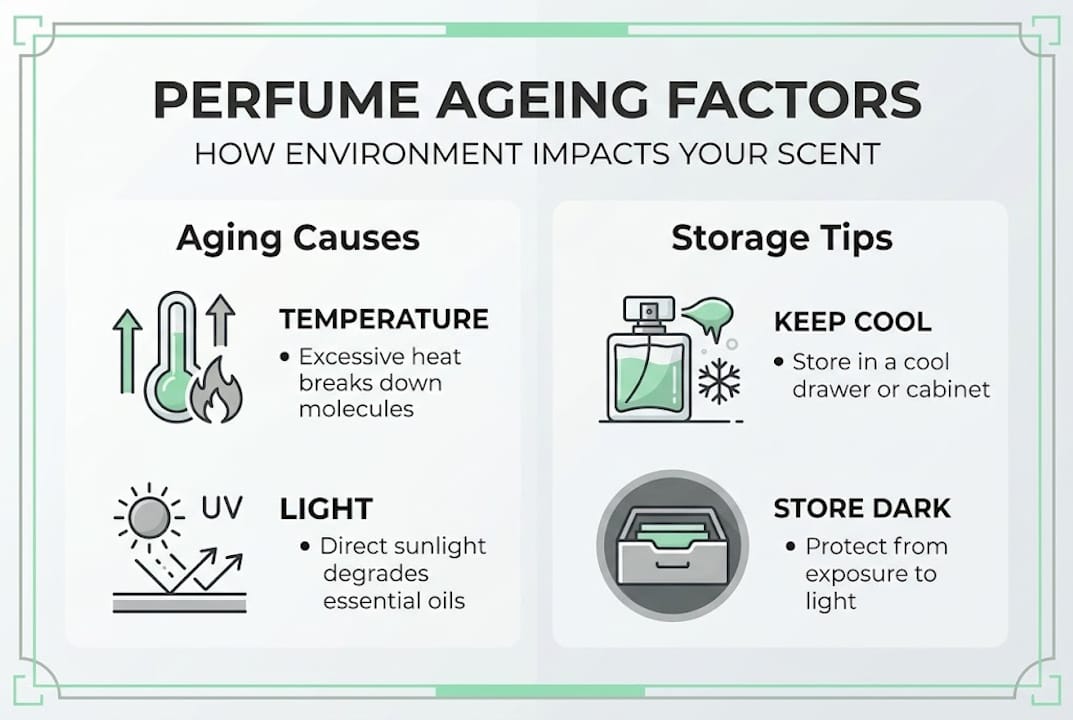
The way a perfume unfolds on the skin, known as its note structure, is also affected. Top notes, which are the bright, volatile molecules you smell first, are the most fragile. Citrus, green, and light floral top notes tend to evaporate or degrade fastest. What remains can feel heavier, more alcoholic, or simply flat.
Here is a quick overview of how ageing affects different note layers:
| Note layer | Typical ingredients | Ageing effect |
|---|---|---|
| Top notes | Citrus, herbs, light florals | Fade or sour first |
| Heart notes | Rose, jasmine, spice | Shift in character over time |
| Base notes | Musk, woods, resins | Most stable, but can turn rancid |
Beyond scent, you may also notice visual changes in an aged perfume:
- Darkening of colour: A once pale golden liquid may deepen to amber or brown
- Cloudiness or haziness: Clarity is lost as molecules clump or separate
- Sediment: Fine particles may settle at the bottom of the bottle
- Evaporation: The liquid level drops even when the bottle is sealed
“A perfume that once opened with a luminous burst of bergamot may greet you years later with a dull, muted warmth — not ruined, but unmistakably changed.”
Proper storing perfume properly is the single most effective way to slow these changes before they take hold.
The biggest factors that age perfume
Now that you understand what actually happens inside the bottle, it is worth examining which environmental forces accelerate ageing the most. Knowing your enemies, so to speak, makes prevention far more straightforward.
The four primary culprits are heat, light, oxygen, and humidity. Each acts on the fragrance differently, but together they form a formidable force against your collection.
Ranked by impact on perfume ageing:
- Heat and temperature swings: Warmth speeds up chemical reactions inside the bottle. Keeping perfume near a radiator, on a sunny shelf, or in a warm bedroom dramatically shortens its lifespan. Fluctuating temperatures are especially damaging, as the liquid expands and contracts, stressing the seal.
- Sunlight and UV exposure: UV rays are particularly destructive to aromatic molecules. A bottle left on a windowsill, even for a few weeks, can suffer irreversible damage to its top and heart notes.
- Oxygen contact: Every time you open a bottle, oxygen enters. Frequent opening, or leaving a bottle without its cap, allows oxidation to progress steadily. Spray bottles are better than splash bottles for this reason, as they limit air exposure.
- Humidity and bathroom storage: Steam and moisture from showers create a warm, humid environment that is almost perfectly designed to degrade fragrance. Despite being a popular spot, the bathroom is one of the worst places to keep perfume.
Here is a comparison of common storage locations:
| Storage location | Temperature | Light exposure | Humidity | Overall suitability |
|---|---|---|---|---|
| Bathroom shelf | High and variable | Low | High | Poor |
| Bedroom windowsill | Variable | High | Low | Poor |
| Wardrobe or drawer | Stable and cool | None | Low | Excellent |
| Original box in cupboard | Stable and cool | None | Low | Excellent |
| Refrigerator | Very cool | None | Low | Good for some fragrances |
As optimal storage guidance confirms, a cool environment between 15 and 20°C, kept dark and stable, minimises oxidation and preserves the integrity of the composition.
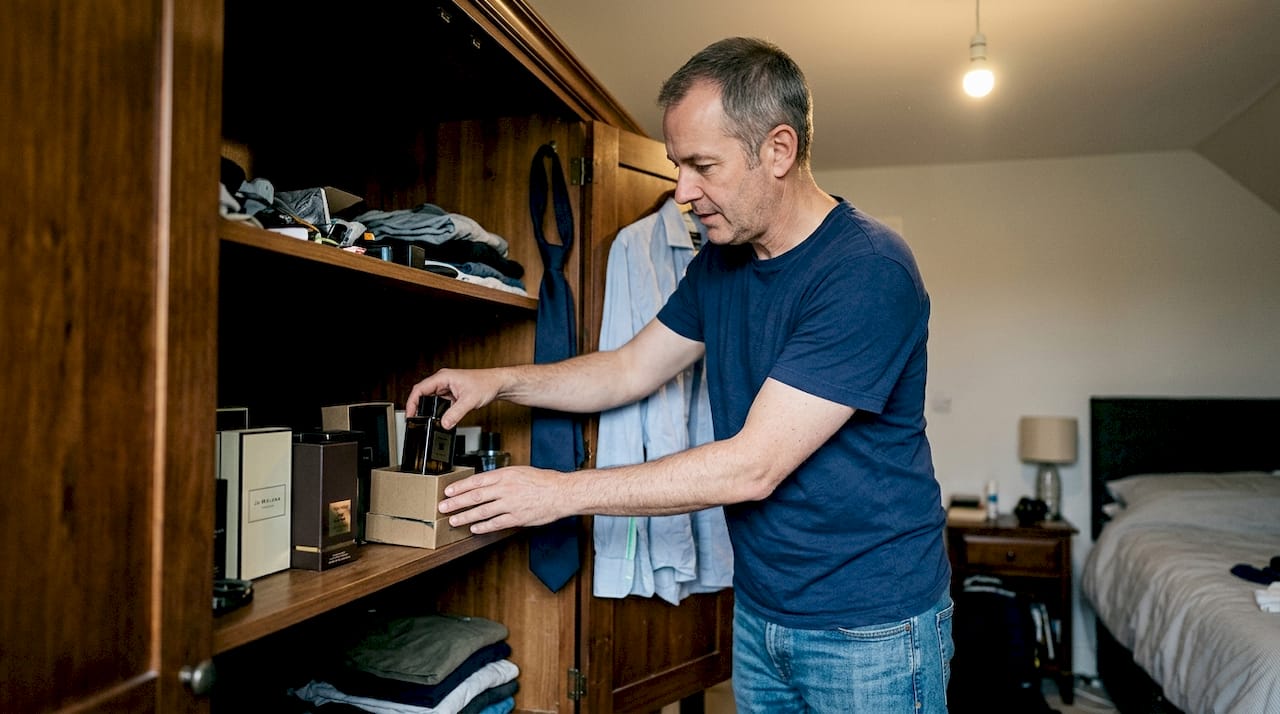
Pro Tip: If you are serious about protecting fragrance from ageing, keep your bottles in their original boxes inside a wardrobe. The cardboard acts as a secondary barrier against light and temperature fluctuation, and it costs nothing extra.
For those building a larger collection, understanding long-term perfume storage strategies becomes even more valuable, particularly when managing multiple bottles at different stages of use.
Signs your perfume has aged
Recognising an aged perfume before it fully spoils gives you the chance to enjoy what remains while it is still at its best. There are four key areas to assess: colour, scent, longevity, and texture.
As research confirms, perfume exposed to poor storage conditions may change in clarity, colour, and scent, sometimes dramatically so. Knowing what to look for makes all the difference.
Visual signs to watch for:
- Darkening: A perfume that has shifted from a pale champagne to a deep amber is showing signs of oxidation
- Cloudiness: Loss of transparency suggests molecular breakdown or contamination
- Sediment at the bottom: Particles settling in the bottle indicate ingredient separation
- Reduced volume without use: Evaporation through a compromised seal is a clear warning
Olfactory signs:
- A sharp, harsh alcohol note that dominates the opening
- Top notes that smell sour, vinegary, or simply absent
- A flat, one-dimensional character where there was once complexity
- An unexpected sweetness or rancid undertone in the dry-down
Wear and longevity:
An aged perfume often performs poorly on the skin. If a fragrance you once enjoyed for six or more hours now fades within an hour, oxidation may have weakened the molecular bonds that allow it to project and persist. This is particularly noticeable with lighter eau de toilette formulations.
Texture:
If a perfume feels slightly thicker or leaves a sticky residue on the skin or nozzle, the solvent balance has likely shifted. This can also affect how evenly it sprays.
Focusing on extending perfume life from the moment you open a new bottle is the smartest approach, but catching these signs early still allows you to enjoy a fragrance before it deteriorates further.
Statistic to note: Most fragrances, when stored correctly, retain their intended character for three to five years. Poor storage can reduce this to under twelve months.
How to slow down perfume ageing
The good news is that slowing perfume ageing requires no specialist equipment and very little effort. A few consistent habits will protect your collection and keep every bottle performing at its best for as long as possible.
A cool, dark, stable environment between 15 and 20°C is the gold standard for perfume storage, and it is entirely achievable in most homes.
Follow these steps to preserve your fragrances:
- Choose the right location: A wardrobe, drawer, or cupboard away from exterior walls and radiators is ideal. Consistent temperature is more important than achieving a perfectly cool space.
- Keep bottles upright: Storing perfume on its side increases the surface area of liquid in contact with the cap seal, which can cause leakage and accelerated evaporation.
- Seal bottles tightly after every use: This sounds obvious, but it is easy to leave a cap slightly loose. A firm seal after each spray dramatically reduces oxygen ingress.
- Avoid unnecessary shaking: Shaking a bottle introduces air bubbles and accelerates oxidation. There is no benefit to shaking a perfume before use.
- Use miniatures for daily wear: If you have a full bottle of something precious, decant a small amount into a travel atomiser for everyday use. This limits how often the main bottle is opened.
- Keep the original packaging: Boxes, tissue, and outer wrapping all serve as additional protection against light and temperature changes.
Pro Tip: For tips on affordable perfume collections, consider buying smaller bottle sizes if you rotate through many scents. A 30ml bottle used within a year will always outperform a 100ml bottle left half-full for three years.
For anyone looking to go further, exploring long-lasting perfume strategies can reveal additional techniques for maximising both longevity and projection from every fragrance you own.
Why perfume ageing is misunderstood: a fresh perspective
There is a persistent myth in fragrance circles that only cheap or poorly made perfumes age badly. The reality is quite different. Every perfume, regardless of its price point or prestige, is subject to the same chemical forces. A designer bottle left on a sunlit dressing table will degrade just as surely as an affordable inspired scent kept in the same conditions.
What matters is not the cost of the fragrance but the care given to it. This is actually liberating news for those who love exploring quality dupes and inspired alternatives. When you understand that smart storage is the great equaliser, the anxiety around buying affordable scents dissolves entirely.
Another common misunderstanding is that aged perfume is always ruined. Some fragrances genuinely evolve in interesting ways over time, developing richer base note depth. The key is knowing the difference between intentional evolution and deterioration, which comes from testing for fragrance quality regularly and trusting your senses. Enjoyment and daily use will always matter more than perfect preservation.
Find affordable, long-lasting scents
If this article has inspired you to take better care of your collection, or to explore new fragrances with confidence, Alexandria UK is the ideal place to start.
Alexandria UK specialises in affordable long-lasting fragrances inspired by iconic designer scents, crafted with quality ingredients that reward proper care. Whether you are building your first collection or expanding an existing one, there are practical guides and beautifully composed options waiting for you. Explore lasting scent tips and discover inspired alternatives that deliver genuine longevity without the designer price tag. Great fragrance, stored well, is one of life’s most accessible pleasures.
Frequently asked questions
How long does perfume usually last before it ages?
Most perfumes last three to five years if stored in a cool, dark place, though this varies by ingredients and formulation. Perfume ages faster when exposed to light, heat, and oxygen.
Can you still use perfume after it ages?
Most aged perfumes remain safe to wear, but if the scent, colour, or texture has changed noticeably, it is wise to stop using it. Aged perfume may also perform poorly on the skin even when it is technically still safe.
What’s the best way to store perfume to slow ageing?
Keep your perfume in a cool, dark, and stable spot, ideally in its original box inside a wardrobe or drawer. Optimal storage at 15 to 20°C with minimal light and air exposure makes the greatest difference.
Does the price of perfume affect how quickly it ages?
All perfumes, regardless of price, can age if not stored well, as environmental factors are the primary cause of deterioration. Perfume ageing is driven by conditions, not cost, making smart storage equally important for every bottle in your collection.


