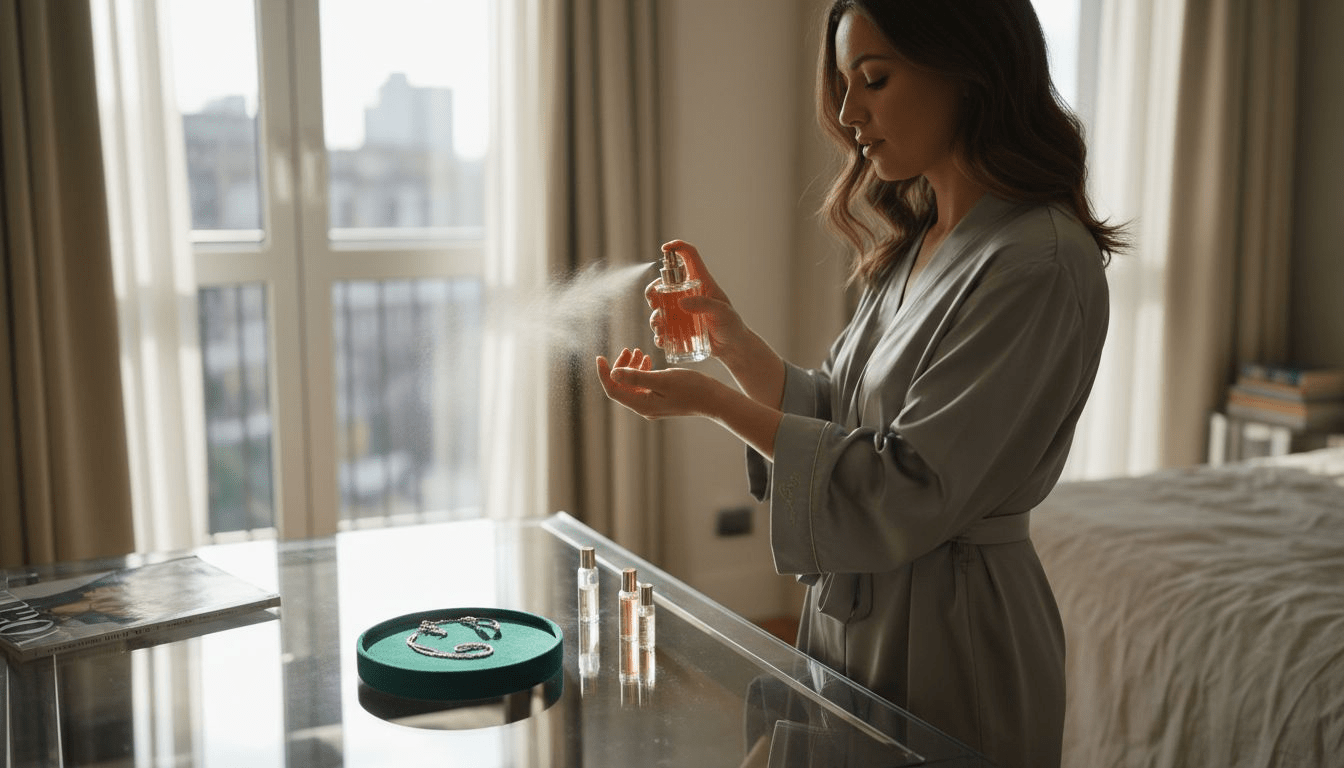
What Makes Perfume Last Longer: Expert UK Tips
For many fragrance lovers across the United Kingdom, nothing is more disappointing than watching a coveted scent fade before midday. The true secret behind long-lasting perfume lies not in price or label, but in the careful science of formulation and application. By understanding the vital role of molecular weight, fixative ingredients, and individual skin chemistry, you can unlock fragrance persistence that truly maximises your investment.
Table of Contents
- Perfume Longevity Defined And Common Myths
- Different Perfume Types And Longevity Factors
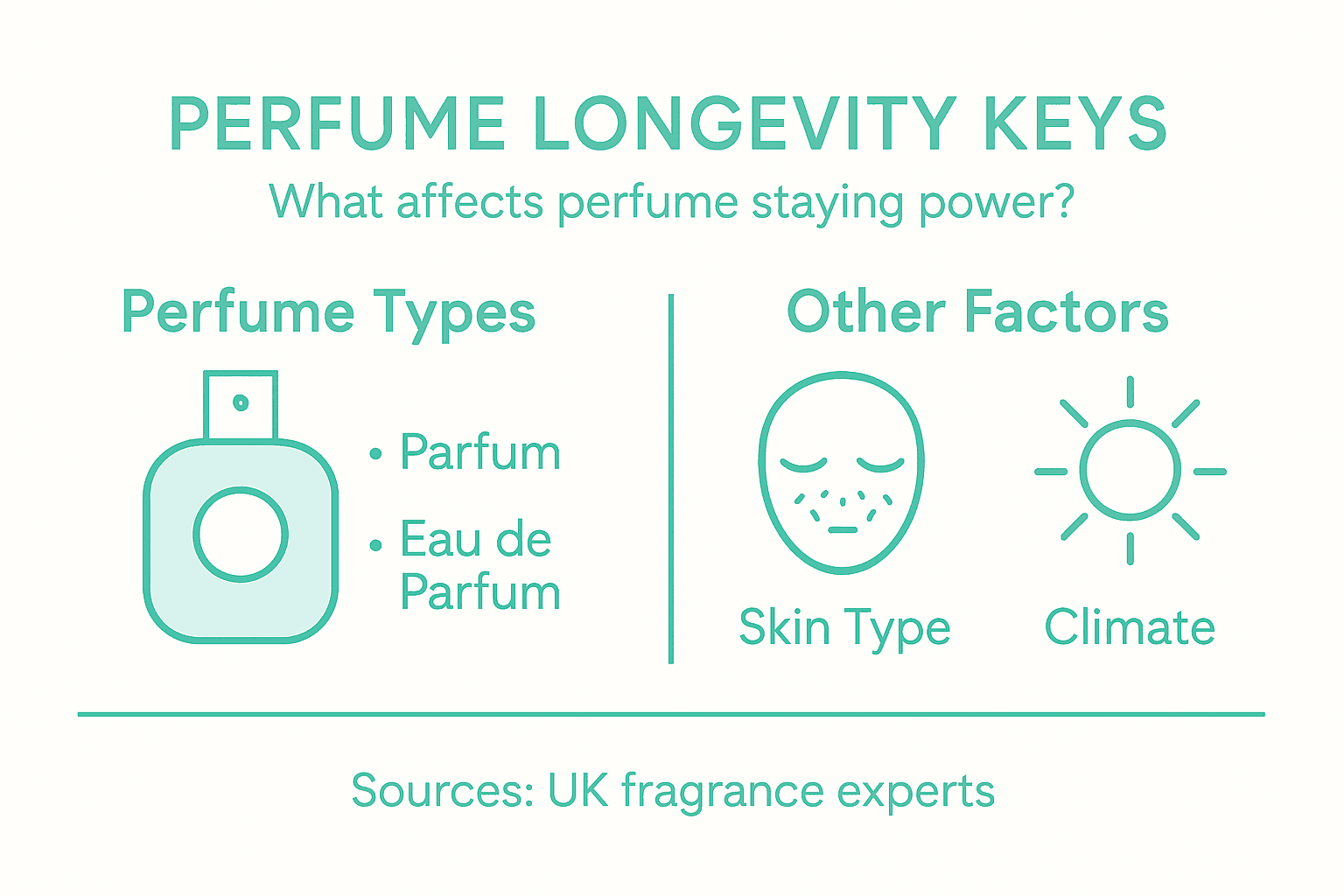
- Role Of Skin Chemistry And Climate In Longevity
- Best Application Techniques For Staying Power
- Common Mistakes That Shorten Perfume Life
Key Takeaways
| Point | Details |
|---|---|
| Perfume Longevity Factors | The longevity of a perfume depends on its molecular composition, concentration of essential oils, and individual skin chemistry, not just price or brand. |
| Perfume Types and Their Durations | Different types of perfume have varying oil concentrations, directly affecting their staying power, with Parfum lasting the longest. |
| Environmental and Personal Effects | Factors like skin type and climate can significantly influence how long a fragrance lasts, requiring tailored application strategies. |
| Storage and Application Practices | Proper storage in cool, dark places and specific application techniques can greatly extend the life and quality of a fragrance. |
Perfume Longevity Defined and Common Myths
Perfume longevity represents the duration a fragrance remains detectable on skin after initial application. Understanding this complex phenomenon involves exploring scientific principles beyond simple marketing claims. Fragrance persistence depends on multiple intricate factors that determine how long a scent will effectively linger.
Contrary to popular belief, perfume longevity is not exclusively determined by price or brand prestige. The scientific composition plays a far more critical role in a fragrance’s staying power. Key elements influencing scent persistence include:
- Molecular weight of fragrance compounds
- Concentration of essential oils
- Presence of specialised fixative ingredients
- Individual skin chemistry
- Environmental temperature and humidity
Many consumers mistakenly assume that expensive perfumes automatically last longer. However, research demonstrates that strategic formulation matters significantly more than price point. The balance of top, middle, and base notes contributes dramatically to a fragrance’s overall longevity.
Perfume longevity is a precise scientific art, not merely a matter of brand reputation or cost.
Base notes, typically comprised of heavier molecular compounds like woody or musky elements, provide the most enduring scent profile. These deeper fragrance molecules attach more effectively to skin proteins, ensuring a prolonged aromatic experience.
Pro tip: Store your perfumes in cool, dark environments to preserve their molecular integrity and extend potential longevity.
Different Perfume Types and Longevity Factors
Perfume concentration plays a pivotal role in determining how long a fragrance will last on the skin. Perfume types vary dramatically in their longevity, with each category offering a unique aromatic experience and duration. Understanding these variations helps consumers make more informed purchasing decisions.
The primary perfume types, ranked from highest to lowest concentration, include:
- Parfum/Extrait de Parfum (20-40% fragrance oils)
- Eau de Parfum (15-20% fragrance oils)
- Eau de Toilette (5-15% fragrance oils)
- Eau de Cologne (2-4% fragrance oils)
- Eau Fraiche (1-3% fragrance oils)
Each perfume type offers a different intensity and staying power. Parfum, with its high concentration of essential oils, provides the most enduring scent, often lasting 6-8 hours or more. Eau de Parfum typically maintains its presence for 4-5 hours, while Eau de Toilette generally provides 2-3 hours of noticeable fragrance.
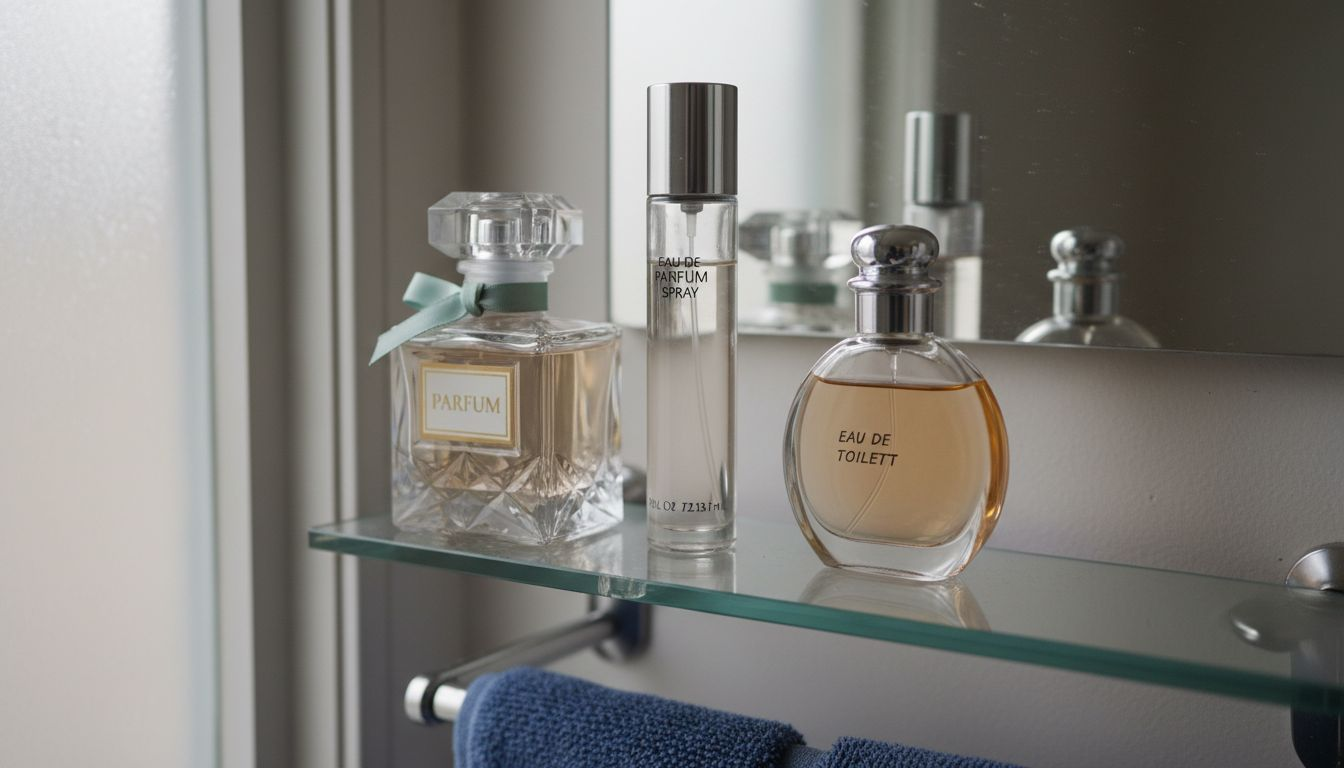
Here is a comparison of perfume types based on oil concentration and typical longevity:
| Perfume Type | Oil Concentration | Typical Longevity |
|---|---|---|
| Parfum/Extrait | 20–40% | 6–8 hours or longer |
| Eau de Parfum | 15–20% | 4–5 hours |
| Eau de Toilette | 5–15% | 2–3 hours |
| Eau de Cologne | 2–4% | 1–2 hours |
| Eau Fraiche | 1–3% | Under 2 hours |
The molecular composition of a perfume is more critical to its longevity than its price tag.
Chemical composition significantly influences a fragrance’s persistence. Base notes, which are heavier molecular compounds like sandalwood, vanilla, or musk, anchor the scent and provide the most prolonged aromatic experience. These deeper molecules attach more effectively to skin proteins, ensuring a more sustained fragrance profile.
Pro tip: Layer your fragrance by using matching body lotion or applying petroleum jelly to pulse points before spraying to enhance and extend scent duration.
Role of Skin Chemistry and Climate in Longevity
Unique skin chemistry dramatically influences perfume performance, creating a personalised fragrance experience that goes far beyond generic application techniques. Each individual’s biological makeup acts like an invisible perfume amplifier, transforming scent molecules in unexpected and fascinating ways.
Critical factors affecting perfume longevity include:
- pH levels of individual skin
- Skin’s natural moisture content
- Individual body temperature
- Skin’s oil production
- Overall hydration levels
- Specific genetic factors
The United Kingdom’s temperate climate presents unique challenges for fragrance enthusiasts. Cooler temperatures typically slow fragrance evaporation, allowing base notes to develop more gradually and maintain their complexity. Conversely, warmer days accelerate molecular breakdown, causing scents to dissipate more rapidly.
Perfume is a scientific dance between personal biology and environmental conditions.
Oily skin types tend to retain fragrances longer due to increased molecular adhesion. The natural oils act as a fixative, helping fragrance compounds bind more effectively and extend their perceptible duration. Individuals with drier skin might experience shorter scent lifespans, as the fragrance molecules have less biochemical infrastructure to attach themselves.
Pro tip: Moisturise your skin thoroughly before applying perfume to create an optimal molecular foundation that enhances fragrance retention.
The following table summarises how different environmental and personal factors affect perfume performance:
| Factor | Effect on Longevity | Suggested Adjustment |
|---|---|---|
| Oily skin | Prolongs scent | Use lighter perfumes if desired |
| Dry skin | Shortens scent | Moisturise before application |
| Warm climate | Accelerates evaporation | Apply more frequently |
| Cool climate | Extends scent development | Choose rich base notes |
| High humidity | Slows down evaporation | Lighter scents may suffice |
Best Application Techniques for Staying Power
Maximising perfume longevity requires more than simply spraying the fragrance. Strategic application techniques can dramatically extend the duration and intensity of your chosen scent, transforming a fleeting moment into a lasting sensory experience.
Key application strategies include:
- Moisturise skin before spraying
- Target pulse points for optimal diffusion
- Avoid rubbing fragrance after application
- Layer complementary scented products
- Apply to warm body areas
- Maintain appropriate spray distance
Pulse points represent the most effective zones for perfume application. These areas generate consistent warmth, helping to slowly release fragrance molecules throughout the day. Key pulse points include the wrists, neck, behind ears, inside elbows, and chest region. The natural body heat from these locations acts as a gentle molecular diffuser, gradually unveiling the fragrance’s complex notes.
Perfume application is an art form that balances science and personal expression.
Environmental considerations also play a crucial role in application. Humidity, temperature, and skin condition can significantly impact how a fragrance develops and persists. In the United Kingdom’s variable climate, understanding these nuanced interactions becomes essential for maintaining a consistent aromatic profile.
Pro tip: Store your perfume in a cool, dark environment and apply to well-moisturised skin to maximise fragrance retention and prevent molecular degradation.
Common Mistakes That Shorten Perfume Life
Perfume storage and application mistakes can dramatically reduce a fragrance’s quality and longevity. Many enthusiasts unknowingly compromise their precious scents through seemingly harmless daily practices that accelerate molecular breakdown and diminish aromatic complexity.
Common perfume preservation errors include:
- Storing perfumes in direct sunlight
- Keeping fragrances in humid bathrooms
- Exposing bottles to extreme temperatures
- Frequently shaking perfume bottles
- Using expired or oxidised fragrances
- Applying perfume to dry, unmoisteurised skin
- Rubbing wrists together after application
Temperature fluctuations represent a significant threat to fragrance integrity. Perfumes are delicate molecular compositions that can rapidly degrade when exposed to heat, light, or dramatic environmental changes. Ultraviolet rays can alter chemical structures, causing premature oxidation and fundamental changes to the scent’s original profile.
Perfume is a precision instrument, not a robust household product.
Many fragrance enthusiasts inadvertently damage their perfumes through improper handling. Constant exposure to air, frequent temperature shifts, and incorrect storage can transform a once-exquisite scent into a diminished, unrecognisable version of its original character. Protecting these liquid artworks requires mindful, strategic preservation techniques.
Pro tip: Invest in a dedicated perfume storage container or drawer, keeping your fragrances consistently cool, dark, and away from environmental fluctuations.
Unlock the Secret to Long-Lasting Fragrance with AlexandriaUK
Struggling to make your perfume last through the unpredictable British climate or unsure how skin chemistry affects your scent’s staying power Find expertly crafted fragrances and dupes designed with quality and longevity in mind at AlexandriaUK. Discover perfumes that feature balanced base notes and fixatives to ensure your favourite scent endures the day Keeping your scent fresh is easier when you shop from quality-focused collections tailored to your needs
Ready to experience fragrances that truly last Visit AlexandriaUK now and explore carefully selected perfumes Concentrate on quality that honours your unique skin chemistry and the nuances of climate Choose your next signature scent today and transform your fragrance ritual with products designed for lasting impact
Frequently Asked Questions
What factors influence perfume longevity?
Perfume longevity is influenced by several factors, including the molecular weight of fragrance compounds, the concentration of essential oils, presence of fixative ingredients, individual skin chemistry, and environmental conditions such as temperature and humidity.
How does skin chemistry affect how long a perfume lasts?
Individual skin chemistry plays a crucial role in perfume performance. Factors like pH levels, skin moisture, body temperature, and oil production can either prolong or shorten the fragrance duration, as oily skin tends to retain scents better than dry skin.
What are the different types of perfume and how long do they typically last?
Perfume types vary in oil concentration and longevity: Parfum lasts 6-8 hours, Eau de Parfum lasts 4-5 hours, Eau de Toilette lasts 2-3 hours, Eau de Cologne lasts 1-2 hours, and Eau Fraiche lasts under 2 hours. Higher oil concentrations generally provide longer-lasting scents.
Are there application techniques to help perfume last longer?
Yes, strategic application techniques, such as moisturising the skin beforehand, targeting pulse points, avoiding rubbing the fragrance after application, layering with matching scented products, and maintaining an appropriate spray distance can significantly enhance fragrance longevity.