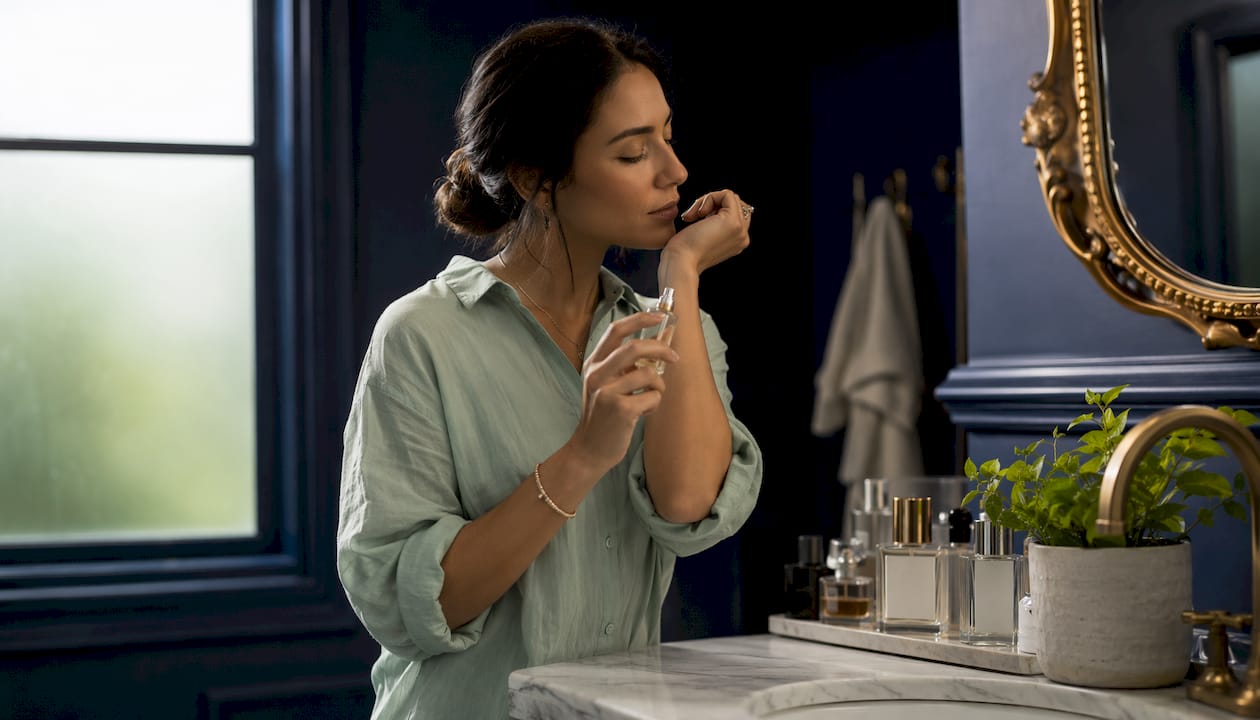
How to find your signature fragrance: an expert guide
TL;DR:
- Testing multiple scents on your skin over a full day reveals your true fragrance match.
- Using a discovery set and recording your emotional responses helps you find your signature scent confidently.
The single fastest way to find your signature fragrance is to test two or three scents from different olfactive families on your skin, then wear each one for a full day before deciding. Skip the bottle-sniffing at the counter. Your skin chemistry, the dry-down, and how a scent makes you feel six hours after application tell you far more than any top note ever will. If you want an immediate next step, order the Alexandria Discovery Set and begin testing at home tonight.
- The fastest route: order a curated discovery set covering multiple families
- Test on skin, not on blotters alone, and wait for the dry-down
- Record your emotional response, not just whether you “like” the smell
- Limit yourself to two or three scents per session to avoid olfactory fatigue
- Commit to wearing each candidate for a full day before ruling it out
Table of Contents
- What should you do in the next five minutes to start?
- Which fragrance family suits you?
- How to test a fragrance properly: the full protocol
- What are the best ways to trial scents in the UK?
- Where can you try and buy fragrances in the UK?
- Why experts say to trust your feelings over the ingredient list
- How do you turn test results into a final decision?
- How long does it take, and what does it cost in the UK?
- Key takeaways
- Why your signature scent is worth the search
- The Alexandriauk Discovery Set: your clearest next step
- Sources and further reading
What should you do in the next five minutes to start?
A short, structured checklist cuts through the paralysis of too many options. Work through these steps in order.
- Wash your wrists (1 min). Neutral, clean skin gives the most accurate read. Residue from hand cream or another fragrance will skew the result.
- Identify one or two families you already love (2 min). Think about perfumes you have worn or admired. Are they fresh and citrus-bright, warmly woody, softly floral, or richly amber? Pinning down even a rough preference narrows thousands of options to a manageable shortlist. A fragrance quiz or digital scent advisor can accelerate this step.
- Apply one scent to each wrist (1 min). Two is the maximum per session. More than that and your nose loses the ability to distinguish them accurately.
- Note your immediate reaction (30 sec). Write one word: warm, clean, sweet, sharp, comforting. This is your top-note impression, and it matters less than you think, but it is still worth recording.
- Set a timer for four hours. The dry-down is where a fragrance reveals its true character. Come back then and record how it makes you feel.
- Open your fragrance journal. Even a notes app on your phone works. Log the scent name, family, time of application, and that one-word first impression.
Pro Tip: Smell the crook of your elbow, not your wrist, if you have recently applied hand sanitiser. The skin there is cleaner and gives a truer read of the fragrance’s opening.
Which fragrance family suits you?
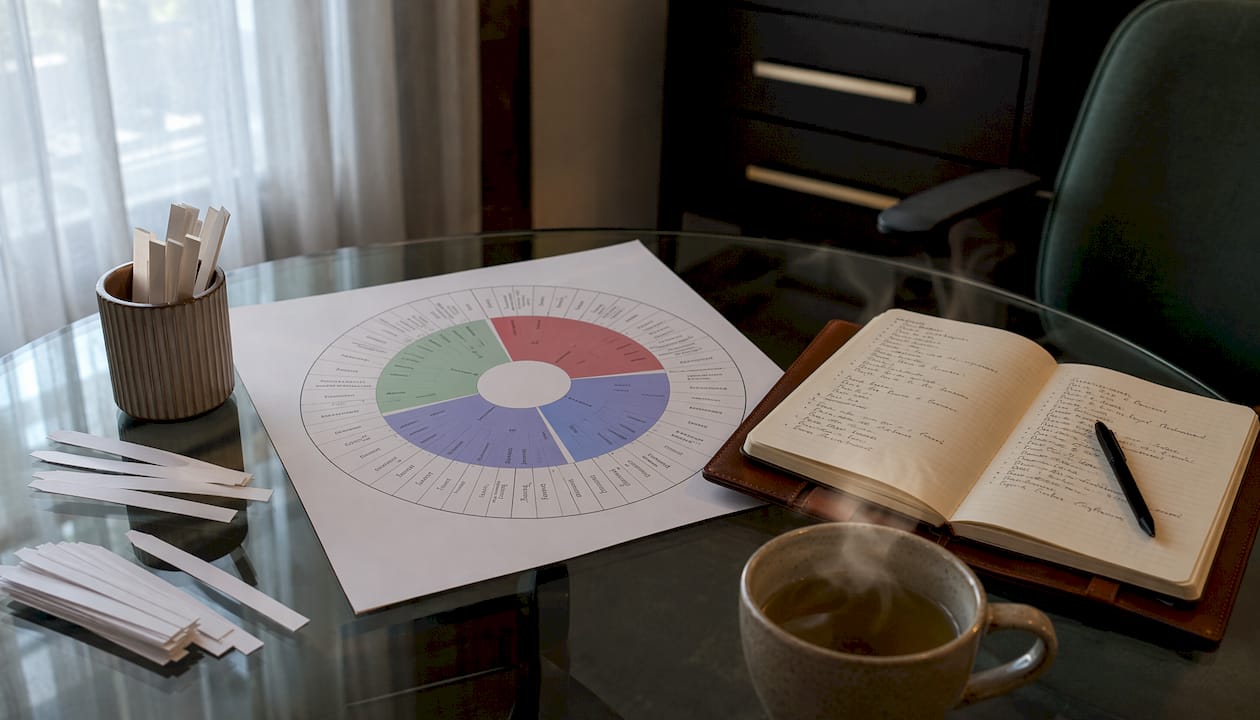
Michael Edwards’ fragrance wheel organises the world of perfumery into four primary families, each with distinct subfamilies. Understanding where your instincts already sit saves you from testing scents that will never feel like “you.”
| Family | Character & mood | Best season/occasion (UK) | Start here if you… |
|---|---|---|---|
| Fresh / Citrus | Light, invigorating, clean; bergamot, lemon, grapefruit | Spring and summer; office, daytime | Prefer clean, unobtrusive scents |
| Floral | Romantic, feminine, luminous; rose, jasmine, lily of the valley | Year-round; versatile | Gravitate toward classic, elegant perfumes |
| Woody / Earthy | Warm, grounding, sophisticated; sandalwood, vetiver, cedar | Autumn and winter; evening, formal | Want depth and longevity on cold days |
| Amber / Gourmand | Rich, sensual, enveloping; vanilla, benzoin, tonka bean | Autumn and winter; evening, intimate | Love warmth and a luscious, hedonistic trail |
In the UK’s cooler, damper climate, fresh and floral accords can feel muted outdoors from October through March, while woody and amber profiles tend to bloom beautifully in the cold. Conversely, a rich gourmand can feel stifling on a warm July afternoon. Matching family to season is not a rigid rule, but it is a practical starting point when you are narrowing your shortlist.
How to test a fragrance properly: the full protocol
Reliable evaluation requires patience. Most people make their decision at the wrong moment, judging a fragrance on its top notes alone, which dissipate within fifteen minutes. The heart and base notes are what you will actually live with.
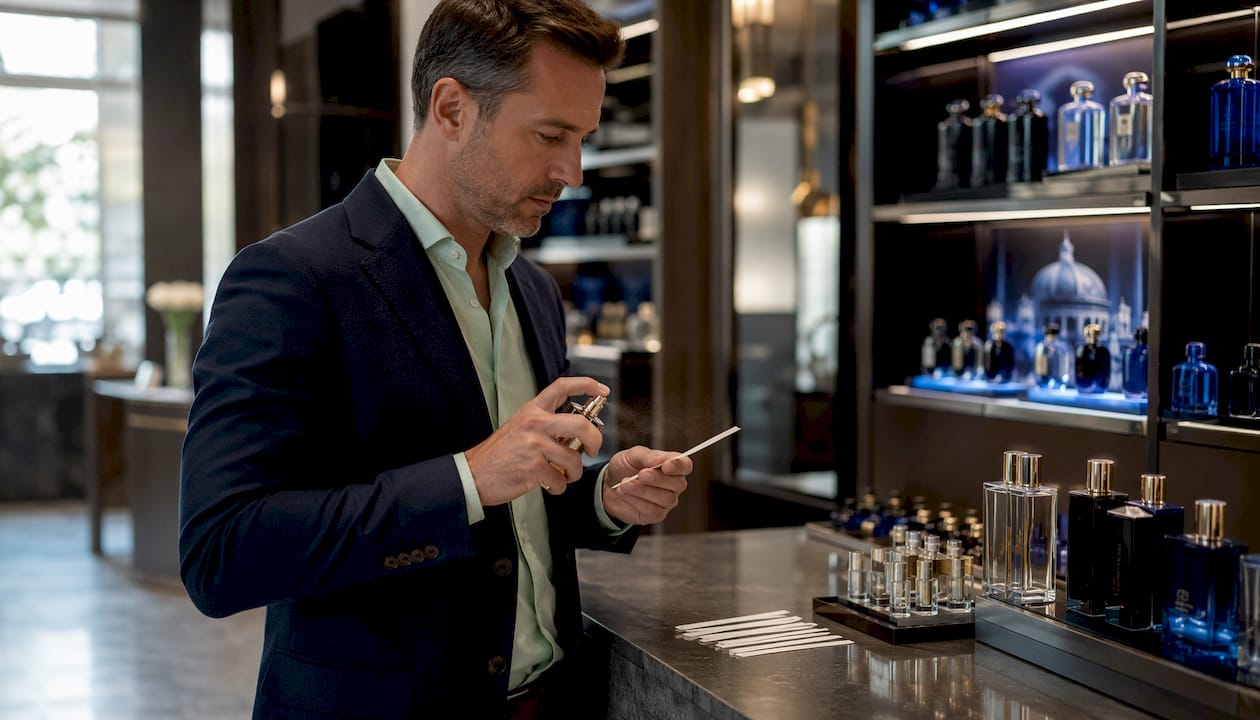
- Begin with blotters. Spray or dab one fragrance per blotter. Wave it gently and inhale from a short distance. This gives you a rough sense of the opening accord and helps you eliminate obvious mismatches before committing skin space.
- Apply to clean, moisturised skin. The inner wrist and the inside of the elbow are ideal. Avoid rubbing the wrists together; this breaks down the molecular structure of the top notes and distorts the opening.
- Wait fifteen minutes. The top notes will have largely evaporated. This is the heart of the fragrance, and it is far more revealing.
- Wait a further two to four hours. The base notes, the woody resins, musks, and ambers, are now dominant. This is the impression you leave on others and the one that lingers on your skin and clothes.
- Apply the 3:1:1 rule. For every three blotter tests, allow yourself one skin test, and commit to one full-day wear before making any decision. This ratio keeps your nose fresh and your evaluation rigorous.
- Use the bungee method for shortlisting. Apply a scent, go about your day, and check in at the one-hour, four-hour, and eight-hour marks. If you find yourself reaching to smell your wrist with pleasure each time, that is a strong signal of genuine affinity.
Pro Tip: If your nose becomes fatigued mid-session, step outside for two minutes of fresh air, or smell the inside of your own forearm. Contrary to popular belief, coffee beans can mislead some noses rather than reset them. Fresh air is the most reliable palate cleanser.
For a deeper look at how to compare fragrances systematically, including longevity scoring and sillage assessment, the Alexandriauk fragrance academy has a dedicated guide.
What are the best ways to trial scents in the UK?
| Method | Pros | Cons | Best for |
|---|---|---|---|
| Discovery set | Multiple scents, curated, test at home over days | Upfront cost; limited to brand’s range | Thorough, unhurried evaluation |
| Mailed samples / decants | Broad range, low cost per vial | Sourcing takes time; quality varies | Exploring niche or hard-to-find houses |
| Department-store testers | Free; immediate; expert staff on hand | Noisy environment; olfactory fatigue risk; pressure to buy | Initial shortlisting only |
| Brand boutique appointment | Focused, expert-led, unhurried | Not all brands offer this; travel required | Narrowing a shortlist of two or three |
A few practical notes for UK shoppers:
- Request sample vials at brand counters rather than buying blind. Most counters will provide two or three vials on request, particularly at quieter times mid-week.
- Decant services, available through various online fragrance communities, let you order 2ml–10ml portions of full-bottle fragrances. This is especially useful for testing expensive niche releases before committing to a full bottle.
- Wear each sample for a minimum of two full days before ruling it out. Skin chemistry, diet, and even stress levels affect how a fragrance performs, so a single wearing rarely gives the full picture.
Pro Tip: Visit department-store fragrance halls on a weekday morning, before the crowds arrive. You will get more time with the sales associates, a quieter environment for your nose, and no queue at the counter.
Where can you try and buy fragrances in the UK?
The UK has a genuinely rich fragrance infrastructure, from the grand halls of department stores to independent boutiques and online sampling services.
- Department stores such as Selfridges, Liberty, and John Lewis carry broad selections across designer and niche houses. Their fragrance halls are ideal for initial shortlisting, particularly if you already have a family preference in mind.
- Independent boutiques in cities like London, Edinburgh, and Manchester often stock niche and artisan houses unavailable in mainstream retail. Staff tend to be more knowledgeable and less sales-driven.
- Online discovery sets and sample clubs allow you to test at home, at your own pace, without the sensory noise of a busy shop floor. This is increasingly the preferred route for those who find in-store testing overwhelming.
- Brand websites frequently offer their own discovery sets, often with a credit towards a full bottle if you decide to purchase. Alexandriauk’s Discovery Set follows this model.
- Fragrance communities on platforms such as Reddit’s r/fragrance and dedicated UK forums are excellent for peer recommendations and sourcing decants from trusted sellers.
For guidance on how seasonal fragrance choices shift across the UK’s climate, the Alexandriauk academy covers this in detail.
Why experts say to trust your feelings over the ingredient list
The most consistent advice from perfumers and fragrance specialists is to lead with emotion, not analysis. As Brianna Arps, founder of Moodeaux, has noted, many people choose fragrances by ingredient lists rather than emotional response, which is precisely why they end up with bottles they never reach for.
Perfumer Susan Wai Hnin’s guidance reinforces this: choose scents that align with where you spend time, opting for cleaner profiles in office environments and warmer, richer accords for cold evenings or intimate occasions. A fragrance that smells extraordinary in a boutique but feels wrong at your desk on a Tuesday morning will never become a true signature.
Pro Tip: Ask yourself one question after wearing a scent for a full day: “Did I think about this fragrance today, or did I forget I was wearing it?” A genuine signature draws you back to your wrist with pleasure. Indifference, even towards a technically beautiful scent, is a clear signal to keep searching.
For a deeper exploration of signature fragrance selection and the psychology of emotional fit, the Alexandriauk academy offers a dedicated guide.
How do you turn test results into a final decision?
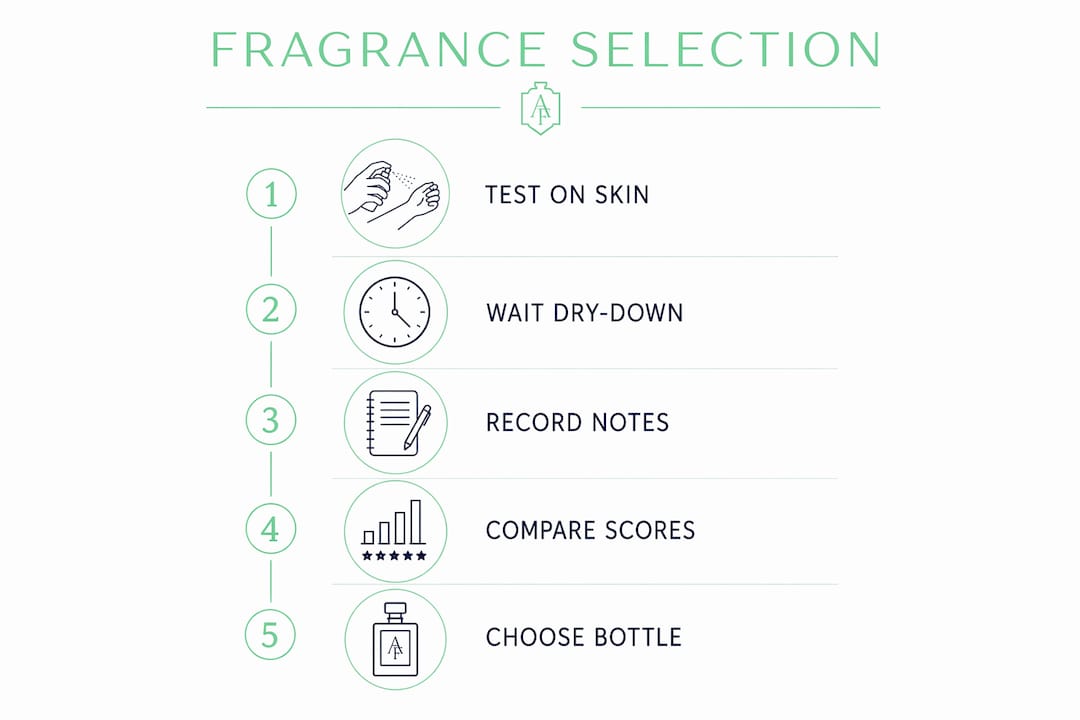
Once you have worn a candidate scent for two or more full days, a short decision framework helps you commit or move on.
- Emotional fit. Does the fragrance feel like an extension of your personality, or does it feel like a costume? Trust this instinct above all else.
- Dry-down quality. Are the base notes as appealing as the opening? A scent that disappoints after four hours will frustrate you daily.
- Longevity and projection. Does it last long enough for your typical day? Does it project at the level you prefer, present but not overpowering?
- Context fit. Does it suit your most common environments, your office, your commute, your social life? Perfumer Susan Wai Hnin’s advice applies here: practical fit often beats theoretical preference.
- The wardrobe question. If no single scent scores perfectly across all contexts, consider building a small fragrance wardrobe. Perfumer Jerome Epinette notes that wearing multiple scents by mood or occasion is entirely valid and often preferred by experienced enthusiasts.
If a scent scores well on all five points, buy the full bottle. If it scores well on three or four, order another sample and wear it a third time. If it scores below three, move on without sentiment.
How long does it take, and what does it cost in the UK?
Setting realistic expectations prevents rushed decisions and wasted money on full bottles you will not wear.
| Path | Timeline | Typical UK cost |
|---|---|---|
| Low spend | A few weeks using department-store testers and free samples | Low cost |
| Mid spend | Several weeks testing a discovery set with a few decants | Moderate cost |
| Higher spend | Over a month testing multiple discovery sets and attending boutiques | Higher cost |
The mid-spend path, a curated discovery set supplemented by one or two decants from niche houses, gives the best balance of breadth and depth for most people. Test each scent for a minimum of two full days, which means a set of five fragrances requires at least ten days of active testing before you have enough data to decide. Factor in rest days between sessions to keep your nose calibrated. Understanding how personal skin chemistry affects fragrance performance is also worth reading before you begin, as it explains why the same scent can smell markedly different from one person to the next.
Key takeaways
The most reliable way to find your signature fragrance is to test on skin, wait for the full dry-down, and record your emotional response across multiple wearings before committing to a full bottle.
| Point | Details |
|---|---|
| Test on skin, not blotters | Blotters reveal top notes only; skin testing over a full day shows the true dry-down and longevity. |
| Limit sessions to two scents | More than two scents per session causes olfactory fatigue and unreliable impressions. |
| Use a fragrance journal | Log scent name, family, longevity, projection, and emotional tag after each wearing for comparable data. |
| Allow two days per candidate | Skin chemistry, diet, and environment all affect performance; one wearing is rarely enough to decide. |
| Alexandriauk Discovery Set | A curated starting point for home testing across multiple families, with a clear path to a full-bottle purchase. |
Why your signature scent is worth the search
There is a particular kind of confidence that comes from wearing a fragrance that is unmistakably, unreservedly yours. Not the confidence of a compliment received, though those come, but the quieter assurance of knowing that the invisible trail you leave in a room is a deliberate expression of who you are. A signature scent becomes part of your presence before you speak.
What most guides understate is that this process is not a one-time event. Skin changes, life changes, and the scent that felt like home at twenty-five may feel like a stranger at thirty-five. A fragrance wardrobe, rotating two or three beloved scents by season or occasion, is not a failure to commit. It is, as the most experienced enthusiasts will tell you, the more sophisticated approach. The psychology behind scent choices is worth understanding if you want to go deeper into why certain accords resonate and others repel.
The search itself, the testing, the journalling, the occasional wrong turn into a cloud of something too sweet or too sharp, is part of developing a genuinely educated nose. Treat it as a pleasure, not a task.
The Alexandriauk Discovery Set: your clearest next step
For anyone serious about finding their signature scent without the guesswork of blind full-bottle purchases, the Alexandriauk Discovery Set is the most direct route from curiosity to confidence.
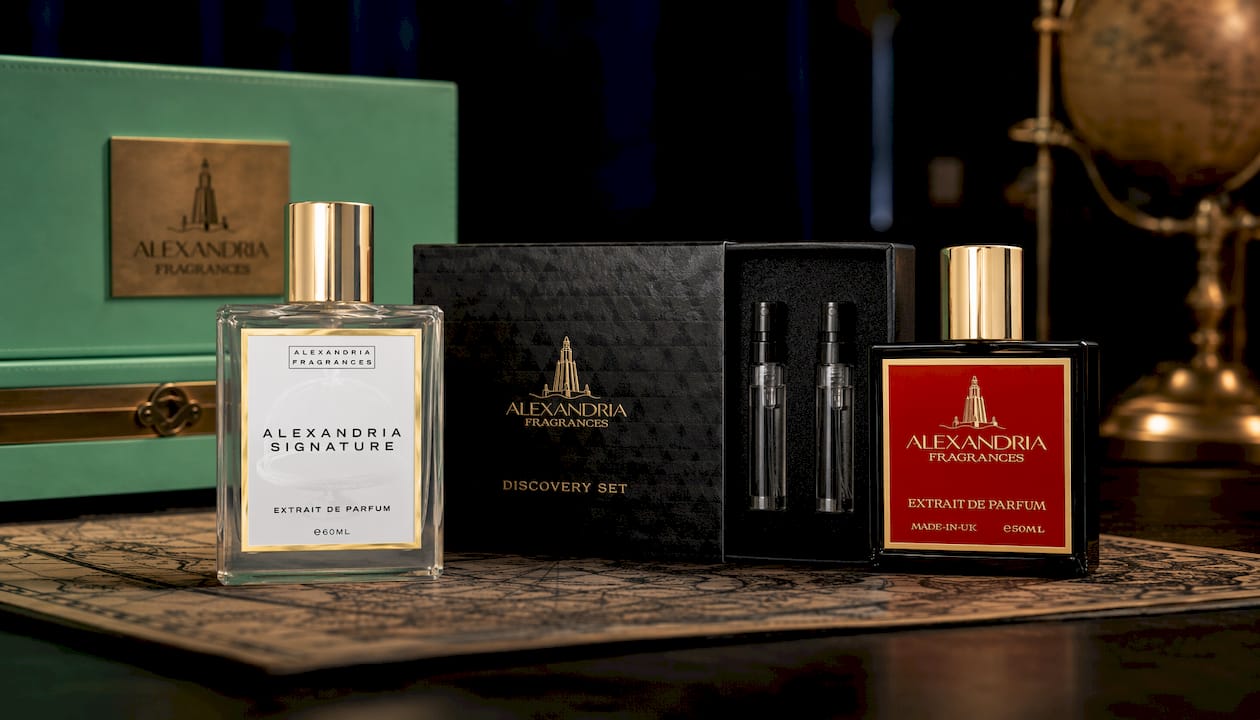
The set delivers a curated selection of Alexandriauk’s finest compositions, spanning fresh, woody, and amber-gourmand families, in generous sample sizes designed for proper at-home testing. Each vial gives you enough product to apply, wear through a full dry-down, and return to the next day for a second impression. That is exactly the protocol this guide recommends. For those drawn to something more distinctive, the HAFEZ Exclusive Original Creation offers a singular, artisan-crafted alternative worth exploring alongside the set. And when you are ready to commit to a full bottle, the Alexandria Signature represents the quintessence of what Alexandriauk does: quality-led, inspired perfumery at an honest price. Order the Discovery Set, follow the testing protocol in this guide, and you will have a confident, well-reasoned answer to the question of what your signature fragrance is within a fortnight.
Sources and further reading
For those who want to go deeper, the following resources informed this guide and offer authoritative next reads.
- Fragrance Discovery Tips: Find Your Signature Scent Easily — Alexandriauk’s pillar guide to early discovery and scent exploration (mandatory reading alongside this article)
- How to find your signature scent — Refinery29 — expert interviews with perfumers and brand founders on the emotion-first approach
- A complete guide to finding your signature scent — Elle UK — practical step-by-step guidance including fragrance journal templates
- How to find your signature scent — Elle — detailed breakdown of top, heart, and base note timing
- Fragrance wheel — Wikipedia — Michael Edwards’ family classification system, the standard reference for olfactive mapping
- Fragnatique fragrance families guide — interactive quiz and family-scoring tool for accelerating initial discovery