

Why your perfume smells different: the science of personal scent
TL;DR:
- Personal skin chemistry, including pH, sebum, microbiome, and temperature, influences fragrance development.
- Lifestyle factors like hormones, diet, medication, and skincare routines can alter how scents smell over time.
- Testing fragrances on skin and applying proper application techniques helps find scents that suit individual chemistry.
Have you ever spritzed on a fragrance that smelled utterly luminous on a friend, only to find it falls flat or turns oddly sharp on your own skin? You are not imagining it, and the bottle is not to blame. The same perfume genuinely does smell different from person to person, and the reasons behind this fascinating phenomenon reach far deeper than most people expect. From the invisible ecosystem living on your skin to the hormones coursing through your body, your personal chemistry is quietly co-authoring every fragrance you wear. This guide unpacks the science, the lifestyle factors, and the practical strategies to help you find and wear scent with genuine confidence.
Table of Contents
- The science: why scent changes from skin to skin
- Lifestyle and changes: why the same perfume can suddenly smell ‘off’
- How to test and choose perfumes for your body chemistry
- Maximising longevity: how to help your perfume perform on you
- A personal scent journey: beyond the rules
- Find your signature scent with us
- Frequently asked questions
Key Takeaways
| Point | Details |
|---|---|
| Body chemistry matters | Your unique skin oils, pH, and microbiome all shape how perfume smells on you. |
| Lifestyle can alter scent | Changes in hormones, diet, or skincare can make the same perfume smell new or unusual. |
| Test perfumes properly | Always try fragrances on your skin for at least 30 minutes to experience the real scent. |
| Practical tips help | Small changes, like moisturising skin or choosing the right concentration, boost fragrance performance. |
The science: why scent changes from skin to skin
Perfume is not a fixed, static thing. The moment it meets your skin, it begins a conversation with your body’s unique biology, and the outcome of that conversation is entirely your own.
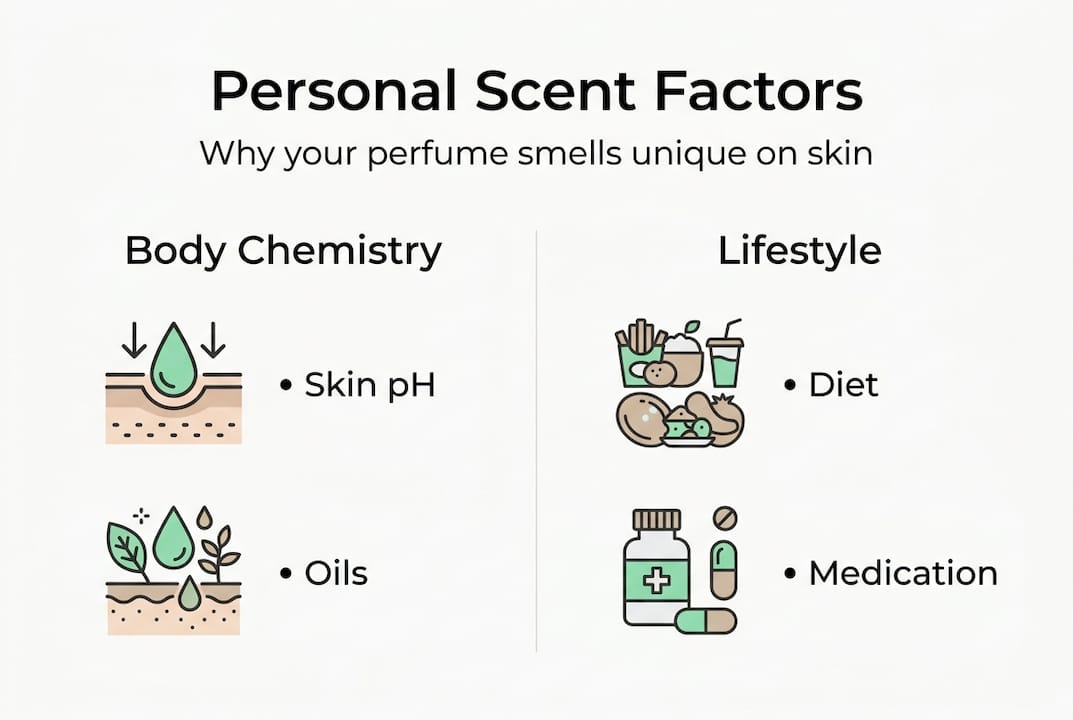
At the most fundamental level, your skin’s surface chemistry plays a decisive role. The skin’s natural pH, which typically sits between 4.5 and 6.5, influences how fragrance molecules bind and evolve. Sebum, the skin’s natural oil, acts as a carrier that can either amplify or muffle certain accords. A person with oilier skin often finds that fragrances last longer and project more generously, because the oils provide a rich medium for scent molecules to cling to.
Then there is body temperature. Warmer skin intensifies base notes like musk and vanilla, accelerating evaporation and projection, whilst cooler skin slows the entire development cycle. This is why the same fragrance can smell boldly hedonistic on someone who runs warm and quietly restrained on another person.
The structure of a fragrance itself matters enormously here. Top notes, those bright, fleeting impressions of citrus or green herbs, evaporate within minutes regardless of skin type. Heart notes, the floral or spicy core of a composition, linger for an hour or two. Base notes, the deep, resinous, woody foundations, are where personal chemistry exerts its greatest influence. For practical guidance on coaxing the best from every layer, explore these long-lasting perfume tips.
Perhaps the most intriguing frontier in fragrance science is the skin microbiome. Emerging research suggests the microbiome may be a primary driver of how scent develops, potentially outweighing traditional explanations centred on pH and sebum, though direct empirical data remains limited. The trillions of microorganisms residing on your skin metabolise fragrance compounds in subtly individual ways, producing a scent signature that is genuinely yours alone.
| Factor | Effect on fragrance | Who it affects most |
|---|---|---|
| High skin pH | Amplifies sharp, sour notes | Oily or combination skin |
| Low skin pH | Softens and sweetens accords | Dry or sensitive skin |
| Warm body temperature | Boosts projection and base notes | Naturally warm-blooded individuals |
| Rich microbiome | Creates unique scent signature | Everyone, to varying degrees |
| High sebum production | Extends longevity significantly | Oily skin types |
“Your skin is not a neutral canvas. It is an active participant in every fragrance you wear, reshaping the composition from the first spray to the final dry-down.”
Key takeaways from the science:
- pH levels determine whether a fragrance reads as sharp or smooth
- Sebum acts as a natural fixative, extending or shortening wear time
- Temperature governs the speed and intensity of scent development
- Microbiome adds a layer of biological individuality that no bottle can replicate
Lifestyle and changes: why the same perfume can suddenly smell ‘off’
With the basics of scent science clear, it is essential to see how real-life factors, from hormones to soap, reshape your unique fragrance experience.
One of the most startling discoveries for many fragrance enthusiasts is that a beloved perfume can suddenly smell wrong, even though nothing about the bottle has changed. The culprit is almost always a shift in personal biology or daily habits.
Hormonal fluctuations are among the most powerful forces at play. Hormonal changes such as pregnancy or shifts across the menstrual cycle can alter skin chemistry so significantly that familiar fragrances smell unrecognisable. Many pregnant women report that perfumes they adored become nauseating overnight. This is not a matter of taste changing; it is biochemistry in action.
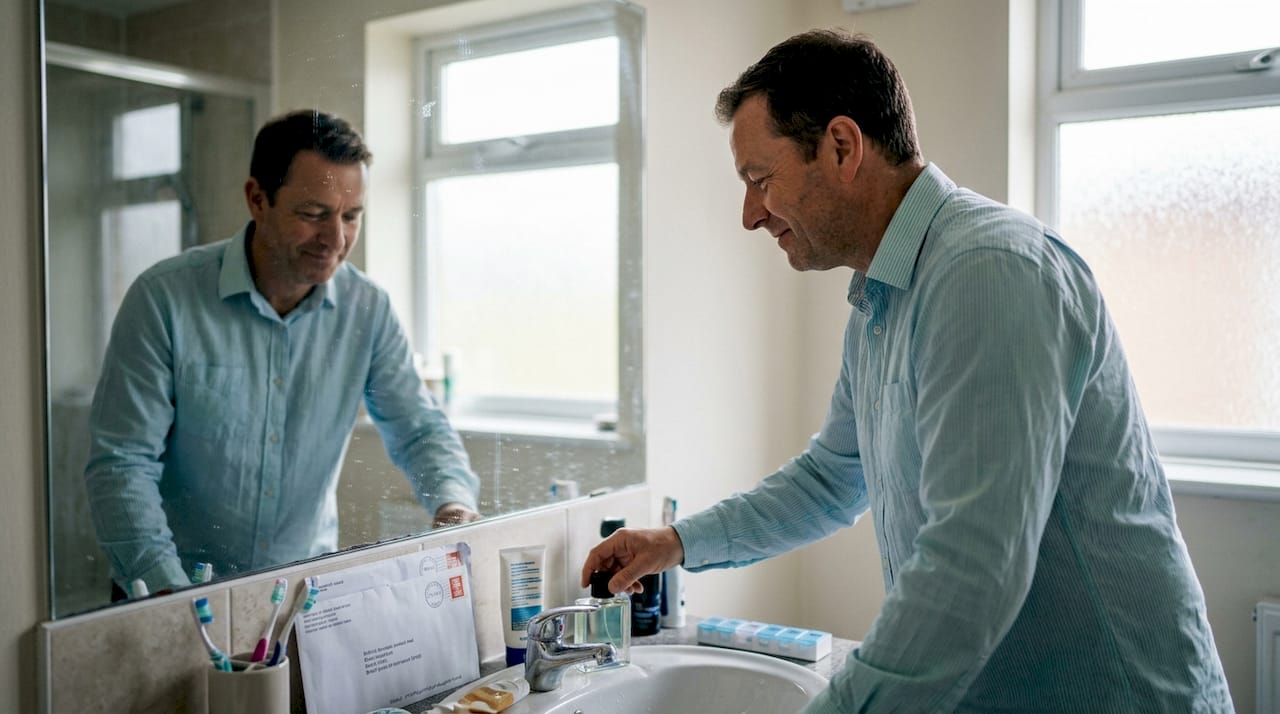
Diet has a subtler but real influence. Foods rich in sulphur compounds, such as garlic and onions, can alter the body’s natural odour, which in turn changes the backdrop against which a perfume performs. Spicy foods raise skin temperature temporarily, accelerating evaporation. A diet high in refined sugars can shift skin pH, nudging certain floral accords towards a cloying sweetness.
Medications are another overlooked variable. Antibiotics, antidepressants, and certain blood pressure treatments can alter perspiration chemistry, body temperature regulation, and even olfactory perception itself. If a fragrance you have worn for years suddenly smells different, a new prescription is worth considering as a cause.
Your skincare routine is equally influential. Switching to a new soap, body wash, or moisturiser introduces fresh molecules that interact directly with your fragrance. Heavily fragranced skincare products can clash with or compete against your perfume, creating an unintended accord that nobody designed. Before testing perfume on skin, always consider what else you have applied.
Pro Tip: If a favourite fragrance suddenly smells different, keep a brief note of any recent changes to your diet, medication, or skincare before assuming the perfume itself is the problem. The answer is almost always in your lifestyle, not the bottle.
Factors that can trigger sudden scent shifts:
- Pregnancy or hormonal contraceptive changes
- Introducing new antibiotics or long-term medications
- Switching soap, body wash, or moisturiser brand
- Significant dietary changes, particularly around sulphur-rich or spicy foods
- Seasonal shifts in body temperature and perspiration levels
How to test and choose perfumes for your body chemistry
Understanding why your perfume might not perform as expected, it is time to learn how best to test and select fragrances for your needs.
Choosing a perfume based on a strip of blotter paper is one of the most common and costly mistakes a fragrance enthusiast can make. Strips reveal a fragrance in isolation, stripped of the biological context that will ultimately define the experience.
Test perfumes on skin, not strips, and wait at least 30 minutes for full development before forming a judgement. The dry-down, that final stage where base notes settle into your skin, is where the true character of a fragrance reveals itself.
A practical testing process:
- Cleanse your skin before testing. Residual products can interfere with accurate scent assessment.
- Apply to pulse points, ideally the inner wrist or inner elbow, where warmth aids development.
- Wait 30 minutes minimum before evaluating. Resist the urge to sniff immediately after spraying.
- Assess in stages: note the opening, the heart after 20 minutes, and the base after an hour.
- Test no more than two fragrances at once to avoid olfactory fatigue.
Skin type should also guide your choice of concentration. Dry skin absorbs fragrance more rapidly, so an Eau de Parfum (EDP) with its higher concentration of aromatic compounds tends to perform better and last longer. Oily skin naturally extends longevity, meaning an Eau de Toilette (EDT) often provides perfectly satisfying wear without becoming overwhelming.
For moisturising for fragrance longevity, applying an unscented moisturiser before your fragrance creates a hydrated base that slows evaporation considerably.
| Skin type | Recommended concentration | Reason |
|---|---|---|
| Dry skin | EDP or Parfum | Higher oil content compensates for rapid absorption |
| Oily skin | EDT or EDC | Natural oils extend longevity without over-concentration |
| Combination skin | EDP | Balanced performance across zones |
| Sensitive skin | EDT or lighter | Reduces risk of irritation from high concentrations |
Pro Tip: If you are torn between two fragrances, wear each on a separate arm and go about your normal day. The one you keep wanting to smell again is the one that truly works with your chemistry.
Maximising longevity: how to help your perfume perform on you
Once you have found a scent that fits your chemistry, take the final step: make sure it truly sings on your skin by applying these expert strategies.
Even the finest fragrance can underperform if application technique is overlooked. The good news is that small adjustments to your routine can make a remarkable difference.
Apply to pulse points where body heat radiates most strongly: the inner wrists, the base of the throat, behind the ears, and the inner elbows. Warmer skin intensifies base notes and accelerates projection, so these warm zones become natural diffusers for your fragrance.
Key application strategies:
- Moisturise first: Apply an unscented body lotion before your fragrance. Hydrated skin holds scent molecules far more effectively than dry skin.
- Do not rub: Rubbing your wrists together after spraying crushes the top notes and distorts the opening accord. Simply allow the fragrance to settle.
- Layer thoughtfully: Using a matching body wash or lotion from the same fragrance house creates a seamless, longer-lasting scent experience.
- Spray, do not dab: Atomiser sprays distribute fragrance more evenly than dabbing from a stopper.
- Hair and clothing: Fragrance clings beautifully to hair and fabric, extending the experience, though be cautious with delicate or pale fabrics.
Storage matters more than most people realise. Heat, light, and humidity degrade fragrance molecules over time, altering the scent profile significantly. Store bottles away from windowsills and bathrooms. A cool, dark drawer or wardrobe shelf preserves the composition faithfully.
Pro Tip: In summer, apply fragrance immediately after a cool shower when pores are open and skin is slightly damp. The moisture locks in the scent and the cooler skin temperature slows evaporation, extending wear time noticeably.
For those wanting to explore further, these guides on how to make perfume last all day and how to extend perfume longevity offer deeper strategies tailored to different skin types and lifestyles.
A personal scent journey: beyond the rules
Stepping back, let us reframe the quest for the perfect scent with insights from long-time fragrance enthusiasts.
There is a tendency in fragrance culture to search for the objectively perfect perfume, the one that will smell magnificent on everyone, everywhere, always. That search is a beautiful distraction, but it is ultimately a fiction. Your skin is not a problem to be solved; it is the final ingredient in every fragrance you wear.
The most rewarding approach is one of genuine curiosity. Seasonal changes, life events, even a new relationship can shift how you perceive and project scent. A fragrance that felt wrong at 25 might feel like a second skin at 35. Embracing these shifts, rather than resisting them, transforms perfume from a product into a living, evolving expression of who you are right now.
Letting go of fragrance envy, that nagging feeling that a scent smells better on someone else, is genuinely liberating. Their skin is not superior; it is simply different. Your chemistry will do extraordinary things with a fragrance that might fall flat on them. Exploring perfume longevity explained can help you understand why certain compositions thrive on your skin whilst others fade, guiding you towards choices that truly resonate.
The joy is in the exploration. Every new fragrance is a small experiment, and every result, expected or surprising, teaches you something remarkable about yourself.
Find your signature scent with us
Ready to put this knowledge to work and discover fragrances that genuinely harmonise with your skin chemistry?
At Alexandria UK, we have curated a diverse collection of quality-led, inspired fragrances designed to offer that luxury scent experience at an accessible price. Whether your skin runs warm and bold or cool and restrained, our range spans accords and concentrations to suit every personal chemistry. Our fragrance guides and knowledgeable team are here to support your discovery process every step of the way. Explore the full Alexandria UK fragrance collection and use everything you have learned today to find the scent that is unmistakably, beautifully yours.
Frequently asked questions
Why does my perfume fade so quickly compared to others?
Perfume fading faster on your skin may be due to higher skin temperature, dryness, or your body’s natural oils accelerating evaporation. Applying an unscented moisturiser beforehand and choosing a higher concentration such as an EDP can significantly improve longevity.
Can my diet or medication really affect how I smell?
Yes. Certain foods and medications alter your skin’s chemistry, which interacts with perfume molecules and can shift the entire scent profile from the opening through to the dry-down.
Why does perfume smell different when I’m stressed or ill?
Stress and illness can raise body temperature and shift hormone levels, both of which alter how fragrance notes develop and how long they last on your skin.
How long should I wait to judge a new perfume on myself?
Wait at least 30 minutes after applying to skin so all layers can fully develop. Testing on skin, rather than a blotter strip, gives you the most accurate and honest impression of how a fragrance will truly perform for you.


