

The intrigue of dark scents in perfumery: a guide
TL;DR:
- Dark scents feature heavy base notes like oud, amber, and vanilla that create depth and longevity.
- They evoke mystery, seduction, and comfort, triggering curiosity and emotional responses.
- Trends show a rising popularity of dark gourmands and sacred accords, shifting these fragrances into mainstream.
Dark scents carry an undeserved reputation for being overwhelming or reserved for the bold few. In truth, these fragrances are among the most emotionally resonant and artistically complex creations in perfumery. Far from gothic or intimidating, they offer warmth, sensuality, and a depth that lighter profiles simply cannot achieve. Whether you are drawn to the smoky whisper of oud, the heady richness of amber, or the velvety comfort of vanilla laced with patchouli, dark scents speak a language all their own. This guide explores what defines them, how they are crafted, why they captivate the mind, and how current trends are bringing them firmly into the mainstream.
Table of Contents
- What defines a dark scent in perfumery?
- How perfumers create darkness: Ingredients and artistry
- The psychological allure of dark scents
- Trend spotlight: The rise of dark gourmands and sacred scents
- A fresh take: Why darkness in scent offers both edge and comfort
- Explore dark scent artistry with Alexandria UK
- Frequently asked questions
Key Takeaways
| Point | Details |
|---|---|
| Dark scents embrace complexity | Unique base notes and layered compositions create intriguing, long-lasting fragrances. |
| Emotional impact matters | Dark perfumes evoke comfort, seduction, and curiosity by engaging the senses and mind. |
| Trends favour depth | The popularity of dark gourmands and ritual scents reflects changing consumer tastes. |
| Anyone can wear dark scents | With thoughtful selection, dark scents can be both expressive and comforting for everyday use. |
What defines a dark scent in perfumery?
With the allure introduced, it is important to clarify just what constitutes a dark scent and why these foundations are so compelling for enthusiasts.
The term ‘dark scent’ refers to fragrances built primarily around heavy, slow-evaporating base notes that lend depth, warmth, and longevity. As fall fragrance trends confirm, dark scents typically feature heavy base notes like woods, resins, oud, amber, vanilla, leather, patchouli, incense, and smoky elements, contrasting with lighter top notes to create remarkable depth. Understanding transparent fragrance notes alongside their darker counterparts reveals just how dramatic this contrast can be.
The contrast with bright or citrus-led fragrances is striking. Where a fresh scent opens with sparkling bergamot or zesty lemon and fades quickly, a dark scent’s base notes linger for hours, evolving on the skin in fascinating ways. This is directly tied to molecular weight: heavier molecules evaporate slowly, which is why dark fragrances feel so enveloping and enduring. Olfactory science findings support this, linking complex molecular structures to heightened pleasantness over time.
The fragrance notes and composition of a dark scent follow a deliberate hierarchy, with the base doing the heaviest narrative work.
“Heavy molecules in dark scents evaporate slowly, delivering lasting complexity.”
Common dark scent notes and their effects:
| Note | Scent type | Effect on the wearer |
|---|---|---|
| Oud | Woody, smoky | Commanding, mysterious, long-lasting |
| Patchouli | Earthy, spicy | Grounding, sensuous, bold |
| Amber | Warm, resinous | Comforting, enveloping, rich |
| Vanilla | Sweet, creamy | Soft, seductive, intimate |
| Incense | Smoky, sacred | Meditative, evocative, ritual-like |
| Leather | Animalic, dry | Edgy, sophisticated, assertive |
Key qualities that define dark scents:
- Fullness: A rounded, three-dimensional presence on the skin
- Warmth: An almost tactile sensation of heat and closeness
- Sensuous appeal: A natural magnetism that draws people closer
- Longevity: Remarkable staying power, often lasting eight hours or more
- Sillage: A rich trail that leaves a lasting impression in a room
These qualities make dark scents not merely perfumes but experiences, ones that evolve, deepen, and reveal new facets across hours of wear.
How perfumers create darkness: Ingredients and artistry
With the foundation of what defines a dark scent established, let us peer into the creative process perfumers use to orchestrate these intricate compositions.
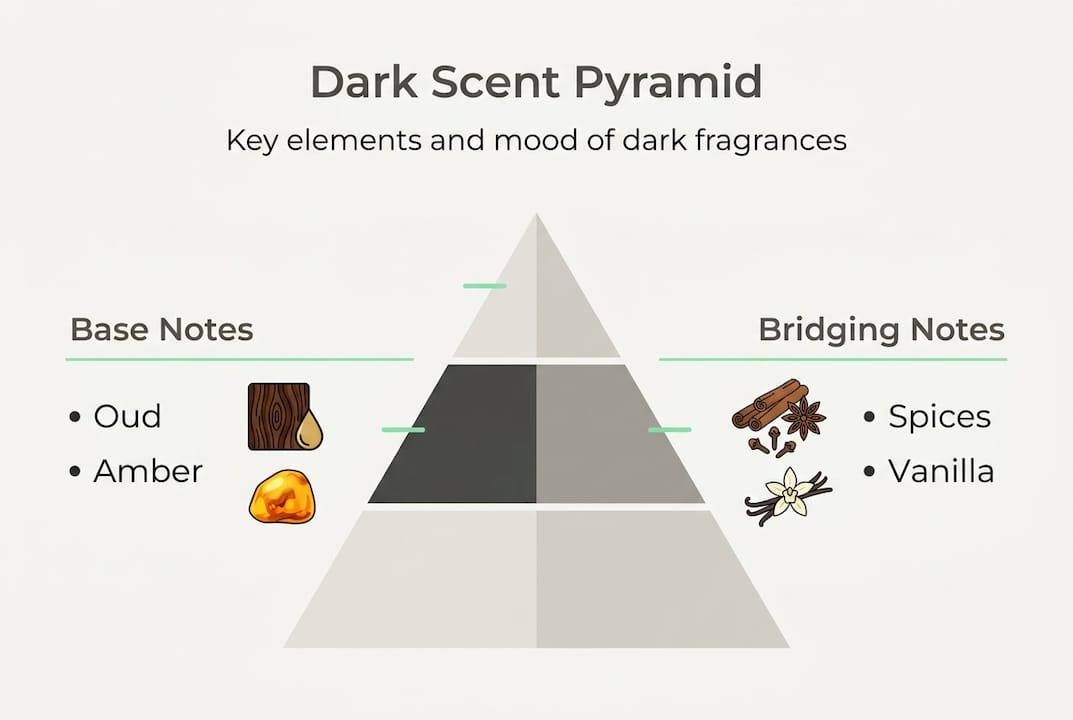
Creating darkness in a fragrance is a masterful act of contrast and balance. Fragrance trends reveal that darkness is achieved through bright top notes transitioning to heavy bases, multilayered florals for density, spices and woods for bridging, and a temporal progression from light to shadow. This journey is what gives dark fragrances their narrative quality, the sense that you are experiencing something unfolding rather than simply smelling something pleasant.
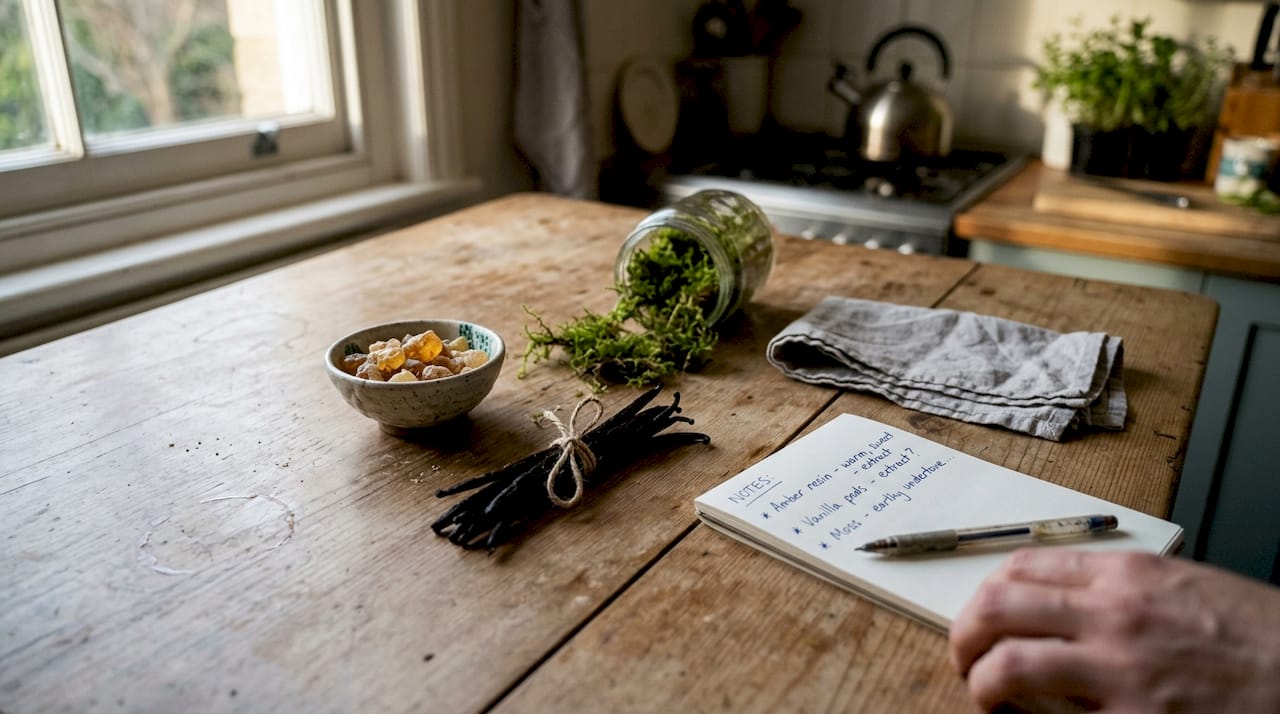
Understanding fragrance categories and oud helps illustrate how different ingredient families contribute to this layered architecture.
Comparing fragrance pyramids: dark vs fresh scents
| Layer | Dark fragrance | Fresh fragrance |
|---|---|---|
| Top notes | Citrus, light spice, bergamot | Citrus, green, aquatic |
| Heart notes | Rose, jasmine, dark florals, spice | Floral, herbal, light musk |
| Base notes | Oud, amber, leather, resins, vanilla | Musk, cedar, light woods |
The base is where the real artistry lives in a dark fragrance. A perfumer constructing a dark composition typically follows a deliberate sequence:
- Establish the opening: Select bright, luminous top notes to create an inviting first impression
- Bridge with spice: Introduce warming spices like cardamom, pepper, or saffron to carry the transition
- Build the heart: Layer dense florals or smoky accords to add mid-profile complexity
- Anchor the base: Settle into rich oud, amber, or resinous notes for depth and staying power
- Balance and refine: Adjust proportions until light and shadow coexist in perfect tension
Spices are particularly vital as bridging notes. Cardamom, for instance, sits beautifully between fresh and dark registers, connecting the two worlds without jarring the senses. This is what creates the emotional journey that dark fragrance lovers find so compelling.
Pro Tip: Always test a dark fragrance on your skin rather than a paper strip. The heat of your body activates the base notes differently, revealing the true character of the scent over time.
The psychological allure of dark scents
Having explored how darkness is crafted physically in perfume, the next reveal is why these olfactory characteristics stir such powerful and nuanced psychological responses.
There is something deeply compelling about a fragrance that feels like a second skin, one that communicates mood, mystery, and intention without a single word. Psychologically, dark scents evoke mystery, seduction, comfort, transformation, and shadow integration, and are strongly associated with outgoing, confident personalities and seasonal introspection.
Olfactory science links complex, heavy molecules to higher perceived pleasantness, with semantic clusters like ‘full, rich, warm’ mediating cross-modal intrigue across the senses. This is not merely poetic language; it reflects measurable neurological responses. Psychological research findings further confirm that unique or complex scents trigger curiosity via the brain’s novelty response, making dark fragrances inherently more memorable.
“Unique scents trigger curiosity via the brain’s novelty response.”
Amber alone generates 14,900 monthly searches, a clear signal of rising consumer interest in warm, resinous profiles. This is not a niche obsession; it is a mainstream shift.
Psychological outcomes associated with dark scents:
- Seduction: The warmth and closeness of heavy notes creates an intimate aura
- Comfort: Vanilla and amber trigger associations with safety and familiarity
- Curiosity: Complex layering invites others to lean in and discover more
- Transformation: Wearing a dark scent can shift mood and self-perception
- Shadow integration: Embracing darker profiles reflects confidence and self-awareness
The psychology of fragrance choices reveals how scent selection is deeply tied to identity. Choosing a dark fragrance is rarely accidental; it is an act of self-expression. As explored in discussions around fragrance and identity, the scents we choose become extensions of who we are and who we wish to be perceived as.
Trend spotlight: The rise of dark gourmands and sacred scents
Now that the psychological appeal is clear, it is fascinating to see how these preferences appear in market trends and popular fragrances.
A ‘dark gourmand’ is one of the most exciting developments in contemporary perfumery. These fragrances marry edible, dessert-like notes such as vanilla, caramel, and chocolate with earthier or spicier bases, creating something simultaneously indulgent and sophisticated. The result is a scent that feels both comforting and complex, sweet without being saccharine. Trend data confirms the rising popularity of dark gourmands alongside sacred and ritualistic scents featuring incense and myrrh, with empirical search and sales increases backing this shift.
Exploring the full range of gourmand fragrance types reveals just how varied and nuanced this category has become, while modern perfumery trends show how the industry is responding with increasingly sophisticated offerings.
Sacred and ritual notes driving the trend:
- Incense: smoky, meditative, and deeply evocative of ceremony
- Myrrh: resinous, balsamic, and ancient in character
- Amber: warm, golden, and universally appealing
- Frankincense: clean smoke with a spiritual, elevated quality
- Benzoin: sweet, vanilla-adjacent, and deeply comforting
What was once considered a niche or gothic preference has become a mainstream bestseller category. Niche fragrance perspectives note this crossover as one of the most significant shifts in recent fragrance culture.
Top dark scent ingredients: popularity and reception
| Ingredient | Monthly search volume | Average review score |
|---|---|---|
| Amber | 14,900 | 4.6/5 |
| Vanilla (dark) | 12,400 | 4.7/5 |
| Oud | 9,800 | 4.8/5 |
| Myrrh | 6,200 | 4.5/5 |
| Black Opium accord | 5,400 | 4.78/5 |
Pro Tip: Layer a dark gourmand over a transparent fragrance note such as musk or clean woods to create a signature blend that is uniquely yours without overwhelming the senses.
These trends reflect something deeper than fashion. Consumers are seeking fragrances that feel meaningful, personal, and emotionally resonant. Dark scents, with their ritual associations and sensory richness, answer that call beautifully.
A fresh take: Why darkness in scent offers both edge and comfort
There is a persistent misconception that dark fragrances are solely the domain of the dramatic or the unconventional. We would argue this misses the point entirely. The most loyal fragrance enthusiasts often gravitate towards dark profiles not for shock value but for the profound sense of comfort and anchoring they provide.
A well-crafted dark scent is not a statement of rebellion; it is a signature. It becomes the invisible thread that connects your mornings, your evenings, and your most memorable moments. The warmth of amber or the depth of oud does not shout. It whispers with authority.
What makes dark scents so enduring for their devotees is precisely this duality: they carry edge and softness simultaneously. Choosing a signature fragrance from the darker register is an act of quiet confidence, a declaration that complexity is not something to fear but something to wear with pride.
Explore dark scent artistry with Alexandria UK
Inspired to experience the world of dark scents for yourself? Alexandria UK curates a remarkable range of dark, gourmand, and ritual-inspired fragrances, each crafted to deliver the emotional depth and sensory richness this guide has explored.
Whether you are seeking your first foray into oud and amber or looking to expand a collection with sacred incense accords, the Alexandria UK collection offers quality-focused, inspired alternatives that honour the artistry of fine perfumery. Sample, discover, and personalise your dark scent journey with confidence, knowing every bottle reflects genuine passion for the craft.
Frequently asked questions
What makes a perfume a ‘dark scent’?
A dark scent uses heavy base notes like woods, resins, oud, or smoky elements that give it depth, longevity, and an enveloping character that lighter fragrances cannot replicate.
Why do people find dark scents intriguing or seductive?
Dark scents evoke mystery, comfort, and transformation, triggering curiosity and emotional responses through complex aroma layers that unfold gradually on the skin.
What are examples of popular dark scented perfumes?
Top examples include fragrances featuring oud, vanilla, amber, or smoky accords. Black Opium, rated 4.78 out of 5 from over 2,400 reviews, exemplifies how dark-sweet profiles dominate bestseller charts.
Are dark perfumes suitable for everyday wear?
Absolutely. Many dark scents are highly versatile and suit daily wear beautifully, particularly in cooler weather or for evening occasions where their warmth and sillage truly shine.


