

How to store perfumes long term: preserve your collection
There is a particular kind of disappointment that comes with reaching for a beloved fragrance, only to find it has shifted into something flat, sour, or barely recognisable. Most people unknowingly shorten their perfume’s lifespan through everyday habits: leaving bottles on a sunny windowsill, storing them in a steamy bathroom, or simply forgetting to replace the cap. The good news is that with a few deliberate changes, you can preserve every bottle in your collection for years, keeping each accord as vivid and luminous as the day you first discovered it. This guide walks you through everything you need to know, from understanding why fragrances fade to building a maintenance routine that protects your investment.
Table of Contents
- Understanding why perfumes fade or spoil
- Essential requirements for long-term perfume storage
- Step-by-step long-term storage process
- Common mistakes and troubleshooting for perfume storage
- How to check and maintain your perfume collection
- Discover more fragrance care tips with Alexandria UK
- Frequently asked questions
Key Takeaways
| Point | Details |
|---|---|
| Light and heat accelerate spoilage | Keep perfumes in a cool, dark place to protect their scent for years. |
| Store upright in original bottles | Prevent leaks and maintain purity by avoiding decanting when possible. |
| Check regularly for colour or scent changes | Early detection of issues allows you to save your favourite bottles before it’s too late. |
| Organisation boosts preservation | Grouping and rotating your collection helps you spot potential problems early and enjoy every fragrance. |
Understanding why perfumes fade or spoil
Before you can protect your fragrances, it helps to understand what is working against them. Perfumes break down due to exposure to light, air, and temperature changes, and each of these forces acts on the delicate aromatic molecules in different ways.
Light, particularly ultraviolet light, is one of the most aggressive culprits. It accelerates chemical reactions within the fragrance, breaking apart the top notes first and leaving behind a heavier, often unpleasant residue. Heat compounds this effect by speeding up oxidation, the process by which oxygen reacts with fragrance compounds and alters their character. Humidity introduces moisture into the bottle, which can dilute the concentration and encourage bacterial growth over time.
Here are the primary enemies of lasting fragrance quality:
- Direct sunlight or UV exposure from windows or display shelves
- High or fluctuating temperatures, such as those near radiators or in cars
- Humidity and steam, common in bathrooms and kitchens
- Frequent air exposure from loose caps or repeated opening
- Vibration, which can disturb the molecular structure of delicate accords
“A fragrance is a masterful blend of volatile compounds, and every unnecessary exposure to light, heat, or air is a small act of erosion against its character.”
Signs that a perfume is beginning to spoil include a noticeably darker colour in the juice, a sharp or vinegary top note where there was once freshness, and a general flatness where the sillage once projected beautifully. If you notice any of these, it is time to assess your storage habits.
Essential requirements for long-term perfume storage
Understanding what causes perfumes to spoil helps you create the right environment. Next, let’s see exactly what you need for proper storage.
Storing perfumes away from sunlight and extremes of temperature safeguards their original scent, and the ideal conditions are simpler to achieve than most people expect.
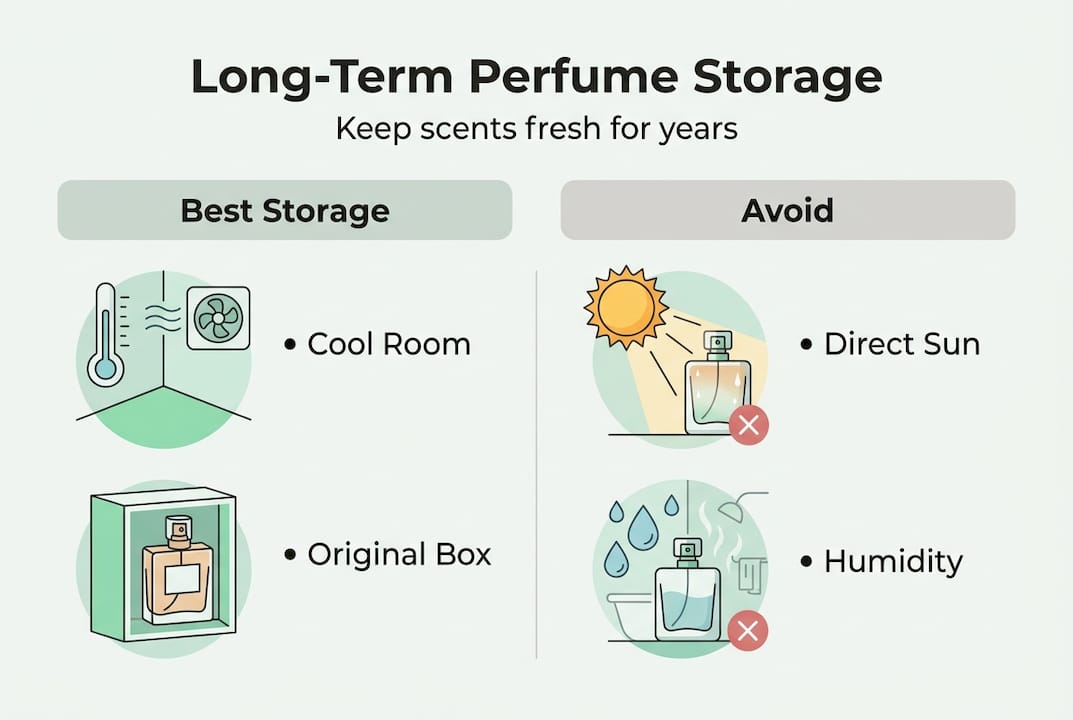
The best storage environments share three qualities: consistent cool temperature, darkness, and low humidity. A bedroom wardrobe, a dedicated drawer, or a closed cabinet away from exterior walls all work beautifully. Avoid the bathroom entirely, regardless of how convenient it feels.
| Storage location | Temperature stability | Light exposure | Humidity risk | Verdict |
|---|---|---|---|---|
| Bedroom wardrobe | Excellent | None | Low | Ideal |
| Closed drawer | Excellent | None | Low | Ideal |
| Display shelf (away from window) | Good | Moderate | Low | Acceptable |
| Bathroom cabinet | Poor | Low | High | Avoid |
| Windowsill | Poor | Very high | Low | Avoid |
| Kitchen counter | Poor | Moderate | High | Avoid |
For the bottles themselves, original packaging is your best ally. The box shields the glass from light and provides a buffer against minor temperature shifts. If you have discarded the box, a dark cloth pouch or an opaque storage case serves a similar purpose.
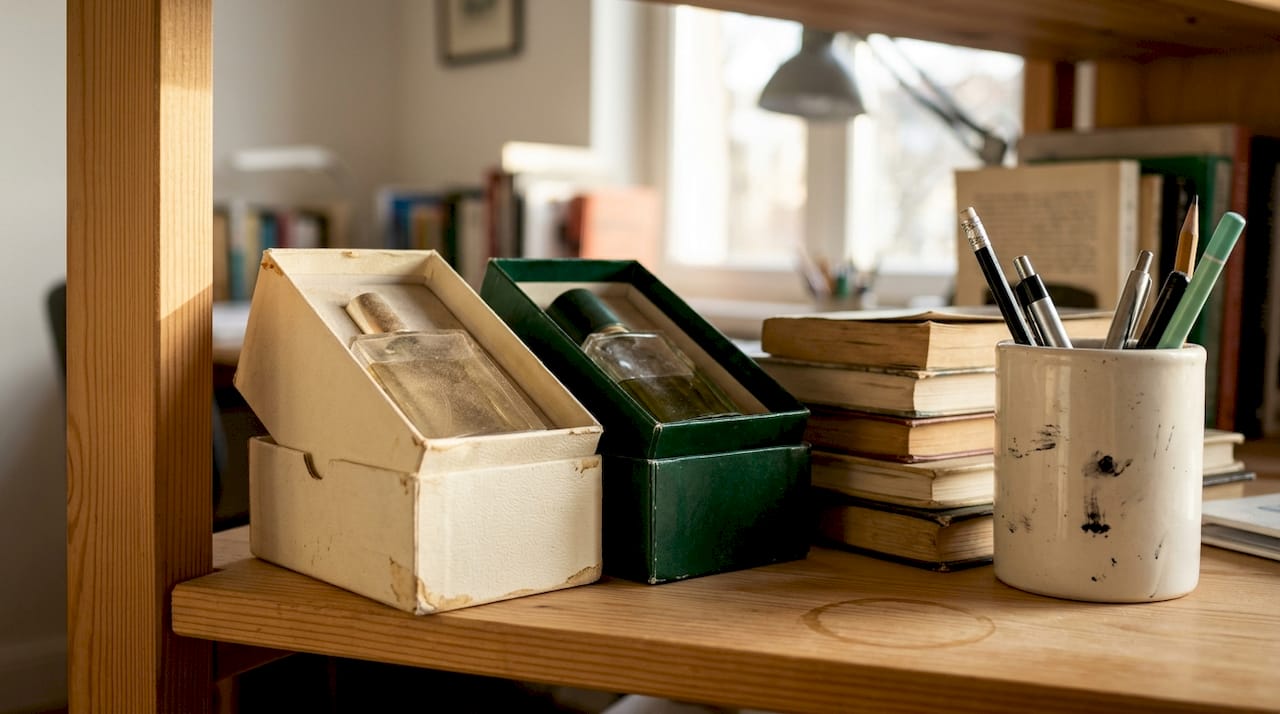
Explore the ways to store perfume long-term that suit your space and collection size, as the right method varies depending on how many bottles you own and how frequently you reach for them.
Pro Tip: Resist the urge to open bottles simply to smell them. Every time you remove the cap, you allow a small amount of air to enter, accelerating oxidation. Use a test strip or a small decant for sampling instead.
Step-by-step long-term storage process
With the right tools and setup in place, follow this step-by-step approach for long-term fragrance preservation.
Store bottles upright in a dark, cool place to reduce the risk of evaporation and oxidation. Laying bottles on their sides can cause the liquid to interact with the cap seal, potentially degrading both the stopper and the fragrance over time.
- Inspect each bottle before storing. Check that the cap or atomiser is secure, and look for any cracks or chips in the glass that could allow air infiltration.
- Return bottles to their original boxes wherever possible. If the box is lost, wrap the bottle in acid-free tissue paper and place it in an opaque container.
- Choose your storage location based on the table above. A bedroom wardrobe or dedicated fragrance drawer is the gold standard.
- Group your collection thoughtfully when organising your perfume collection. Arrange by frequency of use so your daily favourites are accessible without disturbing the bottles you are preserving long term.
- Label any decants clearly with the fragrance name and date of decanting. When storing dupe perfumes alongside originals, clear labelling prevents confusion and ensures each bottle receives appropriate care.
- Avoid placing bottles near each other without separation. Glass conducts temperature, and bottles clustered together can create localised warmth.
| Storage method | Best for | Longevity benefit |
|---|---|---|
| Original box in wardrobe | Full bottles, long-term preservation | Maximum |
| Opaque pouch in drawer | Bottles without original packaging | High |
| Fragrance cabinet with door | Large collections | High |
| Open display shelf | Decorative purposes only | Minimal |
Pro Tip: If you are storing a fragrance you rarely wear, consider placing a small silica gel sachet nearby (not inside the bottle) to absorb any ambient moisture in the storage space.
Common mistakes and troubleshooting for perfume storage
Even with the best prep, mistakes can happen. Here is how to sidestep common issues and tackle any problems that arise.
Frequent temperature changes and decanting can shorten a perfume’s shelf life, and these are two of the most common errors even enthusiastic collectors make.
Here are the mistakes to avoid:
- Storing in the bathroom. Steam and temperature swings from hot showers are particularly damaging to delicate top notes.
- Keeping bottles in the fridge. While cool temperatures are beneficial, fridges cycle between temperatures and can introduce moisture condensation on the glass.
- Shaking the bottle. This introduces air bubbles and can disturb the layered accord structure, particularly in older or more complex fragrances.
- Leaving caps off between uses. Even a few minutes of unnecessary air exposure adds up over months.
- Decanting carelessly. Transferring fragrance into a new vessel without proper sealing dramatically increases oxidation risk.
“The bathroom shelf is the single most common place where beautiful fragrances meet an early end. Steam, heat, and light conspire against every bottle left there.”
If you notice a fragrance beginning to smell slightly off but not entirely ruined, try applying it to fabric rather than skin. The warmth of skin can amplify any sour or sharp notes, whereas fabric allows the mid and base notes to express themselves more gently. For tips on getting the most from your bottles day to day, explore how to make perfume last longer and discover perfume lasting all day techniques that complement good storage habits. You will also find a wealth of long-lasting perfume tips to help you get the best from every spritz.
If a bottle has developed a leaky spray mechanism or a loose cap, address it immediately. A small piece of cling film placed beneath the cap creates a temporary seal while you source a replacement atomiser.
How to check and maintain your perfume collection
With your perfumes safely tucked away, do not forget the maintenance. Here is how to keep everything in top condition year after year.
Regularly checking cap tightness and colour changes maintains fragrance longevity, and a simple seasonal review takes no more than fifteen minutes but can save you from discovering a spoiled bottle months too late.
Follow this routine for ongoing collection care:
- Conduct a visual inspection every three to four months. Hold each bottle up to a gentle light source and check for darkening of the juice, cloudiness, or sediment. Any of these signals potential degradation.
- Test the scent on a strip, not your skin. This allows you to assess the fragrance objectively without skin chemistry interfering. Compare it to your memory of the scent or a reference note.
- Check every cap and atomiser for security. A cap that feels loose or an atomiser that sticks can allow slow air infiltration between uses.
- Assess the packaging integrity. Boxes that have become damp or warped may no longer be providing adequate protection, and replacing them with a fresh opaque container is worthwhile.
- Discard with confidence when necessary. A fragrance that smells markedly sour, sharp, or simply wrong is unlikely to recover. Holding onto it out of sentiment rarely serves you well, and the space is better used for a bottle that still sings.
For a more thorough approach to testing perfume quality across your collection, a structured testing method helps you evaluate multiple bottles consistently and make informed decisions about what to keep.
Discover more fragrance care tips with Alexandria UK
Armed with these techniques, take your passion for fragrance one step further with Alexandria UK’s expert resources. Whether you are building a curated collection of inspired dupes or preserving a treasured original, the principles of care remain the same: protect, organise, and maintain with intention.
Alexandria UK brings together a wealth of knowledge for fragrance enthusiasts at every level, from first-time buyers to seasoned collectors. If you are ready to go deeper, explore more perfume storage advice crafted by people who genuinely love fragrance. Every guide is written to help you get more from your collection, more longevity, more pleasure, and more confidence in every bottle you own.
Frequently asked questions
Can perfumes really expire if stored correctly?
Perfumes can last for many years under optimal conditions, but they will eventually degrade, particularly if exposed to light, air, or heat. Proper storage significantly extends their lifespan without eliminating the natural ageing process entirely.
Is it safe to keep perfumes in a fridge?
Fridges introduce temperature fluctuations and moisture condensation, so a cool, dark cupboard away from strong odours is a far better choice. Consistent, moderate cool is preferable to the cycling temperatures of a refrigerator, as noted in guidance on long-lasting fragrance storage.
How do I know if my perfume has gone off?
If the colour darkens noticeably, the scent shifts to something sharp or sour, or the projection flattens entirely, your perfume may have spoiled. Checking colour changes regularly is one of the simplest ways to catch degradation early.
Does decanting perfume affect its shelf life?
Yes, decanting increases air exposure and oxidation risk, which can shorten shelf life unless the new vessel is sealed carefully and stored correctly immediately after transfer.


