

How to Sample Perfumes Like an Expert for Quality Dupes
Finding the perfect scent match can be challenging when sampling perfumes, especially for those in the United Kingdom keen to expand their collection with high quality dupes. Your environment, choice of samples, and application technique each play a vital role in how a fragrance performs and is experienced. This guide provides expert advice on preparing your space, selecting concentrated samples like Parfum and Eau de Parfum, and applying perfumes using professional fragrance sampling techniques, ensuring your next discovery truly shines.
Table of Contents
- Step 1: Prepare Your Sampling Environment
- Step 2: Select Fragrances And Gather Samples
- Step 3: Apply Perfumes Using Expert Methods
- Step 4: Evaluate Scents And Note Impressions
- Step 5: Verify Quality And Make Informed Choices
Quick Summary
| Key Point | Explanation |
|---|---|
| 1. Prepare a clean sampling space | Select a neutral, well-ventilated area with minimal competing odours to enhance olfactory sensitivity during sampling. |
| 2. Choose the right fragrance concentrations | Understand the differences between Parfum, Eau de Parfum, and Eau de Toilette to select scents that fit your preferences and test efficiently. |
| 3. Apply perfume correctly | Spritz perfume on pulse points and allow it to dry, avoiding rubbing, to fully experience the fragrance’s development and complexity. |
| 4. Evaluate scents methodically | Document your impressions of fragrances over time to grasp their character and how they interact with your skin after application. |
| 5. Verify quality before purchase | Examine packaging and fragrance performance during testing to ensure you select high-quality perfumes that suit your chemistry. |
Step 1: Prepare your sampling environment
Creating the ideal environment for perfume sampling is crucial for experiencing fragrances authentically. Your surroundings dramatically impact how you perceive and evaluate scents, making thoughtful preparation essential for accurate sensory assessment.
First, select a clean neutral space with consistent temperature. Avoid areas with strong competing odours like kitchens, bathrooms, or rooms with scented candles. A quiet room with natural lighting works best ideal perfume evaluation. Ensure good ventilation but avoid direct drafts that might interfere with delicate fragrance notes. Remove any clothing with lingering perfumes or fabric softener smells that could compromise your olfactory experience.
Position yourself near natural light but not in direct sunlight. A white or neutral background helps you focus on the fragrance without visual distractions. Have clean white blotters or testing strips ready, along with a glass of room temperature water to help reset your sense of smell between samples. Professional fragrance sampling techniques recommend avoiding strong coffee or spicy foods before testing to maintain olfactory sensitivity.
Expert Tip: Keep your sampling environment consistently at room temperature between 20 to 22 degrees Celsius to ensure the most accurate fragrance perception.
Step 2: Select fragrances and gather samples
Sampling perfumes requires strategic selection and a nuanced approach to understanding fragrance profiles. Your goal is to curate a collection of potential scents that match your desired characteristics while exploring different olfactory experiences.
Start by investigating different fragrance concentrations. Tester fragrance selection involves understanding the variations between Parfum, Eau de Parfum, and Eau de Toilette. Each concentration offers unique intensity levels and longevity. When gathering samples, prioritise obtaining small vials or blotters that allow multiple testing opportunities without significant investment. Look for fragrance families that align with your personal preferences such as woody, citrus, oriental, or floral notes.

Here is a quick reference for distinguishing perfume concentrations:
| Concentration Type | Typical Longevity | Scent Intensity |
|---|---|---|
| Parfum | 8-12 hours | Very strong |
| Eau de Parfum | 6-8 hours | Strong |
| Eau de Toilette | 3-5 hours | Moderate |
| Eau de Cologne | 2-4 hours | Light |
Prioritise acquiring samples from reputable sources like speciality perfume stores, beauty counters, or online retailers offering discovery sets. These collections often provide miniature versions of designer fragrances, allowing comprehensive exploration without purchasing full bottles. Request paper testing strips and small spray samples to conduct thorough evaluations at home.
Expert Tip: Always store perfume samples in a cool dark place and test them on your skin rather than paper to understand their true interaction with your personal body chemistry.
Step 3: Apply perfumes using expert methods
Perfume application is an art form that requires precision technique and understanding of how fragrances interact with your unique body chemistry. Mastering the application process will help you evaluate scents more accurately and experience their true olfactory character.
Expert fragrance testing techniques recommend targeting specific pulse points where body heat naturally amplifies scent projection. Focus on areas like your inner wrists, neck base, behind ears, and inside elbows. These warm zones allow the fragrance to develop and unfold gradually, revealing its complex note progression. When applying, hold the sample or tester approximately 10 centimetres from your skin and use a light spraying motion to ensure even distribution without oversaturating.
Avoid rubbing the fragrance into your skin, as this can break down the molecular structure and alter the scent profile. Instead, let the perfume naturally dry and develop over 15 to 20 minutes. This waiting period allows you to experience the fragrance’s top notes, heart notes, and base notes sequentially, giving you a comprehensive understanding of its true character and longevity.
Expert Tip: Test no more than two to three different fragrances in a single session to prevent olfactory fatigue and maintain accurate sensory perception.
Step 4: Evaluate scents and note impressions
Evaluating perfumes requires a systematic and patient approach to understanding the complex layers of fragrance composition. Your goal is to develop a nuanced appreciation for how different scent notes interact and evolve on your skin.
Begin by understanding the types of fragrance notes through careful observation. Fragrances typically unfold in three distinct stages: top notes, heart notes, and base notes. Top notes are the initial impressions that emerge immediately after application these are usually light and volatile. Heart notes develop after 10 to 15 minutes and represent the core character of the fragrance. Base notes are the final stage lasting several hours, providing depth and longevity to the scent profile.
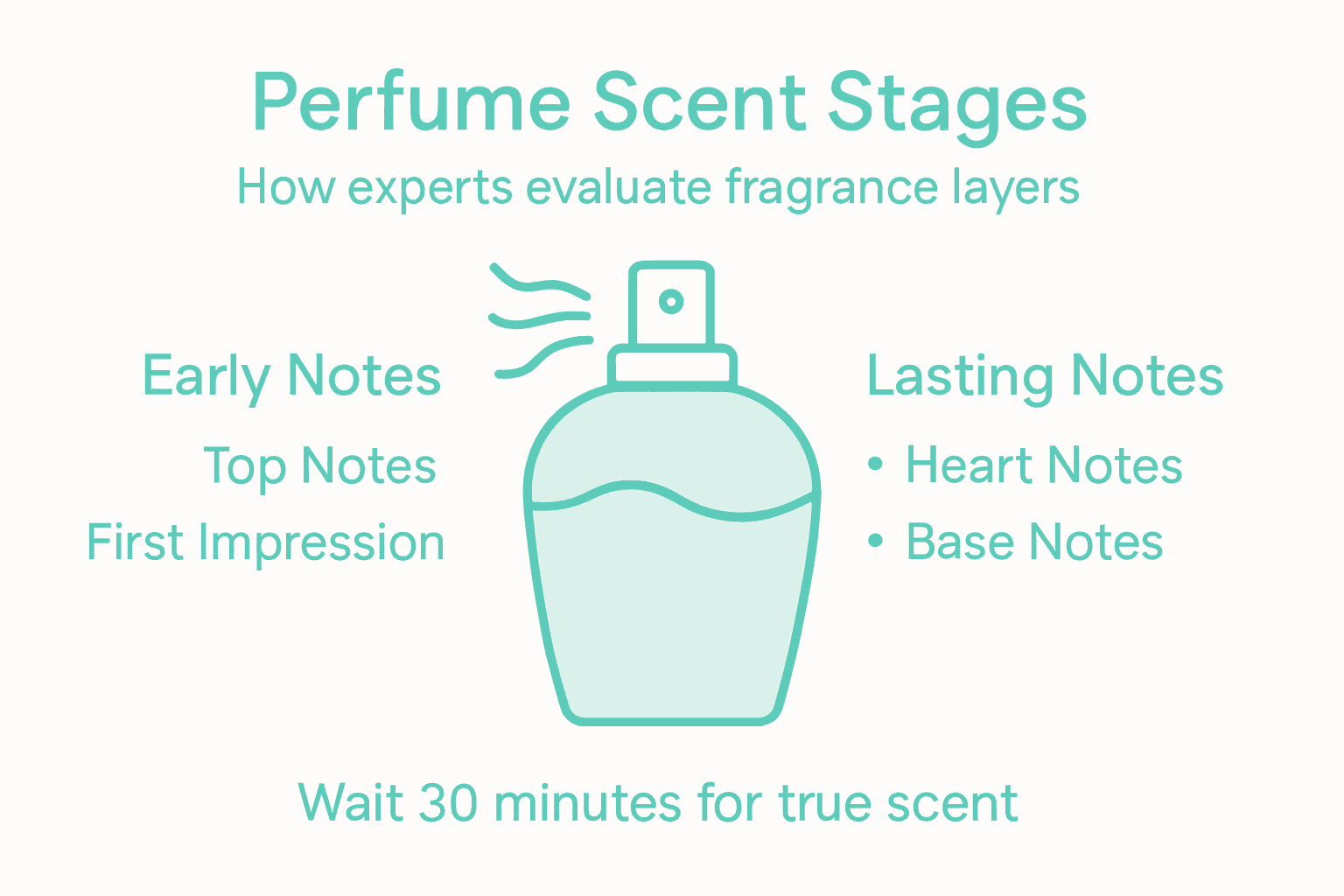
Use this summary to understand fragrance note progression and assessment timing:
| Stage | Description | Typical Timing |
|---|---|---|
| Top Notes | Initial scent impression | 0-5 minutes |
| Heart Notes | Core fragrance character | 10-20 minutes |
| Base Notes | Lingering depth and lasting | 30+ minutes |
Document your observations methodically. Use a dedicated notebook or digital app to record your impressions including initial reactions, how the fragrance changes over time, and your emotional response. Pay attention to projection strength longevity and how the scent interacts with your unique body chemistry. Consider aspects like how the fragrance makes you feel whether it reminds you of specific memories and its potential versatility across different occasions.
Expert Tip: Wait at least 30 minutes after initial application before making a final judgement to experience the complete olfactory journey of the fragrance.
Step 5: Verify quality and make informed choices
Transitioning from sampling to selection requires a discerning eye and strategic approach to evaluating perfume quality. Your ultimate goal is to distinguish exceptional fragrances from mediocre alternatives by applying systematic assessment techniques.
Perfume quality verification demands careful examination of several critical factors. Inspect the packaging integrity first examining label precision print quality and overall presentation. Authentic fragrances demonstrate meticulous attention to detail with crisp printing consistent font styles and high quality materials. Check for clear batch codes manufacturing dates and ingredient listings which provide insights into the perfumes provenance and potential shelf life.
Evaluate the fragrance performance through multiple wears across different environments and times of day. Observe its consistency projection strength and longevity. High quality perfumes maintain their fundamental character while subtly evolving through different note stages. Consider factors like sillage skin compatibility and how the scent interacts with your personal body chemistry. Compare the perfume against established benchmarks within its fragrance family noting nuances in complexity depth and overall sensory experience.
Expert Tip: Request small samples or tester sizes before committing to a full bottle to thoroughly assess the fragrance performance and compatibility with your personal chemistry.
Discover Quality Perfumes Inspired by Expert Sampling Techniques
Sampling perfumes like an expert can be overwhelming with the need to assess fragrance notes, longevity and true quality. The challenge lies in finding authentic scents or quality dupes that truly resonate with your unique preferences and body chemistry without endless trial and error. Our website focuses on eliminating this frustration by offering a curated range of high quality dupes and inspired fragrances designed to meet your desires for complexity, projection and lasting power.
Take control of your scent journey by exploring our collection at Alexandria UK. Benefit from carefully selected perfumes that respect the nuances of top, heart and base notes you learned about. Save time and enjoy confidence in your fragrance choices by shopping with a trusted source dedicated to quality and sensory satisfaction. Start your expert perfume experience now and find your perfect scent today.
Frequently Asked Questions
How should I prepare my environment for sampling perfumes?
To prepare your environment for sampling perfumes, choose a clean, neutral space with natural light and good ventilation. Ensure the temperature is consistent and avoid strong odours by staying away from kitchens or scented items.
What types of fragrance concentrations should I consider when sampling?
When sampling, consider the differences between Parfum, Eau de Parfum, Eau de Toilette, and Eau de Cologne. Each concentration has unique longevity and scent intensity, so gather a variety to compare their effects on your skin chemistry.
How do I apply perfume correctly during my sampling process?
Apply perfume by targeting pulse points, such as your inner wrists and neck, holding the bottle about 10 centimetres away for even distribution. Avoid rubbing the fragrance into your skin; instead, allow it to dry naturally over 15 to 20 minutes to appreciate its full scent development.
What should I look for when evaluating a perfume’s quality?
When evaluating a perfume’s quality, check the packaging for precision and quality, and observe the fragrance’s performance over multiple wears. Look for characteristics such as projection strength and longevity, and document your findings to make informed comparisons.
How many fragrances should I sample at one time?
It is advisable to sample no more than two to three fragrances in a single session. This helps prevent olfactory fatigue and ensures you maintain accurate sensory perception for each scent’s evolution on your skin.
Why is it important to test fragrances on skin instead of paper?
Testing fragrances on your skin is crucial as it allows you to experience how the scent interacts with your unique body chemistry, which can significantly affect the fragrance’s character. Always apply the fragrance to your skin for the most authentic evaluation.


