How to choose long lasting perfume for all-day fragrance
Choosing a perfume that lasts all day can feel frustrating when your favourite scent disappears within hours. Many factors influence how long a fragrance lingers on your skin, from the perfume’s composition to your unique skin chemistry. Understanding these elements helps you select perfumes that deliver genuine staying power and excellent value for money. This guide reveals practical strategies for identifying long-lasting fragrances, including quality dupes that perform brilliantly without breaking the bank.
Table of Contents
- Understanding Fragrance Longevity And Your Skin
- How To Test And Evaluate Perfume Longevity Effectively
- Choosing Perfumes With Ingredients And Formulations For Lasting Power
- Maximising Your Perfume’s Lasting Power In Daily Wear
- Discover Lasting Fragrances At Alexandria UK
- How To Choose Long Lasting Perfume: Frequently Asked Questions
Key takeaways
| Point | Details |
|---|---|
| Base notes determine longevity | Woods, musks, and amber anchor fragrances for extended wear |
| Skin hydration matters | Moisturised skin retains perfume up to 30% longer than dry skin |
| Test properly | The 30-minute rule reveals true lasting power beyond initial spray |
| Concentration affects duration | Eau de parfum and extrait formulations offer superior staying power |
| Application technique counts | Pulse points and moisturised skin maximise scent projection and longevity |
Understanding fragrance longevity and your skin
Perfume construction follows a three-tier system that directly impacts how long your scent lasts. Top notes evaporate first, usually within 15 minutes, creating that initial impression when you spray. Heart notes emerge next, lasting several hours as the fragrance settles. Base notes anchor the scent, providing the foundation that determines overall longevity through ingredients like sandalwood, patchouli, and musk.
Your skin type plays a surprisingly significant role in fragrance retention. Oily skin acts like a natural fixative, holding onto perfume molecules longer and releasing them gradually throughout the day. Dry skin lacks this natural oil barrier, causing fragrances to evaporate more quickly as molecules escape without being anchored. Hydrated skin increases staying power by creating a moisture-rich surface that helps perfume molecules bind effectively.
Skin chemistry creates a personalised scent experience unique to each wearer. Your body’s pH level, diet, and natural oils interact with perfume compounds, subtly altering how fragrances smell and how long they persist. This explains why the same perfume smells different on various people and lasts varying durations.
Body temperature influences scent diffusion in interesting ways. Warmer skin enhances projection, making your fragrance more noticeable to others, but this increased heat can actually shorten longevity by accelerating evaporation. Cooler skin retains scent longer with less dramatic projection, creating a more intimate fragrance experience.
Pro Tip: Apply an unscented moisturiser to pulse points before spraying perfume to create a hydrated base that significantly extends wear time without altering the fragrance profile.
Consider these factors when selecting your next long-lasting perfume:
- Identify your skin type to predict how fragrances will perform
- Note how quickly scents typically fade on you
- Consider seasonal variations in skin hydration
- Track which fragrance families last longest on your skin
How to test and evaluate perfume longevity effectively
Proper testing reveals a perfume’s true staying power beyond the initial spray. The 30-minute rule recommends waiting at least half an hour after application before judging a fragrance, allowing top notes to evaporate and heart notes to develop fully. This patience prevents hasty decisions based solely on fleeting first impressions.
Follow these steps for accurate longevity assessment:
- Spray perfume on your inner wrist or elbow crease for consistent results
- Avoid rubbing the application site, which breaks down fragrance molecules
- Wait 30 minutes before evaluating the scent’s development
- Check the fragrance again after 4 hours to assess middle-stage longevity
- Note whether any scent remains after 8 hours for true staying power
Testing conditions dramatically affect results. Warm skin increases projection but may reduce longevity, whilst cooler environments preserve scent longer. Activity level matters too, as physical exertion raises body temperature and accelerates evaporation.
| Testing method | Advantages | Limitations |
|---|---|---|
| Paper strip | Quick initial assessment, no skin interference | Doesn’t account for skin chemistry or body heat |
| Skin test (wrist) | Reveals true interaction with your chemistry | Varies by individual skin type and hydration |
| Extended wear (8+ hours) | Shows genuine longevity and development | Requires full day commitment for each test |
| Multiple pulse points | Tests projection and staying power | Can be overwhelming with strong fragrances |
Pro Tip: Test perfumes at different times of day and in varying climates to understand how temperature and humidity affect performance, giving you realistic expectations for daily wear.
When testing multiple perfumes, limit yourself to three per session to avoid olfactory fatigue. Space tests across different days for accurate comparisons. Keep notes on each fragrance’s development stages and duration to build a personal reference guide.
Pay attention to how scents evolve rather than fixating on initial intensity. A perfume that starts strong but disappears within hours offers less value than one with moderate opening that maintains presence throughout the day. This evaluation approach helps you discover fragrances that truly last all day rather than those with impressive but fleeting openings.
Choosing perfumes with ingredients and formulations for lasting power
Fragrance concentration directly determines longevity and intensity. Eau de parfum contains 15-20% perfume oil, offering excellent staying power for 6-8 hours of wear. Extrait de parfum, the most concentrated formulation at 20-30% oil, delivers maximum longevity often exceeding 12 hours. Eau de toilette, whilst more affordable, contains only 5-15% oil and typically fades within 3-4 hours.
Strong base notes provide the foundation for long-lasting fragrances. Woods like cedarwood and sandalwood anchor scents beautifully whilst adding warmth. Musks create skin-like softness that lingers close to the body. Amber and vanilla contribute sweet, resinous qualities that persist throughout the day. Balsamic notes from ingredients like benzoin and labdanum add depth and tenacity.
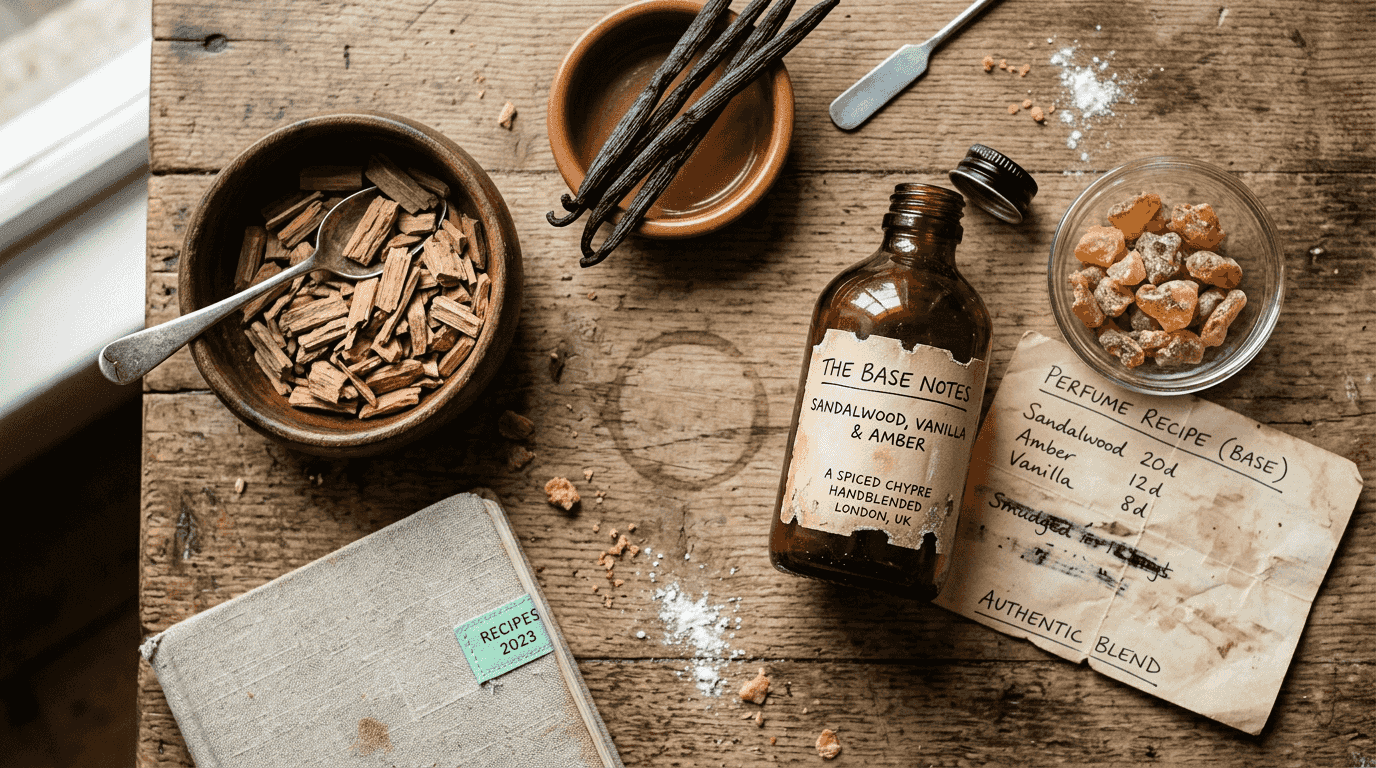
Warm gourmand notes enhance longevity through their rich, complex molecular structures. Tonka bean, caramel, and praline notes contain compounds that evaporate slowly, extending wear time significantly. These ingredients also create comforting, memorable scents that develop beautifully over hours.
| Perfume type | Typical concentration | Average longevity | Price range |
|---|---|---|---|
| Extrait de parfum | 20-30% | 12+ hours | £150-£400 per 50ml |
| Eau de parfum | 15-20% | 6-8 hours | £60-£150 per 50ml |
| Eau de toilette | 5-15% | 3-4 hours | £30-£80 per 50ml |
| Eau de cologne | 2-5% | 1-2 hours | £20-£50 per 50ml |
Value-for-money options include high-quality dupes that replicate expensive fragrances using similar lasting ingredients. These alternatives often feature the same base note profiles as luxury perfumes, delivering comparable longevity at a fraction of the cost. Quality dupes prioritise performance over branding, making them excellent choices for daily wear.
Consider these factors beyond base notes when selecting long-lasting perfumes:
- Packaging quality affects preservation, with dark glass bottles protecting against light degradation
- Storage conditions matter, as heat and sunlight break down fragrance compounds
- Batch consistency varies, with some production runs performing better than others
- Formulation quality differs between brands, even at similar price points
Understanding what makes perfumes last helps you identify genuine quality regardless of price. Look for detailed ingredient lists that highlight base notes and concentration levels. Read reviews focusing on longevity rather than just scent descriptions to gauge real-world performance.
Maximising your perfume’s lasting power in daily wear
Proper application technique transforms how long your fragrance lasts. Applying perfume on hydrated skin improves longevity by up to 30%, creating a moisture-rich surface that binds fragrance molecules effectively. Use an unscented body cream or oil on pulse points before spraying to establish this foundation without interfering with your perfume’s scent profile.
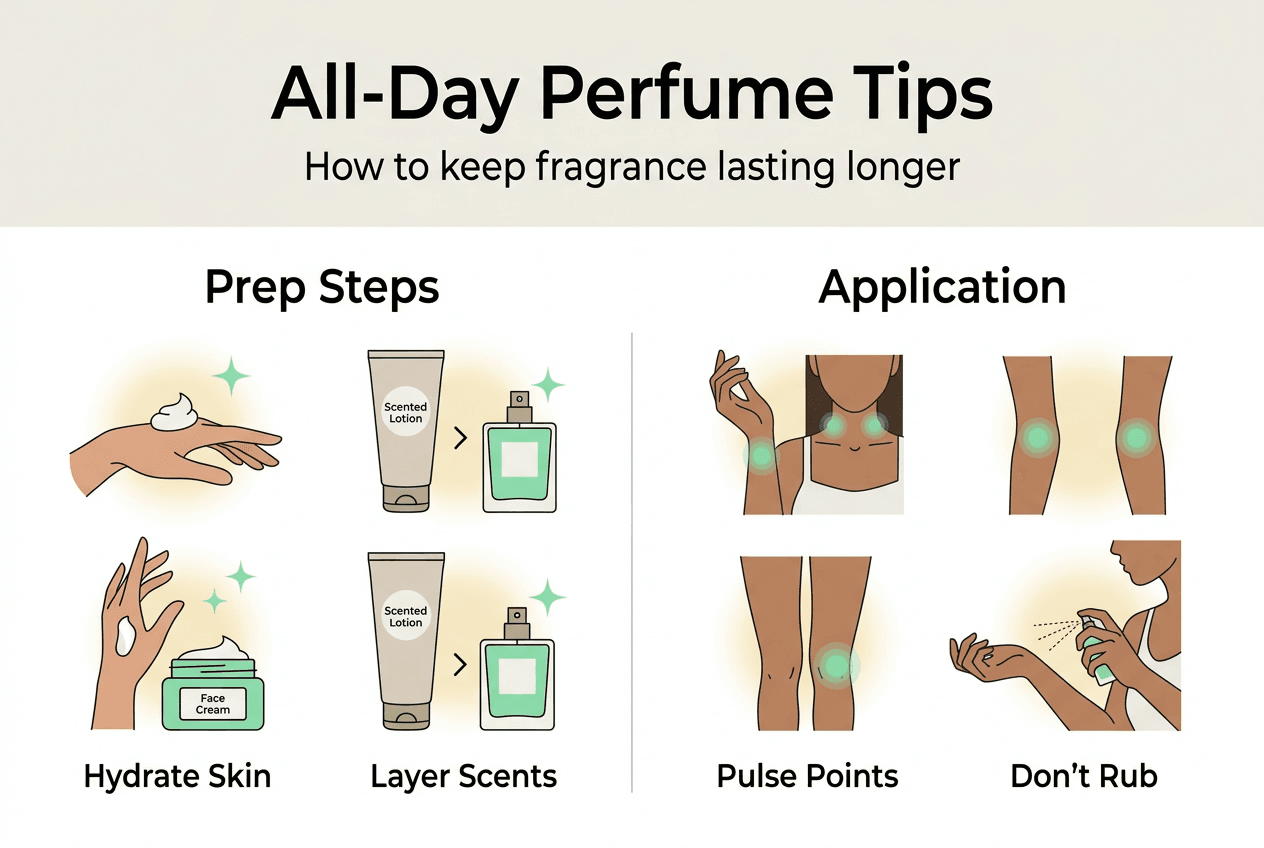
Pulse points generate warmth that helps diffuse fragrance naturally. The wrists, neck, behind the ears, and inner elbows all work excellently as application sites. These areas feature blood vessels close to the skin’s surface, creating gentle heat that releases scent gradually throughout the day.
Avoid rubbing your wrists together after applying perfume, despite this being a common habit. This friction generates heat that breaks down fragrance molecules prematurely, particularly the delicate top and heart notes. Instead, let the perfume dry naturally on your skin to preserve its complete development.
Follow these application and storage guidelines for maximum longevity:
- Spray from 15-20 centimetres away for even distribution
- Apply to clean, dry skin for best absorption
- Store bottles in cool, dark places away from direct sunlight
- Keep perfumes in their original boxes for added protection
- Avoid bathroom storage where humidity fluctuates
- Replace perfumes after 3 years as compounds degrade over time
Layering with matching scented products amplifies longevity and scent intensity. Start with a scented shower gel, follow with body lotion, then apply perfume. This creates multiple fragrance layers that reinforce each other, extending overall wear time significantly. Many fragrance houses offer complete collections designed for this purpose.
Pro Tip: Spray perfume on your hairbrush rather than directly onto hair to avoid alcohol damage whilst creating a subtle scent cloud that follows you throughout the day.
Consider these additional strategies:
- Apply perfume immediately after showering when skin is most receptive
- Focus on areas with higher body heat for better projection
- Refresh strategically at midday on pulse points rather than reapplying everywhere
- Keep a travel atomiser for convenient touch-ups without carrying full bottles
Discover lasting fragrances at Alexandria UK
Finding perfumes that deliver genuine all-day performance becomes easier when you know where to look. Alexandria UK specialises in quality fragrances prioritising longevity and value, offering carefully curated collections that include both popular scents and exceptional dupes. Each fragrance undergoes rigorous evaluation for staying power and ingredient quality.
Our selection focuses on perfumes featuring strong base notes and optimal concentrations for extended wear. Whether you seek affordable alternatives to luxury fragrances or want to explore new scent profiles, you’ll find options designed to last from morning through evening. Browse expert guides and detailed reviews to make informed choices based on your preferences and skin type.
How to choose long lasting perfume: frequently asked questions
Why does perfume fade faster on my skin than on others?
Your skin type and chemistry significantly influence fragrance longevity. Dry skin lacks natural oils that help anchor perfume molecules, causing faster evaporation. Your body’s pH level, diet, and hormones also interact with fragrance compounds uniquely, affecting how scents develop and persist on your skin compared to others.
Which perfume notes provide the longest lasting scent?
Base notes like sandalwood, patchouli, musk, amber, and vanilla offer superior longevity due to their large, slow-evaporating molecules. Woods and resins anchor fragrances for 8-12 hours or longer. Warm gourmand notes including tonka bean and benzoin also contribute excellent staying power whilst adding richness and depth.
How can I tell if a perfume will last before buying?
Check the concentration level, with eau de parfum and extrait formulations offering best longevity. Read the ingredient list for base notes like woods and musks. Test the fragrance on your skin using the 30-minute rule, then check again after several hours to assess true staying power before committing to a full bottle purchase.
Are expensive perfumes always longer lasting than affordable ones?
Not necessarily. Whilst luxury perfumes often use high-quality ingredients, price doesn’t guarantee longevity. Many affordable perfumes and quality dupes feature similar base note profiles and concentrations, delivering comparable staying power. Focus on formulation and ingredients rather than brand prestige when evaluating lasting potential.
Can I make any perfume last longer on my skin?
Yes, through proper preparation and application. Moisturise your skin with unscented cream before applying perfume to create a hydrated base. Spray on pulse points without rubbing, and consider layering with matching scented products. These techniques can extend any fragrance’s longevity by 30% or more regardless of its original formulation.