How perfumers create scents: a behind-the-scenes guide
Creating a perfume is often imagined as a romantic, spontaneous art where a perfumer simply mixes beautiful ingredients until something magical emerges. In reality, the process is far more intricate, requiring deep knowledge of chemistry, artistry, and technical precision. Perfumers spend years mastering the balance between science and creativity, learning how individual molecules interact and how scents evolve over time on skin. This guide takes you behind the scenes to explore how professional perfumers craft fragrances, from selecting raw materials to refining the final composition. Whether you’re an aspiring perfumer or simply curious about the craft, understanding this process will deepen your appreciation for every bottle you encounter.
Table of Contents
- Key takeaways
- Understanding the core ingredients in perfume creation
- The perfumer’s art: crafting fragrance compositions
- Evaluation and refinement: testing and perfecting your scent
- The creative inspirations and trends shaping perfumery today
- Discover authentic fragrances at Alexandria UK
- Frequently asked questions
Key Takeaways
| Point | Details |
|---|---|
| Ingredient categories | Every perfume blends essential oils, absolutes, aroma chemicals and fixatives, each contributing distinct characteristics to the final scent and its longevity. |
| Evaporation and notes | Each ingredient has an evaporation rate that determines whether it forms a top middle or base note, guiding balance and the fragrance evolution on skin. |
| Perfumer’s pyramid | Perfumers structure fragrances with a top middle and base notes pyramid to ensure the scent evolves coherently over time. |
| Ageing and testing | Technical steps include ageing and testing to verify quality, stability and how the fragrance performs with skin. |
Understanding the core ingredients in perfume creation
Every perfume begins with a carefully curated selection of raw materials. These ingredients fall into several categories, each contributing distinct characteristics to the final scent. Essential oils extracted from flowers, fruits, and woods provide natural complexity and depth. Absolutes, which are more concentrated than essential oils, deliver intense floral and resinous notes. Aroma chemicals, synthesised in laboratories, offer consistency and access to scent molecules that don’t exist in nature or are too rare to harvest sustainably.
Perfumers blend natural and synthetic ingredients to achieve desired scent profiles. Natural ingredients bring authenticity and richness, but they can vary between batches due to climate, soil, and harvest conditions. Synthetic components ensure that a fragrance smells identical every time it’s produced, which is crucial for commercial perfumes. These lab-created molecules also enable perfumers to recreate scents that are impossible to extract naturally, such as fresh rain or ocean breeze.
The choice of ingredients directly influences a perfume’s character, longevity, and how it interacts with skin chemistry. Here’s a breakdown of the main ingredient types:
- Essential oils from botanicals provide authentic, complex aromas with natural variation
- Absolutes deliver concentrated floral and resinous notes with intense richness
- Aroma chemicals ensure batch consistency and unlock unique scent molecules
- Fixatives slow evaporation rates, helping fragrances last longer on skin
Understanding how these materials behave is fundamental to creating balanced compositions. Each ingredient has a specific evaporation rate, which determines whether it functions as a top, middle, or base note. Citrus oils evaporate quickly, making them ideal for fresh opening notes. Woody and musky components linger for hours, anchoring the fragrance.
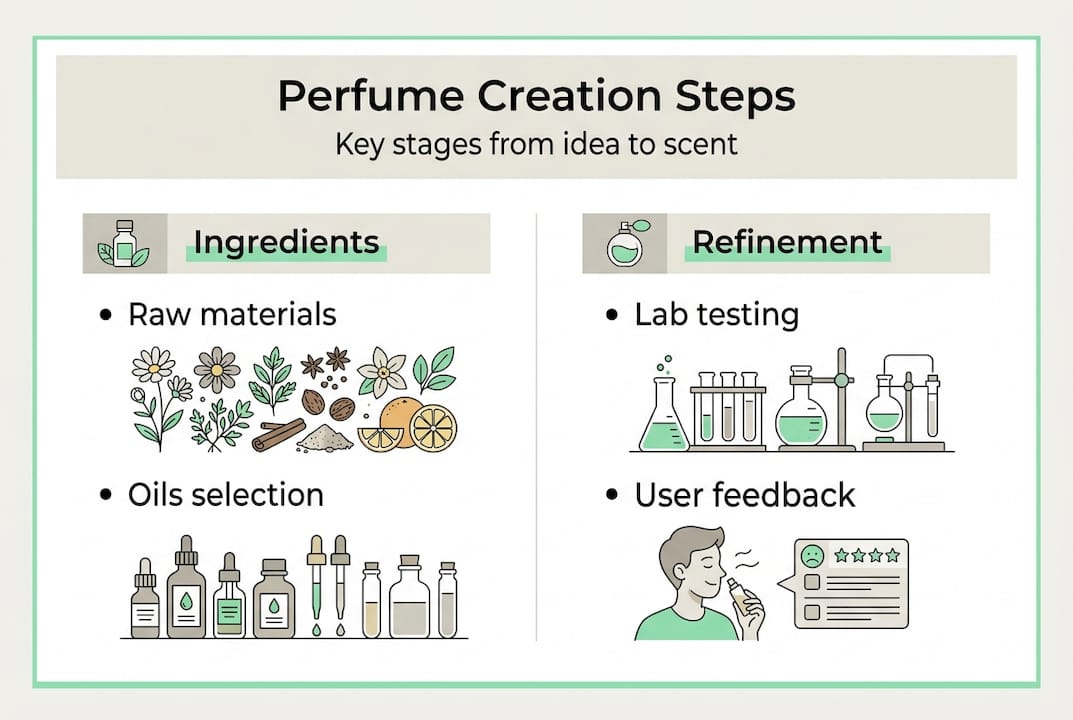
| Ingredient type | Common sources | Scent characteristics | Usage notes |
|---|---|---|---|
| Essential oils | Lavender, bergamot, sandalwood | Natural, complex, variable | Adds authenticity and depth |
| Absolutes | Rose, jasmine, oakmoss | Intense, rich, long-lasting | Used sparingly for impact |
| Aroma chemicals | Lab synthesis | Consistent, unique, stable | Ensures reproducibility |
| Fixatives | Ambroxan, musks, resins | Subtle, grounding, persistent | Extends overall longevity |
Pro Tip: Learning each ingredient’s evaporation rate helps you balance your fragrance composition effectively, ensuring that no single note dominates or fades too quickly.
Mastering ingredient selection is the first step towards creating harmonious, memorable scents. Perfumers often spend years building a mental library of how different materials smell alone and in combination, allowing them to predict how a blend will evolve.
The perfumer’s art: crafting fragrance compositions
Once the ingredients are selected, the real artistry begins. Composition is where technical knowledge meets creative vision. Perfumers structure fragrances using a pyramid model with top, middle, and base notes. This layered approach ensures that the scent evolves gracefully over time, revealing different facets as hours pass.
Top notes are the first impression, typically bright and volatile. They evaporate within minutes, so perfumers choose ingredients that create immediate impact. Middle notes, or heart notes, emerge once the top notes fade and form the core identity of the fragrance. Base notes appear last and linger longest, providing depth and warmth that anchors the entire composition.
Fragrance development involves structured layering with top, middle, and base notes for a balanced scent journey. Each layer must complement the others, creating smooth transitions rather than jarring shifts. Perfumers consider not only how individual ingredients smell but also how they interact chemically. Some combinations amplify each other, while others cancel out or create unpleasant effects.
The composition process follows a structured sequence:
- Conceptualise a theme or story that defines the fragrance’s emotional direction
- Select key accords that will form the scent’s signature character
- Choose specific ingredients for each layer based on evaporation rates and intensity
- Blend small trial batches, starting with base notes and building upwards
- Test each iteration on blotters and skin to evaluate development
- Adjust ratios and ingredients based on how the scent evolves over hours
- Document precise formulas to ensure reproducibility in future batches
This methodical approach allows perfumers to refine their vision incrementally. Rather than mixing everything at once and hoping for the best, they build complexity gradually, testing each addition. A single drop of a potent ingredient can transform an entire composition, so precision matters enormously.
Perfumers also consider sillage, the trail a fragrance leaves, and projection, how far the scent radiates from the wearer. These qualities depend on ingredient concentration and the balance between volatile and persistent notes. A fragrance with strong projection but poor longevity will make an initial impact but fade quickly. Conversely, a scent with excellent longevity but weak projection might go unnoticed by others.
Pro Tip: Always test your fragrance evolution on skin, not just blotters, because body chemistry influences how scents develop and this simulates real-world wear.
Creating a successful composition requires patience and willingness to iterate. Professional perfumers often create dozens of versions before arriving at a final formula. Each adjustment teaches them something new about how ingredients interact, building the intuition that distinguishes master perfumers from beginners.
Evaluation and refinement: testing and perfecting your scent
After composing an initial formula, rigorous testing begins. This stage separates promising ideas from finished perfumes. Evaluation happens at multiple levels, each revealing different aspects of the fragrance’s performance and appeal.
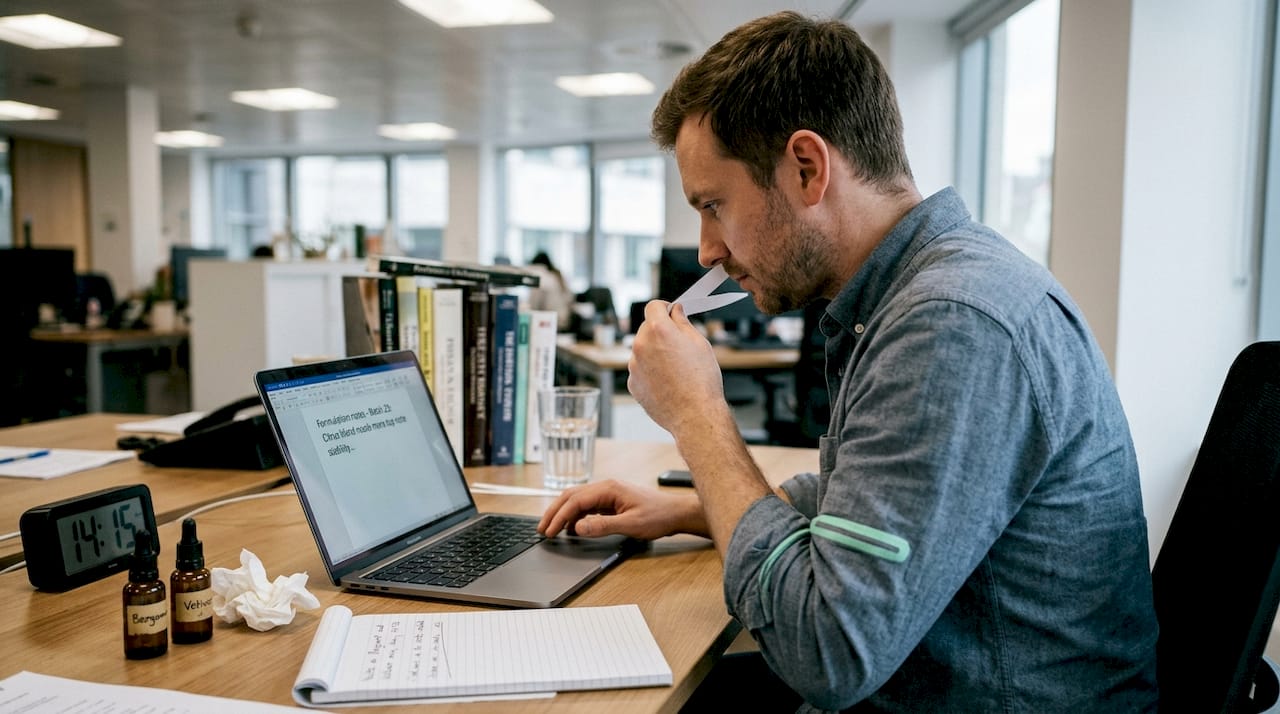
Blotter tests provide the first assessment. Perfumers apply the fragrance to paper strips and observe how it develops over several hours. This method isolates the scent from skin chemistry, allowing pure evaluation of the formula itself. Blotters reveal whether the transitions between notes are smooth and whether any ingredient dominates inappropriately.
Skin tests are essential because human skin interacts with fragrances in ways paper cannot replicate. Body heat accelerates evaporation, and individual skin chemistry can emphasise or mute certain notes. Professional perfume creation includes multiple testing phases to ensure scent stability and appeal. Perfumers test on different skin types to understand how the fragrance performs across varied conditions.
Consumer panels offer broader feedback. While perfumers trust their own judgement, understanding how others perceive a scent is crucial for commercial success. Panel participants describe their impressions, rate the fragrance on various attributes, and indicate whether they would wear it. This feedback often reveals blind spots or unexpected reactions.
| Testing method | Purpose | Advantages | Limitations |
|---|---|---|---|
| Blotter test | Evaluate pure scent development | Isolates formula from skin variables | Doesn’t reflect real-world wear |
| Skin test | Assess interaction with body chemistry | Reveals true performance on skin | Individual variation complicates assessment |
| Consumer panel | Gather diverse perceptions | Identifies broad appeal or issues | Subjective opinions may conflict |
Ageing is another critical phase. After blending, perfumes need time for their components to harmonise. This maturation period, which can last weeks or months, allows chemical interactions to complete and the scent to stabilise. Freshly mixed fragrances often smell harsh or disjointed. With ageing, rough edges smooth out and the composition gains coherence.
Perfumers evaluate several key criteria during testing:
- Scent balance: Do all notes work together harmoniously without any single element overpowering?
- Sillage: Does the fragrance leave an appropriate trail, neither too weak nor too aggressive?
- Longevity: How many hours does the scent remain detectable on skin?
- Emotional impact: Does the fragrance evoke the intended mood or feeling?
Refinement involves making precise adjustments based on test results. If the fragrance fades too quickly, the perfumer might increase base note concentration or add fixatives. If a note seems too sharp, reducing its proportion or adding a softening ingredient can create better balance. Each change requires retesting, as even minor tweaks can have unexpected effects.
This iterative process demands both technical skill and artistic judgement. Perfumers must interpret feedback, diagnose problems, and devise solutions that preserve the fragrance’s core identity while improving its performance. The best perfumes emerge from this disciplined refinement, where every element has been scrutinised and optimised.
The creative inspirations and trends shaping perfumery today
While technical mastery is essential, creativity drives innovation in perfumery. Perfumers draw inspiration from countless sources, translating abstract concepts and sensory experiences into olfactory compositions. Nature remains the most enduring muse, with landscapes, seasons, and botanicals sparking new scent ideas. A walk through a forest after rain, the smell of sun-warmed citrus groves, or the earthy richness of autumn leaves can all inspire fragrance themes.
Art and culture also influence perfume creation. Paintings, music, literature, and fashion trends provide conceptual frameworks that perfumers interpret through scent. A perfume might capture the opulence of a baroque painting or the minimalism of modern architecture. These cross-disciplinary inspirations help perfumers create fragrances that resonate with contemporary sensibilities.
Memory and emotion play powerful roles. Many perfumers create scents that evoke specific moments or feelings, such as childhood summers, romantic encounters, or exotic travels. These personal narratives give fragrances depth and authenticity, connecting with wearers on an emotional level.
Contemporary fragrance trends influence the themes and ingredient choices in new perfume creations. Sustainability has become a major consideration, with perfumers seeking ethically sourced materials and eco-friendly production methods. Consumers increasingly value transparency about ingredient origins and environmental impact, pushing the industry towards more responsible practices.
Nostalgic notes are experiencing a resurgence. Scents reminiscent of vintage perfumes, traditional ingredients, and classic compositions appeal to those seeking authenticity and timelessness. At the same time, experimental blends that push boundaries attract adventurous fragrance enthusiasts looking for something unconventional.
Key creative influences shaping modern perfumery include:
- Nature and seasonal landscapes that inspire fresh, organic scent profiles
- Art movements and cultural aesthetics translated into olfactory experiences
- Heritage and traditional perfumery techniques revived with modern twists
- Sustainability concerns driving ethical sourcing and green chemistry innovations
- Modern lifestyle needs such as gender-neutral scents and mood-enhancing fragrances
Understanding these trends helps aspiring perfumers align their creations with what resonates in today’s market. However, the most memorable fragrances often come from perfumers who follow their unique vision rather than simply chasing trends. Balancing personal creativity with awareness of cultural movements creates perfumes that feel both fresh and timeless.
The interplay between tradition and innovation defines contemporary perfumery. While respecting classical techniques and time-tested ingredients, today’s perfumers embrace new technologies and unconventional materials. This dynamic tension produces fragrances that honour the craft’s rich history while pushing it forward into exciting new territories.
Discover authentic fragrances at Alexandria UK
After exploring the intricate artistry behind perfume creation, you might be eager to experience scents crafted with this level of care and expertise. Alexandria UK offers a curated collection of fragrances that embody the principles discussed throughout this guide. Each perfume in the range reflects careful attention to ingredient quality, balanced composition, and creative vision.
Whether you’re drawn to classic elegance or contemporary innovation, the selection at Alexandria UK provides options for every preference. These fragrances demonstrate how technical mastery and artistic inspiration combine to create memorable scents. Exploring this collection allows you to connect the theory you’ve learned with beautifully realised perfumes, deepening your appreciation for the craft while discovering your next signature scent.
Frequently asked questions
How long does the process of creating a perfume typically take?
Perfume creation can take anywhere from several months to multiple years, depending on the complexity of the formula and the level of refinement required. Simple compositions might reach completion in a few months, while intricate, multi-layered fragrances often need a year or more. Ageing and testing phases contribute significantly to the timeline, as perfumers must wait for the scent to mature and then evaluate its performance across different conditions. Commercial perfumes for major brands may involve even longer development cycles due to market research and regulatory approvals.
What are the main types of fragrance notes used in perfumes?
Fragrances are structured around three main note categories that create a layered olfactory experience. Top notes are the initial scents perceived immediately upon application, typically fresh, bright, and volatile, lasting only minutes. Middle notes, also called heart notes, form the fragrance’s core character and emerge after top notes fade, usually lingering for several hours. Base notes provide depth, warmth, and longevity, appearing last and persisting for many hours or even days. This pyramid structure ensures that perfumes evolve gracefully over time rather than smelling static.
Can amateur perfumers create scents at home?
Amateur perfumers can absolutely experiment with creating scents at home using essential oils, carrier oils, and alcohol bases. However, beginners should invest time learning about ingredient properties, safety guidelines, and proper dilution ratios before starting. Working with small batches allows for experimentation without wasting materials, and testing blends on skin helps develop an understanding of how scents evolve. Consulting resources about recognising quality and ingredient balance accelerates the learning process. While professional-level results require years of practice, home perfumery offers a rewarding creative outlet for fragrance enthusiasts.
Why do perfumes smell different on different people?
Individual skin chemistry significantly affects how fragrances develop and smell. Factors like skin pH, moisture levels, natural oils, diet, and even medication influence which notes are emphasised or muted. Warmer skin tends to project fragrances more strongly, while drier skin may cause scents to fade faster. Hormonal fluctuations can also alter how perfumes interact with your body chemistry. This variability is why perfumers emphasise testing fragrances on your own skin rather than relying solely on how they smell on blotters or other people. What smells beautiful on one person might smell completely different on another, making fragrance selection a highly personal experience.