

Strongest Cologne Type: Complete Guide for 2025
Choosing a new cologne can feel confusing when over 80 percent of shoppers admit they struggle to tell the difference between fragrance types. The strength and staying power of a scent comes down to something called fragrance concentration, which directly affects how memorable you smell and how long your scent lasts. Whether you want subtle freshness or a bold, lingering signature, understanding these concentration levels will help you find the perfect cologne for any occasion.
Table of Contents
- Defining The Strongest Cologne Type
- Cologne Concentration: Eau Fraiche To Parfum
- Fragrance Longevity And Sillage Explained
- Key Differences From Other Perfume Types
- Choosing And Applying High-Strength Cologne
- Common Mistakes And Safety Precautions
Key Takeaways
| Point | Details |
|---|---|
| Fragrance Concentration Matters | Cologne types range from Eau Fraiche (1-3%) to Parfum/Extrait (20-40%), significantly affecting scent intensity and longevity. |
| Sillage and Longevity | Higher concentrations provide greater sillage and duration, with Parfum lasting 6-8 hours compared to Eau Fraiche’s fleeting scent. |
| Application Techniques | For high-strength colognes, use sparingly on pulse points to avoid overwhelming the senses and enhance personal scent. |
| Safety Precautions | Always patch test new fragrances, avoid sensitive areas, and store perfumes properly to preserve quality and avoid skin reactions. |
Defining the Strongest Cologne Type
When exploring the world of fragrances, understanding cologne concentration becomes crucial for enthusiasts seeking the most potent scent experience. According to International Fragrance Association, cologne types are distinguished primarily by their fragrance concentration levels, which directly impact intensity and longevity.
In the fragrance hierarchy, perfume extract (extrait) emerges as the strongest cologne type. Auram.org reveals that parfum contains between 22% to 48% concentrated fragrance, making it the most intense and long-lasting option available. This high concentration translates to several key advantages:
- Longer-lasting scent profile
- More pronounced fragrance notes
- Requires less product per application
- Typically more expensive due to higher ingredient concentration
Compared to other cologne variants like eau de toilette or eau de cologne, perfume extract represents the pinnacle of olfactory intensity. Most standard cologne types range between 2% to 15% fragrance concentration, whereas perfume extract towers above with its robust 15% to 40% concentration range. This significant difference means perfume extract can deliver a more complex, enduring aromatic experience that lingers substantially longer on the skin.
For fragrance aficionados seeking maximum impact, exploring different cologne types becomes an essential journey of sensory discovery. Understanding these nuanced concentration levels empowers you to select a fragrance that perfectly matches your desired intensity and wearing occasion.
Cologne Concentration: Eau Fraiche to Parfum
Fragrances are not created equal, and understanding the concentration spectrum is crucial for selecting the perfect scent. Perfume Society offers an illuminating breakdown of fragrance types, revealing a fascinating hierarchy from the lightest Eau Fraiche to the most intense Parfum.
The fragrance concentration spectrum ranges from minimally potent to richly complex:
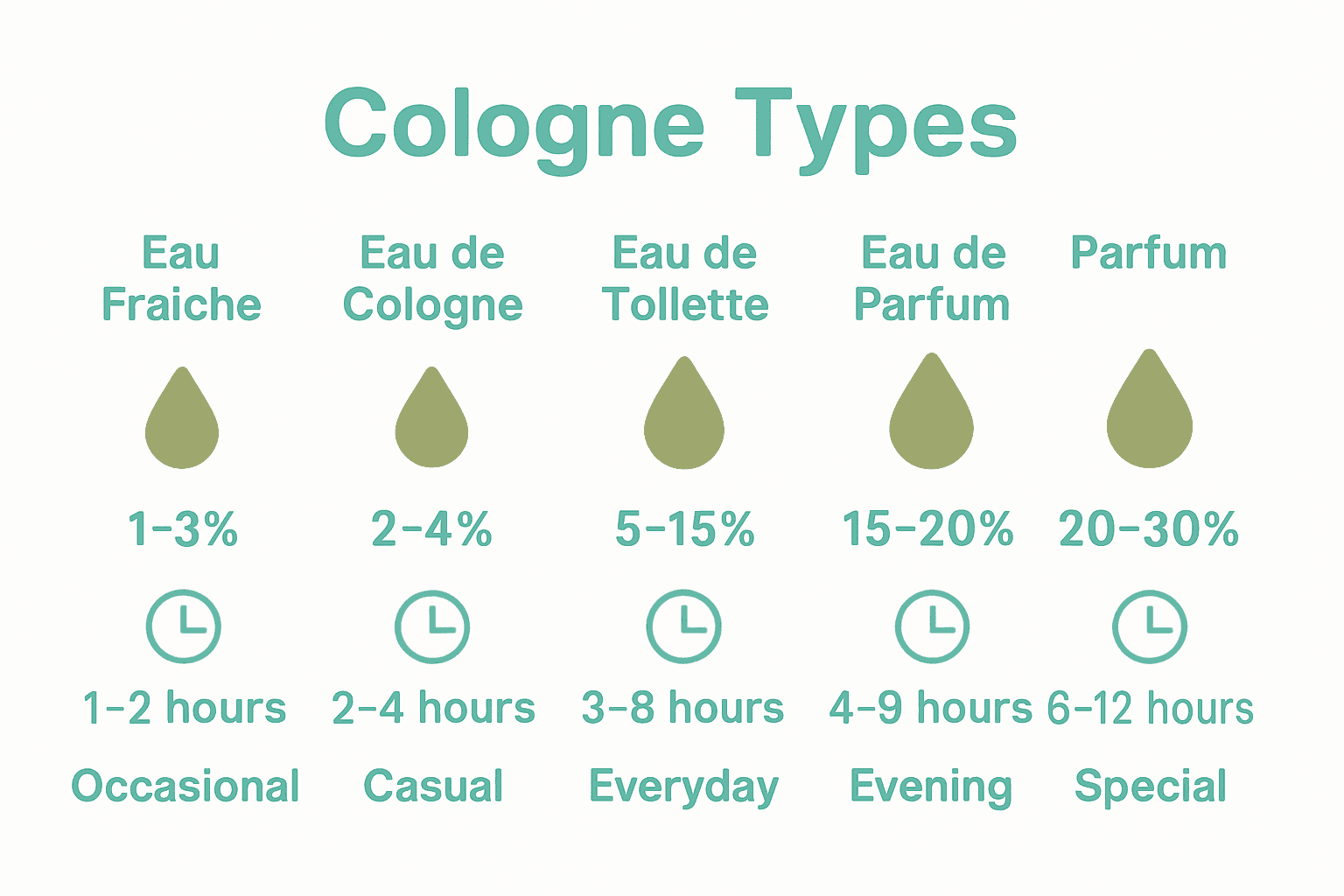
- Eau Fraiche (1-3% fragrance oils)
- Eau de Cologne (2-4% fragrance oils)
- Eau de Toilette (5-15% fragrance oils)
- Eau de Parfum (15-20% fragrance oils)
- Parfum/Extrait (20-40% fragrance oils)
According to IFRA, these concentration levels are not just numbers but determine the fragrance’s entire sensory experience. Eau Fraiche represents the most diluted form, offering a subtle hint of scent that dissipates quickly, ideal for those seeking a light, refreshing touch. In stark contrast, Parfum (or Extrait) delivers an intense, long-lasting olfactory journey that can persist for hours.
For fragrance enthusiasts wanting to dive deeper into understanding these nuanced differences, exploring the detailed Eau de Parfum guide can provide comprehensive insights into the complex world of scent concentrations. Each concentration level offers a unique sensory experience, allowing you to select a fragrance that perfectly matches your personal style and wearing occasion.
Fragrance Longevity and Sillage Explained
Understanding fragrance performance goes beyond simply selecting a pleasant scent. International Journal of Creative Research Thoughts reveals that fragrance longevity and sillage are complex scientific phenomena directly tied to perfume concentration and molecular composition.
Sillage, a French term meaning “wake” or “trail”, describes how a fragrance diffuses around the wearer. It can be visualised as the invisible aromatic cloud that surrounds you. The strength of sillage varies dramatically based on concentration:
- Eau Fraiche: Minimal sillage, close to skin
- Eau de Cologne: Light, short-distance projection
- Eau de Toilette: Moderate sillage, 1-2 feet radius
- Eau de Parfum: Robust projection, 3-4 feet radius
- Parfum/Extrait: Intense sillage, up to 5-6 feet radius
According to DermNet NZ, fragrance longevity ranges significantly across different concentrations. Eau de Parfum typically lasts four to five hours, while Eau de Toilette provides two to three hours of scent. Parfum, with its highest concentration, can persist for six to eight hours, making it the most enduring option for fragrance enthusiasts.
For those seeking to understand the nuanced world of fragrance performance, exploring perfume longevity techniques can transform your scent experience from fleeting to unforgettable. Understanding these subtle differences allows you to select a fragrance that not only smells incredible but also performs precisely as you desire.
Key Differences from Other Perfume Types
Fragrance concentration is the fundamental distinguishing factor between perfume types, creating a nuanced spectrum of olfactory experiences. IFRA highlights that the percentage of fragrance oils dramatically transforms a scent’s character, intensity, and performance.
The perfume hierarchy reveals distinct characteristics across different concentrations:
-
Eau Fraiche (1-3% oils)
- Lightest concentration
- Shortest longevity
- Ideal for hot climates
-
Eau de Cologne (2-4% oils)
- Refreshing, quick-dissipating
- Best for casual, daytime wear
-
Eau de Toilette (5-15% oils)
- Moderate intensity
- Suitable for professional environments
- Balanced projection
-
Eau de Parfum (15-20% oils)
- Rich, long-lasting
- Evening and special occasion wear
-
Parfum/Extrait (20-40% oils)
- Most concentrated
- Intense, luxurious experience
- Longest-lasting formulation
According to Auram.org, these concentration variations not only affect longevity but also significantly impact pricing. Higher concentration fragrances demand premium prices due to increased fragrance oil content and complex composition.
For fragrance enthusiasts eager to explore these nuanced distinctions, understanding different perfume types can transform your sensory approach to selecting the perfect scent. Each concentration offers a unique aromatic journey, inviting you to discover the subtle art of perfumery.
Choosing and Applying High-Strength Cologne
Selecting and applying high-strength cologne requires a nuanced approach that balances personal style, occasion, and olfactory sophistication. DermNet NZ emphasises that understanding your fragrance’s concentration is just the first step in mastering this delicate art.
When navigating high-strength fragrances, consider these essential application strategies:
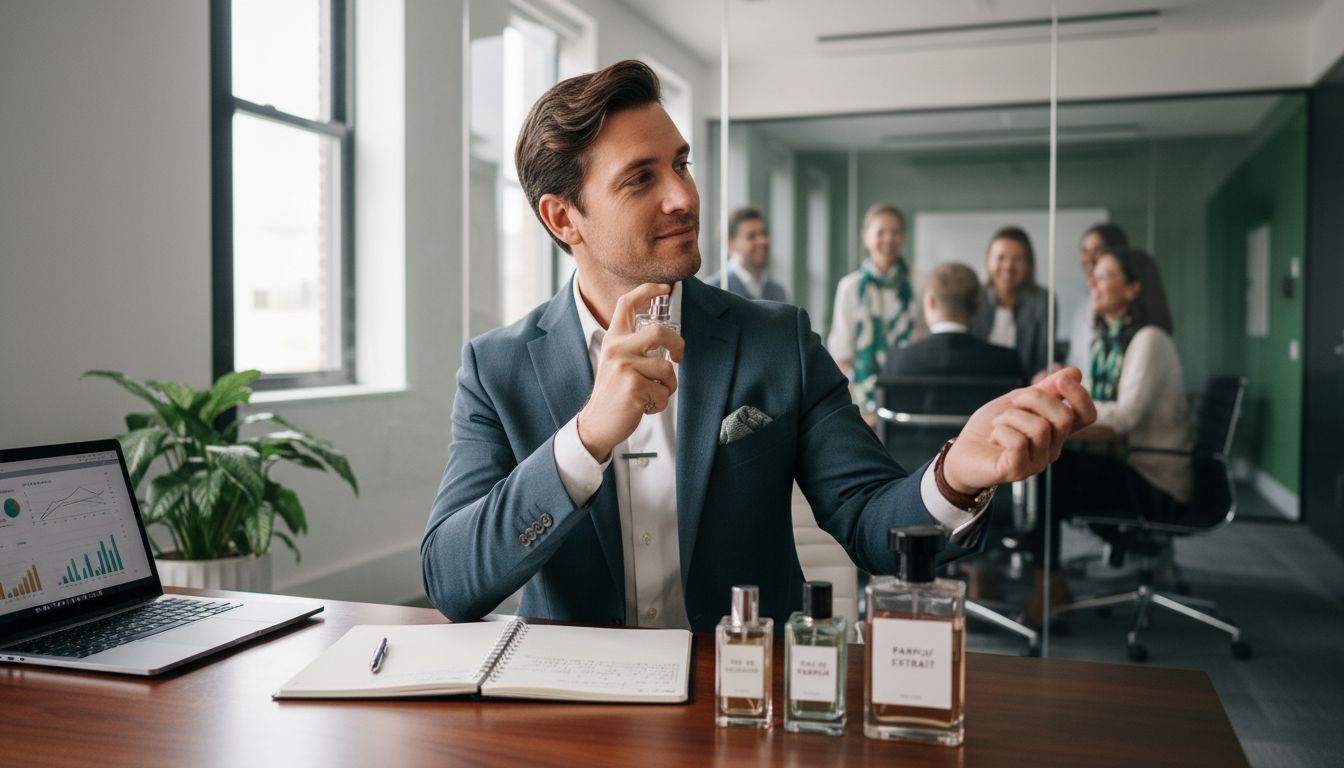
- Less is More: Particularly with Parfum and Eau de Parfum
- Target Pulse Points: Wrists, neck, behind ears
- Avoid Overapplication: One to two sprays maximum
- Consider Skin Chemistry: Test how fragrance interacts with your natural scent
According to the International Journal of Creative Research Thoughts, high-strength cologne application is an art form that requires careful consideration. Professional fragrance experts recommend understanding your personal scent profile and how different concentrations interact with your body chemistry. This means experimenting with small amounts and observing how the fragrance develops over several hours.
For fragrance enthusiasts looking to elevate their scent game, exploring occasion-based fragrance selection can transform your approach from amateur to connoisseur. Remember, the perfect cologne is not just about strength, but about creating a harmonious sensory experience that feels uniquely yours.
Common Mistakes and Safety Precautions
Fragrance safety is an often overlooked aspect of cologne selection and application. DermNet NZ warns that improper use of high-concentration fragrances can lead to unexpected skin reactions and sensory overload.
Key safety considerations for cologne enthusiasts include:
- Patch Testing: Always test new fragrances on a small skin area
- Avoid Sensitive Areas: Keep cologne away from eyes, open wounds
- Skin Sensitivity: Monitor for allergic reactions or irritation
- Storage Conditions: Protect fragrances from direct sunlight and heat
According to the International Journal of Creative Research Thoughts, many fragrance enthusiasts make critical errors in perfume management. Common mistakes include storing fragrances in bathroom cabinets (high humidity), exposing bottles to direct sunlight, and applying perfume to damaged or sensitive skin. These practices can significantly degrade fragrance quality and potentially cause skin complications.
For those seeking to refine their fragrance expertise, exploring comprehensive cologne guides can provide deeper insights into responsible and sophisticated fragrance usage. Remember, a truly remarkable scent experience balances personal expression with mindful application.
Discover Your Perfect Strength in Fragrance Today
Choosing the strongest cologne type can feel overwhelming with so many concentration options and the challenge of finding a scent that lasts throughout your day. If you want a fragrance that stands out with intense sillage and long-lasting impact, understanding concentrations like Parfum and Eau de Parfum is essential. Our focus at Alexandria UK is to help you navigate this sensory journey with quality perfumes inspired by your favourite scents and trusted dupes, so you can confidently select the fragrance that truly reflects your style.
Unlock the power of fragrance longevity and refined aroma by exploring our curated collection. Whether seeking a high-strength cologne for special occasions or a subtle Eau Fraiche for daily wear, find your ideal match with expert guidance and premium options at Alexandria UK. Elevate your scent experience now and make every moment unforgettable.
Frequently Asked Questions
What is the strongest type of cologne?
The strongest type of cologne is perfume extract (extrait), containing 22% to 48% concentrated fragrance oils. This high concentration results in a long-lasting and intense scent experience.
How does fragrance concentration affect longevity?
Fragrance concentration directly affects longevity, with higher concentrations lasting longer. For instance, Parfum can last 6 to 8 hours, while Eau de Parfum typically lasts 4 to 5 hours, and lighter scents like Eau Fraiche last the shortest amount of time.
What are the different types of cologne concentrations?
The common cologne concentrations include:
- Eau Fraiche (1-3% fragrance oils)
- Eau de Cologne (2-4% fragrance oils)
- Eau de Toilette (5-15% fragrance oils)
- Eau de Parfum (15-20% fragrance oils)
- Parfum/Extrait (20-40% fragrance oils)
How should I apply high-strength cologne?
For high-strength cologne, apply sparingly—usually one to two sprays is sufficient. Target pulse points such as wrists and neck, and take into account your skin’s chemistry to see how the fragrance develops over time.


