

Perfume Type Fragrance: Quality Dupes Explained
Shopping for fragrances can feel confusing when every bottle claims a different type or strength. For fragrance lovers in the United Kingdom, understanding the basics of perfume concentration and scent families is key to finding affordable dupes that genuinely suit your preferences. This guide explains how fragrance types and their core components affect wear time and scent quality, so you can confidently build your collection without overspending.
Table of Contents
- Understanding Perfume Type Fragrance Basics
- Categories Of Fragrance And Key Differences
- How Dupes Replicate Designer Scents Affordably
- Quality, Longevity And What Influences Performance
- Legal And Safety Standards For UK Perfumes
Key Takeaways
| Point | Details |
|---|---|
| Understanding Fragrance Types | Fragrance types vary based on the concentration of fragrant oils, affecting longevity, intensity, and price. |
| Fragrance Concentration Impact | Higher concentrations correlate with longer-lasting scents; Eau de Parfum strikes the best balance between wear time and cost. |
| Dupes and Quality Matching | Quality dupes can closely resemble high-end perfumes by utilising similar structures and ingredients without sacrificing scent experience. |
| Regulatory Compliance | All perfumes sold in the UK, regardless of cost, must meet stringent safety standards and comply with regulations to ensure consumer safety. |
Understanding Perfume Type Fragrance Basics
When you’re shopping for fragrances, you’ll quickly discover that not all perfumes are created equal. The term “perfume type” refers to the concentration of fragrant oils in a product, which fundamentally affects longevity, intensity, and price.
Perfumes vary dramatically in their composition and purpose. A perfume is a mixture of fragrant essential oils or aroma compounds, fixatives, and solvents designed to create a pleasant scent experience. Understanding these variations helps you choose the right product for your needs and budget.
The Core Components
Every fragrance contains three essential elements working together:
- Fragrant compounds – the aromatic ingredients that create the scent profile
- Fixatives – ingredients that help the scent last longer on your skin
- Solvents – typically alcohol, which carries and disperses the fragrance
The proportion of these components determines the fragrance type and its characteristics. Higher fragrant oil concentrations mean stronger scents and longer wear times.
The concentration level is the single biggest factor affecting both how long a fragrance lasts and how much you’ll spend on it.
Fragrance Concentrations Explained
Perfumes are classified by their fragrant oil concentration percentage:
- Eau de Cologne (3-5%) – Light, refreshing, lasts 1-2 hours
- Eau de Toilette (5-10%) – Moderate strength, lasts 2-4 hours
- Eau de Parfum (15-20%) – Strong presence, lasts 4-8 hours
- Extrait de Parfum or Perfume (20-40%) – Intense, lasts 8+ hours
Most UK fragrance enthusiasts find Eau de Parfum offers the best balance between longevity and value. It’s potent enough to satisfy throughout your day without the premium price tag of pure extraits.
Here is a concise overview of fragrance concentration types and their everyday suitability:
| Type | Oil Percentage | Wear Time | Typical Use |
|---|---|---|---|
| Eau de Cologne | 3–5% | 1–2 hours | Quick refresh sessions |
| Eau de Toilette | 5–10% | 2–4 hours | Casual daily activities |
| Eau de Parfum | 15–20% | 4–8 hours | Office or special events |
| Extrait de Parfum | 20–40% | 8+ hours | All-day or evening wear |
Why Concentration Matters for Dupes
Quality dupes don’t always match the original fragrance type. A luxury brand’s Eau de Parfum might cost £80, whilst an affordable dupe at the same concentration costs £15. The scent profile remains remarkably similar, but you’re saving considerably.
Some dupes exist at lower concentrations to reduce costs further. An Eau de Toilette dupe might capture 85% of a premium Eau de Parfum’s character whilst lasting slightly shorter and costing even less.
Regulatory compliance matters too. Fragrances in cosmetic products must meet safety standards and labelling requirements, regardless of whether they’re luxury originals or affordable dupes.
Layering and Longevity
Perfumes contain top notes (citrus, fresh elements), middle notes (florals, spices), and base notes (woods, musks) that unfold over time. Understanding this structure helps you appreciate why dupes work—they recreate this layering effect using similar accords.
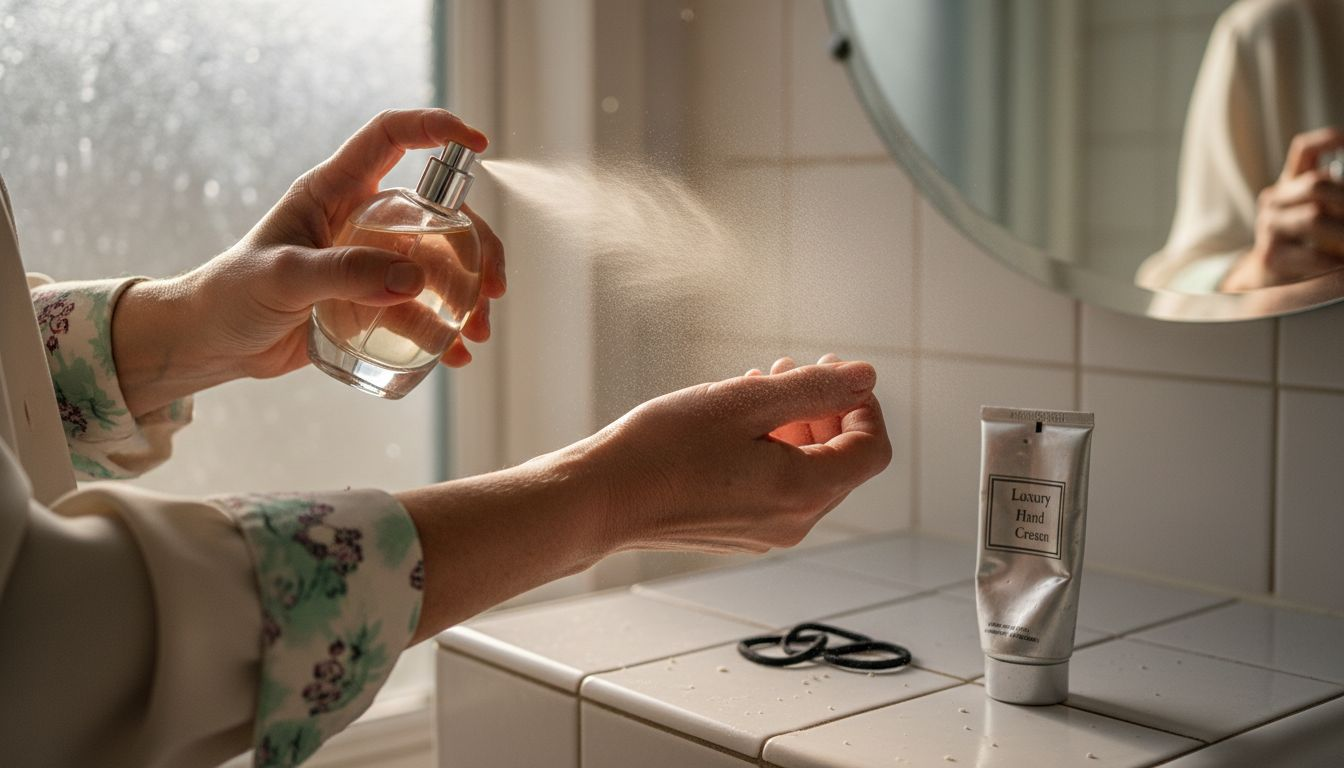
A quality dupe maintains this three-part structure, allowing the fragrance to evolve naturally on your skin. Cheaper knockoffs often collapse quickly into a one-dimensional scent because they lack proper fixatives.
Pro tip: Test any new fragrance on your inner wrist and wait 15 minutes before judging it, as the top notes mask the heart and base notes that ultimately determine whether it suits you.
Categories Of Fragrance And Key Differences
Fragrances aren’t just randomly assembled. They’re organised into distinct families, each with its own character and appeal. Understanding these categories helps you identify which scents suit your preferences and find quality dupes that genuinely match what you love.
The Main Fragrance Families
The fragrance world traditionally revolves around four core families. Each has its own personality, wearing experience, and ideal occasions.
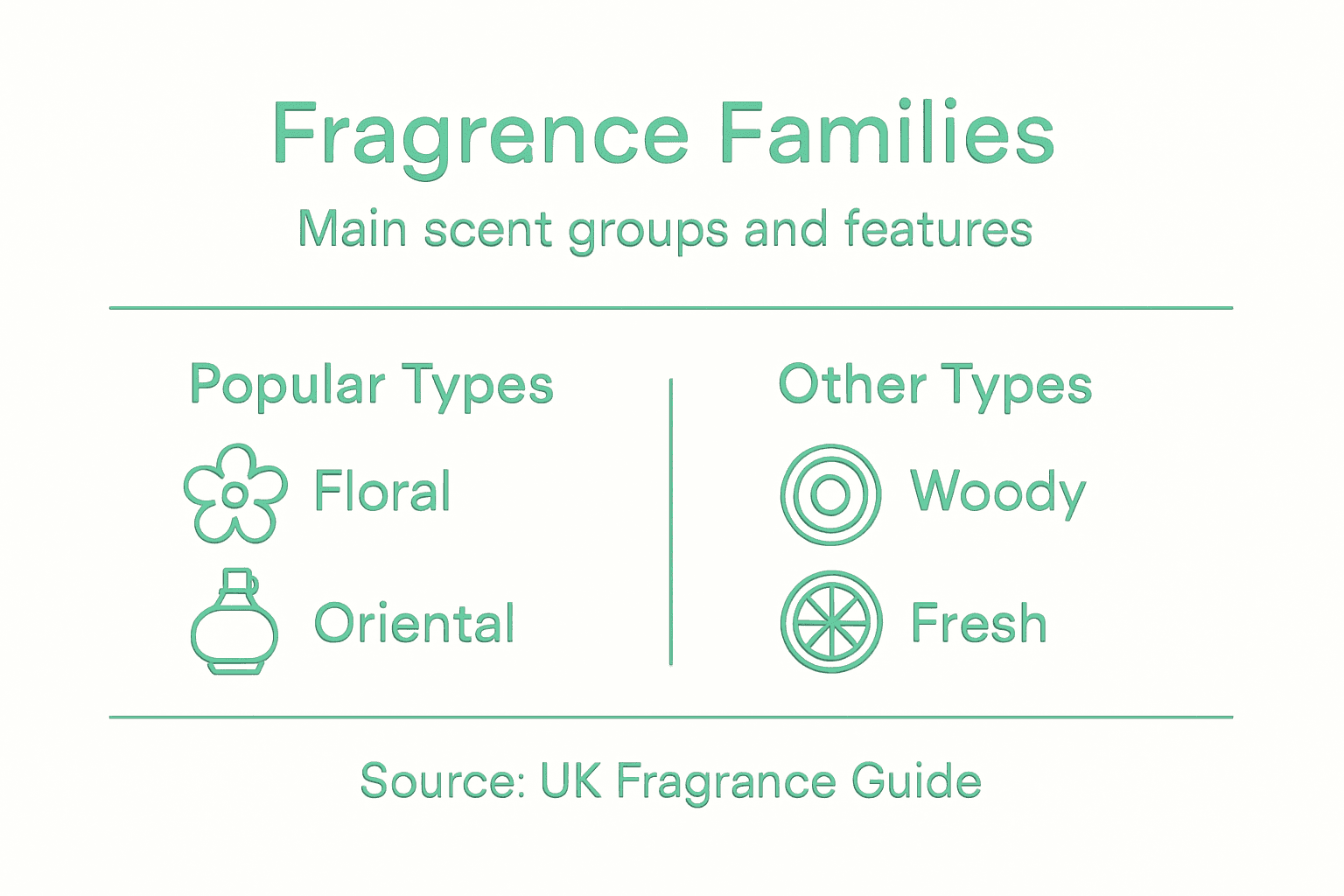
Floral fragrances dominate the market and remain the most popular choice among UK fragrance lovers. These scents celebrate flowers as the star ingredient, ranging from single-flower compositions to elaborate bouquet blends.
Oriental fragrances deliver richness and sensuality through spices, resins, and warming notes. They’re bold, often sweet, and designed for evening wear or colder months.
Woody fragrances ground themselves in earthy notes like sandalwood, cedar, and vetiver. These sophisticated scents appeal to those seeking depth and longevity.
Fresh fragrances offer light, clean profiles perfect for everyday wear. Citrus and aquatic notes dominate this category, making them ideal for work or casual settings.
Below is a summary comparing the four main fragrance families and their characteristics:
| Family | Main Impression | Popular For | Seasonal Suitability |
|---|---|---|---|
| Floral | Romantic, elegant | Occasions, daily | Spring and summer |
| Oriental | Warm, sensual | Evenings, winter | Autumn and winter |
| Woody | Earthy, grounded | Professional wear | Year-round, esp. autumn |
| Fresh | Clean, invigorating | Sport, office, day | Spring and summer |
Modern perfumery blurs these boundaries—most contemporary fragrances blend elements from multiple families to create complexity that pure categories cannot achieve.
Breaking Down Each Family
Within each major family, you’ll find fascinating subcategories that refine the experience:
- Floral: Single florals, soft florals, fruity florals, white florals
- Oriental: Amber, soft Oriental, warm spicy blends
- Woody: Dry woods, warm woods, earthy cedarwood scents
- Fresh: Citrus, aquatic, aromatic, green notes
Fragrance families provide the foundation for understanding which dupes will genuinely satisfy you. A floral dupe, for instance, won’t appeal to someone seeking woody depth.
Why Categories Matter For Dupe Hunting
When searching for quality dupes, starting with the fragrance family narrows your options dramatically. A luxury floral like a classic rose scent has dozens of excellent dupes—but only if you’re hunting within the floral family.
Mismatched categories lead to disappointment. Buying a woody dupe because it’s cheaper, when you adore fresh citrus, guarantees buyer’s remorse.
Fragrance families also hint at longevity and projection. Orientals typically last longer than fresh scents, whilst woody fragrances sit somewhere in the middle. Understanding this helps you choose dupes at appropriate concentration levels.
Modern Fragrance Blending
Contemporary fragrances frequently combine families. A scent might feature floral heart notes balanced with woody base notes and fresh citrus top notes. These complex creations often have the most rewarding dupes because the layered structure is what makes them memorable.
Quality dupe creators recognise this blending technique. The best dupes replicate the multi-family composition rather than focusing on a single dominant note.
Pro tip: When testing a potential dupe, wait until the base notes emerge (after 4-6 hours) before deciding, as this is where family characteristics truly reveal themselves and where quality separates affordable options from cheap knockoffs.
How Dupes Replicate Designer Scents Affordably
You might wonder how a £12 dupe captures the essence of a £95 designer fragrance. The answer lies in modern perfume science and clever reformulation. Quality dupes don’t copy carelessly—they’re engineered to match the original’s character whilst reducing costs dramatically.
The Science Behind Dupes
Perfumers use sophisticated analytical techniques to understand what makes a designer scent work. Gas Chromatography-Mass Spectrometry analysis breaks down original perfumes into their chemical components and reveals exactly which ingredients create the signature scent profile.
This scientific approach removes guesswork. Rather than trying random combinations, perfumers map the precise molecular structure of luxurious originals. They then recreate that structure using alternative ingredients that cost significantly less.
The goal isn’t to perfectly replicate every single molecule. Instead, it’s to recreate the olfactory experience—how the fragrance smells to your nose and evolves on your skin throughout the day.
Quality dupes succeed because they focus on replicating the sensory journey, not achieving perfect chemical parity with expensive originals.
Ingredient Substitution Strategies
Duplicate fragrances work through intelligent ingredient swapping:
- Premium to affordable synthetics – Replacing costly natural oils with chemically identical or similar synthetic alternatives
- Ingredient concentration adjustments – Using slightly less of expensive components, compensated by perfectly balanced supporting notes
- Regional sourcing – Sourcing raw materials from cost-effective suppliers without compromising quality
- Simplified formulations – Removing unnecessary complexity whilst preserving the scent’s soul
These substitutions don’t weaken the fragrance experience. A skilled perfumer ensures the final composition smells nearly identical to the original.
Replicating The Layered Structure
Designer fragrances succeed because they master the three-note pyramid: top notes that grab attention, heart notes that develop character, and base notes that provide longevity. Quality dupes replicate this exact architecture.
When you wear a luxury fragrance, you experience a journey. Top notes burst immediately, then fade. Middle notes blossom, creating the scent’s true character. Finally, base notes anchor everything, creating lasting impressions.
Affordable dupes maintain this timeline precisely. They unfold identically to the original, making the wearer experience feel nearly indistinguishable. This structural accuracy is what separates quality dupes from cheap knockoffs.
Why Cost Savings Don’t Mean Compromise
Designer fragrance pricing reflects brand reputation, packaging, marketing, and retail margins—not solely ingredient quality. A £95 fragrance might contain £8-12 worth of actual fragrant compounds.
Dupe manufacturers eliminate these non-scent costs. They invest directly in fragrant ingredients rather than fancy bottles or advertising campaigns. The result: similar quality at a fraction of the price.
Pro tip: Always test dupes alongside their designer inspirations during fragrance discovery, as comparing dupes with original scents reveals minor differences in longevity or projection that matter when choosing your signature scent.
Quality, Longevity And What Influences Performance
Not all fragrances perform equally. Two perfumes at identical price points can have vastly different staying power, projection, and overall quality. Understanding what affects longevity helps you choose dupes that genuinely satisfy rather than disappoint after a few hours.
Concentration Is King
Fragrance concentration remains the primary factor determining how long a scent lasts on your skin. Eau de Parfum typically outlasts Eau de Toilette by several hours simply because it contains more fragrant oils.
Quality dupes respect this hierarchy. A well-formulated Eau de Parfum dupe will outlast a cheap Eau de Toilette original every time. When shopping for affordable fragrances, matching concentration levels to the original ensures comparable longevity.
Perfume longevity factors include more than just oil content—they encompass your skin chemistry, climate conditions, and application technique.
Your Skin Type Matters Significantly
Not everyone’s skin treats fragrances identically. Oily and moisturised skin retains scent considerably better than dry skin because fragrant molecules grip to skin’s natural oils more effectively.
Dry skin accelerates scent evaporation. If you have dry skin, quality dupes at higher concentrations become even more worthwhile investments since you need the extra fragrant compounds to maintain longevity.
Layering with matching moisturisers or body oils dramatically improves fragrance performance regardless of skin type. This technique costs very little but transforms even modest dupes into longer-lasting experiences.
Your individual skin chemistry influences fragrance performance more than many people realise—the same dupe may last 4 hours on one person and 7 hours on another.
The Role Of Base Notes
Fragrances containing woody and musky base notes naturally last longer than those built on fresh citrus and aquatic elements. This structural difference isn’t a quality issue—it’s chemistry.
When evaluating dupes, base note composition matters enormously. A fresh, citrusy dupe will never match the longevity of a woody original. Select dupes with matching base note profiles to expect comparable wear times.
Quality dupe makers understand this principle and adjust their formulations accordingly. They don’t force cheap citrus dupes to compete with expensive oriental fragrances.
Weather And Climate Influence
The British climate actually favours fragrance longevity. Cool, moist air slows evaporation compared to hot, dry climates. Winter fragrances perform particularly well in the United Kingdom.
Wind and rain reduce scent life noticeably. An outdoor fragrance choice differs from an office scent for precisely this reason. Quality dupes maintain their character regardless of conditions when properly formulated.
Application Technique
Where you apply fragrance dramatically affects how long it lasts:
- Pulse points – Wrists, neck, behind ears (warmth enhances diffusion)
- Hair – Fragrance lingers considerably longer
- Clothing – Scent persists through fabric throughout the day
- Layering – Multiple application points extend overall longevity
Even budget dupes perform exceptionally when applied strategically. Proper technique can extend wear time by 2-3 hours.
Pro tip: Apply fragrances to warm pulse points immediately after showering when skin is slightly damp, then layer a matching body lotion to lock in scent and extend longevity by several hours.
Legal And Safety Standards For UK Perfumes
When you purchase a fragrance in the UK, whether a designer original or an affordable dupe, it’s undergone rigorous safety testing and regulatory compliance. Understanding these standards reassures you that quality matters and that legitimate sellers maintain strict safety protocols.
The UK Regulatory Framework
The United Kingdom operates within a comprehensive fragrance regulation system designed to protect consumers. Post-Brexit, the UK retained much of the European Union’s regulatory framework whilst making adjustments for local enforcement and governance.
IFRA UK (the International Fragrance Association) works closely with government bodies to ensure the fragrance industry complies with safety standards. IFRA fragrance regulation guides manufacturers on safe ingredient usage and maintains frameworks that balance consumer protection with industry innovation.
Key regulations that affect every perfume sold in the UK include Classification, Labelling and Packaging standards, REACH chemical regulations, and Cosmetic Product Regulations.
Every legitimate fragrance seller in the UK must comply with the same safety standards, regardless of price point—affordable dupes face identical scrutiny as luxury originals.
Mandatory Compliance Requirements
Selling perfume in the UK requires strict legal adherence. Manufacturers must appoint a Responsible Person based in the United Kingdom who oversees product safety compliance and maintains critical documentation.
Three essential compliance elements protect you:
- Product Information File (PIF) – Complete documentation of formulation, safety data, and ingredient sourcing
- Cosmetic Product Safety Report (CPSR) – Toxicologist-led evaluation confirming formulation safety
- Government notification – Products must be registered with safety authorities before market release
These requirements apply equally to budget dupes and premium fragrances. A £15 dupe undergoes the same safety assessment as a £150 luxury scent.
Ingredient Restrictions And Labelling
The UK maintains strict restrictions on which fragrance ingredients are permissible. Banned substances cannot appear in any commercial perfume, regardless of brand prestige or price.
Cosmetic product safety compliance requires proper labelling that clearly identifies all potential allergens. You’ll notice fragrance dupes list their ingredients, just as expensive originals do.
Proper labelling protects you from unexpected allergic reactions. Quality dupe manufacturers respect these requirements because legal violations carry serious penalties.
What This Means For Dupe Shoppers
Purchasing from UK-compliant sellers guarantees you’re buying from suppliers who’ve invested in safety protocols. Legitimate dupe retailers maintain the same documentation and compliance standards as luxury brands.
UK sellers cannot cut corners on safety regardless of their price positioning. The regulatory framework ensures that affordability doesn’t mean compromised safety.
When comparing dupes with originals, both have undergone identical toxicological evaluation and ingredient restriction compliance. Your confidence in choosing affordable options is justified by law.
Pro tip: Always purchase fragrances from reputable UK retailers who transparently display their Responsible Person designation and compliance credentials, ensuring your dupe purchase meets all legal safety standards.
Discover Quality Perfume Dupes That Match Your Scent Expectations
Choosing the right perfume concentration and fragrance family can feel overwhelming, especially when seeking a quality dupe that offers real longevity and true character. Many struggle with balancing fragrance performance, skin chemistry compatibility, and affordable pricing while navigating terms like Eau de Parfum or understanding scent layering. At Alexandria UK, we understand these challenges and bring you expertly crafted dupes that respect the original scent’s three-note pyramid and concentration levels without compromising on safety or quality.
Explore our carefully selected collection where every fragrance is designed to provide you with the sensory journey you deserve. Why wait for expensive luxury when you can experience premium quality at a fraction of the price? Start your discovery today by visiting Alexandria UK, learn how to choose your perfect fragrance at our Fragrance Academy, and compare dupes with originals to confidently find your signature scent.
Frequently Asked Questions
What are the different perfume types based on fragrance concentration?
Perfume types are classified based on the concentration of fragrant oils. The common categories are Eau de Cologne (3-5% oil, lasting 1-2 hours), Eau de Toilette (5-10%, lasting 2-4 hours), Eau de Parfum (15-20%, lasting 4-8 hours), and Extrait de Parfum (20-40%, lasting over 8 hours).
How do I choose the right fragrance concentration for my needs?
Choosing the right fragrance concentration depends on how long you want the scent to last and the intensity you prefer. For everyday wear, Eau de Toilette or Eau de Parfum typically offers a balance of longevity and scent strength. If you need something for all-day wear or special occasions, consider Extrait de Parfum for its intense and lasting fragrance.
What should I look for when comparing designer fragrances with affordable dupes?
When comparing designer fragrances with affordable dupes, consider the concentration of fragrant oils, the scent profile, and the three-part structure of notes (top, middle, and base). Quality dupes will closely replicate these elements while providing a similar olfactory experience at a lower cost.
How does my skin type affect fragrance longevity?
Your skin type significantly affects fragrance longevity. Oily and moisturised skin retains scents better than dry skin, as fragrant molecules cling to natural oils more effectively. If you have dry skin, opting for higher concentration products or layering with matching moisturisers can help enhance scent retention.


