

How to Mix Perfumes for Unique, Quality Dupes Easily
Finding affordable yet sophisticated scents can feel frustrating for fragrance lovers across the United Kingdom. With high-end perfumes often out of reach, many enthusiasts turn to the creative world of mixing dupes at home. Establishing a clean and organised workspace and learning the basics of perfume blending allows you to experiment confidently and safely while crafting a signature fragrance that reflects your unique personality.
Table of Contents
- Step 1: Prepare Your Workspace And Select Perfumes
- Step 2: Assess Fragrance Notes And Compatibility
- Step 3: Experiment With Mixing Small Test Batches
- Step 4: Evaluate Scent, Longevity And Quality
- Step 5: Adjust Ratios And Blend For Final Use
Quick Summary
| Key Point | Explanation |
|---|---|
| 1. Create an organised workspace | Ensure a clean, well-ventilated area for safe fragrance mixing. |
| 2. Understand fragrance notes | Learn about top, heart, and base notes to create balanced blends. |
| 3. Experiment with small batches | Use small quantities to find effective scent combinations. |
| 4. Rigorously evaluate your blend | Assess scent, longevity, and projection to refine your perfume. |
| 5. Adjust ratios carefully | Make small changes to enhance the overall fragrance profile. |
Step 1: Prepare your workspace and select perfumes
Creating the perfect perfume blend begins with meticulous preparation and a thoughtful approach to your workspace and fragrance selection. Mixing perfumes requires precision, creativity, and a strategic environment that supports your olfactory exploration.
To start, you’ll want to establish a clean and organised workspace that allows for safe handling of fragrances. Choose a well-ventilated area away from direct sunlight, preferably with a stable surface and good lighting. Proper risk assessment is crucial when working with cosmetic substances to ensure safety and quality.
When selecting perfumes for mixing, consider these key factors:
- Choose fragrances with complementary scent profiles
- Aim for high-quality base perfumes with distinct notes
- Select perfumes from similar fragrance families (woody, floral, oriental)
- Ensure perfumes are from reputable sources with clear ingredient lists
Use white paper strips or blotters to test initial fragrance combinations before committing to a full blend. This allows you to experiment and gauge how different scents interact without wasting expensive perfumes.
Expert Tip: Always keep a small notebook to record your perfume mixing ratios and observations, helping you refine and replicate your unique fragrance combinations.
Step 2: Assess fragrance notes and compatibility
Understanding the intricate world of fragrance notes is essential for creating harmonious and compelling perfume blends. By mastering the art of note compatibility, you’ll transform simple fragrances into extraordinary sensory experiences.
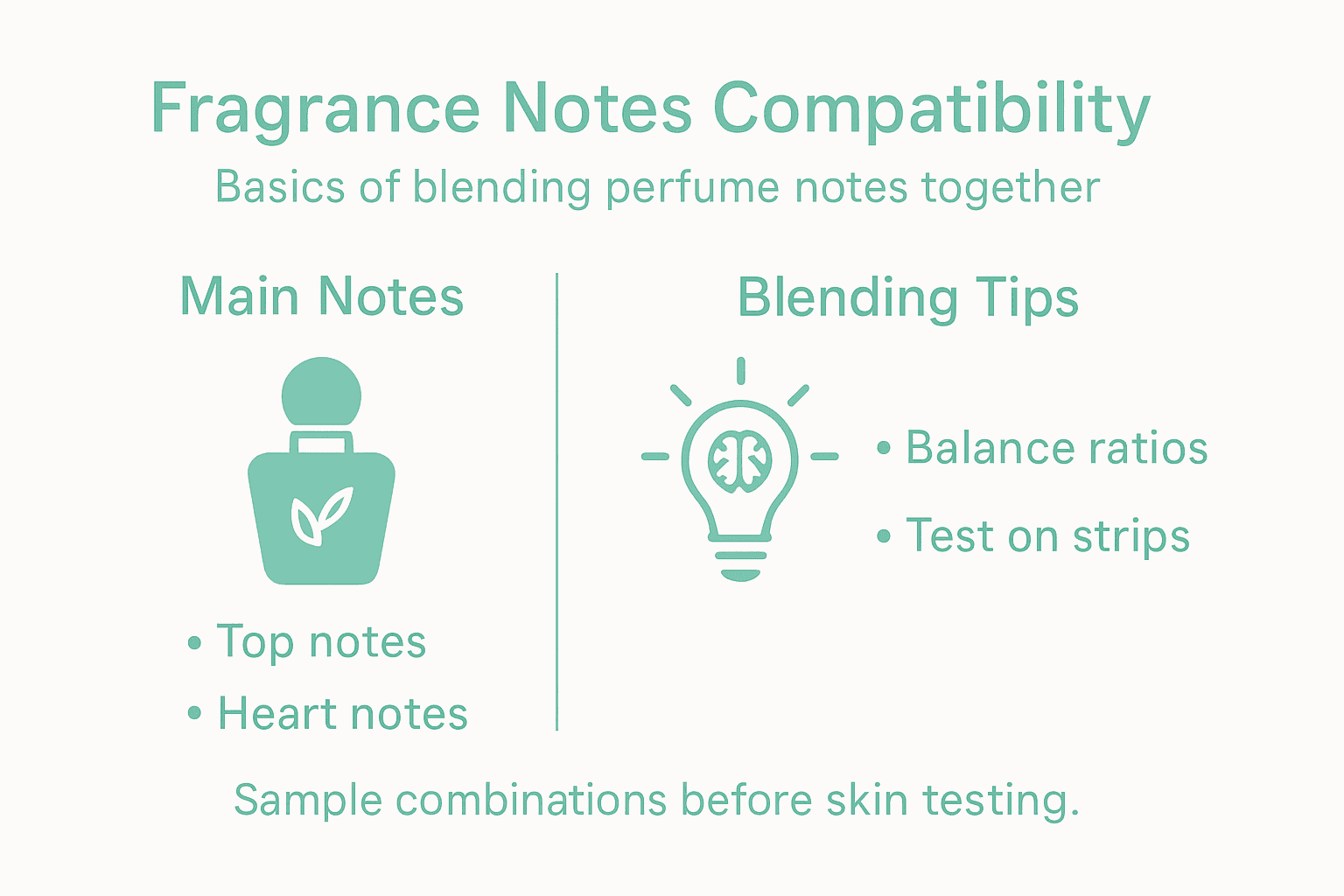
To assess fragrance notes effectively, start by understanding the fundamental fragrance note categories. These typically include:
Here’s a quick overview of fragrance note types and their roles in a perfume blend:
| Note Type | Main Role in Perfume | Typical Longevity on Skin |
|---|---|---|
| Top Note | First impression, fresh | 10–30 minutes |
| Heart Note | Defines main character | 1–3 hours |
| Base Note | Adds depth and longevity | 4+ hours |
- Top notes (initial impression)
- Heart/middle notes (core character)
- Base notes (lasting foundation)
Consider the safety assessment of fragrance compounds to ensure your blend is not only delightful but also safe. Each ingredient should complement rather than compete with others, creating a balanced olfactory profile.
When evaluating compatibility, pay attention to these crucial elements:
- Molecular structure of individual notes
- Potential chemical interactions
- Relative volatility of different fragrance components
- Harmonisation of scent families
A successful perfume blend requires understanding how different notes interact and evolve. Some notes naturally enhance each other, while others might create dissonance. Experiment with small quantities, documenting your findings to refine your technique.
Perfume mixing is an art that balances scientific precision with creative intuition.
Expert Tip: Always test your fragrance combinations on paper strips before applying to skin, allowing the scents to develop and interact over several hours.
Step 3: Experiment with mixing small test batches
Mastering perfume creation requires patience, precision, and strategic experimentation. Small test batches are your gateway to discovering unique fragrance combinations without committing significant resources or risking waste.
Begin by understanding the critical mixing techniques that ensure a harmonious blend. Your mixing process should focus on controlled, methodical approaches:
- Use clean, graduated pipettes for precise measurements
- Mix fragrances in small glass vials
- Start with minimal quantities (1-2 millilitres)
- Record exact ratios in a dedicated notebook
When creating test batches, concentrate on systematic experimentation. Each mixture should represent a deliberate exploration of scent interactions. Combine notes incrementally, allowing each addition to integrate fully before introducing the next component.
Small variations can transform an ordinary fragrance into an extraordinary blend.
Pay close attention to how different concentrations impact the overall fragrance profile. A minute adjustment in proportions can dramatically alter the scent’s character, revealing unexpected and delightful nuances.
Expert Tip: Label each test batch with precise mixing details and date, creating a personal fragrance research archive that tracks your creative journey.
Step 4: Evaluate scent, longevity and quality
Successful perfume mixing relies on meticulous evaluation of your fragrance creation. Understanding how to critically assess your unique blend will transform your experimental efforts into a sophisticated, long-lasting perfume.
Begin by assessing product quality standards through a systematic sensory evaluation. Your assessment should cover multiple critical dimensions:
- Initial scent impression
- Fragrance evolution over time
- Projection and sillage
- Skin compatibility
- Overall olfactory balance
Perform rigorous longevity testing by applying your blend to different pulse points and tracking its development. Note how the fragrance transforms across several hours, paying attention to how top, heart, and base notes interact and dissipate.
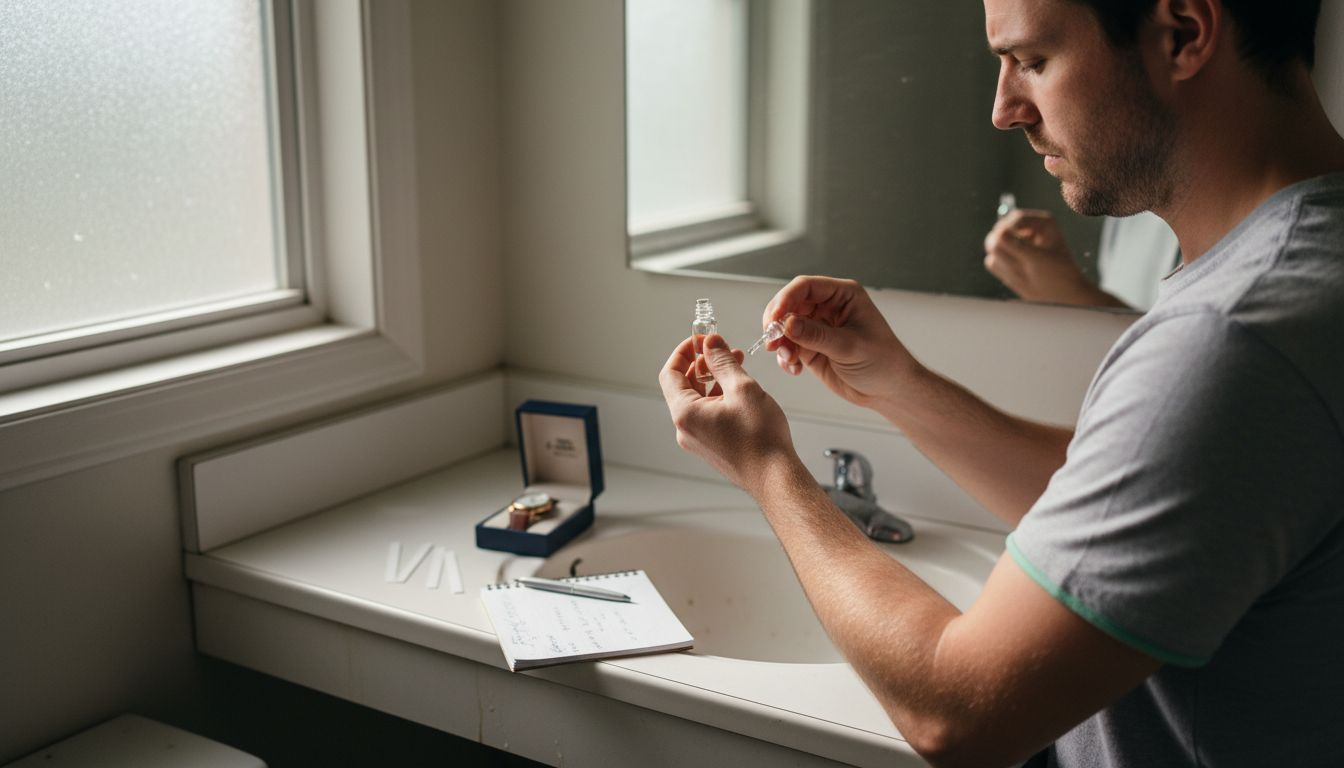
Below is a summary of key evaluation factors when assessing your perfume blend:
| Evaluation Aspect | Why It Matters | How to Assess |
|---|---|---|
| Initial Scent | Sets first impression | Smell immediately |
| Longevity | Lasting power on skin | Monitor over 6+ hours |
| Projection/Sillage | How far scent travels | Notice at arm’s length |
| Skin Compatibility | Avoids irritation | Test on inner wrist |
A truly exceptional perfume tells a complex, evolving story on the skin.
Consider documenting your findings methodically. Track precise details about each test batch, including ingredient ratios, application method, and sensory observations. This approach will help you refine your technique and understand the nuanced chemistry of fragrance creation.
Expert Tip: Create a dedicated fragrance journal with detailed notes, allowing you to reproduce successful blends and learn from less successful experiments.
Step 5: Adjust ratios and blend for final use
Transforming your experimental fragrance into a polished, wearable perfume requires subtle and strategic adjustments. The final blending stage is where your artistry truly comes to life, turning raw ingredients into a harmonious olfactory experience.
Begin by implementing safety standards during your final blend. Your approach should be methodical and precise:
- Start with small incremental adjustments
- Focus on balancing dominant and subtle notes
- Test minute ratio changes systematically
- Ensure consistent fragrance character
Precise ratio modification demands patience and keen sensory awareness. Incrementally adjust your base, heart, and top notes by tiny percentages—sometimes as little as 0.5%—to achieve the perfect equilibrium.
Perfection lies in the nuanced balance between scientific precision and artistic intuition.
Consider creating multiple small variations of your final blend, allowing each subtle adjustment to reveal its unique character. Document every modification meticulously, tracking how minute changes transform the overall fragrance profile.
Expert Tip: Allow each adjusted blend to mature for 48 hours before final evaluation, as some fragrance notes develop complexity with brief resting periods.
Discover Quality Perfume Dupes to Enhance Your Mixing Journey
Mixing perfumes to create unique, quality dupes can be challenging. You need precision, safe handling, and access to high-quality base fragrances with compatible notes. When you aim for a perfectly balanced blend that evolves beautifully on the skin, sourcing reliable ingredients is key. At AlexandriaUK, we understand these critical steps and offer a carefully curated selection of perfumes inspired by popular fragrances that help you achieve that ideal scent.
Explore our range of premium fragrance dupes and base perfumes designed for artistic experimentation and long-lasting results. Start crafting your signature blends today by visiting AlexandriaUK. Your next step to mastering perfume mixing begins with quality ingredients and expert guidance available now on our site. Don’t wait to transform your creative ideas into wearable works of art.
Frequently Asked Questions
How can I prepare my workspace for mixing perfumes?
To prepare your workspace, choose a clean and organised area with good ventilation, stable surfaces, and ample lighting. Ensure you’re away from direct sunlight and have all your tools ready before you begin mixing.
What should I consider when selecting perfumes for mixing?
When selecting perfumes, aim for high-quality fragrances with complementary scent profiles from the same fragrance families, such as floral or woody. Test combinations on white paper strips to assess compatibility before committing to a full blend.
How do I assess fragrance notes for compatibility?
To assess fragrance notes, understand the three main categories: top notes, heart notes, and base notes. Experiment with small quantities to see how these notes interact, and document your experiences for future reference.
What are some tips for creating small test batches?
Start creating small test batches by using graduated pipettes for precise measurements and mixing in glass vials. Focus on systematic experimentation, where you incrementally add new notes while allowing each mixture to develop fully before adding more.
How can I evaluate the quality and longevity of my perfume blend?
Evaluate your perfume blend by assessing its initial scent impression, longevity, projection, and skin compatibility. Apply the blend to different pulse points and observe how it transforms over several hours to determine its overall quality.
What steps should I take to adjust ratios in my final perfume blend?
To adjust ratios, make small incremental changes to your base, heart, and top notes, starting at 0.5% adjustments. Test each modified blend after allowing it to mature for 48 hours to see how the overall fragrance profile evolves.


