

How long can a perfume last? Your 2026 fragrance guide
You might assume that expensive perfumes automatically last longer than dupes, but fragrance longevity depends far more on formulation and storage than price tags. The lifespan of a perfume varies dramatically based on concentration, ingredients, and how you care for it. Understanding these factors transforms how you buy, store, and wear fragrances, ensuring you get maximum value from every bottle.
Table of Contents
- What Determines How Long A Perfume Lasts?
- How Perfume Storage Impacts Its Lifespan
- Comparing Longevity Of Different Perfume Types And Quality Levels
- Practical Ways To Make Your Perfume Last Longer On Skin And In Bottle
- Discover Lasting Fragrances At Alexandria UK
Key takeaways
| Point | Details |
|---|---|
| Concentration matters most | Parfum lasts 6-8 hours whilst eau de toilette offers 2-4 hours on skin. |
| Storage extends lifespan | Proper conditions keep unopened perfumes viable for 10+ years, opened bottles for 3-5 years. |
| Vapour pressure predicts longevity | Lower vapour pressure ingredients evaporate slower, creating longer-lasting scents. |
| Quality beats price | Well-formulated dupes can match designer longevity through ingredient selection. |
| Application technique amplifies wear | Moisturised skin and pulse points hold fragrance significantly longer. |
What determines how long a perfume lasts?
Perfume longevity begins with evaporation. When you spray fragrance, volatile compounds escape from your skin into the air at different rates. Perfume longevity is influenced by the fragrance’s vapour pressure, which determines how quickly molecules transition from liquid to gas. Lower vapour pressure means slower evaporation and extended wear time.
Fragrance concentration creates the foundation for lasting power. Parfum contains 20-30% aromatic compounds, delivering 6-8 hours of scent. Eau de parfum sits at 15-20% concentration for 4-6 hours. Eau de toilette offers 5-15% for 2-4 hours, whilst eau de cologne provides 2-4% lasting just 1-2 hours. These percentages directly impact how long you’ll smell the fragrance.
Ingredient selection matters enormously. Base notes like sandalwood, amber, and musk possess naturally low vapour pressure, clinging to skin for hours. Top notes such as citrus and aldehydes evaporate within minutes due to high volatility. A well-balanced perfume layers these components strategically.
Molecular weight influences persistence too. Heavier molecules with complex structures evaporate more slowly than light, simple ones. This explains why woody and oriental fragrances typically outlast fresh citrus scents. The chemical composition of each ingredient determines its staying power.
Skin chemistry creates another variable. Your natural oils, pH levels, and body temperature alter how fragrances develop and fade. Drier skin absorbs perfume quickly, reducing longevity, whilst oily skin holds scent longer by creating a moisture barrier that slows evaporation.
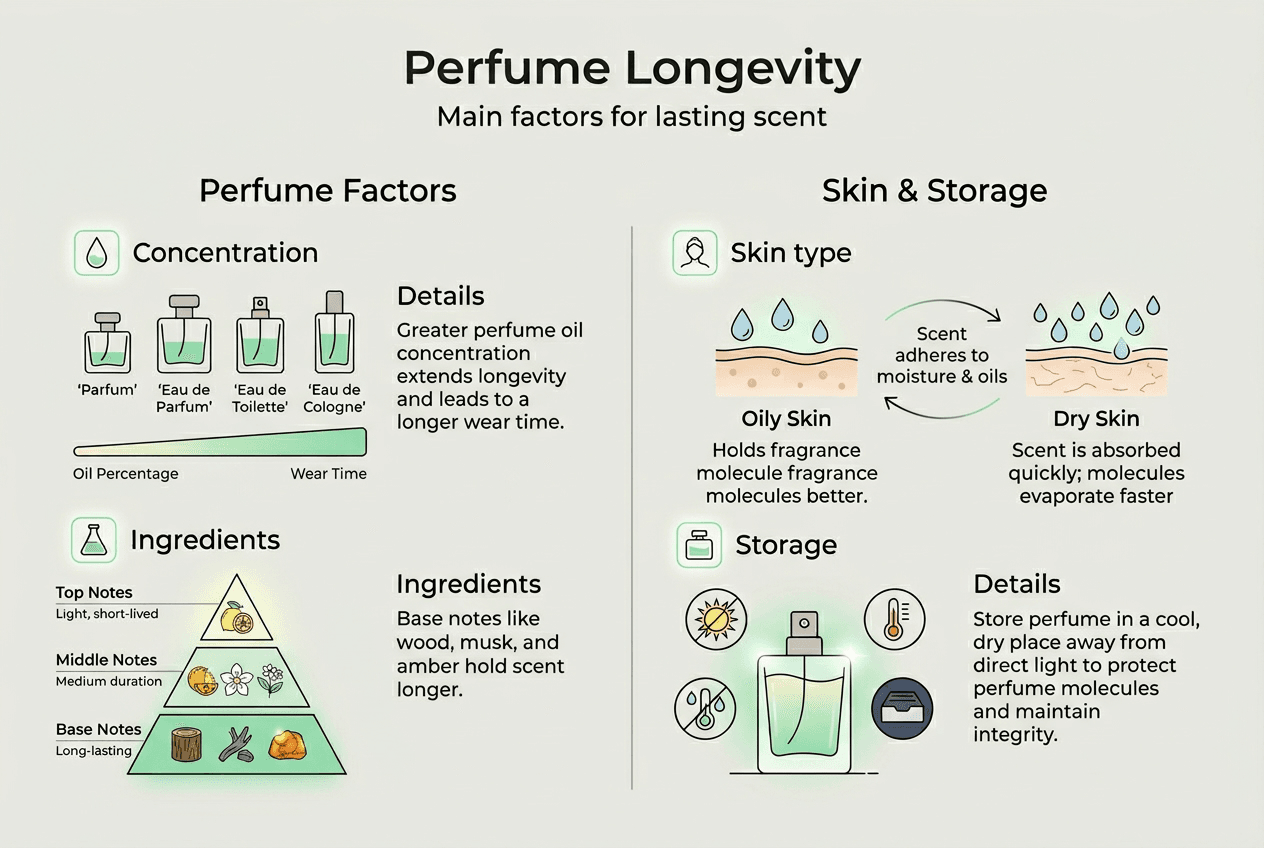
Pro tip: Choose perfumes featuring base notes with low vapour pressure like vanilla, patchouli, or vetiver for extended wear throughout your day.
How perfume storage impacts its lifespan
Heat accelerates chemical breakdown in fragrances. Temperatures above 15°C trigger oxidation reactions that alter scent profiles and reduce potency. Each 10°C increase roughly doubles the rate of degradation. Your bathroom cabinet, despite seeming convenient, creates one of the worst storage environments due to temperature fluctuations from showers.
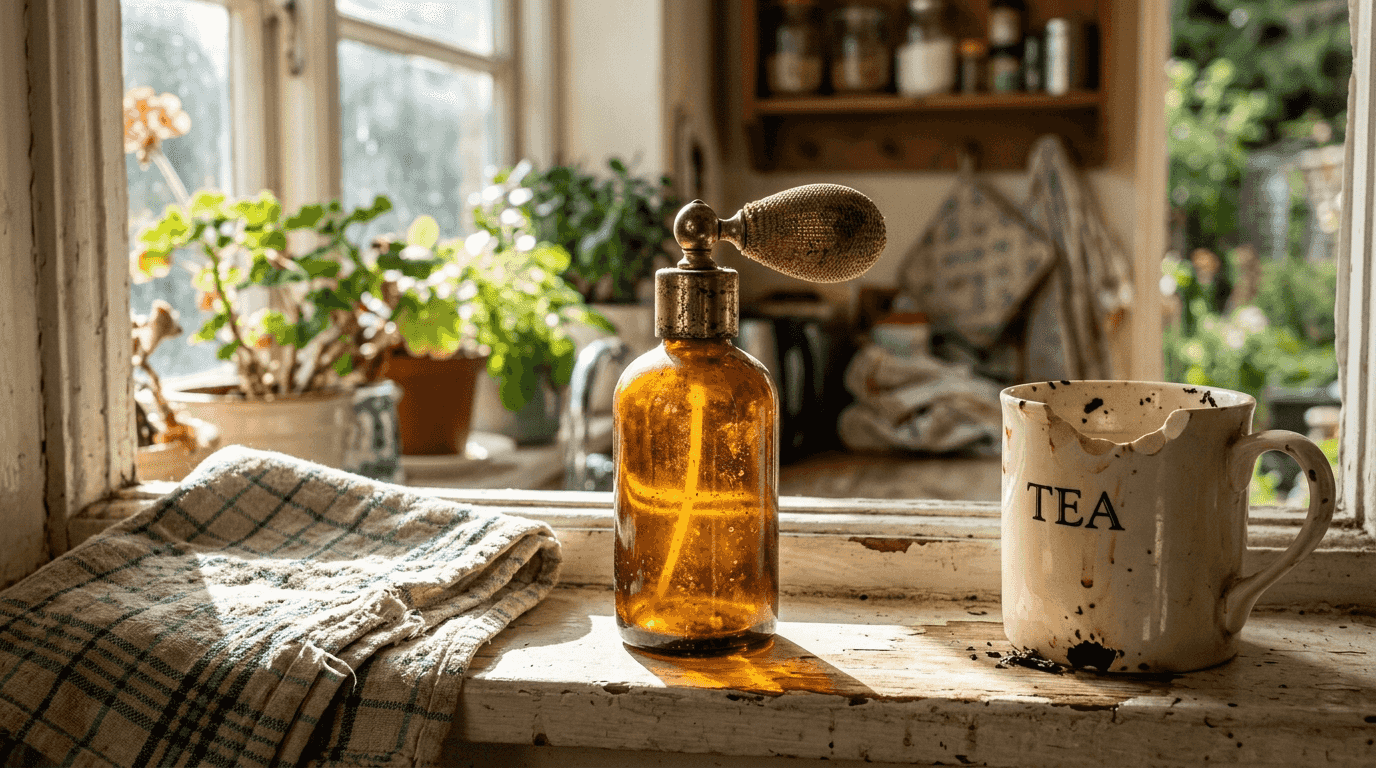
Light exposure causes photodegradation. Ultraviolet rays break molecular bonds in fragrance compounds, particularly affecting delicate floral and citrus notes. Correct storage reduces perfume degradation by shielding bottles from both natural and artificial light sources. Even indirect sunlight through windows damages fragrances over time.
Air contact initiates oxidation immediately. Once you open a bottle, oxygen begins interacting with aromatic molecules, gradually transforming their structure. This process turns fresh scents stale and can create unpleasant metallic or vinegar-like notes. The more headspace in your bottle, the faster oxidation occurs.
Unopened perfumes maintain quality significantly longer than opened ones. A sealed bottle stored properly can last 10-15 years, whilst opened fragrances typically remain optimal for 3-5 years. The difference stems entirely from oxygen exposure and evaporation through imperfect seals.
Container integrity matters enormously. Atomiser pumps that fit loosely allow fragrance to escape and air to enter. Decorative bottles with cork stoppers permit more evaporation than those with tight-fitting spray mechanisms. Original packaging protects against light and provides cushioning against temperature swings.
Common storage mistakes include:
- Keeping perfumes in bathrooms where humidity and heat fluctuate wildly
- Displaying bottles on windowsills or dressing tables exposed to sunlight
- Storing fragrances in cars where temperatures reach extremes
- Transferring perfume to decorative bottles that lack proper seals
- Leaving caps off after application, exposing contents to air
Ideal conditions mimic wine cellars. Store perfume in cool, dark locations between 10-15°C with consistent temperature. Wardrobes, drawers, and dedicated storage boxes work excellently. Keep bottles upright to minimise liquid contact with seals, and maintain original packaging when possible.
Refrigeration works for long-term storage but requires careful execution. Condensation from temperature changes can damage labels and seals. If you refrigerate perfumes, keep them in sealed plastic bags and allow gradual warming before opening. Never freeze fragrances, as this can separate ingredients.
For best storage practices, group your collection in a dedicated space away from environmental stressors rather than scattering bottles throughout your home.
Comparing longevity of different perfume types and quality levels
Perfume classifications reveal expected performance. Parfum (extrait de parfum) delivers the longest wear at 6-8 hours, containing 20-30% fragrance oils in an alcohol base. Eau de parfum follows with 4-6 hours from 15-20% concentration. Eau de toilette provides 2-4 hours at 5-15%, whilst eau de cologne offers 1-2 hours with just 2-4% aromatic content.
Higher concentration perfumes typically last longer on skin through sheer volume of aromatic molecules. However, formulation quality matters equally. A poorly constructed parfum using cheap synthetics may fade faster than a well-crafted eau de parfum featuring quality ingredients.
Luxury perfumes and dupes differ primarily in ingredient sourcing and formulation expertise. Designer houses invest heavily in rare naturals and proprietary molecules. Dupes recreate similar scent profiles using more accessible ingredients. This doesn’t automatically mean shorter longevity though. Quality dupes can match or exceed designer performance when formulators select appropriate fixatives and base notes.
Price reflects brand positioning, packaging, and marketing more than actual lasting power. A £150 designer fragrance might last 5 hours whilst a £30 inspired alternative lasts 6 hours if the dupe uses better fixatives. Testing on your skin reveals true performance better than price tags.
| Perfume type | Concentration | Typical longevity | Best for |
|---|---|---|---|
| Parfum | 20-30% | 6-8 hours | Evening wear, special occasions |
| Eau de parfum | 15-20% | 4-6 hours | Daily wear, office environments |
| Eau de toilette | 5-15% | 2-4 hours | Casual daytime, warm weather |
| Eau de cologne | 2-4% | 1-2 hours | Post-shower freshness, layering |
When selecting fragrances for lasting power, consider these factors:
- Fragrance family: oriental and woody scents naturally persist longer than fresh citrus
- Base note composition: look for amber, musk, vanilla, patchouli, or sandalwood
- Formulation transparency: brands listing actual ingredients signal quality commitment
- User reviews mentioning longevity: real-world testing reveals true performance
- Sample testing: try fragrances on your skin for several hours before purchasing
Understanding concentration levels helps you match perfume types to your needs. If you need all-day scent, invest in eau de parfum or parfum. For subtle freshness requiring reapplication, eau de toilette works perfectly. Neither choice is objectively better, just suited to different purposes.
Quality indicators transcend price. Well-formulated fragrances maintain consistent scent from application through fade-out without turning sour or chemical. The dry-down (final stage) should smell pleasant, not harsh. Opened perfumes that maintain quality for 3+ years demonstrate superior formulation.
Pro tip: Sample fragrances on your pulse points and evaluate scent after 4-6 hours to assess true longevity before committing to full bottles.
Practical ways to make your perfume last longer on skin and in bottle
Skin preparation dramatically impacts fragrance longevity. Apply unscented moisturiser or petroleum jelly to pulse points before spraying perfume. Hydrated skin creates a barrier that slows evaporation, whilst dry skin absorbs fragrance quickly. This single step can extend wear time by 2-3 hours.
Pulse points generate warmth that diffuses fragrance naturally. Target your wrists, neck, behind ears, inside elbows, and behind knees. These areas feature blood vessels close to skin surface, creating gentle heat that projects scent without burning it off. Avoid rubbing wrists together after application, as friction breaks molecular bonds and crushes top notes.
Layering amplifies longevity significantly. Use matching shower gel, body lotion, and perfume from the same fragrance line. Each layer adds aromatic molecules whilst the cream base holds scent longer than bare skin. Even using unscented products maintains the moisture barrier essential for extended wear.
Application timing matters too. Spray perfume immediately after showering when pores remain open and skin holds maximum moisture. This allows fragrance to settle into skin rather than sitting on the surface. Wait a few minutes before dressing to prevent scent transfer to clothes.
Strategic application techniques include:
- Spray perfume from 15-20cm away to create fine mist rather than concentrated spots
- Apply to hair (avoiding roots) using a brush spritzed with fragrance, as hair fibres hold scent exceptionally well
- Spritz a cloud of perfume and walk through it to distribute scent evenly
- Layer petroleum jelly on pulse points, then apply perfume for maximum staying power
- Spray fragrance on clothes linings (test first for staining) where it lasts days longer than on skin
Storage habits preserve opened bottles effectively. Return caps immediately after each use to minimise air exposure. Keep bottles in their original boxes stored in cool, dark locations. Avoid decanting into smaller containers, as this introduces oxygen and risks contamination.
Understanding evaporation and skin chemistry helps you apply these strategies effectively for maximum lasting power throughout your day.
Common pitfalls that reduce longevity:
- Spraying perfume onto dry skin without moisturiser underneath
- Storing bottles in bathrooms where heat and humidity accelerate degradation
- Rubbing wrists together after application, crushing delicate top notes
- Applying fragrance to clothing only, missing the warmth benefits of pulse points
- Using fragrances past their prime when oxidation has altered the scent profile
For comprehensive techniques to extend wear, combine skin preparation with strategic application points and proper storage habits. These methods work equally well for designer perfumes and quality dupes.
Pro tip: Apply perfume to moisturised pulse points after your shower, then seal it with a thin layer of unscented balm for all-day lasting power that survives even long workdays.
Discover lasting fragrances at Alexandria UK
Now that you understand what makes perfumes last, you can make informed choices about your next fragrance purchase. Alexandria UK offers carefully curated perfumes designed for lasting quality, whether you prefer designer inspirations or unique blends. Our collection focuses on well-formulated fragrances that deliver genuine longevity without compromise.
Explore expert guides on perfume care, testing techniques, and longevity principles in our fragrance academy. Each article provides practical insights from industry specialists who understand what makes scents perform exceptionally. When you’re ready to invest in quality fragrances that truly last, visit Alexandria UK to discover your perfect signature scent backed by genuine expertise.
FAQ
How long does perfume typically last once opened?
Properly stored perfumes maintain quality for 3-5 years after opening. Factors like concentration, ingredients, and storage conditions influence this range significantly. Keep opened bottles away from heat and light whilst ensuring tight seals to reach the longer end of this timeframe. Learn more about opened perfume lifespan and proper care techniques.
Do dupes last as long as designer perfumes?
Quality dupes can match or exceed designer longevity when properly formulated. Lasting power depends more on ingredient selection, concentration, and fixatives than brand names or pricing. Well-crafted inspired fragrances often use similar base notes and aromatic compounds that deliver comparable performance. Compare perfume longevity across types to make informed choices.
What storage conditions best preserve perfume’s scent?
Store perfumes in cool, dark locations between 10-15°C away from sunlight, heat sources, and humidity. Keep bottles tightly sealed in their original packaging when possible. Wardrobes and drawers provide ideal environments, whilst bathrooms create the worst conditions due to temperature fluctuations. Consistent, moderate temperatures prevent oxidation and evaporation. Follow these storage guidelines to maximise your fragrances’ lifespan.
Can you tell if a perfume has gone bad?
Expired perfumes display obvious signs including colour changes (darker or cloudy), altered scent (sour, metallic, or vinegary notes), and reduced projection. The fragrance may smell harsh or chemical rather than balanced. If top notes vanish immediately or the dry-down turns unpleasant, oxidation has degraded the formula. Trust your nose; if it smells off, it has likely expired.


