Different cologne types explained for smarter buying
You’ve probably heard terms like Eau de Cologne, Eau de Toilette, and Eau de Parfum thrown around, but did you know they refer to fragrance oil concentration, not scent style? This common misconception leads many fragrance enthusiasts to make choices based on names rather than what actually matters: how long the scent lasts and how intensely it projects. Understanding the real differences between cologne types transforms your buying decisions, ensuring you get the right balance of longevity, intensity, and value for your lifestyle.
Table of Contents
- Understanding Cologne Types And Concentrations
- Chemical Mechanisms Influencing Cologne Types
- Comparison Of Common Cologne Types
- Common Misconceptions About Cologne Types
- Economic Value And Quality Analysis
- Practical Applications Of Cologne Type Knowledge
- Explore Quality Colognes To Suit Your Style
Key takeaways
| Point | Details |
|---|---|
| Concentration defines cologne types | Fragrance oil percentage determines strength, longevity, and intensity rather than scent profile. |
| Higher concentration extends wear time | More oil means scent lasts longer on skin, from 2 hours for Eau de Cologne to 8+ hours for Eau de Parfum. |
| Price doesn’t always match concentration | Brand prestige and marketing inflate costs independently of actual fragrance oil content. |
| Choose based on occasion and need | Match cologne type to your day’s requirements, balancing projection, duration, and budget. |
| Common myths mislead buyers | Understanding concentration clears confusion about quality, gender suitability, and value. |
Understanding cologne types and concentrations
Fragrance oil concentration is the single most important factor separating cologne types. The percentage of aromatic compounds dissolved in alcohol determines how a scent behaves on your skin. Eau de Cologne contains 2-4% fragrance oil, Eau de Toilette 5-15%, Eau de Parfum 15-20%, with each tier delivering distinct performance characteristics.
These concentration ranges aren’t arbitrary. They reflect industry standards developed over centuries of perfumery. Lower concentrations evaporate quickly, creating lighter scents perfect for warm weather or casual settings. Higher concentrations anchor aromatic molecules to your skin longer, delivering richer, more complex scent experiences that evolve throughout the day.
The naming conventions follow French perfumery traditions, where “eau” means water and the following term indicates dilution level. This system applies globally, though some brands create proprietary classifications. When comparing eau de parfum vs extrait de parfum, you’re examining progressively higher oil concentrations that deliver increasingly intense and enduring scents.
Key concentration impacts include:
- Scent projection: Higher concentrations project further from your body, creating a noticeable scent bubble around you
- Longevity: More oil means aromatic molecules evaporate slower, extending wear time from hours to a full day
- Intensity: Concentrated formulas deliver bolder, more pronounced scent experiences that develop complexity over time
- Value perception: Understanding concentration helps you evaluate whether price matches actual fragrance content
Chemical mechanisms influencing cologne types
Alcohol serves as the delivery vehicle for fragrance oils, but its role extends beyond simple dilution. Alcohol content accelerates evaporation, affecting how scent notes unfold over time. When you apply cologne, alcohol evaporates first, releasing aromatic molecules into the air and onto your skin. The higher the alcohol ratio, the faster this initial burst occurs.
Fragrance molecules vary dramatically in size and volatility. Top notes use small, light molecules that evaporate within 15 to 30 minutes, creating the initial impression. Middle notes contain medium-weight molecules lasting 2 to 4 hours, forming the heart of the scent. Base notes use large, heavy molecules that anchor the fragrance for 6 to 24 hours, depending on concentration.
This molecular dance explains why cologne types smell different even with identical scent profiles. A citrus Eau de Cologne bursts bright and fresh but fades quickly. The same citrus blend as Eau de Parfum opens more subtly but develops depth and lasts through your entire day. The concentration ratio determines which notes dominate and how the scent evolves.
Chemical factors affecting cologne performance:
- Molecular weight: Heavier molecules linger longer on skin, whilst lighter ones create immediate impact then disappear
- Alcohol percentage: Higher alcohol speeds evaporation, creating stronger initial projection but shorter overall duration
- Oil solubility: Quality base ingredients dissolve fragrance oils better, ensuring consistent scent release over time
- Skin chemistry interaction: pH levels, moisture, and natural oils on your skin alter how fragrance molecules behave and smell
Comparison of common cologne types
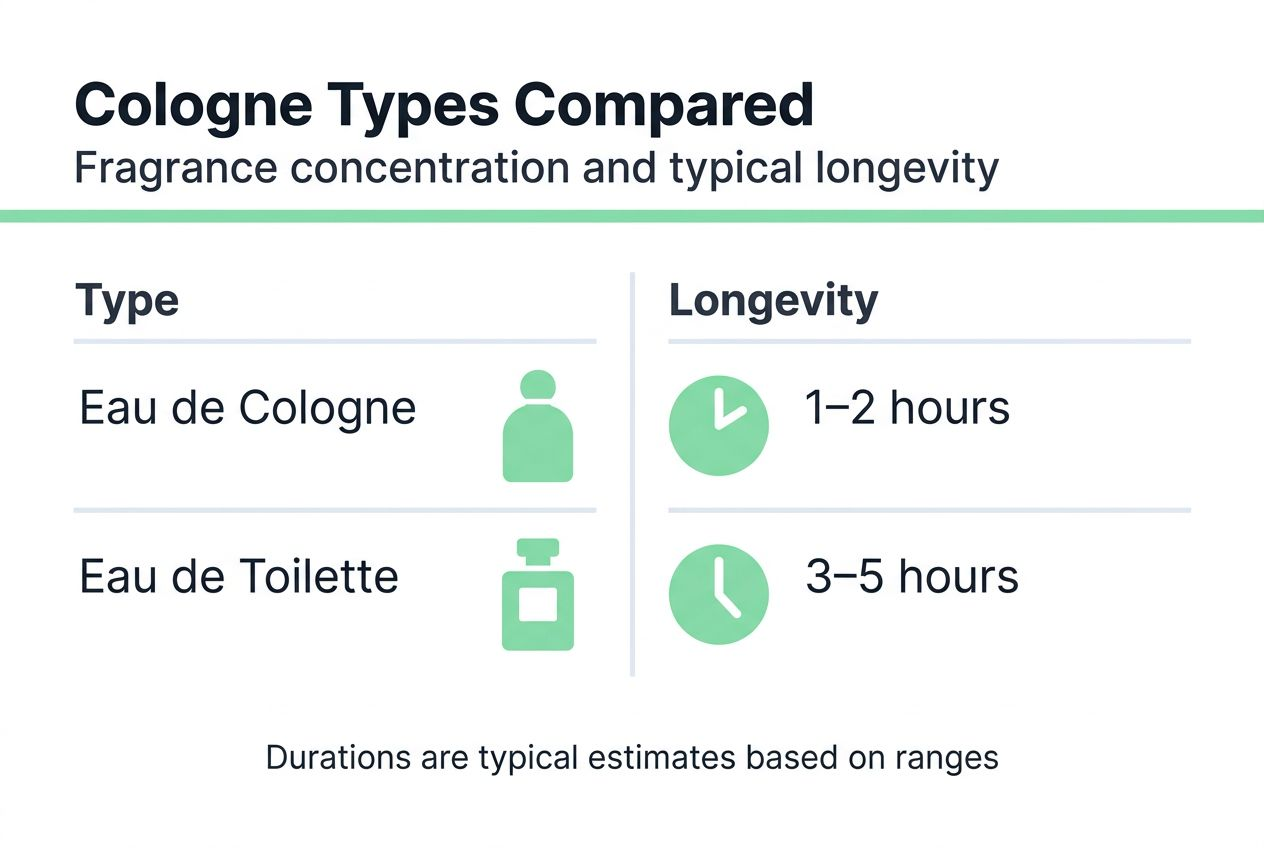
Each cologne type serves distinct purposes based on concentration, longevity, and intensity. Understanding these differences helps you choose fragrances that align with your daily needs. Eau de Cologne lasts about 2 hours, Eau de Toilette 3-5 hours, Eau de Parfum 6-8 hours, reflecting their concentration differences directly.
| Type | Concentration | Longevity | Intensity | Typical Price | Best For |
|---|---|---|---|---|---|
| Eau de Cologne | 2-4% | 1-2 hours | Light | £15-40 | Gym, summer, frequent reapplication |
| Eau de Toilette | 5-15% | 3-5 hours | Moderate | £30-80 | Office, daytime, casual wear |
| Eau de Parfum | 15-20% | 6-8 hours | Strong | £50-150 | Evening, special occasions, all-day wear |
| Parfum/Extrait | 20-30% | 8-24 hours | Very Strong | £80-300+ | Formal events, minimal application needed |
Practical application tips:
- Eau de Cologne works brilliantly as a refreshing body splash after workouts or during hot weather when heavy scents feel oppressive
- Eau de Toilette balances projection and subtlety for professional environments where you want to smell pleasant without overwhelming colleagues
- Eau de Parfum delivers the most versatile performance, lasting through dinner dates, long work days, and social events without reapplication
- Parfum concentrations require only 1-2 sprays due to intense projection, making them economical despite higher upfront costs
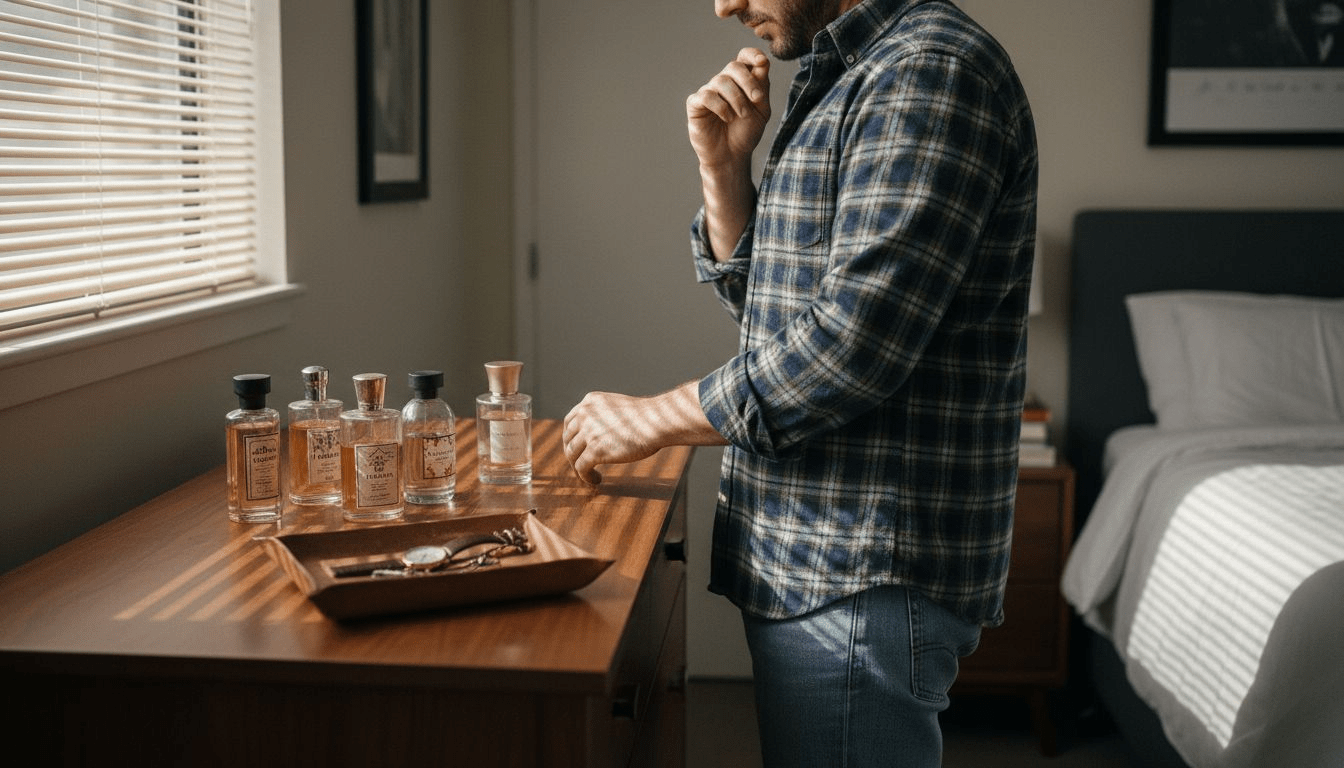
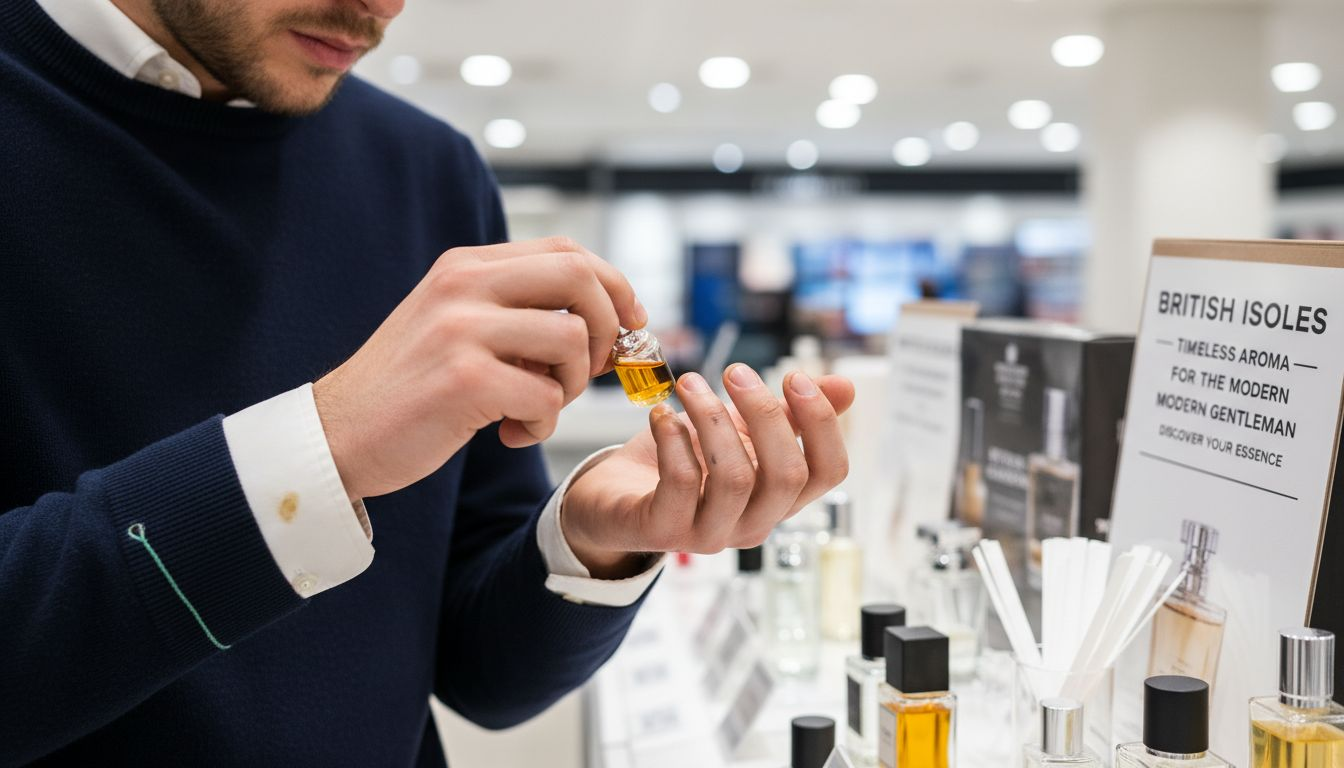
Pro Tip: Test fragrances on your skin for at least 4 hours before buying. Paper strips don’t reflect how concentration interacts with your body chemistry, and many scents transform dramatically as notes evolve. Visit a shop in the morning, apply samples, then evaluate throughout your day to understand true performance.
The strongest cologne type guide offers deeper analysis of concentration impacts on scent projection and longevity, helping you match fragrance strength to your lifestyle requirements.
Common misconceptions about cologne types
Many shoppers believe Eau de Cologne describes fresh, citrus-based scents whilst Eau de Parfum indicates heavier, oriental fragrances. This widespread myth confuses concentration with scent family. Any fragrance profile can exist at any concentration level. You’ll find woody Eau de Colognes and citrus Eau de Parfums, because concentration and scent composition are independent variables.
Another persistent misconception links price directly to quality and concentration. Expensive bottles don’t automatically contain more fragrance oil. Brand prestige, packaging, marketing costs, and celebrity endorsements inflate prices far beyond actual ingredient value. A £150 designer Eau de Toilette might contain less oil than a £60 niche Eau de Parfum from a smaller house focused on formulation rather than advertising.
Common myths that mislead buyers:
- “Cologne is for men, perfume is for women”: Concentration has no gender. Marketing creates these associations, but fragrance types suit anyone based on personal preference and desired intensity.
- “Higher concentration always smells better”: Performance preference is subjective. Some people find Parfum concentrations overwhelming and prefer lighter Eau de Toilette formulations.
- “All Eau de Parfums last the same duration”: Quality of ingredients, molecular composition, and individual skin chemistry create vast performance variations within the same concentration category.
- “Natural ingredients last longer than synthetics”: Many synthetic molecules outlast natural ones, whilst some natural ingredients evaporate almost instantly. Longevity depends on molecular weight, not origin.
Pro Tip: When comparing fragrances, ignore marketing terms like “intense,” “sport,” or “night.” These labels are pure branding. Check the actual concentration percentage listed on the box or ask staff directly. A “Sport” Eau de Parfum will outlast a standard Eau de Toilette regardless of suggestive naming.
Economic value and quality analysis
Fragrance pricing reflects a complex equation where concentration is just one variable. Brand prestige influences price independently of fragrance oil concentration, meaning you might pay triple for a designer label delivering identical oil percentage as an unknown brand. Celebrity endorsements, bottle design, and retail markups add costs having nothing to do with what you smell.
Smart consumers evaluate cost per wear rather than bottle price. A £100 Eau de Parfum lasting 8 hours with 2 sprays daily provides 50 days of use from a 50ml bottle. That’s £2 per day. A £40 Eau de Toilette lasting 3 hours requiring 4 sprays daily empties in 25 days, costing £1.60 per day but demanding reapplication. The pricier option delivers better value and convenience.
Understanding where money goes:
| Cost Component | Percentage of Retail Price | Notes |
|---|---|---|
| Fragrance oil and ingredients | 3-8% | Actual perfume content is surprisingly small portion |
| Bottle and packaging | 8-15% | Luxury packaging significantly increases costs |
| Marketing and advertising | 20-40% | Celebrity campaigns and magazine ads dominate budgets |
| Retail markup | 40-60% | Department stores and speciality shops take largest cut |
| Brand premium | Variable | Prestigious houses charge extra for name recognition |
This breakdown explains why cologne vs perfume concentration longevity guide emphasises understanding actual fragrance content over brand prestige. You’re often paying more for packaging and advertising than aromatic molecules. The most expensive cologne category demonstrates extreme examples where exclusivity and rarity drive prices into thousands, with concentration playing minimal role in cost.
Practical applications of cologne type knowledge
Applying your understanding of cologne types transforms shopping from guesswork into strategic decision making. Your lifestyle, daily routine, and personal preferences should guide concentration choice rather than marketing hype or sales pressure. Consider how long you need scent to last, where you’ll wear it, and how much projection suits your environment.
Step-by-step selection process:
- Define your primary use case: Identify whether you need all-day office wear, evening social scent, gym refresh, or special occasion fragrance
- Match concentration to duration needs: Choose Eau de Cologne for 2-hour scenarios, Eau de Toilette for half-day wear, Eau de Parfum for full-day coverage
- Consider your environment’s scent sensitivity: Professional settings often require moderate projection, whilst social events allow stronger concentration
- Calculate cost per application: Divide bottle price by estimated number of uses based on sprays needed and longevity to understand true value
- Test on your skin in real conditions: Apply samples during typical activities to see how your body chemistry and daily routine affect performance
- Build a rotation strategy: Own different concentrations for varying situations rather than searching for one perfect fragrance
The types of colognes guide explores seasonal considerations, helping you match concentration to temperature and humidity. Summer heat amplifies projection, making lighter Eau de Toilette more appropriate, whilst winter cold mutes scent, favouring Eau de Parfum intensity.
Understanding mens cologne scent types alongside concentration knowledge creates a complete framework for informed purchases. Scent family preferences combine with concentration choice to deliver exactly the fragrance experience you want. The best type of cologne depends entirely on your individual requirements, not universal rankings or popular opinion.
Explore quality colognes to suit your style
Now that you understand concentration differences, you’re ready to explore fragrances matching your specific needs and preferences. Alexandria UK curates cologne selections across all concentration levels, focusing on quality formulations and exceptional value. Our collection includes inspired fragrances and carefully crafted dupes that deliver premium scent experiences without inflated designer markups.
Whether you need an Eau de Toilette for daily office wear or an Eau de Parfum for special evenings, browse the Alexandria UK fragrance collection to find scents optimised for your lifestyle and budget. Every bottle is selected for ingredient quality and performance, ensuring you get genuine value from fragrances that smell remarkable and last appropriately for their concentration level.
Frequently asked questions
How long should I expect each cologne type to last on my skin?
Eau de Cologne typically lasts 1 to 2 hours, Eau de Toilette extends to 3 to 5 hours, and Eau de Parfum delivers 6 to 8 hours of wear. Parfum concentrations can last 8 to 24 hours depending on application. Your skin type, activity level, and climate affect these durations, with oily skin and cooler temperatures extending longevity.
Does higher concentration automatically mean better quality fragrance?
No, concentration indicates strength and duration, not quality. A poorly formulated Eau de Parfum with cheap ingredients smells worse than a well-crafted Eau de Toilette using premium materials. Quality depends on ingredient sourcing, perfumer skill, and formulation balance. Higher concentration simply means more fragrance oil in the mixture, which can amplify both excellent and mediocre compositions.
Should I switch cologne types based on seasons or occasions?
Yes, adapting concentration to context improves your fragrance experience significantly. Summer heat amplifies projection, making lighter Eau de Toilette more comfortable and less overwhelming. Winter cold mutes scent, favouring Eau de Parfum intensity. Professional settings benefit from moderate Eau de Toilette concentrations, whilst evening social events suit stronger Eau de Parfum projection.
How can I properly test a cologne before committing to purchase?
Apply a small amount to your wrist or inner elbow, then wait at least 4 to 6 hours before deciding. Initial top notes disappear quickly, revealing the true character in middle and base notes. Test during your normal activities to see how the scent interacts with your body chemistry, clothing, and environment. Avoid testing more than 3 fragrances at once, as your nose fatigues and loses ability to distinguish subtle differences.
Are certain cologne types better suited to specific genders?
Concentration has no gender association whatsoever. Marketing creates these artificial boundaries, but fragrance intensity suits anyone based purely on personal preference and desired projection. Men, women, and non-binary individuals can wear any concentration level comfortably. Choose based on how long you want scent to last and how strongly you want it to project, ignoring outdated gender-based marketing tactics.