

Cologne vs Perfume 2026: 20-30% Oil vs 2-5% Explained
You’ve likely heard cologne is just lighter perfume made for men, but that’s a myth rooted in marketing, not chemistry. The real difference between cologne and perfume lies in fragrance oil concentration, which determines scent strength and longevity. Understanding these chemical distinctions helps you choose quality fragrances confidently, avoid overspending on marketing hype, and select scents that truly match your needs and occasions.
Table of Contents
- Introduction To Fragrance Concentrations
- Chemical Composition And Its Impact On Scent Duration
- Comparison Framework: Cologne Vs Perfume
- Common Misconceptions About Cologne And Perfume
- Practical Buying Tips For Fragrance Enthusiasts
- Emerging Trends And Market Insights
- Summary: Applying Your Understanding To Quality Scent Choices
- Explore Quality Fragrances & Smart Shopping Tips
Key Takeaways
| Point | Details |
|---|---|
| Concentration defines the difference | Perfume contains 20-30% fragrance oils while cologne has just 2-5%. |
| Longevity varies significantly | Perfume lasts 6-8 hours on skin; cologne fades after 2-4 hours. |
| Gender neutrality matters | Both cologne and perfume can be unisex; concentration, not gender, defines them. |
| Smart buying requires knowledge | Choose based on concentration, occasion, and budget rather than marketing claims. |
| Chemistry beats myths | Understanding aromatic compounds helps you avoid common misconceptions about scent types. |
Introduction to Fragrance Concentrations
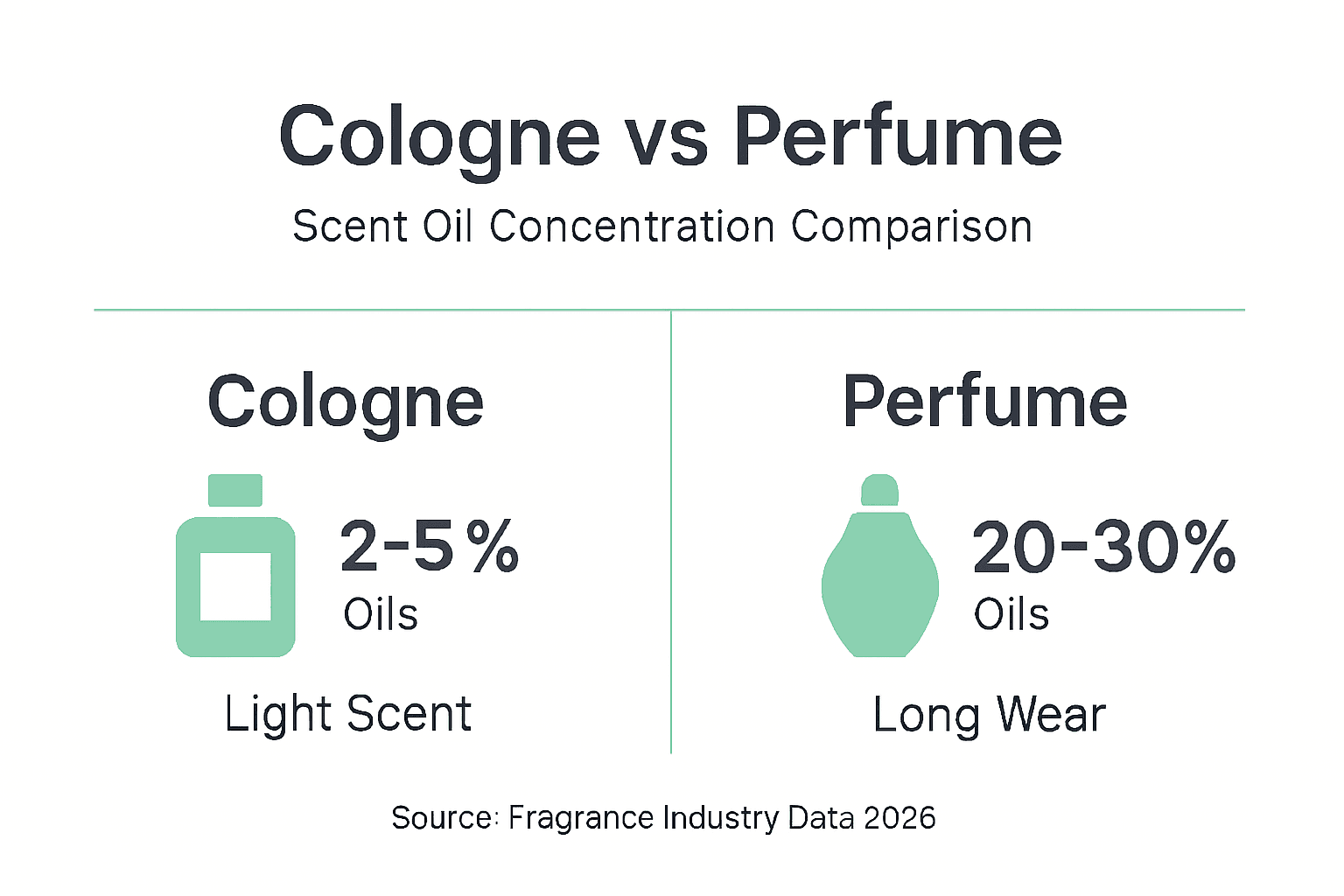
Fragrance concentration refers to the percentage of aromatic oils dissolved in alcohol and water. This ratio determines how a scent smells, how long it lasts, and how intensely it projects. Eau de Cologne typically contains 2-5% aromatic oils, making it the lightest common fragrance type. Perfume, also called parfum or extrait de parfum, contains 20-30% fragrance oils, representing the strongest concentration available.
Between these extremes sit intermediate categories. Eau de toilette holds 5-15% oils, while eau de parfum contains 15-20%. These gradations matter because they directly impact your scent experience and value for money.
When you understand perfume longevity, you realize concentration is the primary factor. Higher oil percentages mean:
- More aromatic compounds on your skin
- Slower evaporation rates
- Stronger scent projection throughout the day
- Greater complexity as different notes unfold over time
- Higher price points reflecting ingredient costs
Consumers often assume scent type or gender determines these categories, but concentration is the true defining characteristic. A floral cologne with 3% oils will fade faster than a woody perfume with 25% oils, regardless of the fragrance family. Recognizing this chemical reality helps you set accurate expectations before purchasing and prevents disappointment when a beautifully scented cologne disappears after lunch.
Chemical Composition and Its Impact on Scent Duration
The concentration gap between cologne and perfume creates dramatic differences in wear time. Perfume lasts 6-8 hours; cologne lasts 2-4 hours on average, according to fragrance chemistry research. This happens because perfume’s 20-30% oil content provides substantially more aromatic molecules than cologne’s 2-5%.

Alcohol serves as the carrier solvent in both formulations. When you apply fragrance, alcohol evaporates quickly, releasing scent molecules into the air and leaving oils on your skin. In cologne, the small oil quantity depletes rapidly. Perfume’s dense oil concentration ensures molecules keep releasing for hours after the initial alcohol flash.
Scent longevity correlates strictly with concentration, not with whether a fragrance smells fresh, woody, or floral. A citrus perfume at 25% concentration will outlast a musky cologne at 4%, defying assumptions about scent families and staying power.
The perfume longevity explanation reveals how molecular weight also plays a role. Heavier base notes like sandalwood and vanilla evaporate more slowly than light top notes like bergamot. Perfumes blend these weights across concentration levels, while colognes lean toward lighter, faster evaporating notes.
Key factors affecting duration include:
- Oil percentage determines total aromatic molecule count
- Skin type influences absorption; dry skin loses scent faster
- Application method matters; pulse points retain warmth and scent longer
- Environmental conditions like heat accelerate evaporation
- Ingredient quality affects molecular stability over time
Pro Tip: Test fragrances on your skin for at least four hours before buying. Many scents smell appealing on paper strips but develop differently as your skin chemistry interacts with the oils and the fragrance moves through top, heart, and base notes.
Comparison Framework: Cologne vs Perfume
Comparing cologne and perfume across multiple dimensions clarifies why concentration drives practical differences in usage, cost, and satisfaction.
| Attribute | Cologne (Eau de Cologne) | Perfume (Parfum) |
|---|---|---|
| Concentration | 2-5% aromatic oils | 20-30% aromatic oils |
| Scent Profile | Light, fresh, often citrus or aquatic | Rich, complex, layered with depth |
| Longevity | 2-4 hours typical wear | 6-8 hours or longer |
| Typical Price | £15-£50 per 100ml | £60-£200+ per 50ml |
| Best Occasions | Casual daytime, gym, office | Evening events, special occasions, all day wear |
Perfume is higher priced due to concentration and quality ingredients. Raw materials like rose absolute, oud, and natural musks cost significantly more than synthetic citrus compounds common in colognes. A 50ml perfume bottle contains 10-15ml of pure aromatic oils, while a 100ml cologne holds just 2-5ml, explaining the cost differential beyond mere volume.
Price alone doesn’t guarantee quality without concentration context. A £100 eau de toilette may contain fewer oils than a £70 eau de parfum from a different brand. Always check concentration percentages on packaging or ask sales staff to verify formulation strength.
Occasion suitability reflects intensity and longevity. Cologne’s lighter profile suits environments where subtlety matters: offices with scent sensitivity policies, afternoon errands, or athletic activities where you’ll shower soon after. Perfume’s persistence makes it ideal when you need scent to last through dinners, theater performances, or full workdays without reapplication.
The fragrance spectrum includes intermediate types that bridge these extremes. Exploring perfume selection tips helps you navigate this range and find concentrations matching your lifestyle and budget without overpaying for unnecessary strength or settling for insufficient longevity.
Common Misconceptions About Cologne and Perfume
Fragrance marketing perpetuates myths that confuse buyers and limit their choices. Correcting these misunderstandings opens up better options and smarter purchasing.
Myth: Cologne is only for men. Reality: Eau de Cologne is a concentration level, not a gender category. Many cologne formulations are marketed to men, but the 2-5% concentration applies regardless of target demographic. Women can wear cologne, and men can wear perfume; concentration determines strength, not who should use it.
Myth: Perfume is always feminine and cologne masculine. Reality: Scent profiles vary widely within each concentration. You’ll find fresh, sporty perfumes and rich, warm colognes. Gender associations come from marketing departments, not chemical composition. The fragrance industry increasingly recognizes this, creating unisex options across all concentration levels.
Myth: The difference is scent type rather than concentration. Reality: Cologne and perfume can share identical scent notes. The distinction lies purely in oil percentage. A rose cologne at 4% oils smells lighter and fades faster than a rose perfume at 25%, even if both use the same rose absolute.
Consumers frequently assume higher prices automatically mean better quality. While concentration affects cost, brand prestige, packaging, and marketing also inflate prices. A niche perfume house might offer superior ingredients at lower prices than designer brands spending heavily on celebrity endorsements and glossy advertising.
Common pitfalls include:
- Believing all expensive fragrances last longer than affordable ones
- Assuming scent family determines longevity instead of concentration
- Choosing based on bottle design rather than formulation details
- Ignoring skin chemistry differences that affect how fragrances develop
- Trusting sales claims without verifying concentration percentages
Pro Tip: Focus on concentration and ingredient transparency over marketing language. A brand listing specific oils and percentages likely prioritizes quality over hype. Look for formulations disclosing natural versus synthetic ratios and avoid those relying solely on aspirational imagery without chemical details.
Practical Buying Tips for Fragrance Enthusiasts
Applying your understanding of concentration differences leads to smarter, more satisfying fragrance purchases. Follow these steps to navigate options confidently.
-
Identify your scent strength and longevity needs. Ask yourself how long you need fragrance to last and how noticeable you want it. If you prefer subtle scents refreshed throughout the day, cologne or eau de toilette works well. For all day projection without reapplication, choose eau de parfum or perfume.
-
Understand concentration ranges to distinguish products accurately. Check labels for oil percentages or concentration names. Don’t assume a product labeled “perfume” in marketing copy actually contains parfum concentration; verify the formulation details. Many products use “perfume” generically while offering eau de toilette strength.
-
Consider occasion and budget realistically. Match concentration to how you’ll use the scent. Daily office wear might justify a mid range eau de toilette, saving perfume concentrations for special events. Calculate cost per wear rather than upfront price; a £150 perfume lasting eight months of daily use costs less per application than a £40 cologne needing replacement monthly.
-
Beware marketing claims and prioritize chemistry. Phrases like “long lasting” or “intense” lack standardized definitions. One brand’s “long lasting” cologne might fade faster than another’s “light” eau de parfum. Focus on oil percentages and ingredient lists over subjective descriptors.
-
Try samples before committing to full bottles. Fragrance develops differently on your skin than on testers or paper strips. Request samples or purchase discovery sets to test scents over several days. Notice how they evolve from initial spray through dry down and whether longevity matches your needs.
-
Explore layering fragrances to enhance your scent experience. Combining a lighter cologne with a richer perfume creates unique blends and extends wear time. The layering fragrance dupes tips guide shows how mixing concentrations adds complexity and personalization to your signature scent.
Additional considerations include storage and application. Keep fragrances away from heat and light to preserve oil integrity. Apply to pulse points where warmth helps diffusion, and avoid rubbing wrists together, which breaks down molecules and shortens longevity.
For budget conscious buyers, perfume selection tips for buyers reveals how to find quality fragrances without overspending. Look for smaller independent brands offering high concentrations at accessible prices, and consider inspired fragrances that replicate expensive formulations at fraction of the cost while maintaining similar oil percentages.
Emerging Trends and Market Insights
The fragrance industry in 2026 reflects evolving consumer values and challenges to traditional categorizations. Understanding these shifts helps you navigate current offerings and anticipate future options.
Unisex fragrances represent the fastest growing segment. Unisex fragrance sales increased by 20% in the UK market as consumers reject rigid gender marketing. Brands now create scents emphasizing individual preference over demographic assumptions, offering woody, floral, and fresh profiles across all concentration levels without male or female designations.
Consumer behavior shifts toward versatility and personalization. Buyers increasingly want fragrances adapting to multiple contexts rather than separate scents for every occasion. This drives demand for mid range concentrations like eau de parfum that balance longevity with versatility, suitable for both professional and social settings.
Innovation in formulations addresses sustainability and ingredient transparency. Natural and organic fragrances gain market share as consumers question synthetic compounds and environmental impacts. Brands highlighting botanical sources, ethical harvesting, and concentration details attract buyers seeking quality beyond marketing claims.
Key market trends include:
- Growth in direct to consumer brands bypassing traditional retail markups
- Increased demand for sample programs and discovery sets before full bottle purchases
- Rising interest in fragrance layering and customization
- Transparency about concentration percentages becoming competitive advantage
- Subscription services offering rotation of scents at various concentrations
These trends influence the cologne versus perfume conversation by emphasizing informed choice over traditional categories. As the fragrance industry trends analysis shows, buyers prioritize concentration, ingredient quality, and personal fit rather than accepting gendered marketing or paying premiums for brand prestige alone.
The shift benefits consumers by expanding options and encouraging competitive pricing. When brands compete on formulation transparency rather than just marketing imagery, you gain access to better information for decision making and more choices at every price point and concentration level.
Summary: Applying Your Understanding to Quality Scent Choices
Fragrance oil concentration remains the defining difference between cologne and perfume, determining scent intensity, longevity, and price. Cologne’s 2-5% concentration delivers light, fresh scents lasting two to four hours, ideal for casual daytime wear and situations requiring subtlety. Perfume’s 20-30% concentration provides rich, complex scents persisting six to eight hours or longer, suited for occasions demanding lasting impression and all day wear without reapplication.
Understanding these chemical distinctions helps you avoid marketing traps that conflate gender, scent type, and concentration. Both men and women can wear any concentration level, and scent families appear across the entire spectrum from cologne through perfume. Price reflects concentration and ingredient quality but doesn’t guarantee superiority without verifying formulation details.
Armed with this knowledge, you can explore fragrances confidently. Match concentration to your lifestyle needs, test scents on your skin over several hours, and prioritize transparency about oil percentages and ingredients. Whether you choose light cologne for daily freshness or invest in perfume for special occasions, your decisions now rest on chemistry and personal preference rather than assumptions and marketing myths.
The fragrance world offers incredible variety once you understand what differentiates options. Your perfect scent exists at the concentration level that balances your longevity needs, budget, and scent preferences, waiting for you to discover it with informed confidence.
Explore Quality Fragrances & Smart Shopping Tips
Now that you understand the science behind cologne and perfume differences, explore expert resources to refine your fragrance choices and maximize value. Our perfume sales guide reveals strategies for finding quality scents at the best prices, while our perfume selection tips help you identify formulations offering superior concentration and ingredients without premium markups.
Timing matters when purchasing fragrances. Learn the best times to buy perfume to secure seasonal discounts and promotional offers on high concentration options. Alexandria UK’s fragrance academy provides ongoing education about ingredient quality, application techniques, and emerging trends, empowering you to build a scent collection reflecting your personal style and delivering the longevity you expect. Visit our blog for detailed guides that transform fragrance knowledge into confident, satisfying purchases.
Frequently Asked Questions
What is the main difference between cologne and perfume?
Fragrance oil concentration is the primary difference, with cologne containing 2-5% aromatic oils and perfume holding 20-30%. This concentration gap affects scent strength, how long fragrance lasts on your skin, and the price you pay per bottle. Both can feature similar scent notes like citrus, floral, or woody profiles, but perfume delivers these notes with greater intensity and persistence throughout the day.
Can cologne and perfume be unisex?
Yes, both cologne and perfume formulations can be completely unisex and gender neutral. The fragrance industry increasingly offers scents marketed without gender designations, recognizing that concentration level doesn’t determine who should wear a scent. Unisex fragrance sales rose by 20% in the 2024 UK market, reflecting consumer rejection of traditional gender boundaries in scent selection. Your personal preference and skin chemistry matter far more than outdated marketing categories.
How should I choose between cologne and perfume for daily wear?
Choose cologne or eau de toilette when you want lighter, fresher scent lasting two to four hours, perfect for daytime office environments, casual outings, or situations where you prefer subtlety. Opt for perfume or eau de parfum when you need stronger, longer lasting fragrance persisting six to eight hours, ideal for evening events, special occasions, or full days without opportunity for reapplication. Consider exploring the layering fragrance dupes guide to combine lighter and richer concentrations for versatile, personalized scent that adapts throughout your day.
Does higher price always mean better fragrance quality?
No, price reflects multiple factors beyond quality, including brand prestige, packaging design, marketing spend, and retail markups. A high concentration perfume from a smaller brand may offer superior ingredients at lower cost than a designer cologne with extensive advertising budgets. Always verify oil percentage and ingredient transparency rather than assuming expense guarantees quality. Calculate cost per wear by considering how long the bottle lasts with your usage pattern, not just the upfront price.
How long should I test a fragrance before purchasing?
Test fragrances on your skin for at least four hours to experience the complete scent evolution from top notes through heart and base notes. Your skin chemistry interacts with aromatic oils differently than paper testers, affecting how the fragrance develops and lasts. Request samples or use discovery sets to wear scents over multiple days in various environments and temperatures. This extended testing reveals whether longevity and scent development match your expectations before committing to a full bottle purchase.


