

Cologne Scent Categories: Enhancing Your UK Collection
Finding a quality cologne dupe can feel like hunting for treasure when every penny counts, especially in the UK. Understanding fragrance families such as Fresh, Floral, Oriental, and Woody makes all the difference, guiding you toward scents that suit your style and match your mood. This guide highlights how scent categories shape your collection, so you can make confident, well-informed choices without overspending.
Table of Contents
- Cologne Scent Categories Defined And Debunked
- Main Fragrance Families And Key Distinctions
- How Subfamilies And Scent Blends Work
- Choosing The Right Scent Profile For You
- Avoiding Common Mistakes With Quality Dupes
Key Takeaways
| Point | Details |
|---|---|
| Understanding Scent Categories | Familiarity with fragrance families, such as Woody, Oriental, Fresh/Citrus, Floral, and Aromatic, enhances fragrance selection and personal expression. |
| Testing on Skin is Crucial | Personal skin chemistry significantly alters fragrance performance, making it essential to test scents directly on your skin before purchasing. |
| Consider Seasonality | Lighter fragrances are ideal for warmer months, while richer scents suit cooler seasons; aligning fragrances with seasonal changes optimises their impact. |
| Be Cautious with Dupes | When selecting fragrance dupes, ensure quality by testing and comparing to the original, as cheaper alternatives may differ in concentration and ingredients. |
Cologne Scent Categories Defined And Debunked
Understanding cologne scent categories is crucial for building a sophisticated fragrance collection. While many assume fragrances are straightforward, the reality is far more nuanced. Different kinds of cologne offer unique sensory experiences that can dramatically transform your personal style.
Fragrance categories are typically divided into several core families, each with distinct characteristics and emotional resonances:
- Woody Fragrances: Rich, earthy scents featuring sandalwood, cedar, and pine notes
- Oriental Fragrances: Warm, spicy compositions with vanilla, amber, and exotic spices
- Fresh/Citrus Fragrances: Light, crisp scents featuring bergamot, lemon, and marine accords
- Aromatic Fragrances: Herbal and green-leaning compositions with lavender and rosemary
- Floral Fragrances: Delicate scents centred around rose, jasmine, and other botanical essences
Each category communicates a different personality and mood, allowing gentlemen to curate their olfactory wardrobe strategically. Professional perfumers understand that scent is about storytelling - every fragrance communicates something unique about its wearer.
The complexity of cologne goes far beyond simple classification. Modern perfumery embraces hybrid categories and innovative blending techniques that challenge traditional boundaries. A contemporary woody fragrance might incorporate unexpected citrus top notes, while an oriental scent could feature surprisingly green undertones.
Pro tip: When exploring cologne categories, sample widely and understand how different notes interact on your individual skin chemistry.
Main Fragrance Families And Key Distinctions
In the sophisticated world of UK fragrances, understanding scent classifications is essential for making informed choices. Types of fragrance families reveal the complex landscape of olfactory experiences that define modern perfumery.
Traditionally, perfume experts recognise four primary fragrance families, each with distinct characteristics:
- Fresh/Citrus Family: Bright, energetic scents featuring lemon, bergamot, and marine notes
- Floral Family: Romantic compositions highlighting rose, jasmine, and delicate botanical essences
- Oriental Family: Warm, sensual fragrances with vanilla, amber, and exotic spice undertones
- Woody Family: Grounding scents emphasising cedar, sandalwood, and earthy wood accords
Each fragrance family represents more than just a smell - it’s a narrative, an emotional journey that communicates personality and mood. Professional perfumers carefully craft these categories to help consumers navigate the intricate world of scent selection.
Here’s how the main fragrance families differ by personality and seasonality:
| Family Type | Personality Impression | Best Season |
|---|---|---|
| Woody | Confident, grounded | Autumn and winter |
| Oriental | Mysterious, sensual | Evening, colder months |
| Fresh/Citrus | Energetic, vibrant | Spring and summer |
| Floral | Romantic, approachable | Spring and year-round |
| Aromatic | Refreshing, modern | All seasons |
Modern perfumery has evolved beyond strict categorisation, embracing hybrid and experimental blends that challenge traditional boundaries. Contemporary fragrances might combine woody base notes with unexpected citrus top notes or integrate green herbaceous elements into oriental compositions, creating unique olfactory experiences that defy simple classification.
Pro tip: When exploring fragrance families, test multiple samples on your skin and observe how different notes interact and transform throughout the day.
How Subfamilies And Scent Blends Work
The intricate world of fragrance composition goes far beyond simple categorisation. Perfume scent categories reveal a sophisticated landscape of olfactory complexity that transforms how we understand scent design.
Subfamilies within fragrance families provide nuanced distinctions that elevate cologne experiences:
- Citrus Subfamilies: Featuring sharp lemon, bergamot, and mandarin notes
- Gourmand Subfamilies: Highlighting sweet, edible-inspired accords like vanilla and caramel
- Green Subfamilies: Emphasising fresh, herbaceous elements like grass and green tea
- Aquatic Subfamilies: Capturing marine and ozonic clean scent profiles
Perfume artisans craft intricate scent blends by layering multiple notes, creating harmonious compositions that evolve dramatically on the skin. These carefully constructed accords transform from initial bright top notes through deeper middle notes to rich base notes, telling an olfactory story that unfolds over hours.

Modern perfumery challenges traditional boundaries, with innovative blends that mix seemingly contradictory elements. A woody oriental fragrance might incorporate unexpected fresh citrus top notes, while a floral scent could integrate smoky, sophisticated undertones, demonstrating the limitless creativity of contemporary fragrance design.
Pro tip: When exploring scent blends, apply fragrances to your skin and allow at least 30 minutes for the full aromatic journey to reveal itself.
Choosing The Right Scent Profile For You
Selecting the perfect fragrance is an art form that requires understanding your personal chemistry and lifestyle. Fragrance profile selection helps transform cologne from mere accessory to a powerful extension of personal identity.
Consider your lifestyle and personality when exploring scent profiles:
- Professional Settings: Clean, subtle woody or fresh fragrances
- Evening Events: Rich, complex oriental or spicy compositions
- Casual Weekends: Light, energetic citrus or aquatic scents
- Romantic Occasions: Warm, sensual gourmand or floral notes
Your individual scent profile depends on several crucial factors, including skin chemistry, personal style, and emotional resonance. What smells extraordinary on one person might feel completely different on another, making personal testing absolutely essential. Professional fragrance experts recommend sampling scents directly on your skin, allowing them to interact with your unique biochemistry.
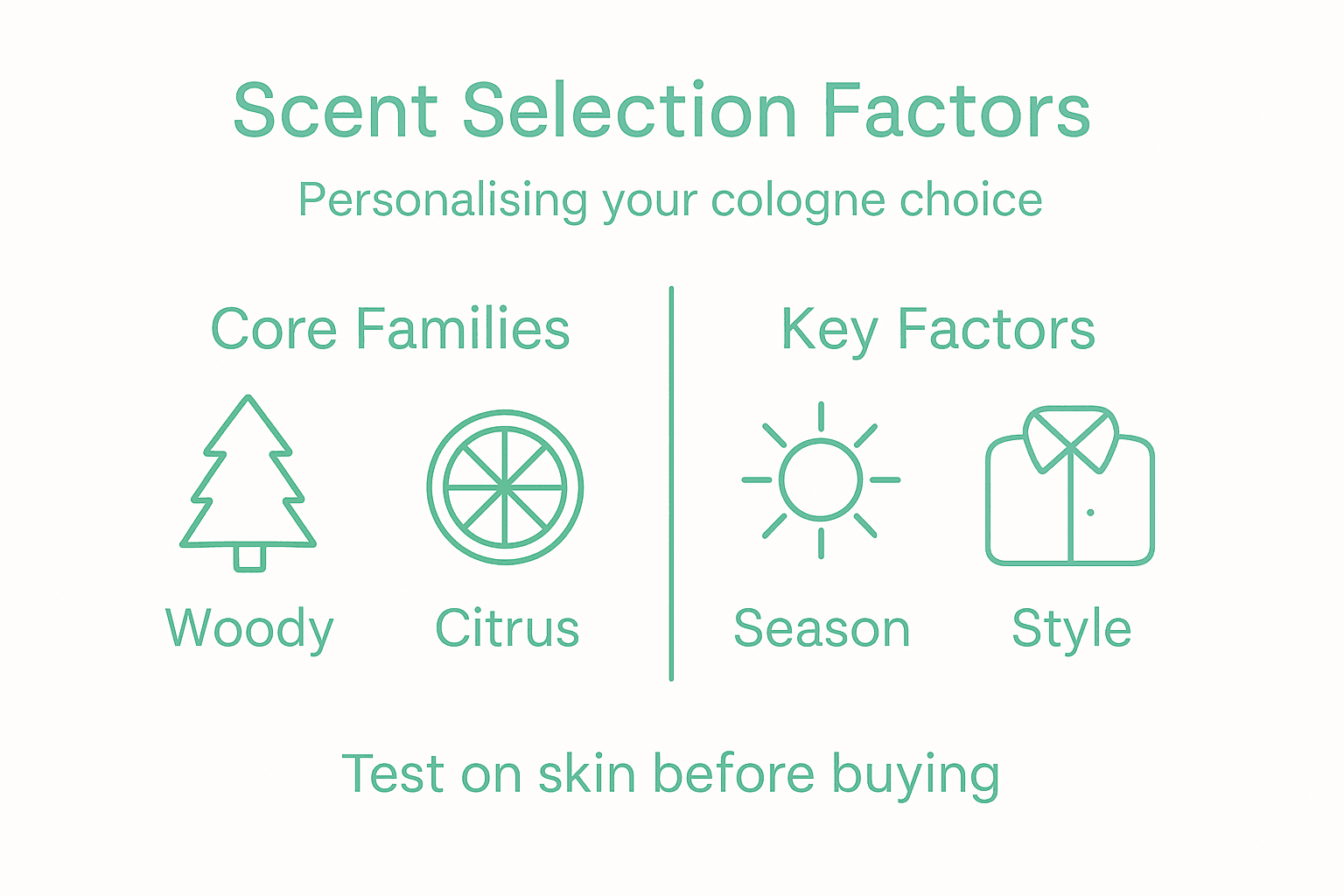
Seasonality plays a significant role in scent selection. Lighter, fresher fragrances work brilliantly during warm summer months, while deeper, more robust scents complement the cooler autumn and winter periods. Understanding these nuanced transitions helps create a dynamic, adaptable fragrance wardrobe that evolves with your environment and mood.
Selecting the ideal fragrance depends on several personal factors:
| Selection Factor | Why It Matters | Choosing Tip |
|---|---|---|
| Skin Chemistry | Alters scent development | Test directly on your skin |
| Lifestyle | Matches activity and setting | Adapt fragrance for each context |
| Season and Weather | Affects note longevity | Lighter for warmth, deeper for cold |
| Emotional Response | Influences confidence | Pick what uplifts your mood |
Pro tip: Always test fragrances on your skin and wait 30 minutes to experience the full aromatic transformation before making a final decision.
Avoiding Common Mistakes With Quality Dupes
Navigating the world of fragrance dupes requires strategic insight and discerning taste. Best perfume choices demand more than simply finding a cheaper alternative - they require understanding the nuanced art of scent replication.
Common pitfalls when selecting cologne dupes include:
- Ignoring Concentration Levels: Budget alternatives often have weaker fragrance intensity
- Overlooking Ingredient Quality: Cheaper versions might use inferior synthetic notes
- Mismatching Skin Chemistry: Not all dupes perform identically across different skin types
- Expecting Exact Replication: Dupes are interpretations, not perfect carbon copies
- Purchasing Without Testing: Blind buying leads to disappointing fragrance experiences
Successful dupe selection involves careful research and personal testing. Professional fragrance enthusiasts understand that a high-quality dupe should capture the essence and emotional resonance of the original scent, not merely mimic its surface-level characteristics. This requires examining the molecular composition, understanding note structures, and recognising the subtle artistry behind fragrance creation.
The UK fragrance market has seen remarkable innovations in dupe technology, with some alternatives approaching remarkable similarity to designer fragrances. Advanced perfumers now use sophisticated extraction and synthetic techniques that can recreate incredibly complex scent profiles at a fraction of the original price point.
Pro tip: Always sample a dupe on your skin and compare its performance against the original fragrance over several hours.
Discover Your Signature Cologne with Expert Guidance and Quality Dupes
Choosing the perfect fragrance from the wide variety of cologne scent categories can feel overwhelming. You want a scent that not only fits your personality and lifestyle but also performs well on your skin throughout the day. Understanding subfamilies and scent blends is essential, yet challenging when faced with the complexities of different notes and how they evolve. At the same time, finding a quality dupe that captures the essence of your favourite fragrance without compromising on concentration or ingredient integrity deepens this challenge.

Unlock the power of scent storytelling by exploring premium selections tailored to your individual fragrance profile. Visit Alexandria UK for an expertly curated range designed to elevate your olfactory wardrobe. Dive deeper into how different kinds of cologne can reflect your mood and discover tips on fragrance profile selection. Embrace the confidence that comes with choosing a scent that truly complements you. Start building your sophisticated collection today at Alexandria UK.
Frequently Asked Questions
What are the main cologne scent categories?
The main cologne scent categories include woody, oriental, fresh/citrus, floral, and aromatic fragrances. Each category offers distinct characteristics and emotional resonances, allowing you to curate a diverse fragrance collection.
How do I choose the right fragrance for different occasions?
Consider your lifestyle and the event type: for professional settings, opt for clean, subtle woody or fresh fragrances; for evening events, choose rich oriental or spicy compositions; and for casual weekends, lighter citrus or aquatic scents work best.
Why is it important to test cologne on my skin?
Testing cologne on your skin is crucial because individual skin chemistry can alter how a fragrance develops. What smells great on one person may not have the same effect on another, making personal testing essential for finding a suitable fragrance.
What should I consider when exploring fragrance dupes?
When exploring fragrance dupes, pay attention to concentration levels, ingredient quality, and ensure that you test the dupe on your skin, as performance can vary. Remember, high-quality dupes capture the essence of the original scent rather than perfectly replicate it.


