Understand seasonal fragrance: match scents to every season
TL;DR:
- Fragrance performance and perception vary with temperature, humidity, and emotional context.
- Choosing scents aligned with seasonal climate and mood enhances suitability and longevity.
- Personal preferences and emotional resonance are key factors in building a versatile, personalized scent wardrobe.
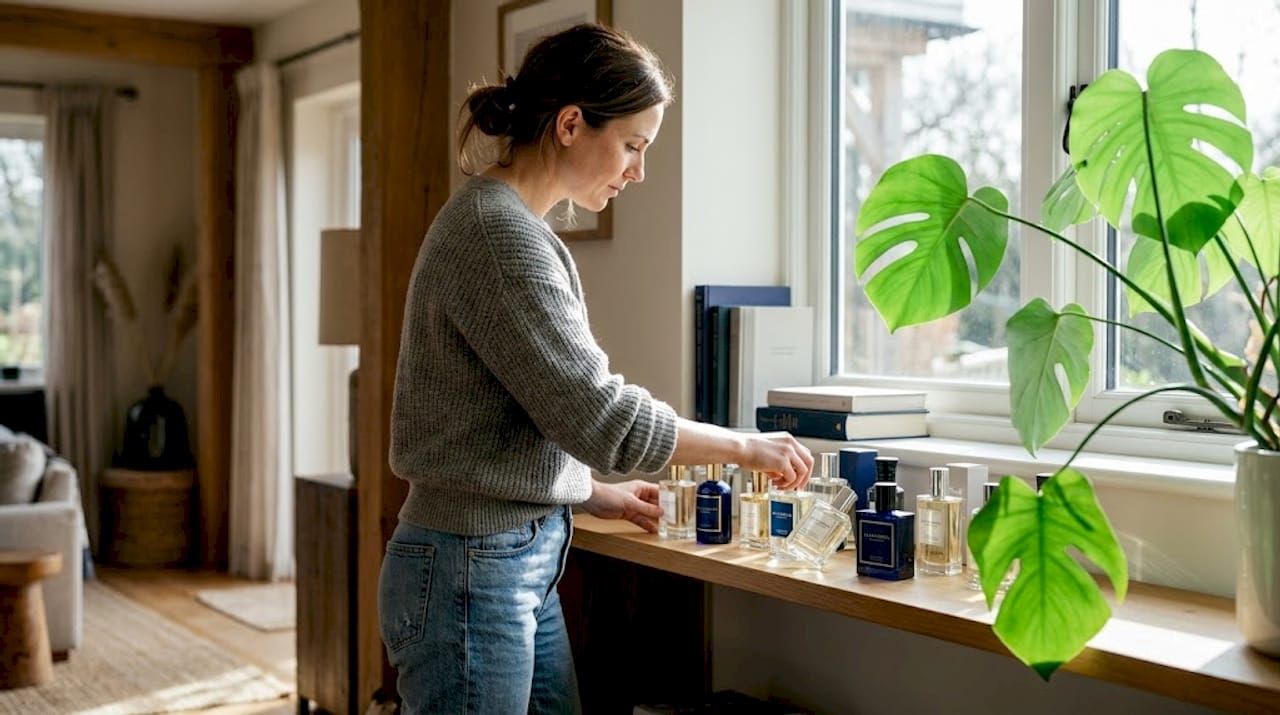
That beloved signature scent sitting on your dressing table may feel like a year-round companion, yet the truth is more nuanced. Fragrance is a living, breathing experience shaped by temperature, humidity, emotional context, and social setting. What smells luminous and uplifting in July can feel cloying or flat by November, and a rich, resinous winter accord may project far too aggressively under the summer sun. This guide cuts through the confusion, offering fragrance enthusiasts a clear, practical framework for choosing, adapting, and layering scents across every season with confidence and sophistication.
Table of Contents
- What is seasonal fragrance?
- How climate and weather shape fragrance performance
- Fragrance families and their seasonal suitability
- Layering and adapting your fragrance through the year
- Our take: why seasonal fragrance isn’t just about weather
- Discover your perfect scent for every season
- Frequently asked questions
Key Takeaways
| Point | Details |
|---|---|
| Seasonal fragrance matters | Matching scents to the season enhances performance and enjoyment. |
| Climate impacts scent | Temperature and humidity affect fragrance longevity, projection, and perception. |
| Choose by family | Select fragrance families and notes that suit each season for optimal results. |
| Adapt with layering | Layering and application adjustments let you use scents flexibly throughout the year. |
| Personal experimentation | Test fragrances on your skin and in your climate to discover what truly works for you. |
What is seasonal fragrance?
Seasonal fragrance is the practice of selecting scents that complement the climate, mood, and social context of a particular time of year. It is a discipline rooted as much in chemistry as it is in human experience, and understanding both dimensions transforms the way you interact with your fragrance wardrobe.
The concept is not simply a marketing construction invented by perfume houses to sell more bottles. It reflects a genuine truth about how our senses function. Our olfactory system, the mechanism through which we perceive scent, responds differently depending on the ambient temperature and the emotional landscape around us. A crisp citrus accord feels instinctively right on a warm summer morning because it mirrors the lightness and vitality of the season. Conversely, a smoky, resinous oud feels deeply satisfying wrapped in the chill of a winter evening, resonating with the warmth and shelter we instinctively seek.
“Seasons are tied to emotions and activities, making fragrance rotation a matter of context as much as chemistry.” This expert perspective, echoed across the best fall perfumes conversation, reinforces that seasonal fragrance is a holistic practice, not merely a technical exercise.
Building a seasonal fragrance wardrobe is, therefore, about curating a collection that responds to life’s changing rhythms. Here are the core dimensions that define seasonal suitability:
- Projection: How far a fragrance radiates from the skin, which amplifies dramatically in heat and narrows in cold.
- Longevity: How long a scent lasts, influenced by hydration, skin type, and humidity levels.
- Perceived fit: The instinctive sense that a scent belongs to a particular moment, place, or feeling.
- Note composition: Whether the dominant notes (citrus, floral, gourmand, woody) feel congruent with the season’s character.
One of the most common mistakes among fragrance enthusiasts is applying a light, aquatic summer scent on a cold January day, only to find it nearly imperceptible on the skin. The reverse, wearing a heavy oriental composition in a heatwave, is equally problematic: the fragrance amplifies beyond comfort, overwhelming rather than enchanting. Understanding why this happens is the first step towards making genuinely informed seasonal choices.
How climate and weather shape fragrance performance
Once we understand the concept, the next step is to see how climate actually shapes the behaviour of scent on skin. The mechanics are fascinating, and knowing them gives you an immediate practical advantage.
Temperature is perhaps the single greatest variable in fragrance performance. Warmth accelerates the evaporation of volatile aromatic molecules, meaning that top notes (the first impression of a fragrance, often bright and citrus-led) lift off the skin quickly and projection increases. This is why a fragrance that seems perfectly calibrated in a cool room can feel overpowering outdoors on a hot day. In cold weather, the opposite occurs: evaporation slows, projection is reduced, and richer base notes (woods, musks, resins) linger closer to the skin, creating an intimate, cocooning effect.
Humidity introduces another layer of complexity. In high-humidity environments, such as those experienced during British summers or tropical holidays, fragrance molecules can become weighed down by moisture in the air. This sometimes intensifies certain heavy accords while distorting lighter, more delicate compositions. In dry, cold conditions, skin can lose moisture rapidly, which diminishes longevity considerably as there is less natural oil to anchor the fragrance.
Testing fragrance on skin in the expected climate is one of the most reliable methods for understanding how temperature and humidity alter your perception of a scent. A fragrance that impressed you in an air-conditioned boutique may reveal an entirely different character when worn outdoors on a humid summer afternoon.
| Climate condition | Effect on fragrance | Recommended adjustment |
|---|---|---|
| High heat (above 25°C) | Increases projection, amplifies heavy notes | Choose lighter concentrations; fewer sprays |
| High humidity | Distorts delicate accords, increases weight | Select airy, fresh, or citrus-led formulas |
| Cold and dry (below 10°C) | Reduces projection, slows evaporation | Choose richer, denser formulas; apply to pulse points |
| Mild and temperate | Balanced performance | Most fragrance families work well |
For heat-proof holiday scents, the principle is consistent: lean towards eau de cologne or eau de toilette concentrations, apply sparingly, and favour compositions built on citrus, aquatic, or lightly floral accords. In cooler months, fragrance for cold weather demands richer, denser formulas that can project adequately despite reduced evaporation.
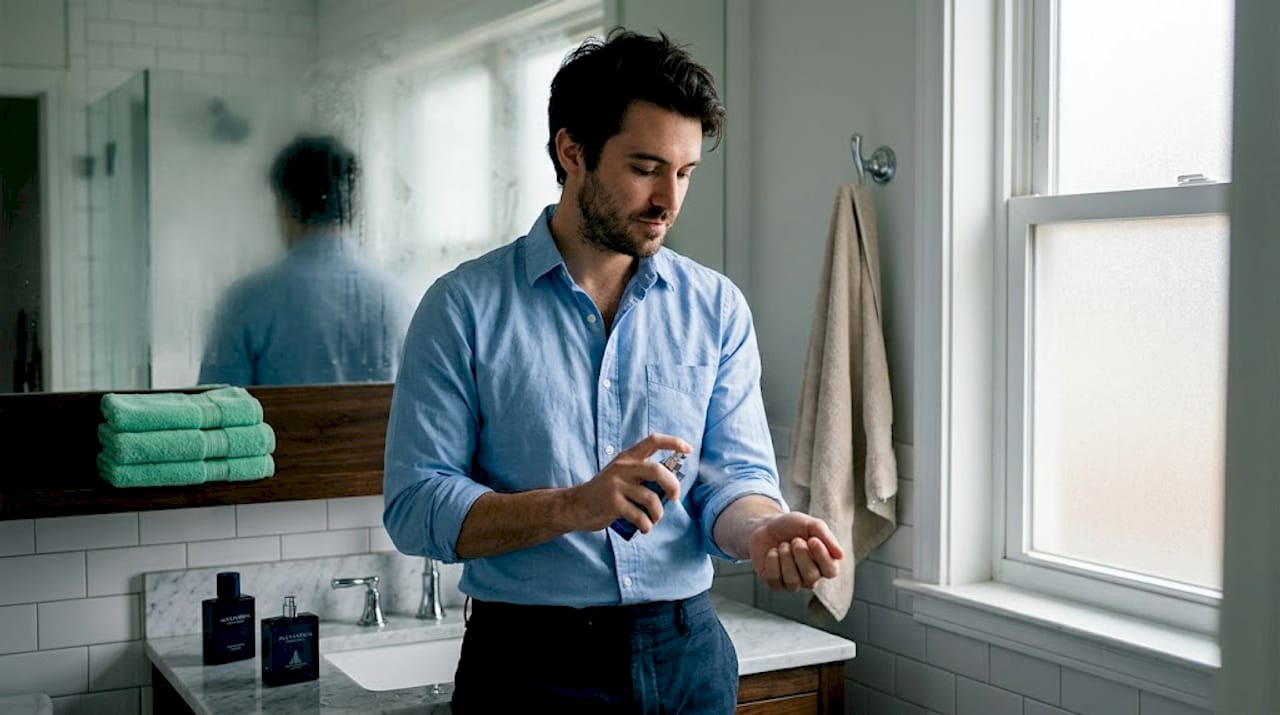
Pro Tip: Always trial a fragrance both indoors and outdoors in the relevant season before committing to it as your go-to scent. What performs beautifully in a cosy autumn interior may feel entirely different during a crisp outdoor walk.
Fragrance families and their seasonal suitability
Now that you know how climate affects fragrance, let’s look at which scent families make the most practical and pleasing choices for each season. The fragrance world organises itself into broad families, each with characteristic note profiles and typical behaviours in different climates.
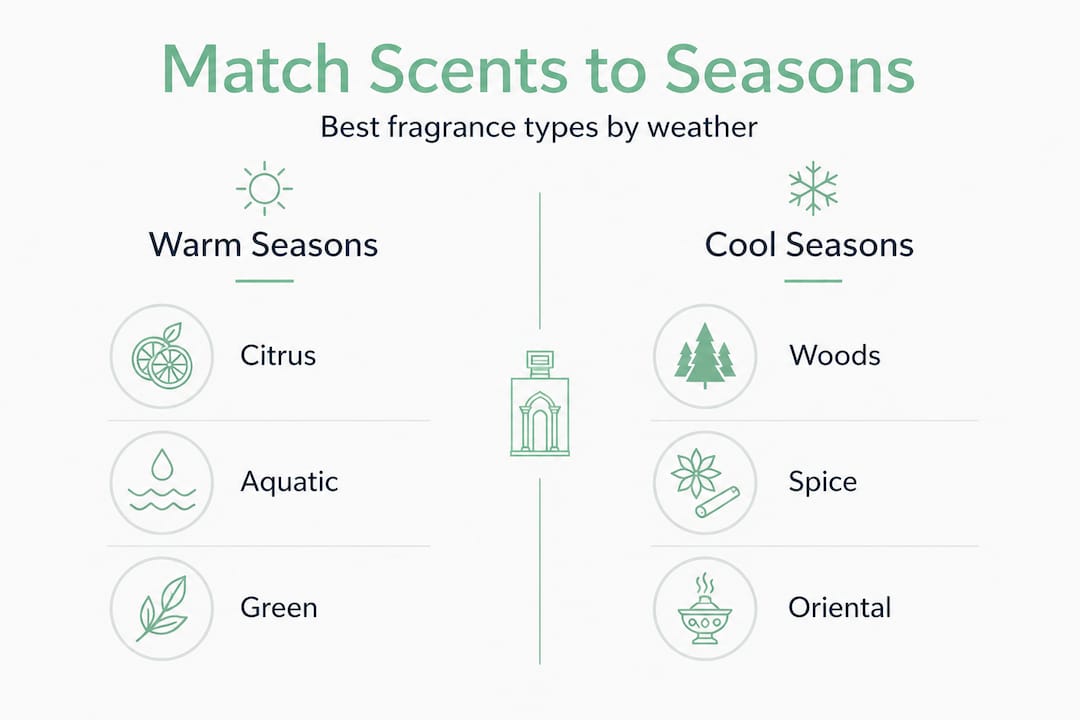
The main fragrance families and their seasonal alignment:
-
Citrus and aquatic: Bright, clean, and effervescent. These compositions, built on notes such as bergamot, lemon, grapefruit, and sea spray, perform magnificently in spring and summer. They lift the mood, project naturally in warmth, and carry a sense of vitality that feels genuinely congruent with longer days. Their relatively lightweight molecular structure means they do not overwhelm in heat.
-
Floral: The quintessential spring family, florals range from the luminous delicacy of white musks and jasmine to the richer, more sensuous character of rose and tuberose. Lighter florals thrive in warmer months; heavier, powdery, or more opulent floral compositions can bridge into early autumn beautifully.
-
Woody and earthy: Cedarwood, vetiver, sandalwood, and patchouli form the backbone of fragrances that genuinely belong to autumn and winter. These notes project with quiet authority in cool air and anchor beautifully on dry skin during colder months.
-
Spicy and oriental: The most indulgent of the families, these compositions weave together notes of cardamom, pepper, cinnamon, amber, and oud. Rich, warming, and often deeply gourmand in character, they are the signature of a well-crafted winter scent. Many fragrance wardrobes are consciously built around these seasonal poles: lighter citruses for summer, richer woods and spices for winter.
-
Chypre and fougère: These sophisticated, complex families, combining mossy, woody, and aromatic elements, are wonderfully versatile. They tend to perform well in spring and autumn, bridging the more extreme seasonal requirements with refinement.
A practical three-step framework for finding your seasonal match:
- Identify your climate needs. Consider the temperature range and humidity typical of your location in the relevant season. This determines the concentration and projection level you require.
- Map your mood and lifestyle. Are you attending formal events, spending time outdoors, or seeking comfort at home? Lifestyle context shapes which family will feel most fitting.
- Test on skin in real conditions. Visit a boutique or request samples, and wear your chosen scent through a full day in the relevant season before purchasing.
A comprehensive summer fragrance guide can introduce you to the finest warm-weather compositions, whilst dedicated winter fragrance recommendations offer a curated path through the richest cold-weather accords. For those seeking a broader seasonal perspective, exploring ideal seasonal fragrance selections provides an excellent starting point for building a truly versatile wardrobe.
Personal taste remains the decisive factor throughout. A fragrance enthusiast who runs warm, lives an active outdoor lifestyle, or simply adores fresh compositions may prefer lighter formulas even in the depths of winter. Rules serve as guides, not mandates, and the most sophisticated fragrance wardrobes are always shaped by individual sensibility.
Layering and adapting your fragrance through the year
Having understood how to select seasonal scents, the next step is adapting, because the most versatile fragrance enthusiasts do not simply swap bottles between seasons. They customise, layer, and refine their application to extract maximum performance and pleasure from their collection year-round.
Fragrance layering, the practice of combining two or more complementary scents on the skin, is one of the most powerful tools available to the informed enthusiast. By pairing, say, a clean musk base with a warm spice-forward eau de parfum, you can create a personalised accord that shifts seamlessly from an energetic daytime presence into a richer, more intimate evening character. The technique requires some experimentation, but the rewards are considerable: a truly unique olfactory signature that no single bottle could achieve alone.
Key strategies for seasonal adaptation:
- Adjust your spray count. In summer heat, two sprays are often sufficient for full projection. In winter, three to four sprays on pulse points (wrists, neck, inner elbows) may be necessary to achieve the same presence. Adjusting application in this way is one of the simplest and most effective methods for optimising seasonal performance.
- Layer with complementary body products. Unscented or matching-formula body lotions and oils create a hydrated base that anchors fragrance molecules to the skin, extending longevity significantly. This is particularly valuable in dry winter conditions.
- Transition your scents across seasons. Rather than an abrupt switch, allow two or three weeks of experimentation as one season gives way to the next. During this transition period, layering a warm-weather scent with a richer, spicier counterpart can create beautiful accords that belong uniquely to that shifting moment.
- Store your fragrances correctly. Heat and light degrade aromatic molecules. Keep bottles away from direct sunlight and radiators to preserve their integrity across seasonal transitions.
Mastering fragrance layering techniques opens remarkable creative possibilities. For those beginning this practice, layering basics offer a structured introduction, and for enthusiasts working with accessible alternatives, layering dupe perfumes demonstrates how inspired interpretations can be combined just as effectively as their luxury counterparts.
Pro Tip: Keep a simple fragrance journal. Note the date, weather conditions, number of sprays applied, and your observations on projection and longevity. After one full year, you will possess a personalised dataset revealing exactly how each scent in your wardrobe performs across the seasons.
Common mistakes in seasonal adaptation include over-spraying in warm weather (resulting in olfactory fatigue for those around you), neglecting skin hydration in winter (causing fragrances to disappear within an hour), and applying fragrance to clothes rather than skin in cold months, which prevents the scent from interacting with your natural warmth and body chemistry.
Our take: why seasonal fragrance isn’t just about weather
Here is a perspective that does not often make its way into mainstream fragrance advice: the most significant factor in seasonal scent choice is not temperature. It is emotional resonance.
Consider how strongly fragrance is tied to memory. The cinnamon-laced warmth of a winter oriental may not simply feel fitting because of the cold air outside. It feels fitting because it resonates with feelings of shelter, nostalgia, and intimacy that winter evokes culturally and personally. Similarly, a luminous white floral might be chosen for spring not because its molecular structure responds well to 15°C ambient temperatures, but because it mirrors an emotional openness and optimism that comes with longer days. Context and emotion drive fragrance trends far more than meteorology alone.
This matters enormously for how you approach building your wardrobe. The conventional advice to follow strict seasonal rules, citrus in summer, oud in winter, is a useful starting framework but it should never become a straitjacket. Some of the most memorable fragrance experiences come from deliberate rule-breaking: a rich vanilla gourmand worn on a warm summer evening, or a bright, green floral chosen for a moody winter gathering. When a scent aligns with your emotional state and the social context of the moment, it transcends seasonal convention.
Our recommendation is to treat the science as your foundation and your feelings as your compass. Understand how climate shapes performance so that you can make informed choices, then trust your instincts about which scent captures the feeling of the moment you are stepping into. Exploring a considered seasonal fragrance wardrobe advice resource can help you identify which scents resonate most deeply, not just perform most correctly.
Discover your perfect scent for every season
There is genuine joy in stepping into a new season with the right fragrance on your skin. Whether you are building your first seasonal wardrobe or refining a collection years in the making, having expert guidance makes the journey far more rewarding.
At Alexandria UK, you will find a carefully curated range of inspired fragrances and quality alternatives that span every season, every mood, and every occasion. From luminous summer citruses to deeply warming winter resins, the collection is designed for enthusiasts who refuse to compromise on quality. Explore the seasonal fragrance wardrobe guides alongside layering resources and seasonal picks to begin curating your perfect year-round scent rotation with confidence.
Frequently asked questions
Can you wear the same fragrance all year round?
It is entirely possible, though most enthusiasts find a scent performs and feels quite different as seasons change, since temperature and humidity alter both projection and longevity in ways that affect the overall experience.
How do I know which scent is right for each season?
Begin with fragrance families as a guide (citrus and aquatics for summer, woods and spices for winter), then test on your skin in the relevant climate, as matching scent families to season consistently improves both performance and perceived suitability.
Are seasonal fragrances a marketing gimmick?
Not at all. Expert consensus is clear that seasons genuinely influence how scent is experienced, since fragrance rotation aligns with shifting emotions, activities, and social contexts, not merely with commercial incentives.
How can I make summer fragrances last longer?
Choose lighter concentrations such as eau de toilette, apply to hydrated pulse points, and layer with a matching or unscented body lotion, as adjusting application and layering significantly boosts longevity in warm-weather conditions.