Perfume Scent Categories: Making Smart Choices UK
Finding a fragrance that matches both your style and your budget can feel daunting, especially with so many scent categories to choose from. For British perfume lovers, exploring the Fragrance Wheel offers clarity in a market bursting with options. Understanding the four main fragrance families—Floral, Oriental, Woody, and Fresh—puts you in control, helping you select scents that truly fit your personality. This guide highlights key perfume categories and smart sampling tips to make your next scent purchase more satisfying and affordable.
Table of Contents
- Perfume Scent Categories Defined Clearly
- Main Fragrance Families and Key Examples
- How Subfamilies and Blends Work
- Scent Notes and Olfactive Pyramids Explained
- Choosing Perfume Types and Quality Dupes
- Common Pitfalls When Picking Perfume Scents
Key Takeaways
| Point | Details |
|---|---|
| Understanding Scent Families | Familiarising oneself with the four primary fragrance categories—Floral, Oriental, Woody, and Fresh—can aid in making informed choices and enhance personal scent selection. |
| Exploring Blends and Subfamilies | Sample fragrances across different families and subfamilies to uncover unique and personalised olfactory experiences that resonate with personal preferences. |
| Recognising Concentration Levels | Be aware of perfume concentrations, such as Parfum, Eau de Parfum, and Eau de Toilette, as this affects longevity, intensity, and suitability for various occasions. |
| Avoiding Sampling Pitfalls | Take care to avoid common mistakes like impulse purchasing and over-sampling; proper testing helps to identify fragrances that suit individual body chemistry. |
Perfume Scent Categories Defined Clearly
Understanding perfume scent categories helps fragrance enthusiasts make more informed purchasing decisions. The Fragrance Wheel provides a comprehensive framework for classifying scents, offering clarity in the often complex world of perfumery. Navigating scent families becomes significantly easier with this systematic approach.
Perfume scent categories traditionally fall into four primary families, each with distinctive characteristics:
- Floral: Sweet, romantic fragrances dominated by flower-based notes
- Oriental: Warm, exotic scents with rich, sensual undertones
- Woody: Earthy, sophisticated aromas featuring bark, resin, and wood essences
- Fresh: Clean, vibrant scents emphasising crisp, light molecular structures
Each fragrance family represents a unique sensory experience, allowing individuals to select perfumes that genuinely resonate with their personality and mood. The categorisation helps consumers understand complex scent profiles beyond simple top, middle, and base notes.
Fragrance Profiles extend beyond simple categorisation, delving into nuanced sensory experiences. Some perfumes blend multiple families, creating complex olfactory narratives that challenge traditional classification.
Pro tip: When exploring new fragrances, sample scents from different families to understand your personal olfactory preferences and expand your aromatic horizons.
Main Fragrance Families and Key Examples
Perfume enthusiasts in the UK are increasingly exploring the rich landscape of fragrance families and subcategories. Understanding these distinct classifications helps individuals curate a more personalised and sophisticated scent wardrobe.
The primary fragrance families encompass four distinctive categories, each offering unique olfactory experiences:
-
Floral: Romantic and feminine fragrances featuring:
- Green floral
- Soft/musky floral
- Fruity floral
- Floral spicy
-
Oriental: Warm and exotic scents including:
- Floral oriental
- Ambery oriental
- Woody oriental
-
Woody: Earthy and grounding aromas such as:
- Aromatic woody
- Mossy woody
- Dry woody
-
Fresh: Clean and energising scents comprising:
- Citrus
- Oceanic/marine
- Green
- Fruity
- Gourmand
Each fragrance family tells a unique story, allowing perfume wearers to express their personality through carefully selected scent profiles. Some notable examples illustrate the depth within these categories: Chanel Coco Mademoiselle represents a complex chypre composition, while Tom Ford Noir Extreme embodies the rich oriental family.
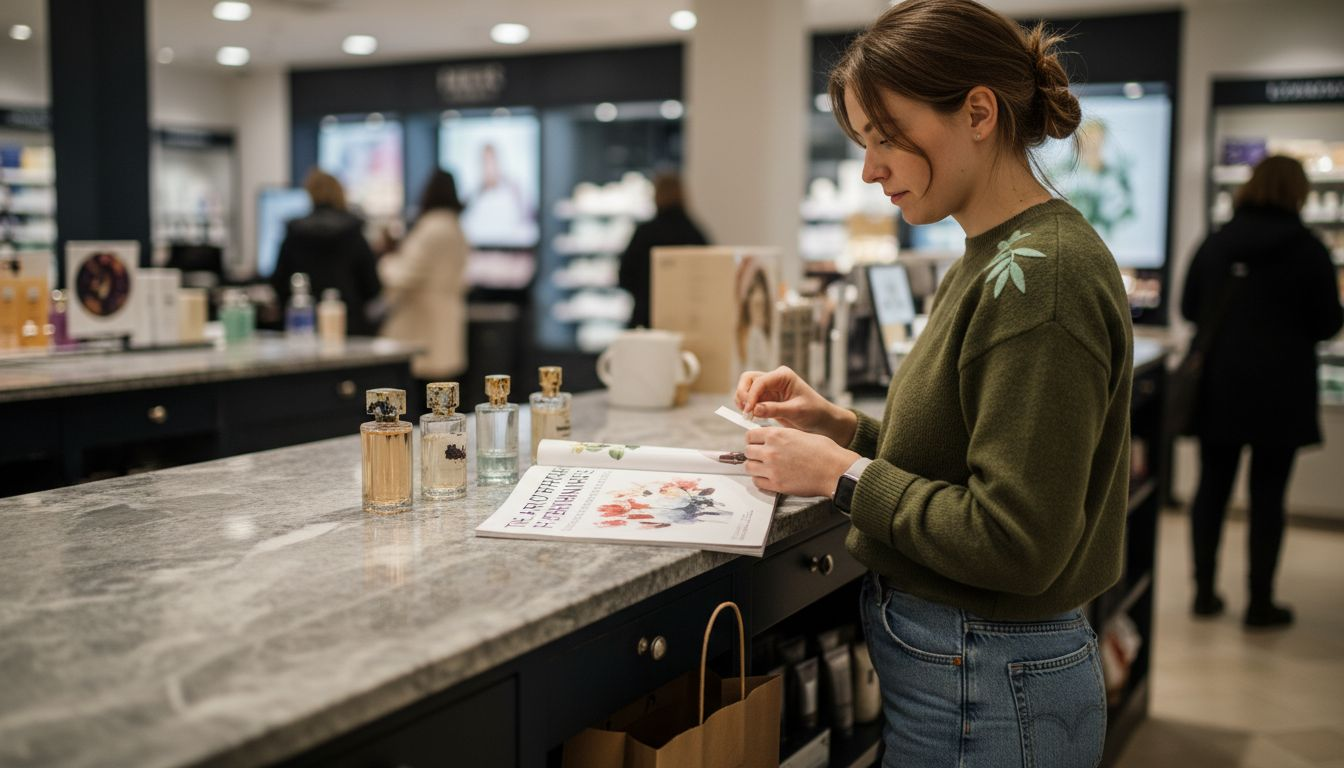
Fragrance Exploration becomes an art form when understanding these nuanced classifications. Perfume lovers can mix and match across families, creating personalised olfactory experiences that transcend traditional boundaries.
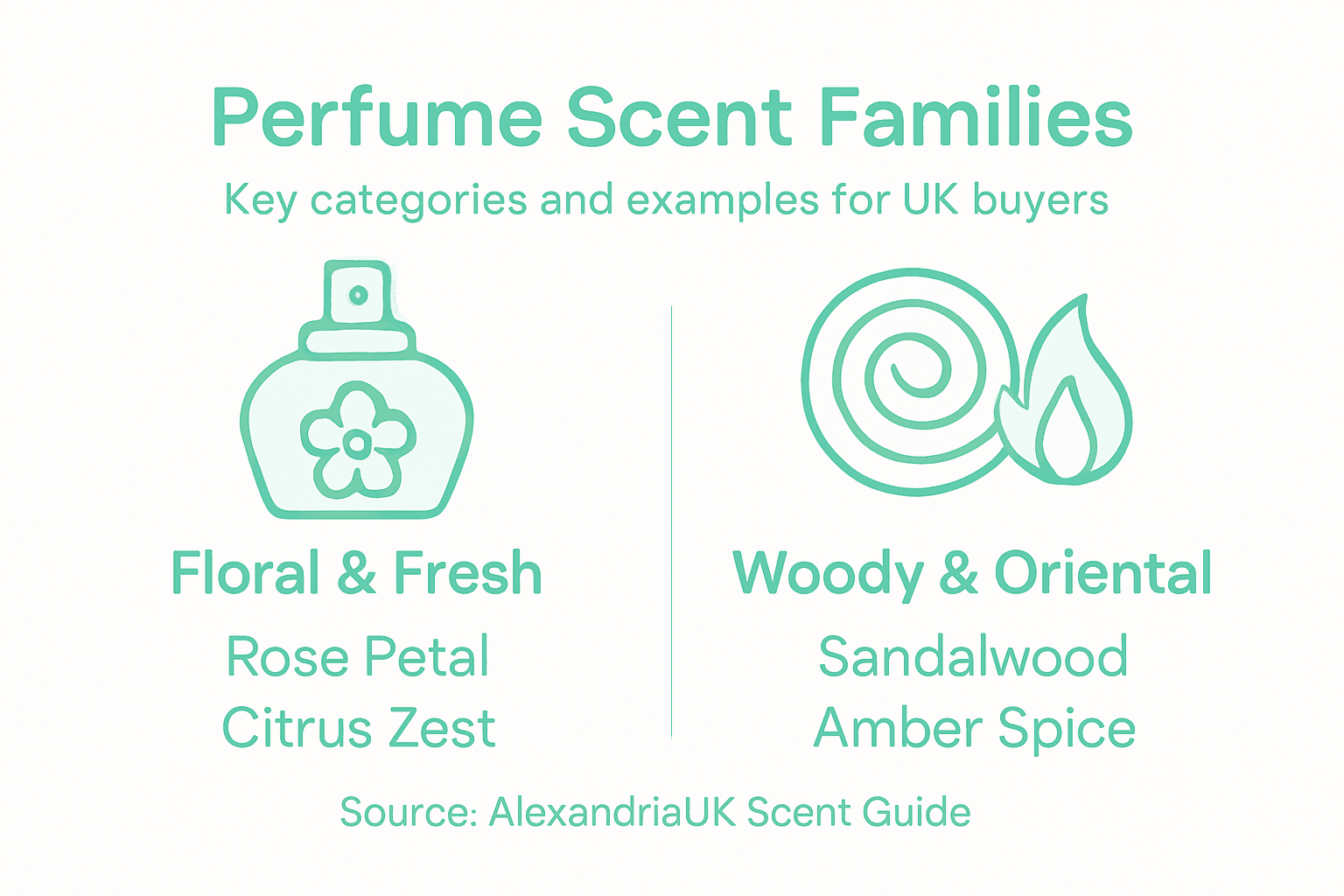
Pro tip: Experiment with fragrance samples from different families to discover your unique scent personality and expand your aromatic horizons.
How Subfamilies and Blends Work
Olfactive families represent a sophisticated framework for understanding fragrance complexity, with hierarchical scent structures revealing the intricate world of perfumery. These meticulously organised categories allow perfume enthusiasts to navigate the nuanced landscape of aromatic experiences.
The structure of fragrance subfamilies typically follows a detailed taxonomical approach:
-
Primary Families:
- Floral
- Oriental
- Woody
- Fresh
-
Subfamilies Characteristics:
- Provide more precise scent descriptions
- Offer deeper sensory exploration
- Highlight specific aromatic nuances
- Enable more targeted fragrance selection
Fragrance Blending emerges as a sophisticated art form where perfumers intentionally combine scents across traditional family boundaries. This creative process allows for extraordinary olfactory experiences that transcend conventional categorisation, challenging the rigid structures of traditional fragrance classification.
The Fragrance Wheel serves as a visual mapping tool, illustrating the intricate relationships between different scent families and subfamilies. Perfumers use this framework to understand how various aromatic notes interact, creating complex and multilayered fragrance compositions that tell unique olfactory stories.
Blending is not about following rules, but about creating emotional landscapes through scent.
Pro tip: Experiment with fragrance samples that cross traditional subfamily boundaries to discover unexpected and personalised scent combinations.
Scent Notes and Olfactive Pyramids Explained
Perfume composition represents a sophisticated sensory journey, with fragrance pyramids revealing intricate scent structures. These meticulously designed layers transform a simple fragrance into a complex, evolving olfactory experience that captivates the senses.
The classic Olfactive Pyramid consists of three fundamental layers:
-
Top Notes (First Impression):
- Lightest and most volatile molecules
- Typically citrus, herbal, or fresh elements
- Lasting approximately 5-15 minutes
- Create initial sensory engagement
-
Middle (Heart) Notes (Core Character):
- Emerge after top notes dissipate
- Represent the fragrance’s primary theme
- Often floral, spicy, or fruity
- Develop for 3-5 hours
-
Base Notes (Lasting Impression):
- Deepest, most substantial molecules
- Provide rich, enduring fragrance foundation
- Include woody, musky, or oriental elements
- Persist 6-10 hours after initial application
Each layer contributes uniquely to the fragrance’s overall narrative, creating a dynamic sensory progression that unfolds differently on each individual’s skin. The interplay between these notes determines a perfume’s complexity, longevity, and emotional resonance.
Fragrance is a personal journey of transformation, with each note telling a part of your unique story.
Pro tip: Test fragrances on your skin and observe how the notes evolve over several hours to truly understand their intricate character.
Choosing Perfume Types and Quality Dupes
Navigating the world of fragrances requires strategic approaches, especially when seeking affordable yet quality perfume alternatives. Smart consumers understand that selecting the right perfume involves more than just price point.
Perfume concentration levels provide crucial insights into fragrance selection:
-
Parfum/Extrait:
- Highest concentration (20-40% pure fragrance)
- Most expensive
- Longest lasting (8-10 hours)
- Ideal for special occasions
-
Eau de Parfum:
- 15-20% fragrance concentration
- Moderate price point
- 4-6 hours longevity
- Best for daily wear
-
Eau de Toilette:
- 5-15% fragrance concentration
- Most affordable
- 2-4 hours lasting power
- Perfect for casual settings
Quality Dupes represent a sophisticated approach to fragrance consumption, offering budget-conscious consumers sophisticated alternatives that mirror high-end scent profiles. These carefully crafted replicas capture the essence of premium fragrances while maintaining affordability.
To help you navigate perfume types effectively, here is a summary of the main perfume concentrations and their ideal uses:
| Perfume Type | Concentration Level | Typical Longevity | Best Occasions |
|---|---|---|---|
| Parfum/Extrait | 20-40% fragrance oils | 8-10 hours | Special events, evenings |
| Eau de Parfum | 15-20% fragrance oils | 4-6 hours | Daily office or social wear |
| Eau de Toilette | 5-15% fragrance oils | 2-4 hours | Casual daytime outings |
| Quality Dupe | Varies (imitates high-end) | 2-6 hours | Budget-friendly alternatives |
Intelligent fragrance selection balances personal preference, budget, and olfactory satisfaction.
Pro tip: Always sample fragrances on your skin and observe how they develop over several hours before making a final purchase decision.
Common Pitfalls When Picking Perfume Scents
Choosing the perfect fragrance requires more than casual sampling, and many UK perfume enthusiasts fall into predictable traps when navigating scent selections. Perfume sampling techniques can significantly improve decision-making and prevent costly mistakes.
Common pitfalls in perfume selection include:
-
Impulse Purchasing:
- Buying based on packaging or brand reputation
- Purchasing without proper skin testing
- Ignoring individual body chemistry
- Falling for marketing hype
-
Sampling Errors:
- Testing too many fragrances at once
- Applying directly to clothing instead of skin
- Not allowing sufficient development time
- Smelling coffee beans between samples
-
Misunderstanding Personal Chemistry:
- Assuming a fragrance smells identical on everyone
- Neglecting individual pheromone interactions
- Overlooking skin pH and moisture levels
- Ignoring personal lifestyle and environment
Each fragrance interacts uniquely with an individual’s body chemistry, making personal testing crucial. What smells divine on one person might be completely underwhelming on another.
For quick guidance on common scent selection pitfalls and strategies, review the comparison below:
| Pitfall | Description | Smart Strategy |
|---|---|---|
| Impulse buying | Choosing based on brand or packaging | Research and test on skin |
| Over-sampling | Testing too many scents at once | Limit samples, take breaks |
| Ignoring body chemistry | Assuming scent is universal | Test on your own skin only |
| Rushing the process | Not allowing proper development time | Wait 30+ minutes before deciding |
| Falling for marketing hype | Being swayed by advertising claims | Focus on scent, not promotions |
Perfume is a deeply personal experience, not a one-size-fits-all commodity.
Pro tip: Always test fragrances on your own skin and wait at least 30 minutes to evaluate the true scent profile and longevity.
Discover Your Perfect Fragrance with Confidence
Choosing the right perfume in the complex world of scent categories can be overwhelming. The article highlights key challenges such as understanding fragrance families, navigating olfactive pyramids, and avoiding common pitfalls like impulse buying and overlooking personal skin chemistry. These pain points often leave perfume lovers frustrated by fleeting or mismatched scents.
At AlexandriaUK, we specialise in offering carefully curated perfumes and quality dupes that empower you to make smart choices without compromising on elegance or longevity. Whether you prefer warm Oriental tones, fresh Citrus bursts, or classic Woody profiles, our collection focuses on quality and authenticity, helping you match your unique scent personality with confidence.
Ready to elevate your fragrance journey now
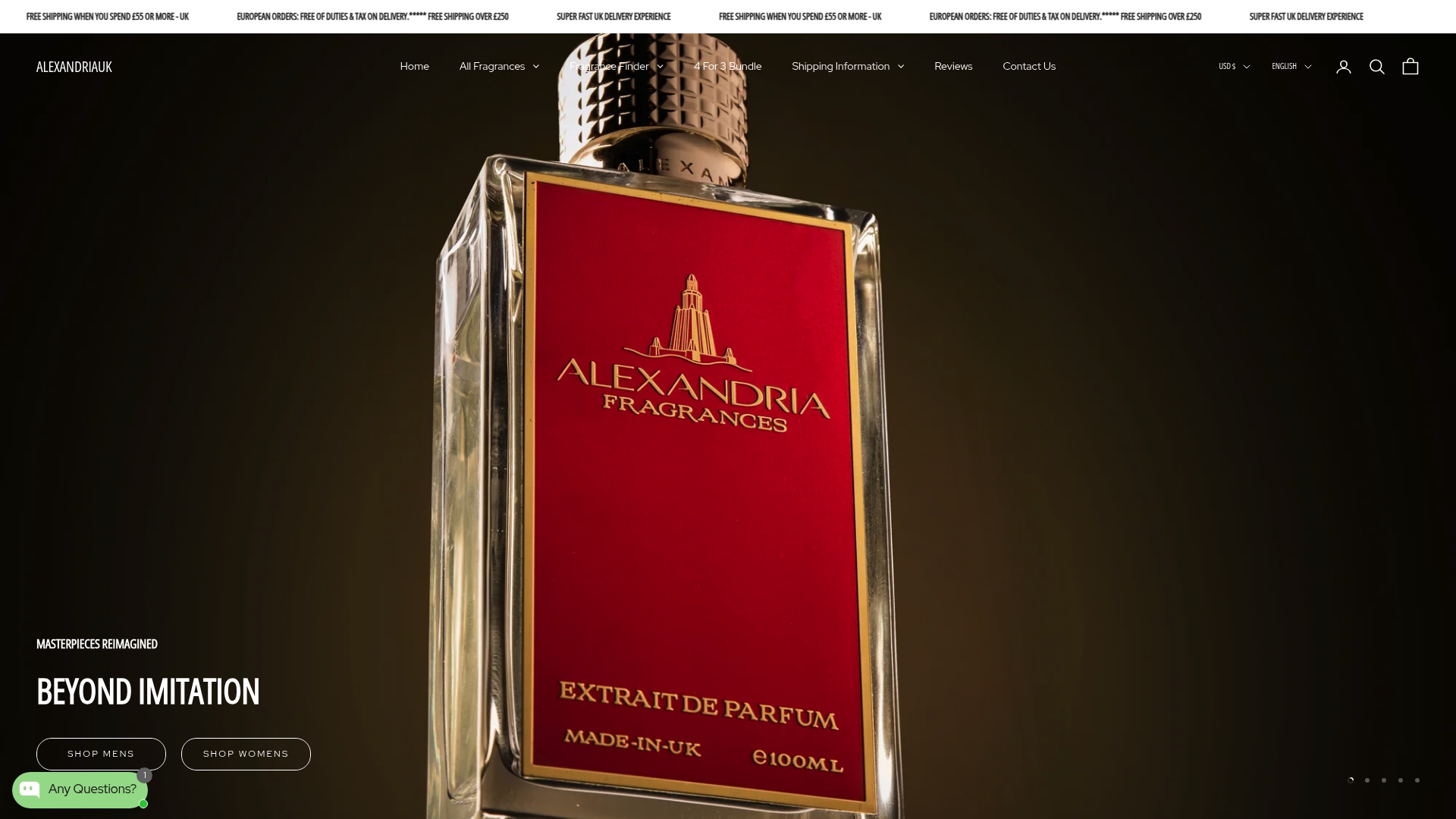
Explore our exclusive range and find your ideal perfume blend today. Visit AlexandriaUK to browse authentic perfumes inspired by your favourite scent categories. Start testing and loving fragrances that truly complement your lifestyle and skin chemistry. Don’t wait for special occasions when your signature scent is just a click away.
Learn more about quality dupes and scent selection tips to shop smarter and smell remarkable every day.
Frequently Asked Questions
What are the main perfume scent categories?
The main perfume scent categories are Floral, Oriental, Woody, and Fresh. Each category offers distinct characteristics and olfactory experiences, allowing individuals to select fragrances that match their personal preferences.
How do I choose the right perfume concentration for my needs?
Perfume concentrations differ in strength and longevity. Parfum contains the highest concentration (20-40%), making it ideal for special occasions. Eau de Parfum is suitable for daily wear with a concentration of 15-20%, while Eau de Toilette, which has 5-15% concentration, is perfect for casual outings. Quality dupes can also offer good alternatives based on budget and needs.
What is the role of fragrance notes in perfume composition?
Fragrance notes are categorized into three layers: Top Notes (initial scent lasting 5-15 minutes), Middle Notes (core scent lasting 3-5 hours), and Base Notes (lasting 6-10 hours). Each layer contributes to the overall experience and evolution of the scent over time on the skin.
How can I avoid common pitfalls when selecting a fragrance?
To avoid pitfalls like impulse buying and ignoring personal chemistry, test fragrances on your skin rather than relying on packaging or brand reputation. Allow sufficient time for scents to develop, and limit the number of fragrances sampled at once to enhance decision-making.