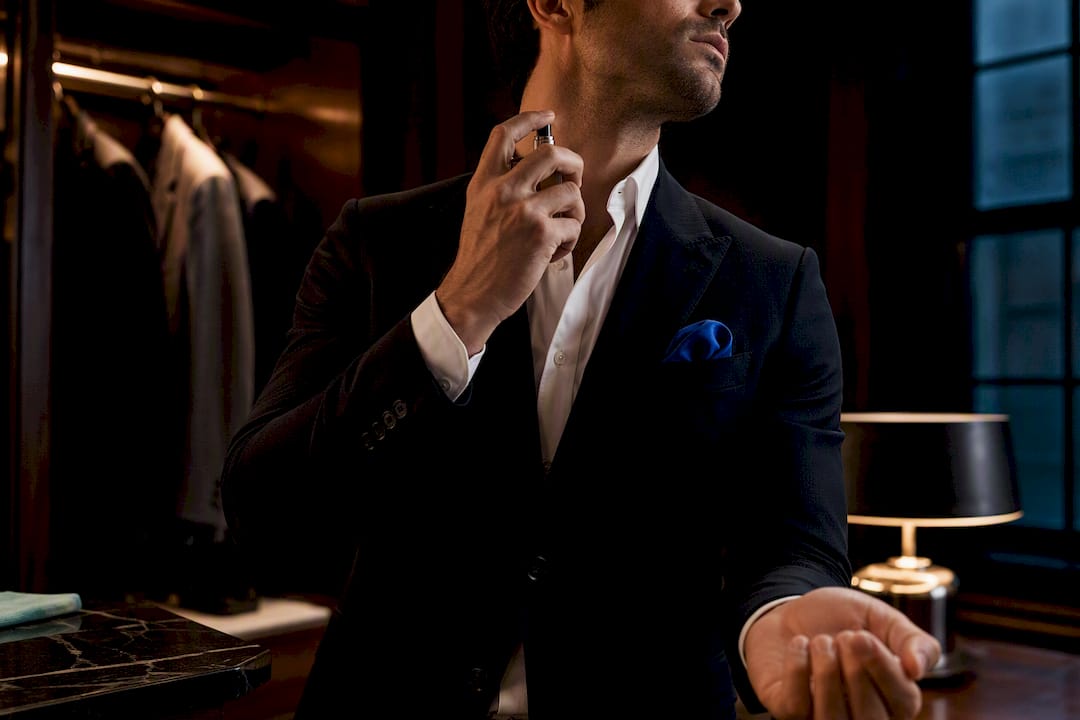
Two Spots, 1 Spray for Parfum: How Men Should Apply Cologne
Apply your fragrance to clean, dry skin straight after a shower, targeting two spots: the chest above the heart and the back of the neck below the hairline. Hold the bottle at an appropriate distance and spritz once for parfum, twice for eau de parfum, or a few times for a lighter eau de cologne. Never rub the skin afterwards, and let it settle for a minute before dressing.
TL;DR:
- Fragrance should be applied to the chest above the heart and the back of the neck below the hairline for reliable pulse points that enhance projection.
- Use one spray of parfum, two of eau de parfum, and three to five sprays of cologne, adjusting for occasion and environment.
- Hold the bottle six to eight inches from the skin and spray without rubbing, waiting 60 to 90 seconds before dressing to let alcohol evaporate.
- Moisturizing dry skin with unscented lotion or petroleum jelly before applying extends fragrance longevity on the skin.
- Avoid over-spraying, rubbing, and applying fragrance to wrists or behind the ears, as these areas are less durable or prone to changing scent profiles.
Table of Contents
- How should men apply cologne to pulse points that actually work?
- How many sprays of cologne should you use?
- What’s the correct technique for spraying cologne?
- Does moisturised skin make cologne last longer?
- How should you adjust cologne for different occasions?
- What are the most common cologne mistakes?
- Why trust AlexandriaUK’s fragrance guidance?
- An editorial take on the two-spot method
- Try before you commit with a sample pack
- Sources
- FAQ
How should men apply cologne to pulse points that actually work?
Pulse points earn their name because blood vessels sit close to the skin there, and the warmth they generate helps a fragrance’s molecules lift and diffuse into the air around you. That’s the whole mechanism behind good projection: heat plus skin equals scent that travels rather than sits.
For men, the chest above the heart and the back of the neck are the two most reliable spots, offering steady warmth without excessive movement or friction throughout the day. When you want a fragrance to work harder, secondary spots can help:
- Hair — holds scent beautifully but only with thicker hair and a quality formulation, since fine hair loses fragrance fast
- Behind the knees — an old perfumer’s trick for evening wear, as body heat carries the scent gently upward
- Inner elbow — useful for a subtle, close-range presence
Wrists and behind the ears are trickier territory. Wrists get washed, rubbed against desks, and clash with hand soap or sanitiser throughout the day, while the area behind the ears can turn oily fast on warmer days, altering how a scent reads by the afternoon.
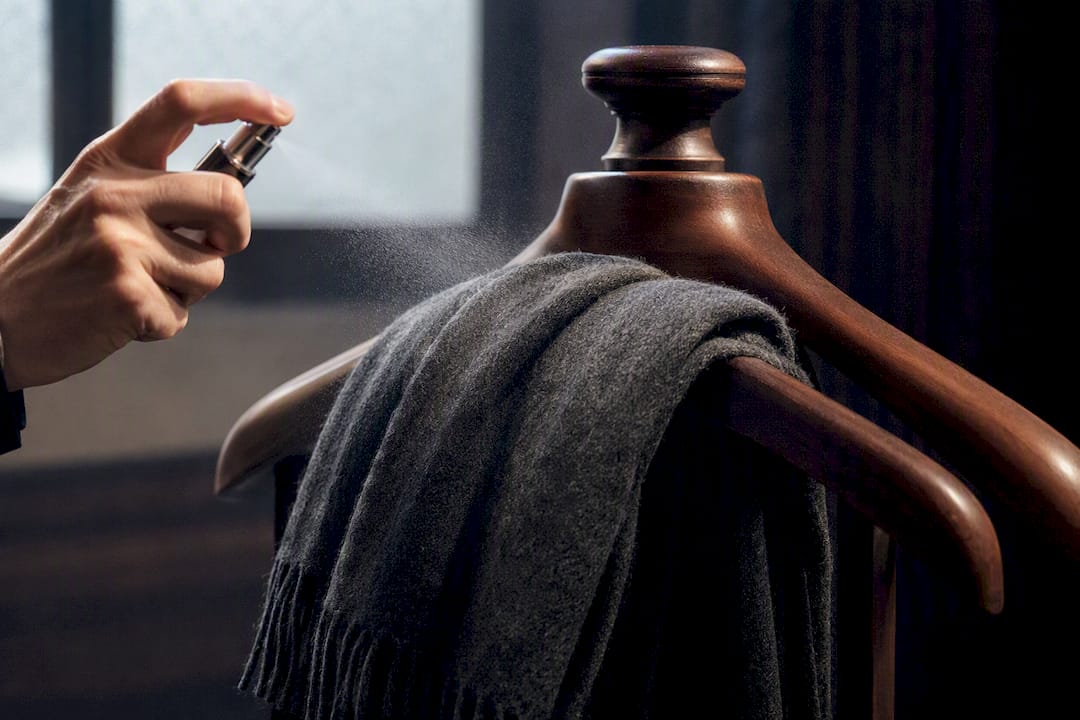
Pro Tip: A light spray on a wool scarf or the inside of a jacket collar (never silk or delicate fabrics) can extend a fragrance’s life well beyond what skin alone offers, since fabric holds onto scent molecules longer than skin does.
Our guide to where to apply cologne covers this two spot method in more depth if you want to fine tune your own routine.
How many sprays of cologne should you use?
Concentration dictates quantity, full stop. Parfum (or extrait de parfum) carries the highest oil content, so it lasts longest and needs the least. Eau de parfum sits a notch below in intensity. Eau de toilette is lighter still, and eau de cologne is the most diluted of the four, built for a brief, refreshing burst rather than all-day presence.
A dependable starting point looks like this:
- Parfum — 1 spray
- Eau de parfum — 2 sprays
- Eau de toilette — 2 to 3 sprays
- Eau de cologne — 3 to 5 sprays
Occasion matters just as much as concentration. An office day calls for restraint, a date night allows one extra spray of something richer, and standing outdoors in summer heat means your scent evaporates faster, so a slightly higher count on a lighter cologne compensates for that loss.
Once you’ve applied, wait a few minutes, then bring your wrist close to your nose. If you catch it easily but a colleague across the desk wouldn’t, you’ve nailed the balance.
What’s the correct technique for spraying cologne?
Technique separates a fragrance that develops beautifully from one that dies within the hour, and it starts before the bottle even comes out.
- Shower and dry off completely, since clean skin absorbs and releases fragrance far more evenly than skin carrying yesterday’s grime or product residue.
- Apply an unscented moisturiser if your skin runs dry (optional, but recommended).
- Hold the bottle six to eight inches from skin and spray directly onto the chest or neck, never at close range.
- Resist the urge to rub the spot with your wrist or fingers.
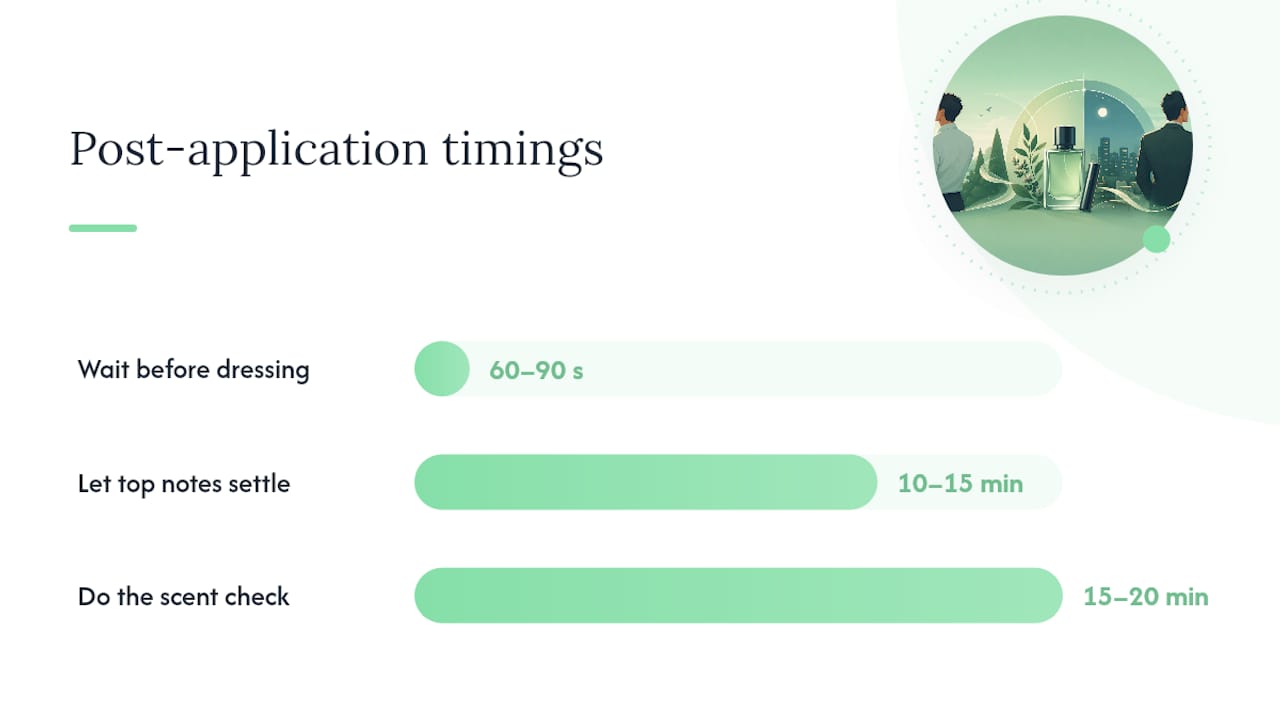
- Wait 60 to 90 seconds before dressing, giving alcohol time to evaporate and true notes to emerge.
Rubbing wrists together is the most common technique mistake, and it does real damage: friction generates heat that burns off volatile top notes before they’ve had a chance to introduce the fragrance properly, which flattens the whole opening act. A perfumer’s guideline worth remembering: allow 10 to 15 minutes for those top notes to settle before judging whether you’ve applied enough.
After 15 to 20 minutes, do a simple sniff test, close in on the pulse point, then step back an arm’s length. You want a scent that’s noticeable up close and only faintly present at distance, not a wall you have to walk through.
Does moisturised skin make cologne last longer?
Dry skin is porous and thirsty, and it drinks up fragrance oils before they’ve had a chance to develop properly, which is why moisturising is one of the simplest longevity fixes available. A thin layer of unscented lotion or a dab of petroleum jelly on pulse points before spraying gives the fragrance something to cling to rather than evaporating straight off dehydrated skin.
Skin and clothing behave very differently once fragrance lands on them:
- Skin application lets a scent evolve through its full arc, top notes, heart notes, base notes, exactly as the perfumer intended
- Clothing application lasts considerably longer since fabric fibres hold onto molecules more stubbornly, but you sacrifice that full development, and pale or delicate fabrics risk staining
Hair application sits between the two, working best on thicker hair and only with quality formulations, since cheap fragrances applied to hair tend to smell harsh rather than warm. Age changes the equation too. Skin naturally dries out over the years, so men over 40 often find they need slightly more product or more frequent moisturising to get the same longevity they had at 25.
Pro Tip: Keep an unscented moisturiser by your aftershave, applying it thirty seconds before your fragrance takes under ten seconds and noticeably extends wear time.
For a deeper breakdown of layering and fabric tricks, our piece on making perfume last all day is worth bookmarking.
How should you adjust cologne for different occasions?
Context should always steer both concentration and quantity. What works in a nightclub will clear a boardroom.
- Office and close quarters — stick to one or two sprays maximum, and lean toward eau de toilette rather than a heavier parfum
- Summer and outdoors — heat accelerates evaporation, so lighter eau de toilette or cologne concentrations with a slightly higher spray count hold up better than heavy parfums, which can turn cloying in warm air
- Evening and dates — a richer concentration is fair game, but increase by one spray at most rather than doubling up
- Scent-free environments — hospitals, certain workplaces, and shared close-quarters spaces call for skipping fragrance entirely out of respect for colleagues with sensitivities
Our guide to men’s cologne scent types breaks down which families genuinely suit which settings, useful if you’re building a small rotation for different parts of your week.
What are the most common cologne mistakes?
Over-spraying is the mistake nearly every man makes at some point, usually out of nerves rather than carelessness. If you can smell yourself strongly from several feet away, you’ve overshot the mark, and the fix is straightforward: a dab of unscented lotion on the area to dilute the concentration, some fresh air, or a change of shirt if the damage is already done to fabric.
- Product clashes happen when scented deodorant, shower gel, and cologne all compete, so switching to unscented body products lets your fragrance lead unchallenged
- Olfactory fatigue tricks your own nose into thinking you need more, when in fact you stopped detecting your own scent simply because you’ve been wearing it for hours, a phenomenon perfumers call nose blindness
- The room test solves this instantly, ask someone you trust, or step into a different room and re-enter to smell with fresh perspective
- Reapplication should happen sparingly, and only on a fresh area rather than layering more onto skin that’s already carrying fragrance
Why trust AlexandriaUK’s fragrance guidance?
Getting application right is only half the equation, choosing scents that suit your chemistry and lifestyle is the other. AlexandriaUK’s fragrance academy resources cover everything from pulse point strategy to longevity tricks, built to help you get more from every bottle you own.
If you’re still working out which concentrations and scent families suit you, sample packs and discovery sets offer the most sensible way to test the two spot method across several fragrances without committing to full bottles. Testing directly on your own skin, in your own routine, tells you far more than any description ever could.
An editorial take on the two-spot method
The advice men actually receive on cologne is usually either too vague (“just spray a bit”) or too fussy (elaborate seven-step rituals nobody follows past week one). Neither serves you. What the evidence from perfumers and grooming editors consistently points to is something far simpler: two spots, a measured spray count tied to concentration, and a short wait before you leave the house.
Where conventional advice falls down is treating every fragrance the same. A parfum and a cologne are not interchangeable in how you wear them, and the men who get the best results are the ones who check concentration first and adjust spray count accordingly, not the ones with the most elaborate technique. Prioritise that single habit above everything else.
The other overlooked truth is that longevity problems are usually skin problems, not fragrance problems. Before blaming a bottle for “not lasting,” moisturise properly and reconsider whether it’s actually the skin drinking the scent away.
— dave
Try before you commit with a sample pack
Reading about application technique only gets you so far, the real test happens on your own skin. Lower-cost routes into trying several fragrance concentrations side by side are available, rather than gambling on a full bottle of something you’ve never worn.
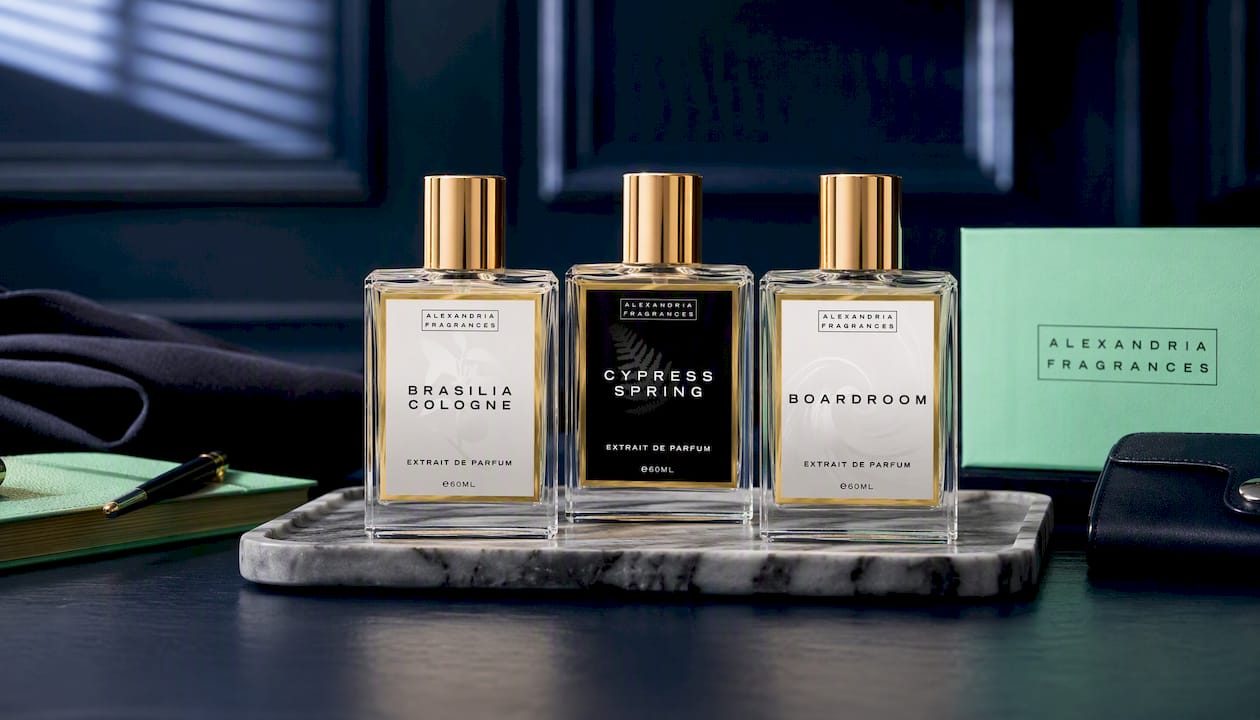
The Brasilia Cologne offers a warm, everyday option worth testing with the two spot method described above. If you want to see how a mossy, woody profile projects across seasons, the Cypress Spring Inspired By Amouage Bracken Man is a strong candidate for that experiment. For office and boardroom wear, where restraint matters most, the Boardroom Inspired By Office for Men is built with exactly that lower spray count guidance in mind.
Start with a sample pack or discovery set, apply using the chest and neck routine outlined above, and give each scent its full ten to fifteen minutes before judging it. For a fuller breakdown of technique, our pillar guide to applying cologne is the next logical stop.
Sources
- How to apply aftershave: A modern man’s guide
- How to Apply Cologne Without Overdoing It
- How to properly apply cologne, according to a grooming editor
FAQ
How many squirts of cologne should a man use?
It depends on concentration: one spray for parfum, two for eau de parfum, two to three for eau de toilette, and three to five for a lighter eau de cologne, adjusted slightly for occasion.
Where are men supposed to wear cologne?
The chest above the heart and the back of the neck below the hairline are the most reliable spots, with hair, behind the knees, or the inner elbow as secondary options.
What is the 5 spray rule?
There’s no single universal “5 spray rule”, it’s really a guideline for the lightest concentrations, eau de cologne, which can take three to five sprays to reach a noticeable, lasting presence.
Should you apply cologne to skin or clothes?
Skin lets a fragrance evolve through its full development, top to base notes, while clothing application lasts longer but sacrifices that evolution and carries some staining risk on pale fabrics.
How do you know if you’ve applied the right amount of cologne?
Smell your pulse point up close after ten minutes, then check from an arm’s length away; you want it detectable close up and only faint at a distance, not overwhelming from across a room.