
What perfume is best for me? A quiz and testing guide
TL;DR:
- Testing fragrances on skin for a full day offers the most accurate scent experience. Using quizzes and select samples reduces buyer regret and helps find personal scent profiles. Building a small wardrobe of well-tested fragrances suits most occasions better than seeking one signature scent.
The best perfume for you is the one you test on skin, live with for a full day, and that aligns with a short personal scent profile built around mood, occasion, and season. Three steps get you there faster than any amount of browsing: use an online fragrance finder or quiz to narrow your options to two to four candidates; spray one on skin each day and wait through the dry-down; then commit only after trying a discovery set, decant, or sample. That last step alone eliminates most buyer’s regret.
- Step 1: Take a fragrance quiz or finder to map your preferences to a scent family and a short candidate list.
- Step 2: Test one fragrance per day on skin, not paper, and assess it at the 20-minute, 2-hour, and 4-hour marks.
- Step 3: Buy a discovery set or decant before investing in a full bottle. Options like Alexandriauk’s bespoke fragrance service make this low-risk and expert-guided.
Table of Contents
- How do perfume quizzes and fragrance finders actually work?
- Fragrance families and notes: the map that makes quiz results useful
- How to test a perfume properly, step by step
- How to match a scent to your personality, occasion, and season
- How to buy samples, discovery sets, and decants in the UK
- Travel sizes, bottle choice, and the carry-on liquids rule
- Key takeaways
- Why the “signature scent” idea can hold you back
- Alexandriauk’s discovery kits and bespoke service: a low-risk route to your perfect scent
- Useful sources and further reading
How do perfume quizzes and fragrance finders actually work?
A well-designed fragrance finder does one thing well: it converts vague preferences into a testable shortlist. Most ask about the scents you already enjoy, the moods you want to create, and the occasions you dress for. The output is a scent personality profile, typically a dominant fragrance family, a handful of key notes, and two to four specific suggestions to test.
The quality of your answers determines the quality of the result. Be honest about what you actually wear and love, not what you think you should like. If you gravitate towards warm, resinous scents on a cold evening, say so. If you find heavy florals suffocating in an office, note that too. Quizzes reward specificity.
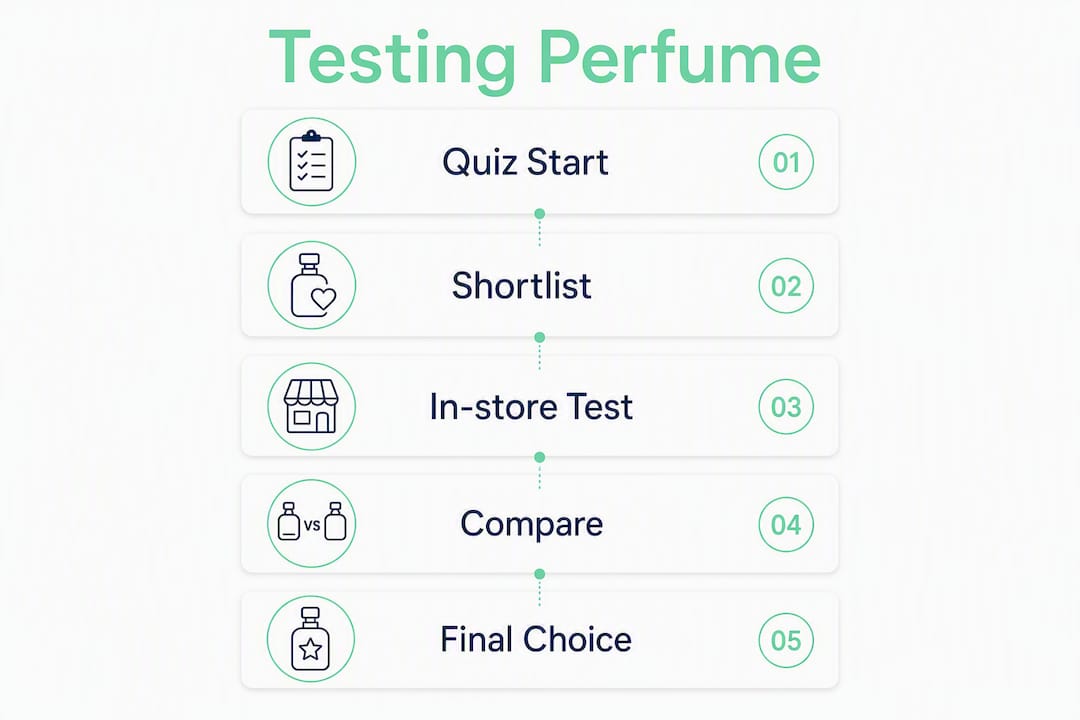
Once you have a result, resist the urge to treat it as a final verdict. Use it as a map. Your profile might read “woody amber with a hint of vanilla” and that tells you to test fragrances with sandalwood, benzoin, or labdanum at the base rather than scrolling through hundreds of bottles blind. That is the real value: reducing a universe of options to a manageable test list.
Pro Tip: Run two or three different finders and compare outputs. Where they agree on a family or note cluster, that is your genuine preference. Where they diverge, the discrepancy usually reflects how you answered mood questions differently each time, which itself tells you something useful about your range.
Fragrance families and notes: the map that makes quiz results useful
Understanding fragrance families transforms a quiz result from a label into a shopping tool. The six principal families each carry a distinct character:
| Family | Character | Typical notes |
|---|---|---|
| Citrus / Fresh | Bright, clean, energising | Bergamot, lemon, grapefruit, ozonic accords |
| Floral | Romantic, soft, luminous | Rose, jasmine, peony, iris |
| Woody | Warm, grounded, sophisticated | Sandalwood, cedarwood, vetiver, oud |
| Amber / Oriental | Rich, sensual, enveloping | Benzoin, vanilla, labdanum, resins |
| Green / Aromatic | Crisp, herbal, natural | Basil, sage, violet leaf, fougère accords |
| Gourmand | Luscious, edible, hedonistic | Tonka bean, caramel, praline, coffee |
Fragrance families offer character cues rather than rigid rules. A woody amber can be austere or deeply sensual depending on its construction; a floral can be sheer and modern or opulent and classical.
Notes unfold in three stages. Top notes are the opening impression, lasting roughly 15–30 minutes: citrus, light herbs, and green accords dominate here. Heart notes (or middle notes) emerge as the top fades and define the fragrance’s true character for the next one to three hours. Base notes are the foundation, the slow-drying resins, woods, and musks that linger on skin for hours and determine whether you still love the scent at the end of the day.
Concentration matters too. An Eau de Toilette (EDT) carries roughly 5–15% fragrance oil, projecting brightly but fading faster. An Eau de Parfum (EDP) sits at 15–20%, offering richer depth and longer wear. A parfum or extrait pushes beyond 20%, delivering the most intimate, skin-close experience. For daily UK wear, an EDP tends to strike the most satisfying balance.
How to test a perfume properly, step by step
Paper strips lie. The blotter gives you a rough first impression of the top notes, nothing more. Real testing happens on skin, over time, and one fragrance at a time. Living with a scent through several hours gives the most reliable sense of whether it suits you, because the initial top notes are rarely representative of the final dry-down.
- Blotter first. Spray or dip a strip and take a brief initial sniff. This filters out anything you find immediately unpleasant and saves skin space.
- One spray on skin. Apply to the inside of your wrist or inner elbow. One application only.
- Wait 20–30 minutes. The top notes burn off. What you smell now is the heart of the fragrance beginning to emerge.
- Reassess at 2 hours. The heart is fully open. This is the version you will wear most of the day.
- Final check at 4–6 hours. The base notes dominate. If you still love it here, it is a serious contender.
- One fragrance per day. Testing multiple scents simultaneously creates olfactory confusion and false positives.
Pro Tip: Heat amplifies projection. Test on a warm day or after light exercise to understand how a fragrance performs at its most expressive. Pulse points (wrist, neck, inner elbow) work well because the warmth there accelerates the dry-down and reveals the base notes faster.
For a deeper look at in-store testing practices, including how to reset your nose between trials, Alexandriauk’s fragrance academy covers the full protocol.

How to match a scent to your personality, occasion, and season
The most useful framing is not “what does my personality say about me?” but “what atmosphere do I want to create?” A fragrance is a mood you wear. Choose the feeling first, then find the family that delivers it.

Seasonality shapes this choice more than most people realise. Warm weather amplifies projection and can make heavy ambers or dense orientals feel oppressive. Light citrus, fresh aquatics, and sheer florals carry beautifully in summer. As temperatures drop, the skin’s warmth draws out the richness of woody ambers, gourmands, and spiced orientals in a way that feels genuinely luxurious rather than excessive.
| Occasion | Recommended family direction |
|---|---|
| Day / office | Fresh citrus-woods, tea accords, light musk, iris |
| Commute / casual | Green aromatic, clean vetiver, soft floral |
| Evening / date | Amber oriental, rich floral, dark woody |
| Weekend / leisure | Gourmand, warm spice, relaxed musk |
UK indoor and commuting etiquette tends to favour restrained, fresh-woody or clean musk profiles for daily wear. A fragrance that reads as powerful in a boutique can feel intrusive on a packed Tube carriage.
Pro Tip: Build a small wardrobe of two to three complementary fragrances rather than searching for one perfect scent. A light, fresh option for daytime, a richer woody or amber for evenings, and a relaxed casual option for weekends covers almost every context without the paralysis of a single “signature.” Alexandriauk’s seasonal fragrance wardrobe guide maps this approach in detail.
How to buy samples, discovery sets, and decants in the UK
Committing to a full bottle before you have lived with a fragrance is the single most common and expensive mistake in perfume buying. The UK market offers several lower-risk routes:
- Discovery sets: Curated collections of miniatures (usually 1.5–5 ml vials) grouped by family or mood. Ideal for mapping your preferences across a range quickly.
- Decants: Portions of a full bottle transferred into a smaller vial by a specialist seller. Lets you test niche or expensive fragrances without the full outlay.
- Sample programmes: Some retailers offer a sample with purchase or a subscription-style service sending monthly samples.
- Travel sprays: Refillable atomisers (typically 5–10 ml) that let you carry a tested favourite without committing to the full bottle for travel.
Discovery kits and decants let you live with a scent before committing to a full bottle, which is the most reliable way to avoid regret. When buying decants online, purchase only from sellers who list the batch code and bottle source. Alexandriauk’s guide on how to spot fake perfume covers the key authentication checks, including packaging inconsistencies, cap quality, and the tell-tale signs of diluted juice.
Travel sizes, bottle choice, and the carry-on liquids rule
Perfume is a liquid, and the rules governing what you can carry onto a plane are unambiguous. UK guidance limits hand luggage liquids to containers of 100 millilitres or less, placed in a single small clear bag for security screening. The restriction applies to the container size, not the volume of liquid inside: a bottle larger than 100 millilitres, even if partially empty, does not qualify.
For travel, a small spray bottle is the practical sweet spot: enough for a week’s wear, small enough to pass security without a second thought. Sample vials and travel atomisers (5–10 ml) are ideal for short trips or for testing a new fragrance in different climates before buying a larger size. Pack your full-size bottles in checked luggage, well-wrapped, to avoid pressure-related leaks.
Key takeaways
The fastest route to finding your ideal fragrance is a quiz to narrow the field, skin testing to confirm it, and a discovery set to remove the financial risk before you commit.
- Take a fragrance quiz or finder to identify your dominant family and a shortlist of two to four candidates.
- Test one fragrance per day on skin, assessing at 20–30 minutes, 2 hours, and 4–6 hours.
- Judge the dry-down, not the opening spritz. The base notes at hour four are what you actually wear.
- Try a discovery set, decant, or sample before buying a full bottle.
- Build a small wardrobe of two to three scents for different occasions rather than searching for one perfect fragrance.
| Point | Details |
|---|---|
| Quiz first | Use a fragrance finder to map preferences to a family and a short test list of 2–4 candidates. |
| Test on skin | Paper strips show only top notes; skin testing over 4–6 hours reveals the full dry-down. |
| One per day | Testing multiple fragrances simultaneously creates confusion; one per day gives reliable results. |
| Sample before buying | Discovery sets and decants let you live with a scent before committing to a full bottle. |
| Alexandriauk | Alexandriauk’s bespoke service and discovery options offer an expert-guided, low-risk route from quiz result to full bottle. |
Why the “signature scent” idea can hold you back
The pressure to find one perfect, lifelong signature scent is, frankly, a marketing construct more than a fragrance truth. A signature scent is often an extension of your current life and mood, and experts note it can shift with seasons and life stages rather than remaining a fixed identity. Treating it as a permanent declaration raises the stakes unnecessarily and leads people to over-invest in a single bottle before they have genuinely explored their preferences.
What actually works is the opposite approach: a small, deliberate wardrobe built through disciplined testing. Two to three fragrances chosen through the quiz-to-skin-test method described above will serve almost every context, reduce regret, and give you a far richer relationship with scent than a single “signature” ever could. The discipline of testing one fragrance per day, logging what you notice at each stage, and comparing finalists over several weeks produces results that a single afternoon in a department store simply cannot match.
The other thing most guides understate is the role of emotional atmosphere over personality matching. Choosing a fragrance because it “suits an introvert” or “works for creative types” is far less useful than asking: what feeling do I want to carry into this room? Clarity, warmth, quiet authority, playful sensuality. Start there, find the family that delivers it, then test on skin. That sequence, more than any personality quiz, is how a genuinely personal scent is found.
Alexandriauk’s discovery kits and bespoke service: a low-risk route to your perfect scent
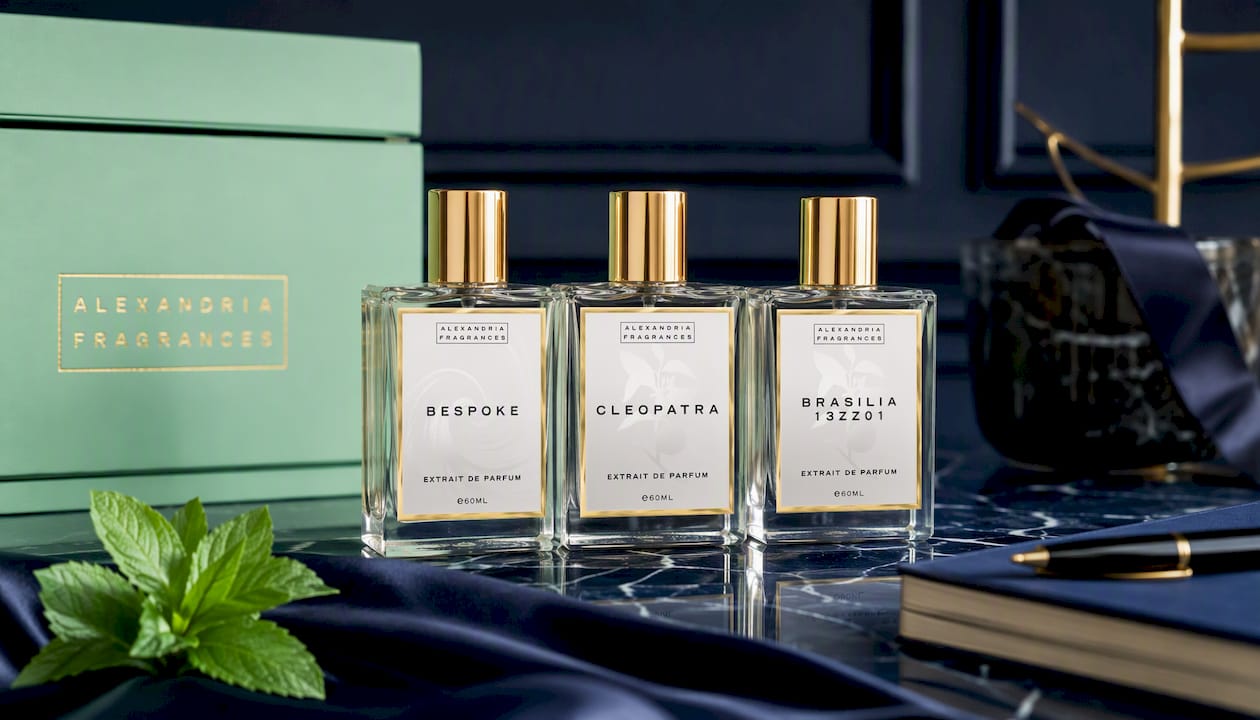
For those who have taken the quiz, narrowed the shortlist, and want expert curation without the guesswork of navigating a crowded market alone, Alexandriauk offers two clear routes forward. The discovery kit approach lets you test a curated selection of quality-focused, inspired fragrances across the families most relevant to your profile, with no obligation to commit to a full bottle until you are certain. The bespoke fragrance service goes further: a consultation-led process that translates your scent profile into a fragrance built around your preferences, occasion needs, and the notes you have confirmed you love through testing.
Both routes are grounded in Alexandriauk’s focus on quality and inspired craftsmanship. For readers drawn to rich, enveloping femininity, Cleopatra (For Her) is a compelling starting point. Those who prefer a more contemporary, distinctive character will find Brasilia 13zz01 worth exploring. For the full methodology behind building a signature selection, Alexandriauk’s guide to signature fragrance selection is the natural next step. Visit alexandriauk.com to explore discovery options and book a bespoke consultation.
Useful sources and further reading
- Hand luggage restrictions: liquids — UK government guidance on the 100 ml carry-on rule for all liquids including perfume.
- A Complete Guide To Finding Your Signature Scent — ELLE UK’s expert-led overview of olfactive families and how to narrow your choices through skin testing.
- How To Find Your Signature Scent: A Fragrance Editor’s Method — A fragrance editor’s practical method: learn the families, sample on skin, and judge the dry-down over days, not minutes.
- Best ways to test perfume for better fragrance choices — Alexandriauk’s pillar guide on sampling, living with a scent, and when to commit to a full bottle.
- FIND A FRAGRANCE — The Perfume Society’s finder tool for UK readers exploring families and discovering new directions.
- For discovery sets and legitimate fragrance sampling, Jeffi Inc’s fragrance range offers a curated selection worth exploring alongside dedicated UK decant communities.