What Are Oriental Fragrances? A Guide to the Amber Family
Oriental fragrances are warm, rich, sensual perfumes built on a base of amber, vanilla, resins, balsams, spices and woods. The word is a historic perfume term for a family, not a place: you will find oriental scents made in Paris, London and Dubai alike, and the industry now more often calls the family “amber” or “ambery”. Think of a velvet-lined room lit by candlelight, and you are close to the mood.
Below, we explain what defines the family, which notes to look for, how its sub-styles differ, and how to choose one without spending blindly.
TL;DR
- An oriental (now often called amber) fragrance is a warm, sweet, resinous perfume built around vanilla, amber, tonka, labdanum, incense and spice.
- The name is a historic category label, not a geographic one, and it is being replaced by “amber” and “ambery” in much of the industry.
- Sub-styles range from soft and floral to spiced, gourmand, woody and leather-led, so “oriental” never means just one smell.
- These scents are rich and tend to be strong, so sample before committing to a full bottle and apply sparingly.
- Inspired-by interpretations let you explore the style at a gentler price, and a sample set is the sensible place to begin.
Table of Contents
- What the term “oriental” means in perfumery
- The anatomy of an oriental accord
- A short history: from Jicky to Shalimar
- The main styles of oriental fragrance
- Why the family feels so personal
- Famous oriental perfumes worth knowing
- How to wear and choose an oriental fragrance
- Our perspective: why we love the amber family
- Explore the style with Alexandriauk
- Common mistakes when exploring oriental perfumes
- FAQ
- Sources
What the term “oriental” means in perfumery
In fragrance classification, “oriental” describes a family of warm, sweet and sensual compositions. Perfume Society explains that the word is a historic classification covering notes such as amber, sandalwood, coumarin and orris. It evokes the spice routes and the resins, balms and incense that travelled along them, which is where the romantic name comes from.
Today the label sits a little awkwardly. Many houses and writers prefer “amber” or “ambery”, which says more about the smell and less about geography. When you see a retailer filter by “oriental”, an “amber” family or a “warm and spicy” family, you are usually looking at the same territory with different names. That also answers one of the questions readers often raise: what are oriental fragrances called now? Amber, ambery, or sometimes “warm spicy” and “gourmand” when sweetness leads.

The anatomy of an oriental accord
Perfumers speak of an accord: a blend of materials that together read as a single, new impression. The classic oriental accord is, according to Sylvaine Delacourte’s guide to the family, generally made of tonka bean, vanilla, vanillin, coumarin, labdanum and patchouli, often joined by resins such as benzoin, incense or opopanax. Each contributes something different:
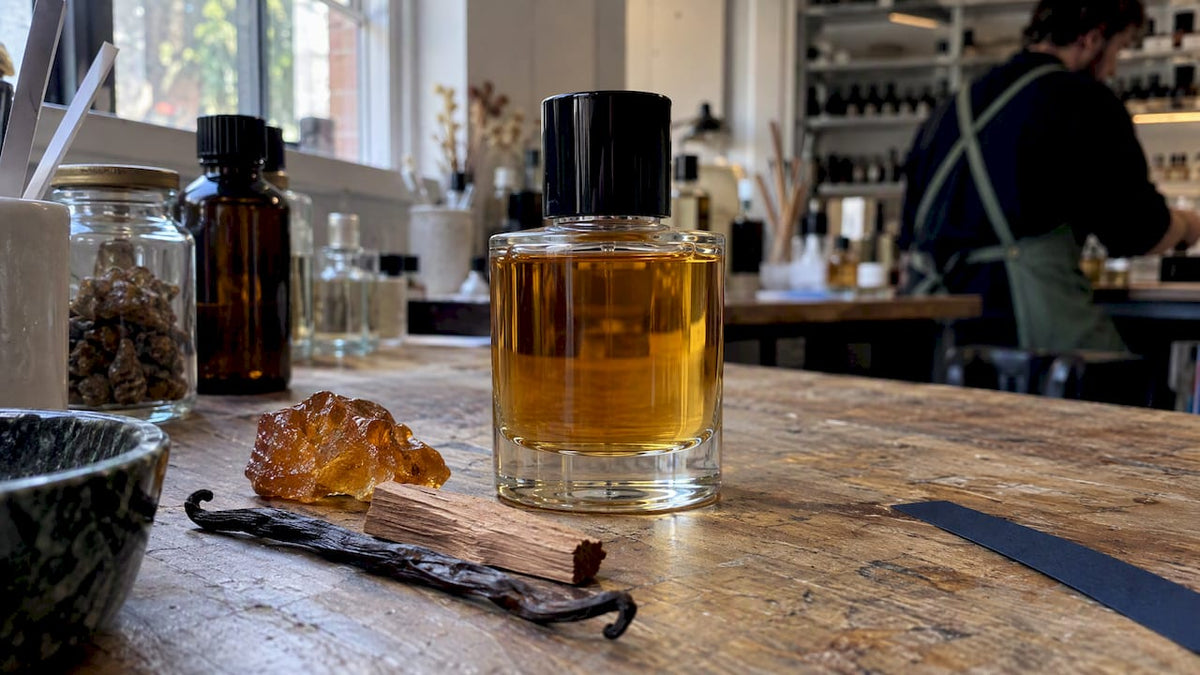
- Vanilla: creamy, enveloping sweetness, the soft heart of the style.
- Amber and labdanum: a golden, resinous, slightly animalic warmth that gives the family its name.
- Tonka bean: a nutty, almond-and-hay sweetness rooted in coumarin.
- Resins and incense (benzoin, myrrh, frankincense, opopanax): smoky, balsamic depth and a sense of ceremony.
- Spices (cinnamon, clove, cardamom, saffron): heat and sparkle that stop the sweetness from turning heavy.
- Woods and patchouli (sandalwood, oud, cedar): a dark, earthy foundation that prolongs the dry-down.
Note that amber in perfumery is a constructed idea, not a single raw material. It is an accord assembled to suggest warm, glowing resin, which is why two ambers from two houses can smell so different.
A short history: from Jicky to Shalimar
The amber accord is traced back to Guerlain’s Jicky of 1889, which paved the way for the family, according to Delacourte. The landmark most perfume lovers cite is Shalimar, created by Jacques Guerlain and, per Fragrantica, launched in 1925. Its bold use of vanilla set a template for countless oriental and vanilla-led perfumes that followed.
What made it so influential was the contrast: a bright bergamot opening, a floral heart of iris, jasmine and rose, and then a voluptuous base of vanilla, tonka and musks. That arc, light to velvet, remains the model for the whole category.
The main styles of oriental fragrance
Saying “oriental” is rather like saying “red wine”: true, but not precise. The family has several well-defined branches.
Soft oriental
Powdery, floral and gently sweet. Vanilla, iris, ylang-ylang and a hint of incense create a perfume that feels like cashmere. It is the most approachable entry to the family.
Spicy oriental
Cinnamon, clove, saffron and pepper over amber and resin. Warm, lively and assertive, it suits autumn evenings and winter coats.
Gourmand oriental
Here sweetness takes centre stage: caramel, praline, coffee, dried fruit, honey. The accord stays amber-based, but the mood is edible and indulgent.
Woody oriental
Sandalwood, cedar, patchouli and oud lend dryness and structure. Smoky and contemplative, these are often chosen by those who find vanilla too sweet.
Leather and oud oriental
Suede, birch tar and agarwood add a dark, plush quality. Oud, in particular, has its own devoted following; our guides to oud perfume and leather and oud pairings go deeper into the subject.
| Style | Dominant notes | Mood | Best for |
|---|---|---|---|
| Soft | Vanilla, iris, powder, incense | Cosy, sensual | Newcomers, daytime in cool weather |
| Spicy | Cinnamon, clove, saffron, amber | Vibrant, confident | Autumn and winter evenings |
| Gourmand | Praline, caramel, tonka, coffee | Indulgent, playful | Dessert lovers |
| Woody | Sandalwood, patchouli, cedar | Dry, composed | Those who dislike sweetness |
| Leather and oud | Suede, agarwood, smoke | Dark, dramatic | Experienced wearers |
Why the family feels so personal
Few families carry as much emotion as this one. In her profile for The Fragrance Foundation UK, Marina Mansour describes fragrance as an invisible form of identity and links materials such as jasmine, bakhoor, oud and warm amber with cultural memory and a sense of welcome or presence. It is a useful reminder that these notes are not merely sweet: depending on the composition, they can feel intimate, ceremonial, luxurious or assertive.
That range explains why one person finds an oriental perfume comforting and another finds it overwhelming. The same vanilla-amber base reads differently when lifted by bergamot, deepened by incense or sharpened by pepper.
Famous oriental perfumes worth knowing
It helps to anchor the family in real bottles. Delacourte’s overview lists, among others, Guerlain’s L’Instant, Spiritueuse Double Vanille and Cuir Beluga, Tom Ford’s Amber Intrigue, Jo Malone’s Myrrh & Tonka, Hermès Ambre Narguilé and Louis Vuitton’s Ambre Nomade. Alongside Shalimar, they show how wide the family is: some are boozy and spiced, some powdery, some smoky and resinous.
If you are comparing categories more broadly, our primer on neroli, tonka, oud and gourmand perfumes shows where each sits.
How to wear and choose an oriental fragrance
These perfumes are dense, and they reward restraint. A few practical guidelines:
- Start with fewer sprays. One or two on the chest or pulse points is often plenty; the base will bloom as it warms.
- Match the season. Cold air softens heavy sweetness, so autumn and winter are natural homes, though a light soft oriental can work in spring evenings.
- Moisturise first. Fragrance clings better to hydrated skin. If your skin is sensitive, a dermocosmetics specialist such as this Spanish online parafarmacia offers professional guidance on choosing skincare suited to your skin type.
- Test on skin, not paper. Amber and vanilla change with body chemistry; give a sample a full day.
- Go gradually with oud. The Fragrance Foundation UK’s commentary on oud suggests newcomers approach intense oud step by step, with lighter interpretations being more accessible and rose, tobacco and stronger oud constructions sitting at the more powerful end.
Our guide on how to sample perfumes like an expert takes this further, with a method for judging the opening, heart and dry-down over several hours.
Our perspective: why we love the amber family
We see oriental perfumery as the most generous corner of the fragrance world. It asks you to slow down. A great amber unfolds across a whole evening, and the best of them are remembered long after the bottle is empty.
It is also the family where high prices often arrive fastest, since resins, vanilla and oud-style materials are costly in prestige houses. That is precisely why we make inspired-by interpretations: to let enthusiasts and bargain hunters enjoy the architecture of a celebrated amber, oud or leather scent without paying for the label. Our approach is to use high oil concentrations for lasting performance, and our production is cruelty-free and IFRA-compliant.
Our advice is always the same. Do not buy a dark, sweet perfume from a description alone. Smell it, live with it for a day, and only then choose your bottle. An inspired-by perfume should be judged on its own merit, not just on how close it feels to the original.
— dave
Explore the style with Alexandriauk
If the family intrigues you, begin where the risk is lowest. Our Sample Pack of six 5ml vials is priced at £59.99, and our Discovery Set is 83 USD, both a way to compare several styles on your own skin first.
For specific directions in the oriental world:
- Oriental Leather, inspired by Dior Oud Ispahan: a leather-and-oud interpretation for those drawn to the darker side.
- China Affair, inspired by Chanel’s Coromandel: an amber-tinged, softly resinous take on a well-loved classic.
- Oriental Oud: one of our own Original Creations, not a copy of anything.
You can also browse by audience: women’s, men’s and unisex fragrances. For a deeper dive into the accord that underpins many of them, read our complete guide to oud perfumes.

Common mistakes when exploring oriental perfumes
A few traps catch almost everyone at first.
Judging by the first ten minutes. The opening of an amber perfume is often bright with citrus or spice. The real character, the vanilla, resin and wood, appears an hour or two later.
Over-spraying. Rich bases carry. What seems faint on your own skin can fill a room, so build slowly.
Assuming all oriental means sweet. Woody and leather orientals can be dry and smoky. If one sugary vanilla disappoints you, try an incense or oud-led style before you give up on the family.
Ignoring concentration. Strength and longevity vary by concentration and by the formulation itself. A well-built eau de parfum with a generous oil load will outlast a thin one, which is why we emphasise concentration in our own blends.
Buying a full bottle too soon. Amber and oud change dramatically across skin types, which is the whole case for sampling.
For a wider look at the style in our own range, see our article on oud and amber creations.

FAQ
What fragrances are oriental?
Oriental fragrances are those whose character comes from amber, vanilla, resins, spices and warm woods. Classics include Guerlain’s Shalimar, Hermès Ambre Narguilé and Tom Ford’s Amber Intrigue. Many oud, leather and gourmand perfumes also belong to the wider family.
What are oriental fragrances called now?
Most often they are called amber or ambery fragrances. Retailers may also group them under warm spicy or gourmand headings, depending on how sweet or spiced they are. The old word survives mainly as a familiar shorthand.
Are oriental perfumes only for women?
No. The family is among the most gender-neutral in perfumery, since vanilla, resin, incense and woods suit anyone. Spicy, woody and leather styles are often favoured in men’s fragrance, while soft and gourmand styles are popular in women’s, but the lines are blurred.
When should I wear an oriental fragrance?
Autumn and winter evenings suit the richer styles, because cool air tempers their intensity. A soft oriental can work in the daytime if you apply it lightly. In very hot weather, most people find these perfumes heavy.
What is a good oriental perfume to start with?
Begin with a soft or gourmand style, where vanilla and amber dominate over smoke and spice. Try several in sample sizes before choosing, and keep notes on how each smells after an hour and after six.
Sources
- Ambrée, Perfume Society
- Oriental & Ambery Perfumes guide, Sylvaine Delacourte
- Shalimar Parfum, Fragrantica
- Marina Mansour, The Fragrance Foundation UK
- The Fragrance Foundation UK