Understanding Woody Fragrance Examples for Enthusiasts
Woody fragrances have ruled perfume counters for decades and their deep, earthy scents remain a firm favourite in Britain. Yet many people do not realise that synthetic molecules now make up a significant portion of modern woody perfumes. That classic woodland aroma you think comes straight from the forest could easily come from a laboratory.
Table of Contents
- What Are Woody Fragrances? An Overview Of The Category
- Why Woody Fragrance Examples Are Popular Among Users
- How Woody Fragrances Are Created: The Process Explained
- Key Notes In Woody Fragrances: Understanding Their Role
- Real-World Applications Of Woody Fragrance Examples
Quick Summary
| Takeaway | Explanation |
|---|---|
| Woody fragrances evoke emotional connections | These scents trigger deep emotional responses associated with nature and stability, appealing to primal senses. |
| Key notes include sandalwood and cedar | Primary ingredients like sandalwood and cedar impart rich, complex scents that define woody fragrances. |
| Versatile for various environments | Woody fragrances fit both personal and professional settings, providing a sophisticated olfactory identity. |
| Blending techniques enhance complexity | Perfumers use careful blending of notes to create rich, multi-layered scent profiles that evolve over time. |
| Fragrances support environmental design | Woody scents can influence the atmosphere in homes and businesses, creating specific emotional responses in spaces. |
What are Woody Fragrances? An Overview of the Category
Woody fragrances represent a sophisticated and timeless category within the perfume world, characterized by their rich, earthy, and grounding scent profiles. These fragrances capture the essence of natural wood elements, offering a complex sensory experience that evokes forests, timber, and raw botanical materials.
The Essence of Woody Fragrance Notes
At their core, woody fragrances are built around scent molecules that mimic the aroma of wood. According to the Perfume Society, these fragrances typically incorporate essential ingredients such as:
- Sandalwood: A creamy, smooth woody note with soft, warm undertones
- Cedar: Providing a crisp, clean, and slightly spicy wood impression
- Patchouli: Offering an earthy, deep, and sometimes slightly sweet wood character
- Vetiver: Contributing a smoky, rooty woody essence with complex depth
Understanding Woody Fragrance Complexity
Woody fragrances are not monolithic but exist on a nuanced spectrum. The American Chemical Society highlights that these scents can be manipulated through careful blending, allowing perfumers to create multifaceted olfactory experiences. Some woody fragrances lean towards being dry and austere, while others incorporate warmer, more sensual qualities by introducing complementary notes like spices, herbs, or subtle fruity accents.
These fragrances appeal to individuals seeking scents that communicate sophistication, maturity, and a connection to natural environments. Whether used in perfumes designed for professional settings or personal expression, woody fragrances offer a versatile and compelling olfactory journey that transcends traditional scent boundaries.
To clarify the core building blocks of woody fragrances, the following table outlines the primary woody notes and their characteristic scent profiles described in the article.
| Woody Note | Description | Characteristic Scent Profile |
|---|---|---|
| Sandalwood | Creamy, smooth, warm | Milky, soft undertones |
| Cedar | Crisp, clean, slightly spicy | Sharp, astringent, structured |
| Patchouli | Earthy, deep, slightly sweet | Rich, herbaceous, mysterious |
| Vetiver | Smoky, rooty, complex | Earthy, grounding, deeply nuanced |
Why Woody Fragrance Examples Are Popular Among Users
Woody fragrances have surged in popularity due to their distinctive ability to communicate complexity, sophistication, and a profound connection with natural environments. These scents transcend mere olfactory experiences, offering users a sensory journey that resonates with deeper emotional and psychological preferences.
Psychological Appeal of Woody Notes
The attraction to woody fragrances is rooted in powerful psychological associations. According to research from Imperial College London, scents that evoke natural elements trigger profound emotional responses. Woody fragrances specifically tap into primal sensory memories, representing:
- Stability: Reminiscent of sturdy trees and grounded landscapes
- Masculinity: Traditionally associated with strength and earthiness
- Sophistication: Communicating maturity and refined taste
Versatility in Professional and Personal Settings
One key factor driving woody fragrance popularity is their remarkable versatility. These scents seamlessly transition between different environments, making them ideal for professional contexts and personal expression. Their nuanced profiles allow individuals to craft a sophisticated olfactory identity that remains consistent yet adaptable.
Moreover, woody fragrances offer remarkable longevity and depth. Their molecular structure enables slower evaporation, ensuring that the scent remains consistent and intense throughout the day. This characteristic makes them particularly appealing to users seeking fragrances that maintain their character and intensity over extended periods.
How Woody Fragrances Are Created: The Process Explained
The creation of woody fragrances is a sophisticated process that blends artistry, chemistry, and sensory expertise. Perfumers employ complex techniques to transform raw botanical materials and synthetic compounds into captivating olfactory experiences that capture the essence of wood and natural landscapes.
Sourcing and Extracting Natural Ingredients
The foundation of woody fragrances begins with meticulous ingredient selection. Perfume chemists carefully harvest and extract essential oils from natural sources like sandalwood, cedar, and vetiver. These extraction methods include:
- Steam Distillation: Capturing volatile compounds by passing steam through plant materials
- Solvent Extraction: Using chemical solvents to isolate delicate aromatic molecules
- Cold Pressing: Mechanically extracting oils from woods and plant materials
Synthetic Molecule Development
According to chemical research, modern woody fragrances increasingly rely on synthetic molecules that can precisely replicate or enhance natural wood notes. These laboratory-created compounds offer several advantages:
- Consistent quality and reproducibility
- Enhanced stability of fragrance profiles
- More sustainable and ethical production methods
- Greater flexibility in scent composition
The final fragrance is a carefully balanced blend of natural extracts and synthetic molecules, designed to create a complex, multidimensional woody scent that evolves gracefully over time. Perfumers spend years mastering the intricate art of combining these elements to produce fragrances that resonate with emotional and sensory experiences.
To better illustrate how natural and synthetic approaches shape the final product, the table below compares the key features of natural ingredient extraction and synthetic molecule development in woody fragrance creation.
| Aspect | Natural Ingredient Extraction | Synthetic Molecule Development |
|---|---|---|
| Sourcing Method | Harvesting and distilling natural woods | Laboratory synthesis of aromatic compounds |
| Quality Consistency | Can vary due to crop differences | Highly consistent and reproducible |
| Sustainability | Often limited, may stress natural resources | Can be more environmentally friendly |
| Fragrance Stability | May change over time | Enhanced stability and longevity |
| Flexibility in Scent Composition | Restricted by what nature offers | High flexibility and possibility of new notes |
Key Notes in Woody Fragrances: Understanding Their Role
Woody fragrances are distinguished by their complex and nuanced key notes, each contributing unique characteristics that transform a simple scent into a sophisticated olfactory experience. Understanding these individual components is crucial for appreciating the intricate world of woody perfumery.
Primary Woody Fragrance Notes
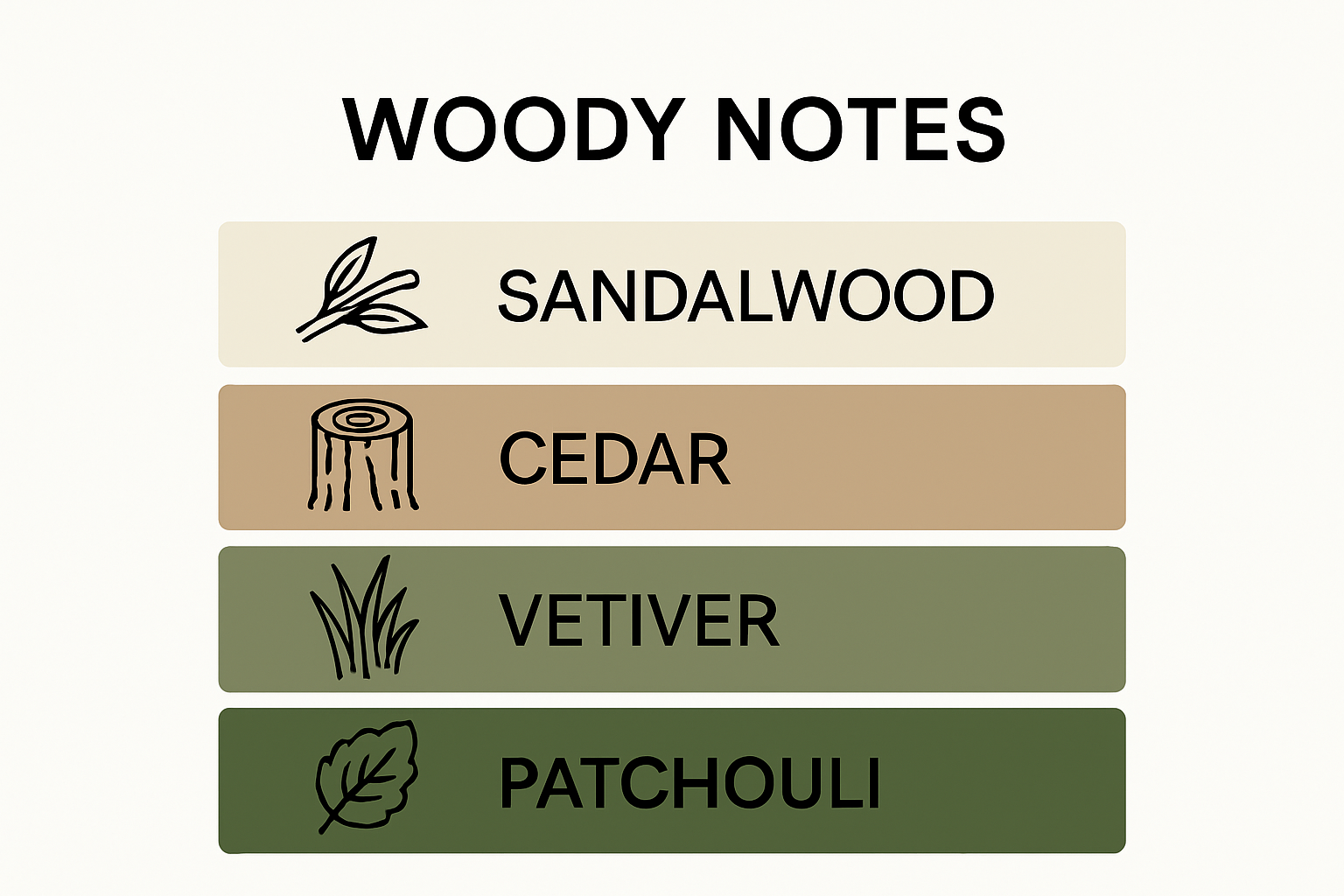
According to research from the American Chemical Society, several key woody notes form the foundation of these captivating fragrances. Perfume Notes 101 highlights the primary ingredients that define woody fragrances:
- Sandalwood: Creamy, smooth, with warm and milky undertones
- Cedar: Sharp, clean, with a crisp and slightly astringent profile
- Vetiver: Earthy, smoky, with complex rooty characteristics
- Patchouli: Deep, rich, with herbaceous and slightly sweet nuances
Layering and Complexity
The magic of woody fragrances lies in their ability to layer these notes, creating depth and complexity. Each note plays a specific role in the fragrance composition. Sandalwood often provides a soft, creamy base, while cedar adds brightness and structure. Vetiver introduces an earthy grounding element, and patchouli contributes a rich, mysterious dimension.
The interplay of these notes allows perfumers to craft fragrances that evolve over time, revealing different aspects of their character as they interact with an individual’s unique body chemistry. This dynamic quality makes woody fragrances exceptionally intriguing and personal, transcending simple olfactory experiences to become almost narrative expressions of scent.
Real-World Applications of Woody Fragrance Examples
Woody fragrances extend far beyond personal perfumery, finding remarkable applications across diverse industries and personal environments. Their versatility and complex sensory profiles make them integral to numerous practical and aesthetic experiences.
Home and Personal Space Design
Crafting a fragrant sanctuary at home involves strategically using woody fragrances to transform living spaces. These scents can create specific atmospheric moods and emotional responses:

- Relaxation Zones: Using sandalwood and cedar to promote calmness
- Work Environments: Incorporating vetiver to enhance focus and concentration
- Meditation Spaces: Selecting patchouli to ground and centre mental energy
Professional and Commercial Applications
Businesses increasingly recognise the power of woody fragrances in creating memorable sensory experiences. From high-end retail spaces to corporate environments, these scents serve multiple strategic purposes:
- Establishing brand identity through signature olfactory signatures
- Creating welcoming atmospheres in hospitality settings
- Enhancing customer perception of product quality and luxury
Woody fragrances represent more than mere scents. They are sophisticated tools for emotional manipulation, environmental design, and sensory storytelling, bridging the gap between chemistry, psychology, and human experience.
Discover the Depth of Woody Fragrance with Alexandria UK
Have you struggled to find woody fragrances that truly capture authenticity and complexity, as described in our article on scent layering and longevity? Many enthusiasts are left disappointed by mass-market perfumes that lack richness or fade too quickly. At Alexandria UK, we focus on high-quality dupes and inspired scents so you do not have to compromise on depth or sophistication.

Ready to elevate your collection with expertly crafted woody scents? Explore our most-loved range inspired by classic woods, featuring creamy sandalwood, robust cedar and earthy vetiver. Discover the art of timeless fragrance and shop our latest selections at Alexandria UK now. Experience the scent journey you have always dreamed of—visit today before your next signature fragrance is gone.
Frequently Asked Questions
What are woody fragrances?
Woody fragrances are a category of perfumes characterised by rich, earthy, and grounding scent profiles that evoke the essence of natural wood elements like sandalwood and cedar.
What are the primary notes that define woody fragrances?
The primary notes in woody fragrances include sandalwood, cedar, vetiver, and patchouli, each contributing unique characteristics and complexities to the overall scent.
How are woody fragrances created?
Woody fragrances are created through a combination of natural ingredients and synthetic molecules, using techniques like steam distillation and solvent extraction to capture the essence of wood.
What makes woody fragrances popular in professional settings?
Woody fragrances are popular in professional settings due to their versatility, sophistication, and longevity, allowing users to craft a memorable olfactory identity that is appropriate for various environments.